

What do you think?
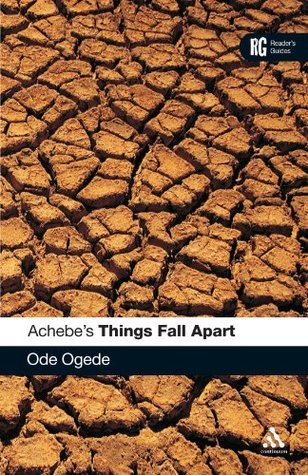
Achebe's Things Fall Apart
Reader's Guides provide a comprehensive starting point for any advanced student, giving an overview of the context, criticism and influence of key works. Each guide also offers students fresh critical insights and provides a practical introduction to close reading and to analysing literary language and form. They provide up-to-date, authoritative but accessible guides to the most commonly studied classic texts.
Chinua Achebe's remarkable novel Things Fall Apart (1958) is probably the best known African novel and has become one of the world's most influential literary masterpieces. Since publication, a total of nearly 12 million copies have been sold, with translations into more than 50 languages. Despite its undoubted success, its apparent simplicity has tended to blind readers to the dazzling storytelling resources and the inventive language, plot, setting, and characterization which first draw them to the novel and keep them reading. This is the ideal guide to the text, setting Things Fall Apart in its historical, intellectual and cultural contexts, offering analyses of its themes, style and structure, providing exemplary close readings, presenting an up-to-date account of its critical reception and examining its afterlife in literature, film and popular culture. It includes points for discussion, suggestions for further study and an annotated guide to relevant reading.
Reader's Guides provide a comprehensive starting point for any advanced student, giving an overview of the context, criticism and influence of key works. Each guide also offers students fresh critical insights and provides a practical introduction to close reading and to analysing literary language and form. They provide up-to-date, authoritative but accessible guides to the most commonly studied classic texts.
Chinua Achebe's remarkable novel Things Fall Apart (1958) is probably the best known African novel and has become one of the world's most influential literary masterpieces. Since publication, a total of nearly 12 million copies have been sold, with translations into more than 50 languages. Despite its undoubted success, its apparent simplicity has tended to blind readers to the dazzling storytelling resources and the inventive language, plot, setting, and characterization which first draw them to the novel and keep them reading. This is the ideal guide to the text, setting Things Fall Apart in its historical, intellectual and cultural contexts, offering analyses of its themes, style and structure, providing exemplary close readings, presenting an up-to-date account of its critical reception and examining its afterlife in literature, film and popular culture. It includes points for discussion, suggestions for further study and an annotated guide to relevant reading.
Chinua Achebe's remarkable novel Things Fall Apart (1958) is probably the best known African novel and has become one of the world's most influential literary masterpieces. Since publication, a total of nearly 12 million copies have been sold, with translations into more than 50 languages. Despite its undoubted success, its apparent simplicity has tended to blind readers to the dazzling storytelling resources and the inventive language, plot, setting, and characterization which first draw them to the novel and keep them reading. This is the ideal guide to the text, setting Things Fall Apart in its historical, intellectual and cultural contexts, offering analyses of its themes, style and structure, providing exemplary close readings, presenting an up-to-date account of its critical reception and examining its afterlife in literature, film and popular culture. It includes points for discussion, suggestions for further study and an annotated guide to relevant reading.
Reader's Guides provide a comprehensive starting point for any advanced student, giving an overview of the context, criticism and influence of key works. Each guide also offers students fresh critical insights and provides a practical introduction to close reading and to analysing literary language and form. They provide up-to-date, authoritative but accessible guides to the most commonly studied classic texts.
Chinua Achebe's remarkable novel Things Fall Apart (1958) is probably the best known African novel and has become one of the world's most influential literary masterpieces. Since publication, a total of nearly 12 million copies have been sold, with translations into more than 50 languages. Despite its undoubted success, its apparent simplicity has tended to blind readers to the dazzling storytelling resources and the inventive language, plot, setting, and characterization which first draw them to the novel and keep them reading. This is the ideal guide to the text, setting Things Fall Apart in its historical, intellectual and cultural contexts, offering analyses of its themes, style and structure, providing exemplary close readings, presenting an up-to-date account of its critical reception and examining its afterlife in literature, film and popular culture. It includes points for discussion, suggestions for further study and an annotated guide to relevant reading.
136 pages, Paperback
First published January 1, 2007
Ratings & Reviews
Friends & Following
Create a free account to discover what your friends think of this book!
Community Reviews
Displaying 1 - 30 of 120 reviews
Read
November 13, 2011I'm currently on page 76 and this book is incredible. I don't really like reading about tribes and historical reading but this book has definitely caught my attention since its from the perspective of Okonkwo. I recommend this book to anyone and everyone who just want to read a book that contains somewhat tribal traditions and beliefs. I rate this book an absolute 5.
June 5, 2014
Language can be a bridge from one way of thinking to another person's culture, which is what this book provides. It isn't about clever puns, riveting plot twists, or flowing descriptions, it's about a culture that you've most likely never seen, told through the eyes of a man who is watching it crumble into dust. The language is basic English, probably 6th grade or middle school level, but it provides a fascinating glimpse into an Africa that doesn't exist anymore. It doesn't romanticize it either. People are killed in ways that modern Western views still find barbaric, but it's just a fact of life for this tribe, a sacred law. The white men that come later do things that are just as barbaric, and some try to enforce civilization in a way that doesn't seem so bad. The point-of-view turn at the very end of the book makes it for me... I won't spoil it, but it made me want to scream with indignity for a culture that was squandered. This book will make you see Africa in a different way, and you'll be better for it.

July 16, 2015
This was a strange book with a disappointing ending. It tells the story of the yearly customs of an African tribe and how their society is broken down by the arrival of the Christian missionaries. The day to day actions of the tribe are way too detailed and mundane; it’s as if the author is actually writing recipes for yams as a subtext in order to fill pages. I also find that having characters whose names are spelt similarly loses the focus of the novel as the reader struggles to remember which character does what; leaving the whole narrative in a blur. The suicidal ending leaves the tribe particularly lost as if their traditions really are falling apart and their moral is broken. I'm also baffled as to why the reader is left with the formation of the District Commissioner’s dictionary. I wonder if Achebe was a racist who experienced these issues within his Nigerian village?

October 9, 2014
I don't think this book is spectacular in any sense of the word. Immediately I was thrown off with the sort of bumpiness of the book, how no transition from scene to scene would be smooth. Also, I felt that instead of being immersed into the world, you were simply tossed into it with little exposition. Unless you want to consider the first half of the book the exposition, in which case - no. Overall, I didn't really like the book, but it is unique and so it gets stars for that.

June 12, 2015
I find Achebe's subtle story engaging on two interrelated levels.
First, it provided this Western reader with a fascinating glimpse of world views which non westerners use to make sense of the world.
Secondly, "Things Fall Apart", functions like as an anthropological parable. It reminds the reader of the bittersweet truth that progress is a relative concept and that there is no escaping change.
First, it provided this Western reader with a fascinating glimpse of world views which non westerners use to make sense of the world.
Secondly, "Things Fall Apart", functions like as an anthropological parable. It reminds the reader of the bittersweet truth that progress is a relative concept and that there is no escaping change.

August 7, 2014
An insight to tribal life in Africa, their customs, their Gods and their beliefs. The story is told in a very simplistic tone, sort of like the main character. He was a strong, proud, hardworking warrior who saw life in simple terms. As always, white men imposed themselves without understanding their customs. A sad story of this proud warrior.
November 19, 2015
Wonderful book with in depth study of an African traditional culture, ending with the arrival of the white missionaries. I have a much better understanding of the concepts of a traditional animist culture from reading this book. At the same time I was interested in the stories and characters from a fictional perspective.
October 16, 2008
I love the history behind this book. It is very interesting to learn of Africa and read a fictional story with some historical basis. This book was a little hard for me to get into at the beginning, but worth it in the end

June 18, 2015
La historia de un hombre cuyas acciones hablaron por él, narrada en un lenguaje sencillo y de fácil y rápida lectura. Desearía que el final hubiera sido diferente, pero la historia debe seguir su curso natural.

April 9, 2009
Breath taking on the deep rooted culture in Africa

May 9, 2015
The last few chapters reminded me of Aranyak a lot.. As Tagore said rightfully, Civilization is a curse..
December 12, 2018
Chinua Achebe's Things Fall Apart is a fictional novel written by Ode Ogede. This novel is about life in the late 19th century in Nigeria. This novel tells of someone from that area, named Okonkwo. Okonkwo is a rich and respected soldier from the Umuofia clan, a lower Nigerian tribe that is part of a consortium of nine connected villages, including the village of Okonkwo, Iguedo. Okonkwo was really different from his father who was now dead, Unoka, who was afraid to see blood and didn't really care about his children and wife. However, Unoka has an ability, he is a skilled flute player and has a talent for language. The unpleasant thing about this novel is that the novel is very boring and the story about the characters is very minimal, Okonkwo never showed any emotion openly, unless it be the emotion of anger. Also this novel tells about history. It's portrayed so well but it's still boring because I don't really like historical novels. To show affection was a sign of weakness, the only thing worth demonstrating was strength. So the readers are hesitant to determine how the characters actually are in the novel. If to fill your free time, it is not recommended to read this novel, because it is boring and not entertaining. Actually this novel provides information that is quite complete and quite interesting because it is a story about a different culture and also from the previous century. Indeed, if the reader wants to know the culture and history of other countries that are interesting and quite tense, this novel is suitable for you to read. Besides that, there must be a lot of general knowledge and information that you can get after reading this novel.
This entire review has been hidden because of spoilers.
April 15, 2026
I enjoyed reading this book. At the beginning, I was a bit confused about what the overall plot and meaning of this book was going to be, but as it went on it made more sense. The book was very fast paced and quick to read, but still is somewhat challenging to read due to the complex plot. There are many different characters, and there was many interesting and intriguing events various times throughout the story. The book is very centered on religion and cultural tribes and gave me a glimpse into what a new culture is like. I would recommend this book to anyone who enjoys fast paced, mostly fictional, cultural books, or anyone who enjoys learning about new things. I would rate this book a 4/5 stars, because although it was a good book, written very well, it wasn't a very appealing topic to me. I did enjoy getting to learn about a new culture though.

January 22, 2022
I didn’t quite understand the name of the book until I got 3/4 of the way through and my goodness, did things fall apart quickly.
It took me a while to really understand what was going on. I didn’t quite get what the plot of the story was until as the title states, things falling apart. And now, I can understand why this book is such a classic.
This was a great entry book into colonisation. After reading it, I took some time to reflect on this history and wow. It made me so angry, mad and just all round hateful towards the church for coming into these tribes and colonising it. Building the church, shops and starting a school... It just doesn’t sit right with me as a Christian that the man in charge of this did this in the name of God??!!
I cannot recommend this book enough!
It took me a while to really understand what was going on. I didn’t quite get what the plot of the story was until as the title states, things falling apart. And now, I can understand why this book is such a classic.
This was a great entry book into colonisation. After reading it, I took some time to reflect on this history and wow. It made me so angry, mad and just all round hateful towards the church for coming into these tribes and colonising it. Building the church, shops and starting a school... It just doesn’t sit right with me as a Christian that the man in charge of this did this in the name of God??!!
I cannot recommend this book enough!
February 2, 2024
In "Things Fall Apart" a wealthy African tribesman and warrior from a tribe in Nigeria. His father was a deadbeat and is now dead but still haunts him. "Things Fall Apart" is a decent book. It's action packed but still a little hard to stay focused just because it really isn't my thing. I liked the way Achebe wrote about the tribes and showed how real they were with the killings and wrestlings and how they lived in general. I didn't like how the book was set up very much though it kind of drug out. A motif of the story is how many stories they tell in the book. Over and over again they show the cultural value with each story. I personally would not read this book again.
February 4, 2026
Enjoyed reading this book which took me to another world where honour, traditions and respect towards the patriarchy and ancestral spirits were the backbone of this African Tribe. I felt lost on the foreign sounding names at the beginning but got accustomed to it. It was an immersive read with the each character, their surroundings and their raison d'etre deftly described without any lingering on like an impressionistic picture. I found the third part of the book is too short for the gravitas it contains but it aptly describes the devastating effect of colonialism on this tribe and on the principle character Okonokwo.
February 18, 2020
Achebe gives a profound perspective on immense cultural upheaval sparked by the advent of Christian missionaries in Africa. It's multi-faceted and really a book you can spend days studying and discussing. Although the imagery used for men and women was certainly laden with traditional gender biases, that in itself lets you into Achebe's mind and the world he is opening to the reader. It's not a book I'd curl up with next to the fire with, but it's an interesting one to study.
May 12, 2017
A magnificently incisive, well-conceived/executed parable (also splendidly concise) about the human condition in general, the clash between tradition and change in general, and the specifics in an African village Not a word too many, or a note out of place.
June 8, 2018
Useful guide with intelligent insights.
September 3, 2019
U can relate to their pain, dilemma and every emotions. I literally cried when Ikmefuna died.
This entire review has been hidden because of spoilers.

January 29, 2020
Fascinating view of Kenya culture from their perspective. Sad invasion
April 26, 2020
The plot itself was not so moving, but it provided an interesting perspective on life and values in an African tribe.
Want to Read
July 19, 2020elibrary

June 6, 2025
Nice book that shows colonisation in a less violent way, definitely did not expect the ending to be as it was in the book.

December 9, 2025
3.5/5
Just picked this randomly. It was an OK story but not much any impact
Just picked this randomly. It was an OK story but not much any impact

March 22, 2026
we were built to fall apart DH_epub
April 13, 2015
Things Fall Apart by Chinua Achebe is a book about a successful man named Okonkwo living in an African tribe, who refuses to change as time passes on, and eventually, things fall apart for the man. From a 3rd person point of view, Achebe wrote this book to teach people timeless life lessons, which can apply to anyones life. Achebe also wrote Things Fall Apart to inform people about african culture of the early 1900’s. Achebe did this by writing a story with a realistic plot, but at the same time teaching people the way of life of the African civilization. “Every year before I put any crop in the earth, I sacrifice a cock to Ani, the owner of all land. It is the law of our fathers.” This is a quote said by Unoka, showing the traditions of the tribe, which Achebe wrote to inform people of the tribe’s culture. Achebe accomplished this task efficiently, as the plot of the story became very dramatic towards the end of the story.
Many of the themes in Things Fall Apart are revealed due to the suicide of Okonkwo. Achebe most likely did this because the death of someone (especially a suicide) usually results in a lesson that was learned, or that should be learned. A major theme of Things Fall Apart is “don’t be afraid of change.” This theme is developed throughout the story when Achebe reveals how stubborn Okonkwo was, and how he was so frightened of change, that his life fell apart. This was the major theme of Things Fall Apart, because it was the main reason why Okonkwo killed himself. Another theme in Things Fall Apart is “know your place in society.” When Okonkwo was exiled from Umuofia for 7 years, he expected to come back to the village, and be exactly where he left off. When Okonkwo arrived, he realized that he is not the “one and only,” and he is replaceable. People like Okonkwo were “a dime a dozen” in the society, which disturbed Okonkwo when he came back to his old home. Okonkwo expected his culture and place in society would remain the same over 7 years, which also led to his suicide. The themes in Things Fall Apart are fairly common, which Achebe probably intended to do, so the books he wrote could be read and enjoyed forever.
Things Fall Apart is historical fiction, but is also a very atypical tragedy. This book was so different because it discussed things I had never heard about, but was very relatable at the same time. This connects to the intended audience, because Achebe wrote the book so anyone can relate to it. To do so, Achebe also had to write the book very clearly, since the plot is discussing unique things for the audience. Achebe had to not only write clearly, but write so the plot could be easily followed, so the reader knows what is happening, and when it is occurring. Although it can be very subjective, I did not think Achebe did the best job of using description. I never really felt like I was in the scene of the book, as I do while reading many other books. With this being said, Things Fall Apart was a story about a topic that was slightly foreign to me, so for someone who has already introduced to the subject it might be easier to get a feel of how things are happening. The introduction of characters, however was very easy to follow, along with the order in which things happened. I thought the book was fairly easy to go along with, which is a good quality to have when writing a book for an audience that is not familiar with the material being discussed.
Things Fall Apart did not change any of the previous opinions I had, but was more of a reminder not to stay in the past. In life a person has to accept change, instead of fight against it, which this story really displayed. I think it was Achebe’s goal to display these themes, so he achieved his goal very well when writing this book. For a teenager in Pelham, this book might not relate to them in this point in time. It is important though, to remember themes that come from this book, so if you are ever scared of change, or are lost in identity, you have an idea of what to do, or how to react.
I would definitely recommend this book to a friend. Usually when you recommend a book it is because you enjoyed it, but this time, it is because of the bigger picture. Sometimes in life you will face difficulties, and so it is important to use the themes that Achebe presented in the timeless book: Things Fall Apart.
Many of the themes in Things Fall Apart are revealed due to the suicide of Okonkwo. Achebe most likely did this because the death of someone (especially a suicide) usually results in a lesson that was learned, or that should be learned. A major theme of Things Fall Apart is “don’t be afraid of change.” This theme is developed throughout the story when Achebe reveals how stubborn Okonkwo was, and how he was so frightened of change, that his life fell apart. This was the major theme of Things Fall Apart, because it was the main reason why Okonkwo killed himself. Another theme in Things Fall Apart is “know your place in society.” When Okonkwo was exiled from Umuofia for 7 years, he expected to come back to the village, and be exactly where he left off. When Okonkwo arrived, he realized that he is not the “one and only,” and he is replaceable. People like Okonkwo were “a dime a dozen” in the society, which disturbed Okonkwo when he came back to his old home. Okonkwo expected his culture and place in society would remain the same over 7 years, which also led to his suicide. The themes in Things Fall Apart are fairly common, which Achebe probably intended to do, so the books he wrote could be read and enjoyed forever.
Things Fall Apart is historical fiction, but is also a very atypical tragedy. This book was so different because it discussed things I had never heard about, but was very relatable at the same time. This connects to the intended audience, because Achebe wrote the book so anyone can relate to it. To do so, Achebe also had to write the book very clearly, since the plot is discussing unique things for the audience. Achebe had to not only write clearly, but write so the plot could be easily followed, so the reader knows what is happening, and when it is occurring. Although it can be very subjective, I did not think Achebe did the best job of using description. I never really felt like I was in the scene of the book, as I do while reading many other books. With this being said, Things Fall Apart was a story about a topic that was slightly foreign to me, so for someone who has already introduced to the subject it might be easier to get a feel of how things are happening. The introduction of characters, however was very easy to follow, along with the order in which things happened. I thought the book was fairly easy to go along with, which is a good quality to have when writing a book for an audience that is not familiar with the material being discussed.
Things Fall Apart did not change any of the previous opinions I had, but was more of a reminder not to stay in the past. In life a person has to accept change, instead of fight against it, which this story really displayed. I think it was Achebe’s goal to display these themes, so he achieved his goal very well when writing this book. For a teenager in Pelham, this book might not relate to them in this point in time. It is important though, to remember themes that come from this book, so if you are ever scared of change, or are lost in identity, you have an idea of what to do, or how to react.
I would definitely recommend this book to a friend. Usually when you recommend a book it is because you enjoyed it, but this time, it is because of the bigger picture. Sometimes in life you will face difficulties, and so it is important to use the themes that Achebe presented in the timeless book: Things Fall Apart.
Read
April 13, 2015I will admit, I was originally skeptical about reading "Things Fall Apart" by Chinua Achebe. I questioned what relevance a book written 50 years ago that takes place in a small Nigerian village in the midst of colonization. But once I read the book I was pleasantly surprised by Achebe's use of dialogue and character because somehow I was able to make multiple connections between the fictional village of Umuofia and modern day Pelham. The theme of Things Fall Apart is that change is not only inevitable but it's also perpetual. This theme will apply to society until the en of time because as our culture progresses, new and more advanced technologies are being invented and used all over the world for better or for worse. This can be scary as we see through the main character, Okonkwo. A 50 year old man, Okonkwo is dead set on his ways for the most part. He believes that men are dominant and women and children are their subjects. Soon after the reader learns about the ways of Umuofia, we are introduced to settlers from Europe who plan on converting all residents of the village to Christianity. With these foreign thoughts and clothing, the Europeans bring new technologies and ideas. This angers Okonkwo because he believes that life was good before these white settlers came and ruined everything. I even made a personal connection between my Grandfather, an 80 year old stubborn Scot. They are similar in not only their intolerance and inability to change but they both have brutal tempers. Change is inevitable as it is perpetual and Achebe's message to the reader is that it is better to be flexible in your opinions and horizons than to wallow in your tired, old traditions.
Though this book is a drama, it is unlike any drama I have ever read. This book is unique by setting alone, never have I read a book about an african village in the early 1900s but I suppose that's part of the intrigue. While dramas often take place in modern society and involve gossip or monogamous relationships, Things Fall Apart features a drama about change, tribal differences, war and polygamous relationships. This book is intended for people who have broad horizons and are willing to take a chance on something different. Achebe writes in a very strong way, his delivery is simple and blunt, he uses copious amounts of figurative language especially personification and metaphors. For the most part I thought this book was very exciting and different, however, patients is certainly a virtue with Things Fall Apart. Achebe tends to drift off into excruciating detail about small things. With that said I encourage the reader to preserver because Achebe has many exciting, tragic and jaw-dropping moments in Things Fall Apart.
Though this book is a drama, it is unlike any drama I have ever read. This book is unique by setting alone, never have I read a book about an african village in the early 1900s but I suppose that's part of the intrigue. While dramas often take place in modern society and involve gossip or monogamous relationships, Things Fall Apart features a drama about change, tribal differences, war and polygamous relationships. This book is intended for people who have broad horizons and are willing to take a chance on something different. Achebe writes in a very strong way, his delivery is simple and blunt, he uses copious amounts of figurative language especially personification and metaphors. For the most part I thought this book was very exciting and different, however, patients is certainly a virtue with Things Fall Apart. Achebe tends to drift off into excruciating detail about small things. With that said I encourage the reader to preserver because Achebe has many exciting, tragic and jaw-dropping moments in Things Fall Apart.
Displaying 1 - 30 of 120 reviews