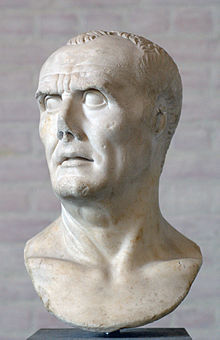
The history of the Romans and the "barbarians" they encountered as their mighty legions advanced the frontiers of Classical civilization has in large part been written as a story of warfare and conquest. But to tell the story on only that level leaves many questions unanswered, not only about the Romans but about the barbarians, as well.
Who were the Celts, Goths, Huns, Persians, and so many others met by the Romans as they marched to the north and east? And what made them barbarians in the eyes of Rome? What were the political, military, and social institutions that made Rome so stable, allowing its power to be wielded against these different cultures for almost three centuries?
Dr. Kenneth W. Harl is Professor of Classical and Byzantine History at Tulane University in New Orleans, where he teaches courses in Greek, Roman, Byzantine, and Crusader history. He earned his B.A. from Trinity College and his M.A. and Ph.D. from Yale University.
Recognized as an outstanding lecturer, Professor Harl has received numerous teaching awards at Tulane, including the coveted Sheldon H. Hackney Award two times. He has earned Tulane's annual Student Body Award for Excellence in Teaching nine times and is the recipient of Baylor University's nationwide Robert Foster Cherry Award for Great Teachers.
In 2007, he was the Lewis P. Jones Visiting Professor in History at Wofford College. An expert on classical Anatolia, he has taken students with him into the field on excursions and to assist in excavations of Hellenistic and Roman sites in Turkey.
Professor Harl has also published a wide variety of articles and books, including his current work on coins unearthed in an excavation of Gordion, Turkey, and a new book on Rome and her Iranian foes. A fellow and trustee of the American Numismatic Society, Professor Harl is well known for his studies of ancient coinage. He is the author of Civic Coins and Civic Politics in the Roman East, A.D. 180–275 and Coinage in the Roman Economy, 300 B.C. to A.D. 700.
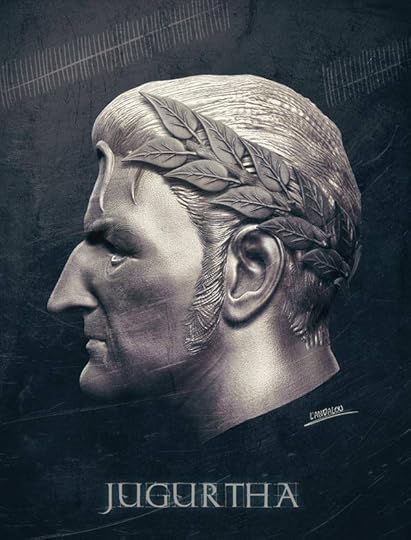
4. The Roman Way of War 5. Celtic Europe and the Mediterranean World 6. The conquest of Casalpine Gaul 7. Romans and Carthaginians in Spain 8. The Roman Conquest of Spain 9. The Genesis of Roman Spain 10. Jugurtha and the Nomadic Threat
Constantine, Algeria
11. Marius and the Northern Barbarians
12. Rome's Rivals in the East 13. The Price of Empire 14. Julius Ceasar and the Conquest of Gaul 15. Early Germanic Europe 16. The Nomads of Eastern Europe 17. Arsacid Parthia 18. The Augustin Principate and Imperialism 19. The Roman Imperial Army
Whipped through these last few lectures, so am now on a mirroring timeline with Trajan re Portus.
4* The Vikings (Great Courses, #3910) TR Secrets of Sleep Science: From Dreams to Disorders TR Turning Points in Modern Times: Essays on German and European History 4* Myth in Human History (Great Courses, #2332) 3* History of Russia: From Peter the Great to Gorbachev (Great Courses, #8380) TR Classic Novels: Meeting the Challenge of Great Literature (Great Courses, #2310) 4* Rethinking Our Past: Recognizing Facts, Fictions, And Lies In American History OH A History of England from the Tudors to the Stuarts (Great Courses, #8470)
This wasn't a bad lecture series by any means and the content of it was interesting for sure but the lecturer had a habit of stumbling over his words and saying "um" a lot, which could get a little distracting if you keep hearing it. However, with that said, I do understand it must be challenging at times to get through a lecture in a certain amount of time in front of people. I certainly wouldn't be able to do this without stumbling over my words a lot. It just didn't make for the best listening experience for me, personally. I did like the topic of the series a lot, since I love learning more about anything that relates to ancient Rome or ancient history in general. It went into the ancient Romans' conquering of certain peoples like the Gaults, Celts, Huns, Goths (etc) and how the intercommunication developed as the years went on and how their respective civilizations changed as they intermarried and assimilated into the Roman world and vice versa. A fascinating subject manner for sure.
Excellent Primer on All the Foreign Peoples the Romans Encountered, Fought With, and Assimilated The term 'barbarian' is a simplistic word loaded with cultural assumptions, and this series of lectures does a great job of describing the incredible diversity of peoples throughout the Roman Empire and outside its borders that Romans encountered, fought and conquered, enslaved, negotiated with, and eventually assimilated and were in turn influenced by. The reality was far more complex and nuanced that the Romans bequeathing civilization upon the primitive axe-wielding barbarian hordes on their frontiers. As these various groups underwent Hellenization and Romanization, the distinction between Roman and Barbarian become increasingly blurred, and those people became increasingly organized both politically and militarily, so that Roman legions could no longer defeat them with ease, and often had to negotiate, compromise, and quite often were beaten.
What was most fascinating was learning just how many slaves the Romans took from vanquished peoples, thereby fueling a massive exchange of cultures and peoples within the empire, ensuring that the "us vs them" mentality would be increasingly difficult to maintain. And like all exchanges, it was bilateral, not one-sided. So there was huge exposure to the Greeks, Celts, Gauls, Goths, Iberians, Germanic Tribes, Britons, Picts, Parthians, Persians, Scythians, Turks, Huns, Slavs, Dacians, etc. It's impossible to quantify all the levels of cultural interaction, but Prof Harl sheds a lot of light on the most important themes, with great enthusiasm, making for a very enjoyable and educational series of lectures.
First let me say, I love these courses. I cannot remember one that is not a least a 3+ star rating. Second, I admire any one who can speak in front of a group. I would rather face a bear armed with only an umbrella! I truly did enjoy the contents of the lectures but Professor Harl has so many Ums & Uhs it was very distracting. It does seem to get better as the course goes on but I almost gave up about an hour in. If that is something that drives you crazy, you have been forewarned.
I must first confess I love everything I’ve ever heard from Harl. His informal, conversational lecture style pairs extremely well with his profound depth of knowledge, overwhelming passion for Eurasian history, and penchant for an aside or two. If you can’t stand an “um” or stammer here or there, beware. I can’t get enough.
This series examines Rome through its interactions with its “less civilized” neighbors and emphasizes that there really is no way to accurately summarize the complex relationships between Romans and Scythians or Germans or Numidians into one word like “enemies.” Rome changed its barbarians, and its barbarians changed it. I think this exchange is often under-appreciated in the popular understanding and that this course does a great job of communicating its importance to history, right down to this very day.
This was very good but my least favorite so far of Professor Harl’s lectures. There was a big slump in the back half of the course where it very repetitive X-Person was in power and fought the Y-Group, without a lot of details or insights into why it was significant. It seemed we were just flipping quickly through the timeline (the course covers about 900 years) to get to the Good Stuff and I would have preferred the course be structured differently to avoid this wasted time.
Overall this series focuses much more on the Roman/Barbarian conflicts from the perspective of Rome and how these conflicts impacted Roman leaders and society. I would have really liked more details about the Barbarian cultures and leaders even if it was at the expense of cutting some of the smaller conflicts.
In Rome and the Barbarians, Harl flips the normal narrative around and looks at the impact of Rome’s neighbors—especially those they termed barbarians—on the development of the Republic and the Empire. This makes for a very unique experience in exploring the history of Rome and really illuminated aspects of Rome’s foreign policy that I hadn’t recognized before. Using their patron-client system on a national scale, the Romans managed to accumulate a mighty empire on the backbone of their legions—an innovative military constantly adapting to the threats they encountered. Harl also identifies the point in the fourth century when the legions start to break down, lose their discipline, and set Rome on its path to destruction, incorporating barbarian tribes wholesale into the military. It’s an absolutely fascinating way to look at Rome.
I have read and listened to a lot of stuff about Rome and this is if not the best, one of the best overviews of its history I can think of and without a doubt it gives the most comprehensive and understandable reasons on why the western empire fell. I have always enjoyed this lecturer but this is top shelf even for him.
My favorite thing that I've learned from this lecture series so far: In the days of the Roman republic, if you were a general and wanted a triumph (a formal ceremony and parade in your honor in Rome), you had to kill 5,000 barbarians or more. Harl says, "They counted!" If the men counting corpses determined that you killed 4,998, you got an ovation instead of a triumph.
Veldig gøy å høyre koss professoren blir ivrigare og ivrigare utover i kvar førelesing. Denne rekka er litt sånn som ein ventar seg historie, altså ei lang rad slag, generalar, kongar, keisarar etc. Harl konsentrerer seg veldig om krig og politikk, religion blir knapt nemnt, og det er litt vel lite om koss folk må ha hatt det. Likevel engasjerande, også så informativt!
Incredible lecture series. This answered so many of my questions about the late antiquity period and the transformation from Roman Empire to Western European medieval societies.
These lectures cover the history of Rome from the start of Rome to the end of Western Rome (and fast-forward to the end of Eastern Rome), focusing on the relationship between Rome and Barbarians.
Unlike common notions, the word Barbarian refers to groups of “foreigners” encountered by Rome. They were not all uncivilized, just with different cultures and social institutions from Rome.
The history can be roughly divided into two parts, separated by the transition between the Roman Republic and the Roman Empire.
When Rome started expanding several hundred years BC, it encountered other civilizations around its border. The lecture traces the development and interaction on all sides of Rome. A common thread is that Rome was not intensely driven by the desire for expansion. It conquered its neighbors for various reasons: enhancing national security, taking sides in wars between the Barbarians, and zealous Roman generals. Besides wars and conquers, Rome also coexisted and traded with the Barbarians, and many Barbarians immigrated to Rome to seek career opportunities. After conquests, Barbarian civilizations evolved in different ways. Some were integrated into Rome, and some maintained semi-independent status while incorporating a part of the Roman institutions, while others remained allies with Rome.
When Rome became too big, it lost effective governance. Civil war ensued, and eventually, the Republic became an empire. The Roman empire struggled to hold onto its territory. However, its power weakened over the years. The Barbarian states drifted away from Roman power. Some reverted to their pre-Rome institutions, and others became independent kingdoms. In the end, the German people took over Rome City, and West Rome fell. The fall of the Roman Empire was not driven by decisive battles; it was a long process of gradual weakening.
The lectures convey that the Roman-barbarian relationship was not as bloody as we commonly think. There were many wars, but wars were not the norm. Although some Roman generals were eager to engage in battles to achieve power and career advancement, Rome, as a country, was not motivated for continued expansion. Moreover, the Barbarians did not rebel to gain freedom; they just fell away when Rome could no longer control them. As they say, Rome was defeated from the inside.
The 36 lectures were engaging and captivating. The lecturer is a rigorous historian and is bound by available information, which is not always complete. (In comparison, the Chinese maintained much better archives during the same period.) Therefore, the lectures are not storytelling but fact review. As a layman, I benefited from the lectures by obtaining a general picture of European history in that period.
I enjoyed this series quite a bit. Partly I have just really come to enjoy the lecturer, Professor Harl, because he has been the lecturer for so many different history topics that I find interesting. He has his faults, like a tendency to mispronounce certain words, and a speaking style which can be a bit unclear at times-- lots of ums and uhs and frequent corrections or clarifications which can muddy the picture a bit-- but as I believe I have noted in a previous review, to my mind this reflects his great enthusiasm for the subject as well as a great deal of intimate knowledge which leads to frequent small jokes, humorous anecdotes, or statements about his personal favorite/least favorite emperors or the like. But this subject matter is quite interesting in its own right. I'm not quite sure what I was expecting in this series; I mostly liked the title, but I also feel that Rome is perhaps somewhat over-mythologized and over-emphasized much of the time so I wasn't completely sold. Ultimately, it turned out to be primarily a history of Rome, from fairly early in its rise to the fall of the Western Empire, but one which emphasized how Rome developed because of its interactions were surrounding peoples and cultures (the barbarians), rather than some sort of story of internally driven greatness and improvement.
Overall, I think there is a slightly contrarian approach to the presentation of history, which I greatly appreciate. For example, I recently encountered in another lecture series a description of Hadrian's Wall and the Antonine Wall further north which I think is the conventional interpretation: Hadrian's Wall was the hard northern limit of Rome in Britain, the wall was intended as a defensible barrier against barbarian people beyond the border, and the Antonine Wall failed because the defenders had hostile tribes at their back. Except that shortly before I encountered that description, I had listened to the relevant lecture here, and the presentation was quite different: Roman influence probably extended well north of Hadrian's wall, through most or all of what is now lowland Scotland; the wall existed to control the movement of people and particularly to discourage low-level raiding, a cultural aspect well documented from later history, a concept which helps explain the ditch that was dug south of the wall, obviously not a defensive feature, but a great way to make it harder to transport cattle and booty back to base; the Antonine Wall failed because the local people closest to it practiced primarily herding, rather than the agriculture close to Hadrian's Wall, and therefore couldn't easily supply sufficient food to support the garrisons. To me, Professor Harl's explanation just makes more sense, and seem more believable.
Some other things that stood out to me: I like the insight into pre-civilized Europe, the descriptions of how Celtic people had established extensive trade networks and shared cultures across much of Europe; I see parallels with archaeological evidence of broad trade networks among native people in the Americas. Also, it is interesting to learn that the Germanic peoples, as evidenced by archaeology and Roman historical sources, didn't really have a culture of true city building (as opposed to the Celts and Mediterranean peoples), which I think helps make sense of the cultural devolution that marked the early Medieval period: Germanic tribes were dominant, and they tried to make use of existing institutions, but it took some time to really adapt to and adopt the trappings of Roman civilization.
Recently revisited this 'Great Course' on Rome and the Barbarians. Wonderful summary and overview. The course shows the development of both Rome and her neighbors over the history of the Republic, tthe Principate, and the Empire. Despite the title, we're pretty clear on the notion that many of these "barbarians" are in fact quite civilized and technologically superior to Rome in a number of aspects. Trade in goods and ideas is far more the means of interactions over the centuries than war was. Throughout, you're clear that this is a process - Rome is changing those states/peoples it comes into contact with, but those states/people are changing Rome right back. Professor Harl also provides us useful reminders that borders on a map are not bright lines of delineation in this period - it is best perceived as a permeable zone. Good and bad pass back and forth from both sides. And that Rome was no better than 19th and 20th century powers in drawing these borders, arbitrarily splitting tribes, cultures, economies, etc. Professor Harl succinctly outlines why Rome expanded, why eventually it contracted, and why it collapsed in the West and didn't in the East. Like many histories of the period you alternate between wondering why couldn't they see how it was all going so wrong at times, and wondering how they managed to get it right and keep it together for as long as they did. Professor Harl's engaging delivery makes for an enjoyable listen, "dad" jokes and all. One of the better "Great Courses."
Alternate title "ROME (and the barbarians)" because we know so much more about the Romans than the barbarians so there is a lot of information here about Roman politics.
Also the definition of Barbarian is basically any people who were geographically outside the general area of the city of Rome so you get a large dose of Roman history as well (which is nice) But we don't get into the real barbarians (Huns, Visigoths, Ostrogoths, Vandals) till well into the lectures. Would have loved to learned more about barbarian culture. They obviously didn't have the type of civilization of the Roman empire but they were able to marshal large armies and in many cases dealt the Romans some pretty significant defeats.
So they had to be more than an unorganized rabble. Unfortunately we don't get a great feel for that.
Still an excellent course though as are all of Professor Harl's.
A very deep and solid overview of both Republican and Imperial Rome's interactions with the "other", which cleared up some of my misconceptions as well as helped me appreciate the grand story of history. If you are a fan of ancient Rome, strongly consider getting this course, as we often understand civilizations by comparing them to their neighbors and opponents, and seeing how their interactions shape one another.
There were many different barbarian groups that the Roman Empire had to contend with. The Goths, Visigoths, Huns, Franks, Vandals, Burgundians and more. It gets very complicated. I have been through the actual fall a number of times, in different books and courses but I am still getting my bearings.
This series is really interesting if you're super into the topic(s). Pretty dry if not. I found myself mostly bored with this series, but not really because of the lecturer, I just didn't care as much about it as I thought I would and it's really in depth.
Kenneth W. Harl may be my favorite teacher of "the Great Courses." He clearly understands the subject to his marrow!....This course was a wonderful exploration/explanation of a vital changing relationship that truly helped form for good and pad the world we inhabit now!
Excellent course reviewing the full interactions of Rome and the Barbarians. It starta from before Rome and goes until medieval Europe and rise of the Muslim world. Very good lectures with much to learn and explore.
A decent course, surveying Rome's relationship with those defined by Romans as "the barbarians" - essentially other peoples who lacked a political structure like Rome. The professor was very learned, but tended to make too many asides in his delivery. Overall a bit dull.





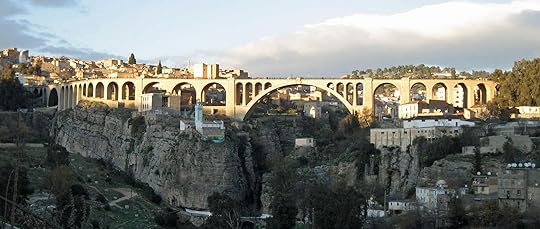 Constantine, Algeria