

What do you think?

Golden Verses of Pythagoras Translated with Examinations
In this twentieth century, the sacred books of the ancients are undoubtedly better understood tan they were even by their contemporaries, for their authors, by the greatness of their genius, are as much nearer to us, as they were different from them. At the close of the eighteenth century, the light which came from the illimitable mind of Fabre d'Olivet shone with solitary splendour and was destined to be seen by only a few devoted followers. But history shows that a great inspirer always appears at the beginning of every great epoch, and however small the number of his disciples, these disciples with their pupils form the magnetic chain which, according to Plato, carries his thought out into the world.
"God! Thou couldst save them by opening their eyes…
But no: 'tis for theh humans of a race divine
to discern Error and to see the Truth."
The Golden Verses of Pythagoras, so remarkable for their moral elevation, present the most beautiful monument of antiquity raised in honour of Wisdom. They formed the credo of the adepts and initiates. In his recondite Examinations, Fabre d'Olivet has drawn the metaphysical correlation of Providence, Destiny, and the Will of Man. In this combined action Destiny reigns of the past, the Will of Man over the future, and Providence over the present, which, always existing, may be called Eternal.
"God! Thou couldst save them by opening their eyes…
But no: 'tis for theh humans of a race divine
to discern Error and to see the Truth."
The Golden Verses of Pythagoras, so remarkable for their moral elevation, present the most beautiful monument of antiquity raised in honour of Wisdom. They formed the credo of the adepts and initiates. In his recondite Examinations, Fabre d'Olivet has drawn the metaphysical correlation of Providence, Destiny, and the Will of Man. In this combined action Destiny reigns of the past, the Will of Man over the future, and Providence over the present, which, always existing, may be called Eternal.
164 pages, Paperback
First published January 1, 1917
About the author
Antoine Fabre-d'Olivet
59 books16 followersAntoine Fabre d'Olivet (1767–1825) was a French author, poet and composer whose Biblical and philosophical hermeneutics influenced many occultists, such as Éliphas Lévi, Gerard Encausse (Papus) and Édouard Schuré.
His best known works are on the research of the Hebrew language and the history of the human race entitled The Hebraic Tongue Restored: And the True Meaning of the Hebrew Words Re-Established and Proved by their Radical Analysis, and Hermeneutic Interpretation of the Origin of the Social State of Man and of the Destiny of the Adamic Race. Other works of renown are on the sacred art of music entitled Music Explained as Science and as Art and Considered in its Analog Relationship with Religious Mysteries, Ancient Mythology and the History of the Earth, and a translation and commentary of Pythagoras's thirty-six Golden Verses.
His best known works are on the research of the Hebrew language and the history of the human race entitled The Hebraic Tongue Restored: And the True Meaning of the Hebrew Words Re-Established and Proved by their Radical Analysis, and Hermeneutic Interpretation of the Origin of the Social State of Man and of the Destiny of the Adamic Race. Other works of renown are on the sacred art of music entitled Music Explained as Science and as Art and Considered in its Analog Relationship with Religious Mysteries, Ancient Mythology and the History of the Earth, and a translation and commentary of Pythagoras's thirty-six Golden Verses.
Ratings & Reviews
Friends & Following
Create a free account to discover what your friends think of this book!
Community Reviews
Displaying 1 - 21 of 21 reviews

September 29, 2014
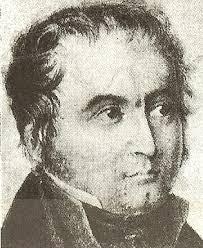
I am very much interested in this book and character. One of the reasons: why was he declared a NON-PERSON, by Napoleon? what’s a non-person? Why was he condemned by the Pope?
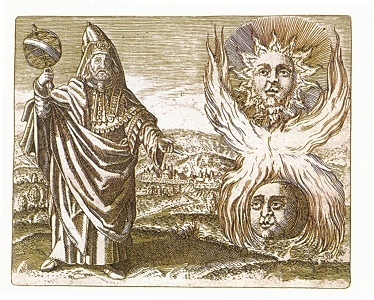
(Hermes)
Fabre, before approaching the verses attributed to Pythagoras, wrote some reflections on world poetry….the essence thereof. He himself invented a new (melodious) form of poetry. He got familiar with several Semitic languages.
I’ve read some of his reflections and don’t agree with his assertion that Camões failed.
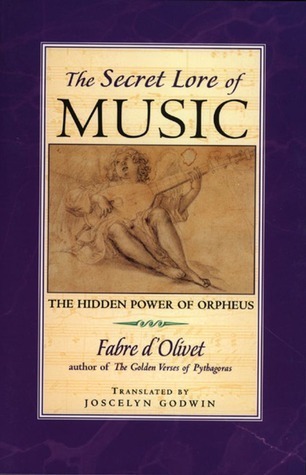
He wrote about the Christian Cabala, about music (as a science) and the language of the Hebrews 'restored'….and provided a new interpretation of the book of Genesis*. I need to find more.

On his biography I was surprised to find: he had been "initiated" in Germany,...and had had a 10 years sort of seclusion (“disconcerting" by some). He believed in reincarnation (metempsychosis); and had a strange death: “at the foot of his altar”.
I’ll be back on him.
----
Well, I'm back.
Someone said (jokingly; but very appropriately) that Fabre was looking for the lost word (“la parole perdu”).Very true.
From my French readings he lived the last years of his life as a protestant. It all seems, he’s been persecuted; at 58, he left 3 children.
All those malevolent (?) words such as “mediocre literate” (“littérateur mediocre”) or “so strange “ and “crazy apocalyptic visionary” are not just. He had a great linguistic talent, whether approaching Latin-based languages (namely the Occitan, and its poetry) or the Semitic languages. Even his most daring hypothesis like the Hebrew as the pure idiom of the ancient Egyptians, should be closely examined.
Nayán Louise Redfield, in 1815, called his work a “prodigious” one. His “neoteric” translation of the first 10 chapters of the Sepher of Moses (Genesis) deserve proper attention.
Finally, the Golden verses.
They are a set of principles (some say “moral exhortations) for a correct/healthy livelihood. On the whole, they consist of 37 recommendations/exhortations on how properly (virtuously) a Pythagorean Philosopher should behave and act.
These principles (commented by Fabre) cover several areas: friendship, sobriety, autonomous thinking, self-respect, freedom of choice, reflection before action; how to subdue the passions; …and avoid wrath.
Some are like this in formulation: “Revere the memory of the illustrious heroes”;”be a good son, just father…”; "choose for thy friend, the friend of virtue” etc.
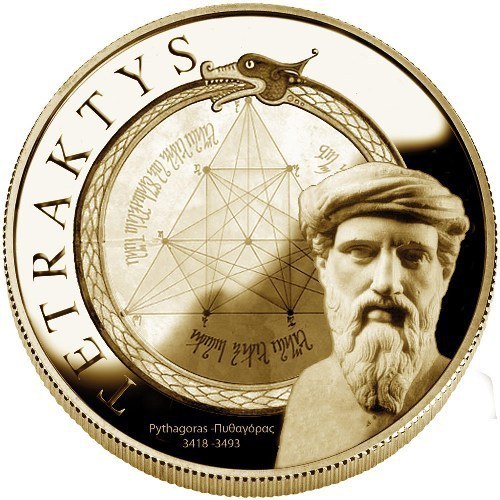
I cannot avoid expressing some sympathy for the “tolerance” (Polytheism) imbued in this approach; versus the Christian severity.
"A Christian philosopher could not, without perjuring himself and committing a frightful impiety, bend the knee in China before Kong-Tse, nor offer incense to Chang-Ty nor to Tien; he could neither
render, in India, homage to Krishna, nor present himself at Benares as a worshipper of Vishnu; he could not even, although recognizing the same God as the Jews and Mussulmans, take part in their ceremonies, or what is still more, worship this God with the Arians, the Lutherans, or Calvinists, if he were a Catholic".
And: >"This is what was done by the disciples of Pythagoras, according to the commandment of their master; they saw in the gods of the nations, the attributes of the Ineffable Being...".
The 37th and last principle looks like a reward to those who follow such code on Pythagorean conduct.
37. So that, ascending into radiant Ether,
Midst the Immortals, thou shalt be thyself a God
To those who follow those wise and golden rules. Golden, because they conceal “the most pure doctrine”.
Fabre followed the Greek text.
Fabre,... the person.
*https://medium.com/@graham-pemberton/...

January 28, 2017
Wonderful book. The search for knowledge and the search for virtue are the same in these verses. Even the agnostic reader might find many reasonable suggestions. I have no idea about the philology of this book, but its core ideas are really interesting. The split we take as natural came during the last centuries.

July 22, 2016
Interesting collection of maxims, some of which are divided mid-sentence. Perhaps this is proper grammar in ancient Greek? Anyways, useful and beautiful. A shame that humanity still has not mastered these.
A few samples:
---------------
7. Avoid as much as possible hating your friend for a slight fault.
12. But above all things respect yourself.
32. In no way neglect the health of your body.
39. Do only that which will not hurt you, and think carefully about what you are going to do before you do it.
67. But abstain from meat, which will prevent you from the purifying and the deliverance of your soul.
A few samples:
---------------
7. Avoid as much as possible hating your friend for a slight fault.
12. But above all things respect yourself.
32. In no way neglect the health of your body.
39. Do only that which will not hurt you, and think carefully about what you are going to do before you do it.
67. But abstain from meat, which will prevent you from the purifying and the deliverance of your soul.

February 4, 2013
This is a very interesting book as Olivet uses the first part of the book to show his thoughts on poems, and ancient writings and how they relate to Pythagorean thinking, further to that how some poems have become much removed from the original intent of the Pythagorean verse. He shows how Pythagoras, in his opinion, used the Golden Verses to convey much more than was written. Or should I say Lysis, one of his students, did.
The remainder of the book takes you verse by verse into the interpretation and extrapolation of Olivets's interpretation of the Verses. There is some interesting thought, and other paths in his thinking too. He is very conversant with ancient writings, and is said to have infuenced the writings of E. Levi. Anyway, a good read, and worth reading, if Pythagoras interests you.
The remainder of the book takes you verse by verse into the interpretation and extrapolation of Olivets's interpretation of the Verses. There is some interesting thought, and other paths in his thinking too. He is very conversant with ancient writings, and is said to have infuenced the writings of E. Levi. Anyway, a good read, and worth reading, if Pythagoras interests you.

September 1, 2017
Holy shit

Read
May 9, 2022But above all things respect yourself.
the world is a scene, a mutation, life a transition, a vain opinion, you came, you saw, you departed.
the world is a scene, a mutation, life a transition, a vain opinion, you came, you saw, you departed.
June 12, 2022
Denna hade kunnat ligga under moderna tolkningar också. De gyllne verserna är en av de bevarade texterna som sammanfattar Pythagoras lära, såsom den tedde sig 800 år senare. Skribenten var övertygad pythagorée. Det är ett intressant dokument, och har, föga förvånade, mycket gemensamt med dagens självhjälpslitteratur: du behöver vidmakthålla självrespekt genom att vårda dina relationer och ditt omdöme; värdera varje dag vad du har gjort med den; historien är nödvändig - framtiden skapar du - ögonblicket är kombinationenen, som i den bästa av alla värdar är godhet, genom insikt. Insikten att mycket går igen, är själva det legitimerande i filosofin som ämne - om människan är den samma, bör det som fungerar gå igen.
d'Olivet som kommentator är användbar. Jag hade aldrig hört om honom tidigare, men det han gör är att kontextualisera påståeendena till modernare filosofer, såsom Bacon, Kant och Leibnitz. Detta gör en del påståenden tydligare; passagen om jämförelsen mellan Pythagoras syn på själen och Kants förnuftsbegrepp hjälper mig om inte annat att förstå Kant bättre.
Boken är riktigt bra, och tänkvärd. Jag rekommenderar den för hågade nördar.
d'Olivet som kommentator är användbar. Jag hade aldrig hört om honom tidigare, men det han gör är att kontextualisera påståeendena till modernare filosofer, såsom Bacon, Kant och Leibnitz. Detta gör en del påståenden tydligare; passagen om jämförelsen mellan Pythagoras syn på själen och Kants förnuftsbegrepp hjälper mig om inte annat att förstå Kant bättre.
Boken är riktigt bra, och tänkvärd. Jag rekommenderar den för hågade nördar.
June 6, 2026
It is fascinating that we have a modern English translation of a poem attributed to the Pythagorean tradition, possibly preserving teachings that were first communicated orally in the circle of Pythagoras more than 2,500 years ago and written down in Greek centuries later. The wisdom contained in the 71 lines of the Golden Verses does not feel substantially new to us, because much of it was absorbed into Western moral and religious culture over the following two millennia. But that is precisely what makes the poem interesting: it lets us glimpse these familiar principles in an early Pythagorean form, where moderation, justice, self-examination, purification, and harmony with divine order are presented as a disciplined path of life.

March 5, 2022
Although it does have its interesting moments and parts of it are still occasionally relevant, this commentary seems a bit outdated. For example, d'Olivet seems to think that Egyptian civilization began only through the influence of India. I can only guess that he (and others of his time) might have thought that because Hindus usually like to exaggerate how ancient Vedic traditions were.
Many of his long tangents on poetry and philosophy often get tedious.
Many of his long tangents on poetry and philosophy often get tedious.

August 30, 2021
nice but very short book

April 19, 2022
And When you have eventually divested yourself of your mortal body, you will arrive at the most pure Ether

September 24, 2023
Um livro com um vocabulário mais simples sobre os versos dourados de Pitágoras. Leitura dinâmica e rápida, que consegue passar, de forma mais resumida, as principais ideias do Pitágoras.

August 26, 2024
@Janka At least I finished reading it before I lost it :(

October 30, 2025
Good overview of the life and thought of Pythagoras.

June 15, 2021
Estos versos aúreos, atribuidos a Pitágoras, a mi parecer son una versión más condensada pero ambigua de las máximas délficas. Recalca la piedad que debemos tener para con los dioses y con los demás. Enseña a moderar las pasiones y a conducirnos con templanza.
Son perlas de sabiduría estos versos de oro.
Son perlas de sabiduría estos versos de oro.

March 24, 2022
De reținut două vorbe mari și late:
Nicicând să nu-ți urăști prietenul pentru o greșeală de nimic, atât cât poți.:)
Multe vorbe, bune sau răutăcioase, ies din gura oamenilor; nu le-arăta prea multă prețuire, dar nici nu le-nfiera. Chiar lucruri mincinoase de auzi, îndură cu răbdare și blândețe.
January 24, 2021
Quelques vers de Pythagore seulement. Texte extrêmement court au sein duquel ma seule surprise a été de constater à quel point la philosophie pythagoricienne préfigurait les bases du catholicisme près de 500 av. J-C

November 5, 2014
Los versos de oro de Pytágoras, son un conjunto de principios, desde la visión del autor, que permiten llevar una vida digna y buena.
Muchas de sus ideas me parecen válidas y otras no tanto.
Muchas de sus ideas me parecen válidas y otras no tanto.

April 28, 2019
Gusto a poco
bien pero con gusto A poco quizás se debe a la ausencia de material acerca de este gran filósofo que pérdida más grande para la humanidad
bien pero con gusto A poco quizás se debe a la ausencia de material acerca de este gran filósofo que pérdida más grande para la humanidad

April 14, 2020
Ma che meraviglia!
August 12, 2020
Probabilmente tutto quello che c’è da sapere per condurre una buona vita raccolto in poche pagine. Da riprendere e rileggere ogni tanto, per ricordarsi di mettere in pratica quello che c’è scritto
Displaying 1 - 21 of 21 reviews