I was born in Brooklyn and was brought to California when I was 9. Some sharp listeners can still hear a hint of an accent.
After high school, I and my family spent nine months in the Middle East and Europe, which was a life-changing period for me. Then I went to UCLA.
Marriage, kids, back to school, writing, divorce, more writing -- all nonfiction articles to that point -- and then new love. And back to school again. (I do love school and have had dreams at night that I'm still there but have forgotten to attend class and am months behind.)
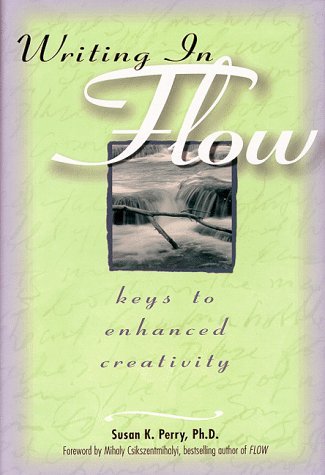
After my Ph.D. was turned into a bestseller (WRITING IN FLOW), I wrote five more books before realizing I had to try my hand at fiction. A decade went by, revising, resubmitting, all that necessary stuff.
My first novel KYLIE'S HEEL was published by Humanist Press. It got some cool kudos, which is certainly gratifying. Selling a small press book to the public is really hard though. (Especially for an introvert.)
I read tons of novels, blog about some of them and their authors on my Creativity blog at PsychologyToday.com. My two kids are grown, and my poet husband died not very long ago.
Keep an eye out for my latest, not quite ready, a memoir called Unoriginal Sins. Coming soon.
You can tell this was a PhD thesis based on interviews with established authors, then reworked into a manual for interested writers. But that isn't a bad thing. This book really influenced the way I understand writing as a first-person activity, and also the way I practice and critique it. I knew I went into flow states, though I didn't know they were called that - I'm yet another example of someone who writes partly to chase that trance - but I didn't feel I had any control over it. After this book, writing has became a habit I try not to overdo at the expense of other demands, rather than what it was before, something I tried to get around to and often enough did.
This is by far the best source of information on the topic that I know of, likely as much as you'll want to know and more. It demystifies the factors that lead to or impede flow, as reported by many successful writers - some of whom experience flow often, others never.
It's clearly written in a pleasant style. This is not an abstruse or overtly academic book, despite its origins. I'd call it gently academic. It's more practical; the advice can be applied by anyone. Takeaways from the different interviews are presented in sequence, and the chapters are full of snippets from the respective authors. But the audience is perhaps narrow, let's say select. If the idea of being fully absorbed to the point of lost in the act of writing is interesting to you, and you don't mind an easygoing but researchy/interviewy read, you might find it completely fascinating.
I was already writing relatively often because I liked being in flow. For me the first time I remember was in 4th grade, when I was writing a story for an assignment. After a bit of thinking about the setting and basic plot - some effort to get started - I found that I was lost in the story I was reading, forgetting where I was, all that stuff I enjoyed about reading a good book - only I was writing it. If you want to discover that experience, I can't say whether this book would help someone who doesn't know what it's like, at least while writing. But reading this might work well, as the tips are based on patterns found in the data. Like most of psychology, flow feels like magic but isn't actually magic. There are parameters, metaphorical knobs and dials. If that kind of thing, thinking at all mechanistically about experience, puts you off - if understanding the biology of a flower degrades your experience of the beauty of the flower - you might not like this book. That isn't how I am (the flower often gets more beautiful) so I loved it. But the book is undeniably informative.
A key fact came out of the research: being in flow does not correlate with writing better. You may feel that what you wrote all at once, easily and fluently, is better than what you chiseled together, painfully, against the current and the tide and the prevailing winds and all the other demands in life - but that isn't how it works. Writers who experience flow are not more or less capable than writers who don't. The same goes for writing sessions in which flow was present or absent: flow doesn't tell you about whether the result is good or bad (or even whether it reads smoothly). However, flow does correlate with enjoying writing, and writing more. So there are more professional writers who go into flow than who don't - people who find "the zone" enjoy writing, write more, and get better.
Flow is something you can influence - hence the value of this book. But note that Writing in Flow is specifically about the feeling of flow while writing, rather than a reader's impression that the writing flows well. Two different kinds of flow! Sometimes they do seem to align, other times definitely not. Just removing that preconception - "It flowed when I wrote it, so it must flow for a reader" - is helpful.
I do believe there is something to the words that come naturally, and this is why redrafting often works better than just tinkering in a word processor. But that isn't necessarily a question of psychological flow states. I'm guilty of almost never redrafting - I tinker to hell, but I know it's an issue. Most writers swear by reading out loud, which gives your ear a snapshot of the language fluency, and starting at the top and writing the thing over. Again, that's a concern closer to the other kind of flow - the reader's. You don't have to be in a trance to put the reader in a trance, and if you are, it doesn't necessarily translate.
Earlier I had this rated at 4 stars because it eventually gets less exciting, like any news article or journalism piece with an inverted pyramid structure (most important info first). But on reflection, that's quite all right, and I think the many exciting bits are far more representative, and ultimately a book that strongly influenced how I see and live deserves the hat-tip.
I would love for all the time I spend writing to be in flow. I tried to read this book to glean some techniques for getting into and staying in flow. Every time I picked up this book to read at least one chapter, I would fall asleep. Even in the afternoon! Lots of examples of poets who I never heard of (including most often, the author's husband) and other writers who I may have heard of, and their experiences of getting into or not getting into flow. Couldn't finish. Didn't help.
If you've read Csikszentmihalyi's "Flow", you might be tempted to read this for more insight. Unfortunately, unless you've never attempted a regular writing practice and experimented with what works for you, this book won't teach you anything. The basic gist: getting to "flow" is different for every writer (never mind the ones who say it never happens to them, doesn't exist, or isn't desirable). If you write, try different things in your routine to see if you can get "flow" to happen more often: that's it. The more interesting parts of the book are direct quotes from writers that partially serve to illuminate their own writing practices; I like reading writers on writing, but that's less than what I expected with this promising title, which purports to hold out the "keys" to flow. These turn out to be undefinable on a personal level, and can be discovered individually by common sense trial and error. Good for beginning writers.
Writing in the Flow is the most extensive and readable book on writing I have read in a very long time. In the beginning, it was too much! Too many sources, and interviewees. Then I discovered it was her dissertation and appreciated the work and the style much more, valuing her extensive sources of personal varieties. Because of all the examples, I was able to feel very comfortable with my ways of writing. The Inner Critic is currently unemployed! The when, how, and why to write are thoroughly covered. My Flow became more definite and possible. Perry is very very readable and encouraging. Great read. Great author.
I really enjoyed this book and finally understand the word flow from a writer's perspective. I do know what flow is in terms of creating but this book focuses only on writing. For years I've heard writers talk about writing in the flow and I never really understood what they meant, like they also wrote when not in the flow. And the flow is a gift.
Well, I kind of live in the flow, because I am always present in what I do. So it all makes sense to me now. I do recommend it and I think writers should read it. I bought a used copy.
There are two aspects to flow. One is you do stop time in a way. When you are working in flow, you don't think about time at all. The second thing is you are not aware of other things, say, hunger or sometimes even pain. For example. I've been writing all day and I had not drank my water, forgot to pay my bills, and even didn't eat until after four in the afternoon. Flow did that. And if you can achieve flow as a writer on demand, you will not have to wait for inspiration. Smiling. And you will enjoy the process so much more.
Process and purpose will become everything. Achievement won't matter, and you will quit counting words. Laughing.
I can't imagine there being anything else Susan K. Perry could have said about writing in flow. So much of what she wrote rang true to me, and it was a good feeling to know that some of my quirks are shared with professional writers. It's nice to just feel a little more normal sometimes, even if being normal means relating to an eccentric group of people. From the advice given in this book, I believe I can now relax and let the writing process happen naturally, as opposed to working so hard at writing what I believe everyone expects of me.
As an author - and a professor - I enjoyed this book by Dr. Susan Perry. She explains the concept of Flow - "the inspired freedom and creativity achieved when you lose yourself completely in an activity" - like writing and then through the book she suggests ways to help an individual move into flow. It might be a little lengthy and subject-oriented for some … but, of course, as a writer I enjoyed it - identifying with many of Perry's observations and thoughts - and gaining some insights I might use in my work.