A wild and brilliant tale by the winner of the Man Booker Prize and one of our most original storytellers. On a Tuesday in terror-struck London, Blair and Bunny Heath become the first adult conjoined twins ever successfully separated. On a Tuesday in the war-torn Caucasus, Ludmila Derev accidentally kills her grandfather. By December, they find themselves trudging together through a snow field, staring down the barrel of a rebel's gun.
Ludmila sets out on a journey west to save her family from starvation and marauding Gnez troops. Hers is an odyssey of sour wit, even sourer vodka, and a Soviet tractor probably running on goat's piss. The Heath twins are released from a newly privatized institution rumored to have been founded for an illegitimate royal baby. They are plunged into a round-the-clock world churning with opportunity, rowdy with the chatter of freedom, self-empowerment, and sex. Dangerous cocktails and a Russian Brides Web site throw these unforgettable characters together with explosive results.
DBC Pierre's second novel confirms his place in the ranks of today's most audacious and acclaimed novelists.
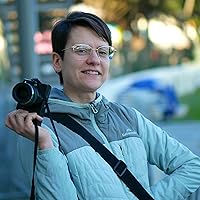
DBC Pierre is an Australian-born writer currently residing in Ireland. Born Peter Warren Finlay, the "DBC" stands for "Dirty But Clean". "Pierre" was a nickname bestowed on him by childhood friends after a cartoon character of that name.
Pierre was awarded the Booker Prize for fiction on 14 October 2003 for his novel Vernon God Little.
He is the third Australian to be so honoured, although he has told the British press that he prefers to consider himself a Mexican.
One of the 'critic' reviews called this book 'brilliantly insane'; personally I found the use of the first adjective superfluous, 'cos this book was just nuts. Two formerly conjoined twins are pushed out of their Government funded home during a crisis, and struggle to live any kind of remotely normal life; way over in an unnamed Russian republic Ludmila seeks a new life after an attempted rape by her grandfather spurs her towards change, well that and an ever nearing civil war! This book is about the journey's both took and how they came to cross paths. Kind of feels overwritten, trying too hard to be shocking, funny and smart. It's always a tough call, writing a second book after your first (Vernon God Little) gets so many plaudits. The big question is would I read it again? And garn dammit I think I would, if only to make more sense of it, as it does feel like there is a great story in here? 5 out of 12, Two Stars, on first and only reading so far. 2019 read
DBC Pierre's début, Vernon God Little, was shot down in flames by practically all my friends who'd read it, for being "too clever". Sod them, with friends like that I'm better off drinking myself to sleep alone every night. Anybody who knows what's good in the world will naturally acknowledge Vernon for the brilliantly twisted, inspired triumph of writing that it is.
Making such a pat judgement about Ludmila's Broken English is harder, simply because it's obviously the less focussed of the two books, the one given to more exciting flights of imagination and, simultaneously, the one suffering from a plot which gets uncomfortably close to breaking down at several points and whose conclusion seems hurried and forced, as if old Pierre simply ran out of juice and decided to put an end to it all with the first thing he could think of, only just slightly short of the "...and then I woke up" twist favoured by so many aspiring magazine contributors.
In any case, if you're me - which you're not - you'd put reckless fantasizing over such plodding virtues as tight plotsmanship, and LBE works because it can be read "live", simply by going through one absurdist situation after another and taking them as they come, disregarding the - frankly, artificial - notion that all of this must somehow add up perfectly in the end.
The settings and the characters are theatrical and very much the product of Pierre's clearly indisciplined and colourful head, which isn't to say that the book is one large exercise in self-indulgence - there is more realism, more genuine pain and hurt, in there than I'd initially given the man credit for.
Oddly, I find reading Ludmila's Broken English to be an experience closer to listening to a record than to reading a novel. The pleasure lies in the individual scenes and dialogues rather in the overall story, which I can take or leave, which is in sharp contrast to his début, which hinges around the plot as much as around the details. This novel is a little like all the bootlegs, B-sides and live albums I'm so fond of, wild and creative without a sharp editorial hand behind it, not something I'd recommend as a starting point to the artist by any means, but something which I've grown much more fond of over the years than the acknowledged "classics".
In the interests of fairness, I will add, however, that some of the stabs at political satire aren't exactly subtle. And the ending might be the most frustrating one I've read in years.
That's a petty quibble, though. I'm glad this book exists and that I have it. It's a little, mad, grotesque world and it's good fun to escape into now and then.
This book has me ready to create a new shelf: Didn't Finish Because It Sucked.
Booker Prize?? THIS?? Christ, the dialogue sounds like a constant drunken row between wasted old men in an Irish pub, and the plot sounds like something a drunk Irish guy dreamt up in some perverse dream while he spent the night sleeping it off in a ditch.
So this book carried moments of humor and scope and tossed in a few scenes of shock and controversy, but fundamentally it came across as a sophomore effort that was rushed to market on the heels of the success of its predecessor. Muddled and wandering and just not very good. Definitely my least favorite of Pierre’s work.
no stars (well one)! i read it because his first (curious interest) ws so good! this was crap, i don't think he worked on it at all or maybe that's exactly what he did. anyway the story is crap, the atmosphere is shit, and it is just not worth reading.
In a reversal of the themes of one of the plot strands, the novel really comes alive when the two disparate, alternating plot strands eventually conjoin. There’s a Bruce Robinson-esque note of English squalor colouring one half and a ragged borscht of Russian clichés colouring the other — and neither is entirely successful — but there’s enough flavour in the situations and the gleefully perverse prose to sustain interest, despite its descent into grottiness becoming too all-consuming at points.
The first 150 pages reads like a catalogue of well-crafted insults marinated in overworked metaphors and clunky purple prose. Thereafter, there is a 100 pages of the Benny Hill soundtrack-type plot development followed by some senseless violence and a twisty coda. Disappointing reading after enjoying Vernon God Little so much.
The author has a twisted sense of humour and this is evident in his award winning Vernon God Little but this is nowhere near as good unfortunately. I enjoyed it and will seek out his other books. According to other reviews he redeems himself in his next book. Would I recommend it? That's a difficult question. I suppose after enjoying Portnoy's Complaint so much I'm slightly let down by an author who writes subversive books. I have a hangover from the previous book.
Lights Out in Wonderland is one of my favourite books, so I had high expectations for LudmiIa. But this was a slog and failed to engage until nearly the end. I kept thinking it would make a much better film than it is a book. It's so dialogue driven and I found that the dialogue just isn't sufficient to keep it going. The last third was much better than the previous two thirds and left me really wishing there was more of the same so that I knew more about the characters I'd plodded along with for what seemed like a very very long time.
I started reading this book because I read "Vernon God Little" and really appreciated the story and the language. So I was really disappointed by "Ludmila's Broken English". What a crap. Unbelievable that anyone had published that shit. Apart from the fact that I really "love" how the people from Western world imagine living in the Eastern Europe. You have no clue, really, so concentrate on writing about what you may have idea about. Don't bother to read it – spectacular waste of time.
If I hadn’t loved Vernon God Little so much, I wouldn’t have stuck with this. The Russian stuff worked just fine but the different stories coming together lacked any sense of recognisable humanity. This felt to me like an attempt to step into Irvine Welsh’s more extreme fantasies, but it lacked the verve, charm and cohesion.
I certainly haven’t given up on DBC Pierre but I’ll give it a while before the next one.
I've been reading some of the many books I've accumulated over the years, and this one showed much promise. Back when I bought it, I'd read only good reviews for it, but when I browsed through GR's reviews for it last night, I saw many people weren't impressed by it. My feelings about it are somewhere in-between. I never read the author's earlier, award-winning Vernon God Little, so I have nothing to compare this one with. The plot is simple. On one side, an adult pair of conjoined twins are finally separated and released into the wild, aka London, after growing up in a care facility. To say they're naive would be an understatement. On the other side, specifically the Caucasus area of Russia where a war is being waged, a young woman sets out to find work to help her impoverished family. Throw in the twins discovering the joy of spiked cocktails and a Russian bride scam, and we get an intriguing farce that never fully gels.
The book was entertaining, thanks to the author's deft use of words and similies, but the ending, with the last chapter making a time jump of at least a few years, leaves too many questions needing answers for my taste. This is one book I really wish was better.
My five-star rating is a rebellion against all those readers who aren't giving this book the love it deserves.
As a journalist, I am generally instructed to write clear, simple text that may venture into the realms of "colour", in some fairly tightly bounded ways, but God forbid should it do anything weird.
So I'm doing the literary equivalent of fancying the bad boy and fawning over the bizarre prose of this novel. I've read reviews of this book that say DBC Pierre can do texture, but not plot. I contend that there might be some truth to this, but for those of us who like to luxuriate in the weird, the writing alone is enough. For those who don't, jog on.
Thematically, Pierre swings between lampooning bad writing about third-world poverty and lampooning hopelessly mediocre British men with more than a passing resemblance to certain prime ministers. The ending is appropriately savage. There are certainly some plot points that don't make sense or are simply not explained, but if Philip K Dick can do it and go down as a sci-fi genius then I don't see why this guy can't. I will die on the hill that anyone who likens their character's hand to "a bundle of baby geckos" is worth reading.
Ожидала что-то типа "Истории тракторов по-украински", но оказался стопроцентный Ди Би Си Пьер, ни больше ни меньше. История развивается в двух локациях, Англии и одной из кавказских республик России, просто господи, я не буду эти выдуманные австралийцем "русские" названия. Выросшие в тепличных условиях в английском пансионате сиамские близнецы, разделённые в возрасте за 30, "отрываются", первый раз оказавшись на свободе от пансионата и как бы друг друга. В это время под тенистыми кустами клюквы в стране, где не бывает лета, Людмила и её семья выживает между рейсами хлебного поезда. Как ни странно, если откинуть весь трешняк, характер российского быта описан очень точно. Нет, английский быт тоже утрирован до невозможности - тут автор продавливает тему мусульманских мигрантов. История Золушки, рассказанная так, как вы точно не хотели прочитать. Я не очень хотела.
The storyline of this novel fails to hold any interest at all, but that is not the worst aspect of this book. What makes the book truly painful to read is that every single character has the same personality. They are all cynics, whose every word drips with aggressive sarcasm as they interact with one another. One or two sarcastic cynics as characters in a book can make it amusing. Having all characters take on this kind of persona makes it merely tiresome. The blurb on the back of the book led me to hope I might find some interesting social criticism of the exploitation of people in developing countries by lecherous, wealthy foreigners. Sadly, the book never rises to such lofty heights.
Elements of this are mildly funny, but most of the time it’s actually quite difficult to feel anything much for the twins, or fully understand their mission and predicament. Parts are shocking, but not written as such. Written as the every day abuses that every day people suffer the world over. Whereas for others, the suffering is over lack of a warm drink, a meal, and some home comforts. In some respects thought-provoking, in others numbing.
No rating. I have loved most of DBC Pierre's books (this is the last one to read in fact) but I just can't do it right now. Blame 2020, but I need something a little lighter.
So far it's dealt with incestuous rape, desperate prostitution and the breaking down of a relationship between two ex-conjoined twins. And I know it's going to get worse. Or better. Depends what your thing is.
This is a darkly funny piece of writing. At times, the language bedazzles. There is a manic, gonzo edge to this book. I should have liked it more. However, as a novel it doesn't quite work; the whole is not better than the smaller pieces. Add half a star for the originality and seriously funny dialogue that shines brightest.
3,5 stjerner For ei reise denne boka tok meg med på. Skrive på både russisk og engelsk dialekt, noko som gjorde det vanskeleg å få med seg handlinga til tider. Kan og sei at D.B.C er hakket meir glad i adjektiv enn det eg er, noko som resulterer i nokre svevande og meiningslause setningar. Fantastisk og originalt plot.
Disappointing after the fabulous Vernon God Little. Gory picaresque set in UK and a beleaguered poverty-stricken, war-torn state, often confusing. That said, some stunning descriptions and one-liners make it worth the read.
A bitter disappointment after Vernon God Little. It felt as if DBC Pierre were attempting to write a masterpiece. It clearly isn't. Forced and stilted dialogue, unrealistic characters and a poor story. Quite the worst book I have read for some time.
I gave this book every opportunity to appeal but I just didn’t get it. The language was intriguing but the characters and storyline didn’t gel, even as unlikeable, weird or unconventional. Didn’t get it.
Wanted to enjoy it but it was too slapstick with an unnecessarily messy and unthought out ending. Hard to read and follow the story most of the time. Curious to read more by the author in hopes of changing my opinion of him.
I liked the idea of the plot - as explained on the back cover - and the first chapter read well. But not too far along (second and third chapters?) the writing descended into tedious crudity, with the overbearing addition of intrusive similies. Tedious indeed. Yet another DNF for me.