

What do you think?

The Yellow House on the Corner
The debut collection of poetry by Rita Dove.
72 pages, Paperback
First published January 1, 1980
About the author
Rita Dove
99 books265 followersRita Dove, former U.S. Poet Laureate, Pulitzer Prize winner, and musician, lives in Charlottesville, where she is Commonwealth Professor of English at the University of Virginia.
Ratings & Reviews
Friends & Following
Create a free account to discover what your friends think of this book!
Community Reviews
Displaying 1 - 12 of 12 reviews

November 10, 2016
I enjoyed individual poems from this former U.S. poet laureate’s debut (from 1980), but it didn’t feel like a thematically linked collection. For instance, Part III is composed of poems about slavery, including some monologues, while Part V (the best, I thought) has poems reflecting on travels plus a few gently erotic ones.
My two favorites were “Champagne” (“not an industry to speak of, just / an alchemy whose yield is pleasure”) and “Notes from a Tunisian Journal” (“The camels stand in all their vague beauty— / at night they fold up like pale accordions”).
Other great lines:
My two favorites were “Champagne” (“not an industry to speak of, just / an alchemy whose yield is pleasure”) and “Notes from a Tunisian Journal” (“The camels stand in all their vague beauty— / at night they fold up like pale accordions”).
Other great lines:
“Each inconsolable thought sprouts / a tear of salt which blossoms, / sharpens into a razored petal.” (from “The Sahara Bus Trip”)
“Sometimes // a word is found so right it trembles / at the slightest explanation. / You start out with one thing, end / up with another, and nothing’s / like it used to be, not even the future.” (from “Ö,” which closes the collection)

November 10, 2022
1.5
Not great.
Not great.

June 21, 2024
3.5/5
What makes a poem Black? In her book Renegade Poetics: Black Aesthetics and Formal Innovation in African American Poetry, Evie Shockley took on that very question. “Black poetry” evokes a picture of crooning men in sultry and static bars with jazzy trumpets ejecting notes carrying infectious blues. Who could hear “Black poetry” and not think of Amiri Baraka at the lectern reciting ‘Somebody Blew Up America,’ or Maya Angelou’s performance of Waring Cuney’s ‘No Images.’ Black poets, it is often imagined, are never “visiting the world,” to use Gwendolyn Brook’s phrase – they are always staying at home, and with the home topics of America, racism, slavery, the white man, and Black excellence. Rita Dove’s critical reception has been as one of the few Black poets with a passport, a framing which has generated both praise and stultified much of the critique of her work.
Dove’s debut poetry collection The Yellow House on the Corner, written during her time at the Iowa Writer’s Workshop has somewhat been dismissed by her as an “apprenticeship work,” suggesting that it doesn’t capture her authentic poetic voice, but in many ways it is a sort of roadmap for her career. It is divided into 5 parts loosely connected by their thematic preoccupations – a structure Dove will return to in later works. Dove’s mode in this collection is often surrealist confessional – though not confessional in the manner of Sexton, Plath, and Lowell – she is not revealing ugly/abject feelings, but rather she sits with the mundane and sometimes banal, heightening them to mythic and absurd proportions though really, her poetry is very diverse and resists being labelled as one thing. The first poem in the collection ‘This Life’ presents one of her major themes: love and the way it may be interrupted by departures, much like the central preoccupation of June Jordan’s Haruko.
As a child, I fell in love
with a Japanese woodcut
of a girl gazing at the moon.
I waited with her for her lover.
He came in white breeches and sandals
In a leap of imagination, her wood cut becomes animated. In another swift leap of imagination she finds herself transported into the scene by the end of the poem. The last line “I a stranger/in this desert,/nursing the tough skins of figs” calls to mind Japanese traditional myths. Many critics have found this poem possessed of a strange identification – this is, of course, because Dove is a Black poet. The identification is only strange if you view the primary preoccupation of The Yellow House to be identity, which many critics have. Malin Pereira, for instance, calls the collection “a cultural mulatto poetic with attendant anxieties.” However the identification is not with the Japaneseness of the woodcut, it is with the love and waiting – a theme that pops up in a number of poems: her six part love poem ‘A Suite for Augustus,’ (which looks forward to her magnum opus 'Thomas and Beulah') the poem ‘Happenstance,’ and the poem ‘Then Came Flowers’ for example. Identity is most certainly an undercurrent in the collection – not always racial/cultural but sometimes just navigating growing up, as in the adolescence poems in the fourth part. However, to my eye, it takes a back seat to more salient themes of love and travel. One of my favourite poems in the collection ‘The Sahara Bus Trip’ blends the two themes with an elliptical narrative and Bishopesque effect.
What has suffused most of the understanding of the book and has led to the interpretation that the collection is about Dove’s insecurity in her identity is the third part of the collection which is thematically preoccupied with slavery. Dove attempts historical fiction à la Toni Morrison in this section but a number of the attempts feel awkward. Helen Vendler calls this section Dove’s attempt “to school herself in black historical memory.” She especially takes her to task for the poem ‘The Slave’s Critique of Practical Reason’ which begins in Vernacular English and then abruptly drops it:
Ain’t got a reason
to run away –
leastways, not one
would save my life.
So I scoop speculation
Into a hopsack.
The poems which try to play with diction are mostly unsuccessful. Dove is at her best when she turns to the elemental, as in the poem in this section ‘Pamela,’ which is a slave escape narrative that uses the natural scene to capture the emotions of the eponymous escapee. The woods hissing with cockleburs creates the sense of danger, the gorgeous image “the stars were plates/for good meat” evokes hope. I prefer her engagements with Blackness outside of this section of the collection – especially the daring poem ‘Nigger Song: An Odyssey’ which calls to mind Jean Toomer’s Georgia Dusk and has a great thumping rhythm, as well as her critically acclaimed and controversial poem ‘Upon Meeting Don L. Lee, In A Dream.’ The latter is an Oedipal response to Black male militants, as well as a Bloomian Anxiety of the Influence poem that strikes me as particularly indicative of Dove’s general style in the collection. In it she confronts a fictional Haki Madhubuti/Don L Lee who is stuck in the past. For this reason, he erupts:
…his eyesballs
Burst into flame. I can see caviar
Imbedded like buckshot between his teeth.
His hair falls out in clumps of burned-out wire
The music grows like branches in the wind.
Again we see the surrealism with even greater jumps and stronger imagery than in the first poem, ‘This Life.’ It is cinematic, rather than metaphorical and as in some of the stronger poems in Part three she intertwines violence and serenity to chilling effects. Her recurring images are tears, oranges, rabbits, birds, various plays with light.
Dove is a great poet of serenity, for this, at times, few of the poems can be too cute and because there are so many of them and they are quite curiously ordered, the collection can be at rare times a mixture between disorienting and soporific. I liked many of the poems individually but next to each other some felt out of place. Yet it is safe to say that it is hard to come by debut poetry collections of the calibre, personality, and formal maturity. While I am glad we get to see all these poems as they are, I think the collection would have benefited from editing, removal and reordering to produce more of a seamless journey.
Bearing love, danger and life, Dove attends to much more than identity. She is a true imagesmith, bringing forth the perfected signs and to some readers I can most definitely see her lack of restraint as part of her charm.
Poems I will be returning to:
Robert Schumann, or: Musical Genius Begins With Affliction
Upon Meeting Don L. Lee, In A Dream
Nigger Song: An Odyssey
Geometry
The Secret Garden
A Suite For Augustus
Pamela
Adolescence – I
Adolescence – II
Nexus
The Sahara Bus Trip
His Shirt
Great Uncle Beefheart
What makes a poem Black? In her book Renegade Poetics: Black Aesthetics and Formal Innovation in African American Poetry, Evie Shockley took on that very question. “Black poetry” evokes a picture of crooning men in sultry and static bars with jazzy trumpets ejecting notes carrying infectious blues. Who could hear “Black poetry” and not think of Amiri Baraka at the lectern reciting ‘Somebody Blew Up America,’ or Maya Angelou’s performance of Waring Cuney’s ‘No Images.’ Black poets, it is often imagined, are never “visiting the world,” to use Gwendolyn Brook’s phrase – they are always staying at home, and with the home topics of America, racism, slavery, the white man, and Black excellence. Rita Dove’s critical reception has been as one of the few Black poets with a passport, a framing which has generated both praise and stultified much of the critique of her work.
Dove’s debut poetry collection The Yellow House on the Corner, written during her time at the Iowa Writer’s Workshop has somewhat been dismissed by her as an “apprenticeship work,” suggesting that it doesn’t capture her authentic poetic voice, but in many ways it is a sort of roadmap for her career. It is divided into 5 parts loosely connected by their thematic preoccupations – a structure Dove will return to in later works. Dove’s mode in this collection is often surrealist confessional – though not confessional in the manner of Sexton, Plath, and Lowell – she is not revealing ugly/abject feelings, but rather she sits with the mundane and sometimes banal, heightening them to mythic and absurd proportions though really, her poetry is very diverse and resists being labelled as one thing. The first poem in the collection ‘This Life’ presents one of her major themes: love and the way it may be interrupted by departures, much like the central preoccupation of June Jordan’s Haruko.
As a child, I fell in love
with a Japanese woodcut
of a girl gazing at the moon.
I waited with her for her lover.
He came in white breeches and sandals
In a leap of imagination, her wood cut becomes animated. In another swift leap of imagination she finds herself transported into the scene by the end of the poem. The last line “I a stranger/in this desert,/nursing the tough skins of figs” calls to mind Japanese traditional myths. Many critics have found this poem possessed of a strange identification – this is, of course, because Dove is a Black poet. The identification is only strange if you view the primary preoccupation of The Yellow House to be identity, which many critics have. Malin Pereira, for instance, calls the collection “a cultural mulatto poetic with attendant anxieties.” However the identification is not with the Japaneseness of the woodcut, it is with the love and waiting – a theme that pops up in a number of poems: her six part love poem ‘A Suite for Augustus,’ (which looks forward to her magnum opus 'Thomas and Beulah') the poem ‘Happenstance,’ and the poem ‘Then Came Flowers’ for example. Identity is most certainly an undercurrent in the collection – not always racial/cultural but sometimes just navigating growing up, as in the adolescence poems in the fourth part. However, to my eye, it takes a back seat to more salient themes of love and travel. One of my favourite poems in the collection ‘The Sahara Bus Trip’ blends the two themes with an elliptical narrative and Bishopesque effect.
What has suffused most of the understanding of the book and has led to the interpretation that the collection is about Dove’s insecurity in her identity is the third part of the collection which is thematically preoccupied with slavery. Dove attempts historical fiction à la Toni Morrison in this section but a number of the attempts feel awkward. Helen Vendler calls this section Dove’s attempt “to school herself in black historical memory.” She especially takes her to task for the poem ‘The Slave’s Critique of Practical Reason’ which begins in Vernacular English and then abruptly drops it:
Ain’t got a reason
to run away –
leastways, not one
would save my life.
So I scoop speculation
Into a hopsack.
The poems which try to play with diction are mostly unsuccessful. Dove is at her best when she turns to the elemental, as in the poem in this section ‘Pamela,’ which is a slave escape narrative that uses the natural scene to capture the emotions of the eponymous escapee. The woods hissing with cockleburs creates the sense of danger, the gorgeous image “the stars were plates/for good meat” evokes hope. I prefer her engagements with Blackness outside of this section of the collection – especially the daring poem ‘Nigger Song: An Odyssey’ which calls to mind Jean Toomer’s Georgia Dusk and has a great thumping rhythm, as well as her critically acclaimed and controversial poem ‘Upon Meeting Don L. Lee, In A Dream.’ The latter is an Oedipal response to Black male militants, as well as a Bloomian Anxiety of the Influence poem that strikes me as particularly indicative of Dove’s general style in the collection. In it she confronts a fictional Haki Madhubuti/Don L Lee who is stuck in the past. For this reason, he erupts:
…his eyesballs
Burst into flame. I can see caviar
Imbedded like buckshot between his teeth.
His hair falls out in clumps of burned-out wire
The music grows like branches in the wind.
Again we see the surrealism with even greater jumps and stronger imagery than in the first poem, ‘This Life.’ It is cinematic, rather than metaphorical and as in some of the stronger poems in Part three she intertwines violence and serenity to chilling effects. Her recurring images are tears, oranges, rabbits, birds, various plays with light.
Dove is a great poet of serenity, for this, at times, few of the poems can be too cute and because there are so many of them and they are quite curiously ordered, the collection can be at rare times a mixture between disorienting and soporific. I liked many of the poems individually but next to each other some felt out of place. Yet it is safe to say that it is hard to come by debut poetry collections of the calibre, personality, and formal maturity. While I am glad we get to see all these poems as they are, I think the collection would have benefited from editing, removal and reordering to produce more of a seamless journey.
Bearing love, danger and life, Dove attends to much more than identity. She is a true imagesmith, bringing forth the perfected signs and to some readers I can most definitely see her lack of restraint as part of her charm.
Poems I will be returning to:
Robert Schumann, or: Musical Genius Begins With Affliction
Upon Meeting Don L. Lee, In A Dream
Nigger Song: An Odyssey
Geometry
The Secret Garden
A Suite For Augustus
Pamela
Adolescence – I
Adolescence – II
Nexus
The Sahara Bus Trip
His Shirt
Great Uncle Beefheart

February 6, 2026
Nexus
I wrote stubbornly into the evening.
At the window, a giant praying mantis
rubbed his monkey wrench head against the glass,
begging vacantly with pale eyes;
and the commas leapt at me like worms
or miniature scythes blackened with age.
The praying mantis screeched louder,
his ragged jaws opening onto formlessness.
I walked outside;
the grass hissed at my heels.
Up ahead in the lapping darkness
he wobbled, magnified and absurdly green,
a brontosaurus, a poet.
I wrote stubbornly into the evening.
At the window, a giant praying mantis
rubbed his monkey wrench head against the glass,
begging vacantly with pale eyes;
and the commas leapt at me like worms
or miniature scythes blackened with age.
The praying mantis screeched louder,
his ragged jaws opening onto formlessness.
I walked outside;
the grass hissed at my heels.
Up ahead in the lapping darkness
he wobbled, magnified and absurdly green,
a brontosaurus, a poet.
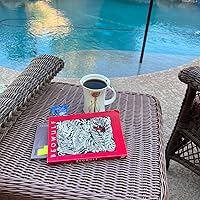
February 28, 2024
Parts of these poems made me ache they were so perfect. If this was her debut collection, I cannot wait to read her other volumes.
“Sometimes a word is found so right it trembles at the slightest explanation.”
Ö by Rita Dove
“Sometimes a word is found so right it trembles at the slightest explanation.”
Ö by Rita Dove

September 6, 2017
Sometimes I just like to read a little poetry. I like how Rita Dove uses words and language, so I re-read a few old favorites. Nice.

July 2, 2020
Some stunning, mature work, particularly for a debut collection. The series of poems about enslaved people is powerful and diverse, and Dove's poems about adolescence are beautiful.

September 30, 2023
do i know what i just read? no. will i have to reread this like 5 times to understand it? yes. did i enjoy it? also yes. talked about race, slavery, and white supremacy

Read
February 3, 2015Rating: 3 1/2
Ms. Dove's debut collection, and it seems like it. Her accessible language / writing style, her humanity, her ability to write as a black person without excluding white people - all these positive attributes are present. But it's also a somewhat boring collection. I can see how her potential had yet to be fully realized.
The best of the collection:
"Notes from a Tunisian Journal"
"The Sahara Bus Trip"
"His Shirt"
All three pieces are from the fifth and final section, whatever that means.
Moments slip by like worms. - "Upon Meeting Don L. Lee, In a Dream"
Ms. Dove's debut collection, and it seems like it. Her accessible language / writing style, her humanity, her ability to write as a black person without excluding white people - all these positive attributes are present. But it's also a somewhat boring collection. I can see how her potential had yet to be fully realized.
The best of the collection:
"Notes from a Tunisian Journal"
"The Sahara Bus Trip"
"His Shirt"
All three pieces are from the fifth and final section, whatever that means.
Moments slip by like worms. - "Upon Meeting Don L. Lee, In a Dream"

November 14, 2015
I wanted to read some poetry by Rosa Parks, but the book listed available at the library wasn't there. I picked this Rita Dove book by chance because she was listed as the person who organized the collection of poetry by Rosa Parks. I liked how Rita Dove created historical fiction poems. There were some love poems, travel poems, and adolescent poems. I didn't find myself enthralled in it like my favorite poets. There are so many high ratings I wondered if there was something I wasn't understanding. I just don't think poetry, at least this collection, is my cup of tea. Her work has been printed in many publications, so she is definitely someone to try and read.

July 17, 2009
I read some of these poems while drunk after work on weeknights and they’d strike me as painstakingly rendered and spare with images that sometimes force me to rethink and reconsider the objects she's describing – everything I look for in poems. It's truly impressive when an author, using only words, compels a reader to see things in the world as if for the first time.
Therefore, 4 stars: plus 5 for making sense to a drunk man and making him think the world is beautiful, minus 1… for making sense to a drunk man and making him think the world is beautiful.
Therefore, 4 stars: plus 5 for making sense to a drunk man and making him think the world is beautiful, minus 1… for making sense to a drunk man and making him think the world is beautiful.

June 25, 2012
Good, but didn't have the impact her later books bring. Solid first book, though.
Displaying 1 - 12 of 12 reviews