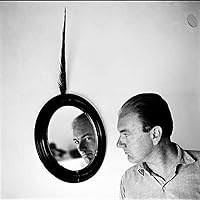
Internationally acclaimed Austrian novelist, playwright, and memoirist Thomas Bernhard (1931-1989) has been compared to Kafka and Beckett, and critics have ranked his novels among the masterpieces of the twentieth century. But in fact he began his career in the 1950s as a poet, publishing three books of well-received verse before turning to fiction. In Hora Mortis / Under the Iron of the Moon is the first book of his expressionist-like poetry to be published in English. Bringing together Bernhard's second and third books of poetry, the collection's short, untitled lyrics reveal his early explorations of themes that would continue to preoccupy him in his novels, plays, and other writings--especially his intense ambivalence toward the land and people of Austria and their then-recent Nazi past. As the translator James Reidel writes in his preface, "Bernhard found Austrian soil . . . to be like a hair shirt and a blanket. It is a killing ground but with a postcard setting." In poems that both subvert and pay homage to such influences as Georg Trakl, Bernhard begins to develop his characteristic dark humor while exploring themes of nature, death, meaninglessness, and faith.
Thomas Bernhard was an Austrian writer who ranks among the most distinguished German-speaking writers of the second half of the 20th century.
Although internationally he’s most acclaimed because of his novels, he was also a prolific playwright. His characters are often at work on a lifetime and never-ending major project while they deal with themes such as suicide, madness and obsession, and, as Bernhard did, a love-hate relationship with Austria. His prose is tumultuous but sober at the same time, philosophic by turns, with a musical cadence and plenty of black humor.
He started publishing in the year 1963 with the novel Frost. His last published work, appearing in the year 1986, was Extinction. Some of his best-known works include The Loser (about a student’s fictionalized relationship with the pianist Glenn Gould), Wittgenstein’s Nephew, and Woodcutters.
Thomas Bernhard’ın nadir şiir kitaplarından biri olan In Hora Mortis, tek bir şiirden oluşuyor. Karakter, tanrı ile konuşuyor; ona yakarıyor, kızıyor, isyan ediyor. Tanrıya da kitap boyunca “Rab” diye sesleniyor.
Kitabın sonundaki açıklamalara göre Bernhard’ın hastanede yattığı bir dönemin sonunda yazdığı bir şiir bu. Çevirmen, Almanca “Herr” kelimesini neden Rab diye çevirdiğini yaklaşık 10 sayfa boyunca anlatmış. Yine de ben bu çeviriden tatmin olmadım. Zaten şiirleri bu kadar açıklamak, irdelemek de anlamsız gelir bana her zaman.
Bernhard’ın ateşli hastalıklı, post ergenlik sanrılarından biri işte! Düzyazılarından devam edelim bitte! :)
Ningún árbol, ningún cielo te consolará, ni tampoco la rueda de molino detrás del crujido de la madera de abeto, ningún ave agonizante ni la lechuza, ni la enloquecida perdiz,
atrás es lejos,
no te protegerá ya ningún arbusto de frías estrellas y ensangrentadas ramas, ningún árbol, ningún cielo te consolará, en las copas de inviernos reventados crece tu muerte de dedos rígidos lejos de la hierba y del bosque salvaje en los conjuros de la nieve recién caída ---
Mañana se cambiará lo que fue por el cielo y la sangre del sol goteará sobre la nieve. No habrá plegaria que me consuele al atardecer ni árbol que me comprenda.
Mi pena tendrá que irse a las montañas y el mirlo me vigilará junto a la tumba reciente.
"Despertarán y habrán sido olvidados en las risas que ruedan de las colinas en la tormenta de los lobos
que sopla hasta convertir sus cabezas de oveja sobre [las humeantes ciudades en polvo. No te conviertas en polvo
en tu hambre insaciable hasta el borde de las estrellas. De noche bailarán con la hoz de los versos y atravesarán sus ojos
en la inmortalidad. No no te conviertas en polvo. Apoya firmemente el timón contra tus huesos y rompe el viento que no llora el Este ni el Oeste, pero aniquila la tortura que nunca los tortura."
My vision torments me Lord and torment makes my heart into a blackbird that does not sing and my writing on the sky someone else’s grass o Lord the star torments me that floats through my sleep with death and morning’s pure soul Lord my vision sees what depresses You and makes my children’s tears into blood o Lord my vision sees that house of walls and the world’s pain perfectly and doesn’t know how to help itself like the tree in winter that silently fells me my word my happiness my weeping.
🌀🌀🌀
Wake up wake up and hear me I am inside You my God wake up and listen to me I am alone with You long burned to ashes and dead in the stone that strikes no fire for me wake up and hear me my God I am already tired from the frost and sad for my day fades and no longer comes anymore what was o Lord I freeze my pain is without end my death soon comes for me.
🌀🌀🌀
I want to praise You my God in this solitude and all fear scatters and every death gives my eyes light my God I praise You for as long as time exists I am no longer alone I am by You and joyful the birds fly apart black and more black their number explodes the moon screams out but I am gone.
🌀🌀🌀
from UNDER THE IRON OF THE MOON
They will wake up and be forgotten in the laughter that rolls down from the hills, in that storm of wolves
that blasts their sheep heads to dust over the smoking cities. O don't you become dust
in your hunger extending inexhaustibly to the stars. They will dance at night to the sickles of verse and pierce their eyes
on the immortality. O don't you become dust. Pull your oars to the bone
and shatter the wind that mourns neither east nor west, but the torment never annihilates those it torments.
🌀🌀🌀
The white flowers of my spring blossom in blood, only grief blows my dying through the wastes, only the grass singing into the sky writes songs where heavy clouds weep somber March days, we no longer are an ear in the river and a prayer in the stone, the rower of the stars dies, and through the brown leaves blue donkeys walk serenely with their empty jugs. When will my God tell me where and when time gets to drive its thorn into my flesh? My hours are burnt out by the night, crumbling walls plunder my heart, I want to blow away, my frost clings to the leaves, my sleep in strange houses, the light in my prayer bores itself insanely into the valley from exhaustion, and a ghost is raised in the summer, the dead upon their grave where the diseased suns of my bleeding lips pull across the green world with its sleepers of red ash a sheet of moon and milk and wind and tears.
🌀🌀🌀
The night falls against the gates of old walls, the moon floats restlessly, the earth seeks to hold on to last summer's frost and stars are white on the mountains, with green eyes, with weary lids the trees stare silently downward.
I bring contempt into the valley and many say that I bear only death and dreams and jealousy in great baskets for the end of the world The stars curse! The day falls strangely into its furrows by the river flowing away in these fantasies with my winter's harsh verdicts.
🌀🌀🌀
The apples roll amid the grass, blood from long winters revels in flowers, the funeral procession tires going up to the cemetery to those endlessnesses burned black that appear from the laughing mouths of the earth.
Over the white of the hills the sun darkens the autumn wind that blows through white fences.
The birds on the wall silently drift away, the flesh sings in the ropes of the soul. All the way down the millwheel makes heart and brain shiver.
Precisamente porque no soy afecta a la poesía, estos poemarios de Thomas Bernhard son como un mensaje cifrado para mí, por una parte. Por la otra, leer poesía traducida es todavía más difícil, dado que solo tenemos la versión del traductor, quien no permite distinguir los juegos de palabras, las segundas intenciones y algunas metáforas de su contenido. Aún así, sin el original, me doy cuenta que el autor usa un estilo clasicista por sus versos libres sin métrica y rima, como lo hacían los griegos y los clásicos latinos. El autor afirmaba en un principio que nunca escribiría en prosa, no obstante que los versos libres son como la prosa, conservando las características propias del verso: creando cortes y encabalgamientos para darle énfasis al significado. El traductor indica que Thomas admiraba a Georg Trakl, poeta de la vanguardia expresionista, decadente y pesimista, y sin embargo, en estos poemarios Bernhard parece apartarse de las vanguardias y trata temas como la fe, su Dios y la muerte. En algunos casos da la apariencia de estar hablando de amor. No es por nada, pero prefiero al T. Bernhard de las novelas autobiográficas.
Before he wrote novels and plays, the young Thomas Bernhard was an accomplished poet significantly involved in his regional poetry scene. Following publication of three books of his poetry, however, the fourth submitted manuscript was rejected, and remains unpublished to this day. At this point, Bernhard quit publishing poetry altogether (until much later in his career) and turned his focus to prose instead. This slim volume collects his second and third books of poetry. Though he set poetry aside for several decades (at least out of public view), Bernhard took great care to ensure that his poetry would remain in print, even publishing for the first time an early collection, Ave Virgil, as a chapbook twenty years after he had written it while living in Oxford and Sicily.
Of the two volumes in this collection, In Hora Mortis (On Earth and in Hell) & Under the Iron of the Moon, I liked the second one more. Both volumes also contain untitled poems, and though both are very dark, the first volume feels like something from the Old Testament, Job or the Psalms, without adding anything new. More than anything it was Bernhard's imagery that made these poems feel alive.
Under the Iron of the Moon had some beautiful poems in it like this one from page 97
God hears my prayer too in the morning, in the cornfield where the wind gathers the children of the afternoon and the departed rest their tired minds on the wall. God hears me in the darkness of the rain and on that path of bitter grass and shining stones across the skulls of night that are smashed apart in my dreams out of fear. God hears me in every corner of the world.
Dark, last-scrap-of-autumnal poems. An interesting glimpse of Bernhard's early literary exploration, still, I'm glad he moved his efforts into fiction without leaving behind his poetic interests nor his appreciation of the importance of rhythm and meter.