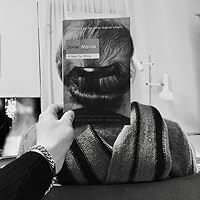
Merilyn Simonds is the author of 18 books, including the novel The Holding, a New York Times Book Review Editors' Choice, and the Canadian classic nonfiction novel, The Convict Lover, a finalist for the Governor General's Award. In 2017, Project Bookmark Canada unveiled a plaque to honour the place of The Convict Lover in Canada’s literary landscape.
Simonds’ short fiction is anthologized internationally and her books are published in the UK, Europe, Asia, Canada, and the United States. In 2012 she published The Paradise Project, a collection of flash fiction hand-printed on an antique press with endpapers made from plants in her garden. The experience of producing the collection in both a digital and book-arts edition is the subject of Gutenberg’s Fingerprint: Paper, Pixels, and the Lasting Impression of Books. Her most recent publication is Refuge, a novel set in Mexico City, New York, and eastern Ontario.
Simonds writes a blog—Books Unpacked—on her website merilynsimonds.com. She shares her life with writer Wayne Grady. They divide their time between Mexico and Canada.
Familiarity can be such an obstacle, assumptions overlaying one another until the true contour of the land is hopelessly lost. p167
Is it possible to get lost in your own life? Try looking at it with a certain detachment. Create some kind of timeline. This could be as simple as chapter headings: first memories;childhood; a holiday; romance; before and after this or that person, discovery, milestone. Jazz it up with exquisite writing, retaining a sense of enigma, and there you have it, eloquent proof of a life.
MS has achieved all this in these endearing stories, each one a chapter in a life lived with integrity and zest, mostly.
Fascinating collection of short stories, each one engaging and real and painful. I felt like this book punched me in the gut, leaving me sore for days.
There are some interesting aspects to Simonds' writing - the first is that each story in this collection builds on the others to form a quasi-autobiographical account of her life. It's like sixty years of living as shown in photographs from different time periods, vignettes of significant periods and turning points.
The second unique aspect of her writing is the fluid nature of time; we seamlessly move from an experience at age 5 to one at age 9 without a single transitory phrase or indication. This phenomenon wanes as the book continues, perhaps as the author/main character ages and her voice matures.
I read this book while on holiday in Brazil a couple of weeks ago. So good... The story begins in Brazil... the the setting changes to Canada. A little girl grows up, becomes a woman... and continues always to learn. Made me think about my life.
The first three stories in this collection left me totally cold and disinterested. I almost gave up on the whole book.
But something about the next story really started to draw me in, and then I found myself enjoying most of the rest of the book as much as I had hated the start.
I'm still not sure what changed. My state of mind? Possibly. The subject matter? Probably. I didn't at all empathise with a young girl growing up in Brazil, or care for the early style which was almost 'magic realism'. But once the narrative began to take hold (the shape of an early romance, which then blossoms over subsequent stories through the marriage, divorce and taking a new lover) I was on firmer ground. I particularly loved "Taken for Delirium" which is a beautiful and heartbreaking meditation on living in the woods and communing with nature. At this point, I not only understood, but yearned to live this life.
Disappointed with the final chapter which seemed to return to the rather obscure and distanced tone of the first, but by this point I'd been mostly won over.
This was a wonderful collection of short stories that involve the life of one woman. I wasn't sure at first if I would like this book, but as it turns out I enjoyed it immensely. My favourite story was called "The Blue of the Madrugada". A story about the girl growing up and realizing her body has changed.
This progression of related stories, based on the author’s life from childhood to middle-age, is full of beautiful imagery … clothing that bore the shape of my older sisters (p.22). Her writing is beautifully pared down as her eager-to-please personality navigates her life’s obstacles, and frees repressed emotion. Very engaging.
I learned about different places in the world. A series of connected short stories takes place over time, and each in a different world location, as the protoginist changes from daughter to wife to mother. Original and cathartic.
To be honest I didn't make it through many of these stories. I didn't like the writing much and I didn't think the stories really held together. On the back it says the author "may be the next Alice Munro." But Alice Munro is the next Alice Munro and that's more than good enough for me.
Just heard this author last night (July 17, 2026) at the Lakefield Literary festival discussing her new book Walking with Beth, along with writer Plum Johnson discussing her memoir The Trouble with Fairy Tales.
These stories had a lovely feel of ethereality, quite similar to what I experienced while reading White Oleander. Very interesting and definitely worth a read.