
Jump to ratings and reviews
Rate this book

The Zuni Man-Woman

Rate this book

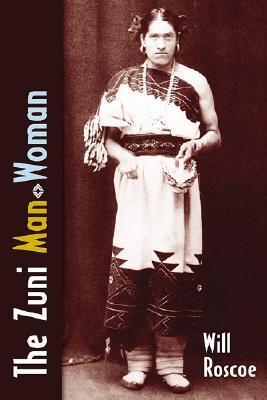
The Zuni Man-Woman focuses on the life of We'wha (1849-96), the Zuni who was perhaps the most famous two-spirit person (an individual who combined the work and traits of both men and women) in all the Turtle Island Indigenous nations history. Through We'wha's exceptional life, Will Roscoe creates a vivid picture of an alternative gender role whose history has been hidden and almost forgotten.

"An important book that will bring to the field a better understanding of the role of the berdache in Pueblo culture."--John Adair, San Francisco State University

324 pages, Paperback

First published May 1, 1991

6 people are currently reading
290 people want to read

About the author

Will Roscoe

15 books7 followers

Ratings & Reviews

What do you think?
Rate this book

Friends & Following

Create a free account to discover what your friends think of this book!

Community Reviews

5 stars
28 (26%)
4 stars
47 (44%)
3 stars
25 (23%)
2 stars
5 (4%)
1 star
1 (<1%)
Displaying 1 - 8 of 8 reviews
Profile Image for Hank Stuever.
Author 4 books2,031 followers
August 22, 2013
Fantastic and eye-opening research into the Native American "two-spirited" tradition of homosexuality and transgender. Made a real impression on me when it first came out (I was young, gay and living in New Mexico).
164 reviews5 followers
January 3, 2019
This is a fascinating book that offers much insight into one form of Two Spirit identity and experience in the late 1800s. (Note that the term “berdache” is considered an insult today.) Roscoe’s research deepened my appreciation for how Zuni Two Spirit identities did not fit our current LGBTQ paradigm; their apparent sense of self and experiences are much more complex and nuanced than either the terms “gay” or “transgender” allow.

However, there are some drawbacks to Roscoe’s book:

1. It’s academic — and not a readable flavor of academic. Certainly, it could be significantly more dense and, as a nerd with an MA, i’m far from someone who disses non-fiction and academic work. But this isn’t a book written around plot and character to keep you hooked in; it takes some effort on the reader’s part.

2. Focusing moderately on We’wha, who lived well over 100 years ago, means that no Two Spirit person gets to speak for themselves. Roscoe gets to interpret We’wha’s experiences however he’d like, although it’s clear that he has buy-in from at least some people at Zuni and has spent time there. His final chapter explores “current” Two Spirit identity (as of 1991). But Two Spirit folks who live “today” are relegated to the final pages; it would have been fascinating to see their insights woven throughout the book.

3. While Roscoe openly acknowledges that We’wha lived outside the traditional, Western gender binary, he insists on referring to them with male pronouns. Granted, referring to them with female pronouns would have been just as reductionist; We’wha’s life clearly transcended binary gender. Roscoe could have taken advantage of alternative pronouns — perhaps ones in Zuni itself. But, instead, he fell back on pronouns reflecting We’wha’s assigned sex at birth, making his language unable to reflect their reality.

4. Speaking of language, in addition to using the outdated/insulting “berdache,” Roscoe also uses “Indian” liberally and unproblematically. While he occasionally uses the slightly more acceptable “American Indian,” readers should be warned this is another aspect in which his language is not without its drawbacks.

5. The book is only nominally focused on We’wha’s life; most of the focus is on their Zuni community and culture and on the larger US culture and attempts at Native genocide.

“The Zuni Man-Woman” is a book worth reading to get some insight into Two Spirit identity and experience in the late 1800s. But it leaves something to be desired. A work by actual Two Spirit folks about their historical and contemporary experiences would be a welcome addition to my library.
Profile Image for Rodney.
171 reviews
March 26, 2018
Woah. More than I bargained for.

This short book is at once a brief history and anthropology of the Zuni people, a biography of We'wha, who fulfilled the lhamana (third gender) role, a meditation on the nature of gender as a cultural construct (specifically how the lhamana identity fulfills a social need that Western/European culture fails to address), a critique of Western gender, an overview of Zuni rites as they relate to the construction of a gender identity, a (heartbreaking) account of the dismantling of the lhamana and similar "two-spirit" identities by government mandate (as well as the Victorian cultural forces that created those mandates), and a small beacon of hope in the (then in its early stages) reburgeoning of the two-spirit identity within intertribal cultures.

And all of this in 210 pages.

Some sections were denser and more academic than I'm used to, particularly Chapter 6 ("Two-fold One-kind," which is a Jungian interpretation of the "meaning" of Zuni rites), but that's not a criticism; those parts were fascinating. Also, it should go without saying that any book about American indigenous peoples and the injustices they've encountered is going to be very upsetting to anyone with a moral compass.

Tremendous respect to Roscoe for frequently deferring to a Zuni perspective; this book was one of the most sympathetic accounts of a culture I've read. It is unfortunate that the book was written before (just barely before) the offensive term "berdache" fell out of favor, but that is what it is.

Anyway, highly recommended. While this is not an easily-located book, you can buy it at the Indian Pueblo Cultural Center in Albuquerque, which is where I discovered it, and is well worth the trip.
Profile Image for Shannon.
37 reviews
September 8, 2021
I haven't read this in a long time, but I do want to address some other criticisms. I enjoyed a close look at what a society can look like if children are left to make their own decisions about their gender and their sexuality, when that society doesn't limit them to two only, and even further, creates a valued and important role for such people. The result is a child that grows up knowing that they have a place in society, knowing that they are accepted for who they are, that they may be different but not excluded. Such a person is much more likely to become mentally healthy, happy and functional adult.

This book was written in 1991, so there are certain usages that go against the current thinking about gender and pronoun usage, and other outdated terms that have been co-opted by haters to become insults. I didn't find it too "academic" at all to read; it was somewhat dry but it was also fascinating, and sad. I also caution people against criticizing the use of the term "Indian," too much, when many (maybe most) North Americans of indigenous descent use this term for themselves as a whole. It's in common use in print and online publications.

I'm still giving it 4 stars because it remains relevant today and is very well written and thoroughly researched, though it did need interviews with modern-day genderqueer people from tribes in the American Southwest, as well as a look at what the climate is today in these societies.

Profile Image for Nicole Lewis.
103 reviews15 followers
June 15, 2021
This was a really good book. Great historical and cultural perspectives. Great for learning about the culture and beliefs of the Zuni people.
Profile Image for SouthWestZippy.
2,111 reviews9 followers
March 7, 2016
“WOW that was very interesting book to read. Even though the books states that it main focus is on We'sha, it is not. I would say majority of it focused on the Zunis and their concepts of gender and sexuality and the religious and mythological dimensions of the Berdache role. A Berdache is a man who preferred women's work and adopted female dress. The last part of the books main focus is on the introduction of the others thinking about the Berdache and how it destroyed the Zunis community inter workings.
Profile Image for Søren.
2 reviews
September 5, 2012
This book changed the way I view my own sexuality. That's a big deal.
Profile Image for Scott Wiggerman.
Author 44 books24 followers
September 3, 2015
Just finished this fascinating look at the "third gender" berdache of Native American tribes.
Displaying 1 - 8 of 8 reviews

Can't find what you're looking for?

Get help and learn more about the design.