

What do you think?

Toilets of the World
This amusing but highly informative photographic journey reveals the idiosyncrasy and inventiveness that characterize the construction of the humble toilet around the globe.
256 pages, Paperback
First published January 1, 2006
Ratings & Reviews
Friends & Following
Create a free account to discover what your friends think of this book!
Community Reviews
Displaying 1 - 30 of 41 reviews

August 17, 2015
Yes, indeedly-doo, there is a definite snerk-factor to this book.

Potty stuff makes us giggle, pure and simple, and yet, taking a look at the structures we use for relieving ourselves can tell us as much about a society as a study of eating and mating habits. Here's a fascinating look at a variety of toilets, from a simple hole in the ground to a solid-gold commode. There are hundreds of color photos, but there is also interesting commentary on the whys and occasionally the hows of each fixture.
Here are some of the book's highlights:
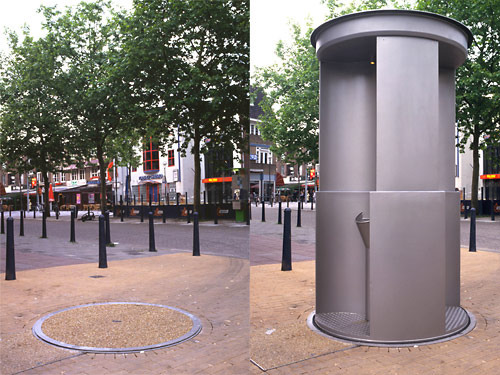
On weekends, these urinals rise out of the street to comfort happy pub-goers in London.
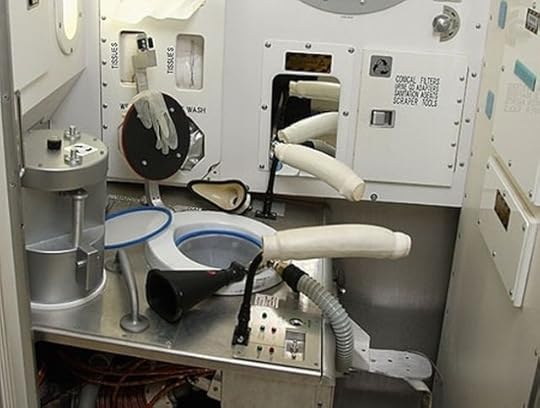
The toilet of the International Space Station.

A simple squat toilet in Kilimanjaro.
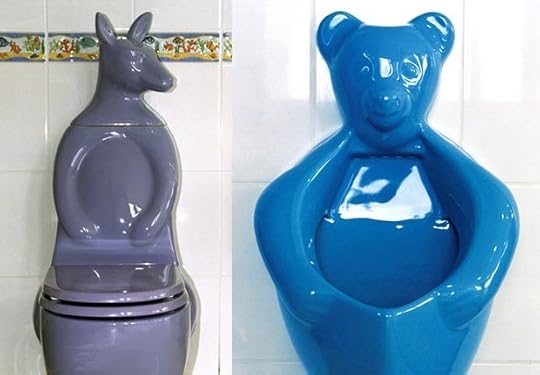
Say "Hello" to these little friends in Turkey.
And finally, a visit to Tokyo will prove to be an unforgettable experience:
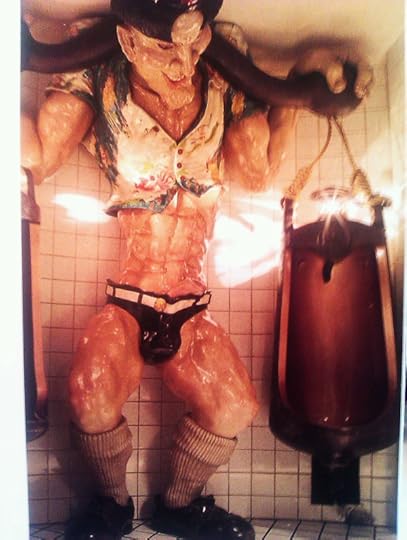
This guy talks, and will point out your "shortcomings" as you attempt to pee.
Ladies, they haven't forgotten you:
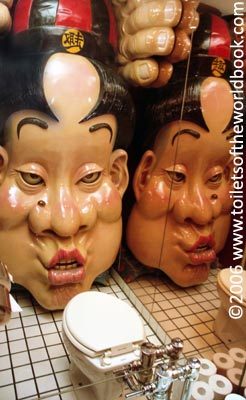
Have a seat! Then the giant head will move forward until she's touching your knees. If that doesn't scare the, um . . . beejesus out of you, nothing will.
I highly recommend this for the curious reader looking for something a bit unusual.
"Life is like a sewer - what you get out of it depends on what you put into it."
Tom Lehrer
Potty stuff makes us giggle, pure and simple, and yet, taking a look at the structures we use for relieving ourselves can tell us as much about a society as a study of eating and mating habits. Here's a fascinating look at a variety of toilets, from a simple hole in the ground to a solid-gold commode. There are hundreds of color photos, but there is also interesting commentary on the whys and occasionally the hows of each fixture.
Here are some of the book's highlights:
On weekends, these urinals rise out of the street to comfort happy pub-goers in London.
The toilet of the International Space Station.
A simple squat toilet in Kilimanjaro.
Say "Hello" to these little friends in Turkey.
And finally, a visit to Tokyo will prove to be an unforgettable experience:
This guy talks, and will point out your "shortcomings" as you attempt to pee.
Ladies, they haven't forgotten you:
Have a seat! Then the giant head will move forward until she's touching your knees. If that doesn't scare the, um . . . beejesus out of you, nothing will.
I highly recommend this for the curious reader looking for something a bit unusual.
"Life is like a sewer - what you get out of it depends on what you put into it."
Tom Lehrer

October 22, 2014
Brought great amusement to the whole family. :D

June 8, 2019
Around Christmas time the bookshelves of the nation groan under the weight of books targeting the ‘difficult relative’ market; those people you have to buy for but don’t really know well enough to know what to give. People seem to think books are safe but rather boring and that may well be true if you get the wrong one. I’d like to make a recommendation for the perfect book for a friend or relative who’s not the type to sit and read a book from start to finish, who likes a book to dip in and out of and the type who likes lots of pictures and a chance to be fascinated by how other people ‘do’ things. In short, this is the perfect present for the person who likes to do their reading in the ‘smallest room’. Toilets of the World by Morna E Gregory and Sian James will fascinate, horrify and entertain in equal measure and will certainly beat that 15 year old copy of the Guinness Book of Records that’s been stuffed behind the U-bend for the last ten years.
My husband has the makings of a perfect toilet inspector. He’s fascinated by how loos vary and how they work around the world and he has a bladder like a peanut which means plenty of opportunity to check out the facilities. By contrast, I have a bladder like a camel’s hump – I can cross deserts without needing to stop and go, especially if I’m in fear of a really stinky, nasty hell-hole. As a result my husband has been known to come out of a ‘convenience’ in a far flung place and demand my camera so he can go back and take a photo. My friend Alex is even more obsessive – he has a photo from Pushkar in India which he describes as looking like the user had gone into the cubicle and exploded. Boys and loos! Who knew they could find such joy. We saw a Toilets of the World calendar in a book shop last year and I then tracked down the book. It lives in our guest bathroom as it undoubtedly should.
In their introduction, the authors propose that studying toilets isn’t as frivolous as it may seem and suggest that toilets offer a valuable insight into culture and sociology and that far from being the same wherever you go, there are enormous differences and that you can learn a lot from a closer look. Peeing and pooing are life’s great levellers – everyone does them, from the queen and the pope to the man living under the railway arches. And of course, they claim that the ‘throne’ is often a place where people have their best ideas – and perhaps in some cases, do most of their reading.
After a brief introduction to the history of the toilet, we are taken on a world tour by the authors. We start in North America which is fair enough, given that the authors are Canadian. They reflect that Americans use more water per flush than any other region and go out of their way to avoid the use of the word ‘toilet’, preferring the laughable euphemisms such as the ‘rest room’ or ‘bathroom’. Each toilet or urinal described comes with a photo and a short commentary on why they are interesting or significant. They range from a lavvy chosen because of the punk graffiti, to a submarine ‘head’ and a NASA outer space loo which both illustrate the challenge of adaptation to unusual environments. There are some gorgeously tiled urinals that look more Portuguese than American, and my favourites are the astonishing entry on the ‘L’Urinette’ – a device that allows ladies to pee standing up – and the tree carved with an arrow pointing to its base and the letter P.
Next stop is Central and South America where the photos tend more towards the scenically placed or ingeniously constructed outhouse rather than technological wonders. There’s a hilarious photo shot through the ‘hole’ of a stilted over-water toilet revealing an unsuspecting snorkeler passing below, fortunately without anyone passing anything above. A close escape! At the other end of the technological spectrum is a photo from Brazil with a (to my eyes) Japanese-style high tech loo with automatic plastic sheathing on the seat, no need to touch anything and lots of motion sensitive (no pun intended) features, sitting proudly beside an overflowing bin full of used loo roll. Top tech toilet but sadly the pipes are too narrow to deal with the paper.
Next step Europe and we meet glowing egg-shaped toilets in a London club, retro public loos in Brussels, French ‘squatters’ that will invoke bad memories about childhood visits to French campsites, unisex loos, chintz covered toilets, disappearing subterranean pod toilets that only pop up at weekends, and a loo with a transparent water tank that’s home to some goldfish.
African examples, a little like the ones from Latin America, tend towards the scenic beauty examples with huts standing in the middle of nowhere, overshadowed by sand dunes or mountains. Apartheid era is remembered in a Johannesburg building with separate toilets for black and white users, whilst the owner of the transparent toilet seat with lengths of barbed wire inside is clearly making a bit of a political point.
The Oceania chapter is heavily influenced by Australia and New Zealand, large countries without a lot of plumbing outside the big cities and hence the need to be creative. ‘Longdrops’ and ‘dunnies’ abound, many of them in neat little tin or wooden sheds. The beautiful QVB building in Sydney is featured in all its Victorian era glory with a ‘four at a time’ urinal of such lavishness that it contrasts nicely with the collapsible ‘thunderbox’ which follows.
Finally we’re in Asia, the region of the squat loo for most and the gold toilet in the bathroom of a Hong Kong jeweler. As Karl Pilkington commented in the series ‘An Idiot Abroad’ the Chinese can build the Great Wall but can’t find a few bits of MDF to build a partition round a toilet and there are several examples of the lack of privacy in the world’s most populous country. I was pleased to see an example of the East-West toilet we had in Rishikesh, India, last year where the design enables both the sitting and squatting approach to getting the job done.
If I had one complaint about this book it would be that there are toilet types I’ve seen around the world that I would have considered more interesting than many that are included but let’s be fair, with billions of bogs to choose from, I can’t expect they’ll find my favourites. The omission of any photos of a German ‘poo platform’ toilet is however unforgivable.
Toilets of the World isn’t book to read in one ‘sitting’ but it’s a fascinating volume that illustrates the ingenuity of the human race, the crassness of those with too much money, the humour of some without, and the many and varied ways that have been developed to deal with life’s necessities. I would suggest it’s just as likely to be popular with the more widely travelled reader who may recognise many of the styles as with those who’ve never stepped outside the realms of a standard black and white Armitage Shanks. There’s something in here to amuse and educate all but the most delicate of readers. And for those who might fear otherwise, the pictures are almost without exception clean and lacking the evidence of their subjects’ purpose. Sadly the same can’t be said for some of my husband’s and my photos. Enjoy!
My husband has the makings of a perfect toilet inspector. He’s fascinated by how loos vary and how they work around the world and he has a bladder like a peanut which means plenty of opportunity to check out the facilities. By contrast, I have a bladder like a camel’s hump – I can cross deserts without needing to stop and go, especially if I’m in fear of a really stinky, nasty hell-hole. As a result my husband has been known to come out of a ‘convenience’ in a far flung place and demand my camera so he can go back and take a photo. My friend Alex is even more obsessive – he has a photo from Pushkar in India which he describes as looking like the user had gone into the cubicle and exploded. Boys and loos! Who knew they could find such joy. We saw a Toilets of the World calendar in a book shop last year and I then tracked down the book. It lives in our guest bathroom as it undoubtedly should.
In their introduction, the authors propose that studying toilets isn’t as frivolous as it may seem and suggest that toilets offer a valuable insight into culture and sociology and that far from being the same wherever you go, there are enormous differences and that you can learn a lot from a closer look. Peeing and pooing are life’s great levellers – everyone does them, from the queen and the pope to the man living under the railway arches. And of course, they claim that the ‘throne’ is often a place where people have their best ideas – and perhaps in some cases, do most of their reading.
After a brief introduction to the history of the toilet, we are taken on a world tour by the authors. We start in North America which is fair enough, given that the authors are Canadian. They reflect that Americans use more water per flush than any other region and go out of their way to avoid the use of the word ‘toilet’, preferring the laughable euphemisms such as the ‘rest room’ or ‘bathroom’. Each toilet or urinal described comes with a photo and a short commentary on why they are interesting or significant. They range from a lavvy chosen because of the punk graffiti, to a submarine ‘head’ and a NASA outer space loo which both illustrate the challenge of adaptation to unusual environments. There are some gorgeously tiled urinals that look more Portuguese than American, and my favourites are the astonishing entry on the ‘L’Urinette’ – a device that allows ladies to pee standing up – and the tree carved with an arrow pointing to its base and the letter P.
Next stop is Central and South America where the photos tend more towards the scenically placed or ingeniously constructed outhouse rather than technological wonders. There’s a hilarious photo shot through the ‘hole’ of a stilted over-water toilet revealing an unsuspecting snorkeler passing below, fortunately without anyone passing anything above. A close escape! At the other end of the technological spectrum is a photo from Brazil with a (to my eyes) Japanese-style high tech loo with automatic plastic sheathing on the seat, no need to touch anything and lots of motion sensitive (no pun intended) features, sitting proudly beside an overflowing bin full of used loo roll. Top tech toilet but sadly the pipes are too narrow to deal with the paper.
Next step Europe and we meet glowing egg-shaped toilets in a London club, retro public loos in Brussels, French ‘squatters’ that will invoke bad memories about childhood visits to French campsites, unisex loos, chintz covered toilets, disappearing subterranean pod toilets that only pop up at weekends, and a loo with a transparent water tank that’s home to some goldfish.
African examples, a little like the ones from Latin America, tend towards the scenic beauty examples with huts standing in the middle of nowhere, overshadowed by sand dunes or mountains. Apartheid era is remembered in a Johannesburg building with separate toilets for black and white users, whilst the owner of the transparent toilet seat with lengths of barbed wire inside is clearly making a bit of a political point.
The Oceania chapter is heavily influenced by Australia and New Zealand, large countries without a lot of plumbing outside the big cities and hence the need to be creative. ‘Longdrops’ and ‘dunnies’ abound, many of them in neat little tin or wooden sheds. The beautiful QVB building in Sydney is featured in all its Victorian era glory with a ‘four at a time’ urinal of such lavishness that it contrasts nicely with the collapsible ‘thunderbox’ which follows.
Finally we’re in Asia, the region of the squat loo for most and the gold toilet in the bathroom of a Hong Kong jeweler. As Karl Pilkington commented in the series ‘An Idiot Abroad’ the Chinese can build the Great Wall but can’t find a few bits of MDF to build a partition round a toilet and there are several examples of the lack of privacy in the world’s most populous country. I was pleased to see an example of the East-West toilet we had in Rishikesh, India, last year where the design enables both the sitting and squatting approach to getting the job done.
If I had one complaint about this book it would be that there are toilet types I’ve seen around the world that I would have considered more interesting than many that are included but let’s be fair, with billions of bogs to choose from, I can’t expect they’ll find my favourites. The omission of any photos of a German ‘poo platform’ toilet is however unforgivable.
Toilets of the World isn’t book to read in one ‘sitting’ but it’s a fascinating volume that illustrates the ingenuity of the human race, the crassness of those with too much money, the humour of some without, and the many and varied ways that have been developed to deal with life’s necessities. I would suggest it’s just as likely to be popular with the more widely travelled reader who may recognise many of the styles as with those who’ve never stepped outside the realms of a standard black and white Armitage Shanks. There’s something in here to amuse and educate all but the most delicate of readers. And for those who might fear otherwise, the pictures are almost without exception clean and lacking the evidence of their subjects’ purpose. Sadly the same can’t be said for some of my husband’s and my photos. Enjoy!

November 23, 2025
Has a bunch of pictures, but doesn't offer any thoughtful insight on culture or related history behind these toilets. Under a guise of objectivity, the toilets they pick insist on Eurocentric supremacy and didn't offer the worldly perspective on such a human experience as I was looking for.

February 11, 2011
Entertaining and educational. Made me glad for my toilet, which is something I don't always say.

July 9, 2018
This was gross, amazing, and humorous. I'm glad I get to do my biz in a toilet.

October 3, 2019
Have you ever wondered what toilets look like in other countries? Here is a guide like no other.
From a thatched palm leave toilet on stilts in Panama which drains directly into the sea to a "pee tree" in an Alberta, Canada campsite to the pair of 24-carat solid gold toilets in a Hong Kong store, this book brings them all to you.
I have experienced firsthand what some of these toilets look like. I can tell you the one in Barcelona with the caves in Park Gueil is exactly the way it is pictured in this book with purple flowers hanging from the entrance. The strangest experience will have to be the German toilets that really do clean themselves with an automatic sponge and a rotating toilet seat. And the squat pots are not worth picturing in China and India, believe me. Check out the cute, purple kangaroo toilet and a turquoise smiling bear urinal in Turkey.
From a thatched palm leave toilet on stilts in Panama which drains directly into the sea to a "pee tree" in an Alberta, Canada campsite to the pair of 24-carat solid gold toilets in a Hong Kong store, this book brings them all to you.
I have experienced firsthand what some of these toilets look like. I can tell you the one in Barcelona with the caves in Park Gueil is exactly the way it is pictured in this book with purple flowers hanging from the entrance. The strangest experience will have to be the German toilets that really do clean themselves with an automatic sponge and a rotating toilet seat. And the squat pots are not worth picturing in China and India, believe me. Check out the cute, purple kangaroo toilet and a turquoise smiling bear urinal in Turkey.

December 20, 2023
Nečakane pútavá kniha, ktorá ponúka paralelu vývoja civilizácie na jednotlivých kontinentoch s vývojom toaliet. Od tých najjednoduchších po najsofistikovanejšie, od najbežnejších po najbizarnejšie (a to skutočne). Okrem toho sa dozviete, že narkobaróna Escobara vypátrali kvôli jeho priam chorobnej láske k čistým toaletám!

May 18, 2020
Absolutely brilliant introduction to all the different types of toilet out there. This is a side interest of mine and I thought this was so interesting not least the tying of toilets to behaviour and cultural norms. *so good*

January 24, 2021
I used to spend hours reading and re reading this when I was in 4th grade and for some reason I thought it was the most entertaining thing ever to look at pictures of toilets. It also lowkey blows my mind the fact that my Mom was the one who decided to give it to me as a present.

May 28, 2018
In just a few words, the best reading for those idle intimate moments. For those who appreciate learning every second of the day.

July 10, 2018
Just a really fun book.
June 14, 2021
Eye-opening, and occasionally eye-watering. :S

August 17, 2025
Would take a doo in some of these toilets. So cool! 🤣

November 23, 2025
Easily the most interesting book I own. I love this.

August 22, 2008
Being good and art aware girl I went to my friend's place who shares passion for art and instead of idle chitchat I went straight to the bathroom and had very good time there with a book. Tell me, have you ever been curious about the simple place of daily interest for example in Zimbabwe? Or is there any difference between yours and Japan's meditation place? The book gives you all answers you were craving for and were to shy to ask. It is the history of the white god in front of every alcoholic after the big drinking party kneel. However it is very hard to do in some countries, because toilets are not all the same around the world. Have a good time and find out for what use is L'urinette.

December 20, 2012
The writing isn't always brilliant, but there are some interesting pictures. It's just for fun, the book doesn't attempt to be comprehensive or try to actually represent the average state of sanitation in any particular place.
For a more serious discussion of worldwide sanitation, I recommend The Big Necessity: The Unmentionable World of Human Waste and Why It Matters.
For a more serious discussion of worldwide sanitation, I recommend The Big Necessity: The Unmentionable World of Human Waste and Why It Matters.

September 17, 2008
best book ever!!!!!!! You have to get this book. I know it looks stupid as it is about toilets, but its really fun and neat and gross to see what other people "go" on. It also gives you surprisingly good insight to the country the toilet is at and what they think of customs in relations to a bodily function. Also, I'm not so freaked out about going in public now. it's just really neat and fun, get this book!!!
December 3, 2014
A thoroughly enjoyable photo essay collection of toilets of the world. From a hole in the sand in the middle of a vast desert, a tree marked "p" on a hiking trail, to an ultra-modernist egg shaped pods at a London club, the world takes potty breaks in a remarkable number of ways. And for those of you familiar with the Kohler Art Museum, you may smugly point out toilets you have personally visited... in one way or another.

March 19, 2010
Absolutely fascinating stuff. Someone has actually gone around the world and photographed and researched all the different types of toilets in the world, from squatty potties, suspended loos over water, street pissoirs to toilets made of gold, with a bit of historical and cultural relevance thrown in. And I know a good place to read it.

August 13, 2011
I started this book not knowing quite what to expect, but I got a lot more information than I thought possible! From high-tech Japanese toilets to rustic outhouses with mannequins inside, this book taught me more then I ever wanted to know about the porcelain throne. Just be grateful we don't live in the middle east.

February 27, 2008
The book I've been waiting for! I love seeing diverse bathrooms from around the world. A clean bathroom is so important, and an innovative toilet is very cool. My favorite one was in Germany, which was like the one in this book that has a plastic cover and cleansing agent.
March 18, 2008
This book is both educational and entertaining. It is a collection of photographs of toilets (or what passes as a toilet) from all over the world. There are classy ones, weird ones, terrifying ones, and ones that I would rather go on the street than use. Check it out if you get the chance.

March 16, 2010
The things one finds on the New books shelf!
This coffee-table genre book (if your coffee table resembles an airline meal tray in size) made for fun reading. It is weren't quite so bulky, I'd deem it perfect for carrying about for waiting rooms and other downtime periods.
This coffee-table genre book (if your coffee table resembles an airline meal tray in size) made for fun reading. It is weren't quite so bulky, I'd deem it perfect for carrying about for waiting rooms and other downtime periods.

February 26, 2011
I can't think of a better bathroom book! It's both horrifying and delightful. Some of the toilets are the stuff of my worst stress dreams and yet, yep, I do want to go to Japan and experience the wild toilets.

June 24, 2013
- beautifully illustrated book about toilets
- their history
- an explanation of worldwide styles and designs
- from no-tech, to low-tech, to very high-tech
- an odd subject, I suppose, but I have used toilets in 32 countries and have been exposed (HA!) to a wide range of styles and designs
- their history
- an explanation of worldwide styles and designs
- from no-tech, to low-tech, to very high-tech
- an odd subject, I suppose, but I have used toilets in 32 countries and have been exposed (HA!) to a wide range of styles and designs

July 15, 2014
Got this because I thought it would be a cute, fun, silly read. Sadly it was lacking. Sure there are the crazy toilets, like the ones with giant heads in Japan that move towards you, but a lot of this book is simply tin shacks and dirt huts in the middle of nowhere.
Skip it.
Skip it.

August 1, 2008
What a delightful book. As expected, some of the toilets in Japan are almost beyond comprehension. I must go to Japan.

November 12, 2008
The second best book near our toilet.

March 24, 2009
I got this for my husband as a stocking stuffer, and it turned out to be great bathroom reading. Very interesting and unusual facilities out there!
Displaying 1 - 30 of 41 reviews