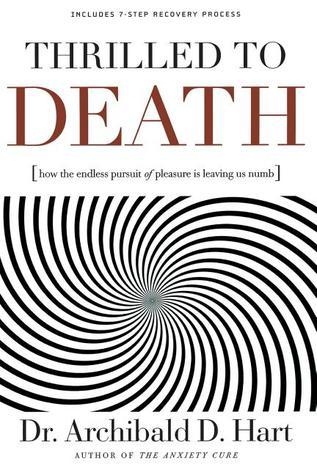
A fascinating exploration of the profound loss of pleasure in our daily lives and the seven steps for restoring it. Pleasure. We know what it feels like and many of us spend our days trying to experience it. But can too much pleasure actually be bad for us? Yes, says Dr. Archibald Hart, clinical psychologist and expert in behavorial psychology. Backed by recent brain-imaging research, Dr. Hart shares that to some extent, our pursuit of extreme and overstimulating thrills hijacks our pleasure system and robs us of our ability to experience pleasure in simple things. We are literally being thrilled to death . In this insightful book, Dr. Hart explores the stark rise in a phenomenon known as anhedonia , an inability to experience pleasure or happiness. Previously linked only to serious emotional disorders, anhedonia is now seen as a contributing factor in depression (specifically nonsadness depression) and in the growing number of people who complain of profound boredom. This emotional numbness and loss of joy are results of the overuse of our brain's pleasure circuits. In Thrilled to Death , Dr. Hart explains the processes of the brain's pleasure center, the damaging trends of overindulgence and overstimulation, the signs and problems of anhedonia, and the seven important steps we must take to recover our wonderful joy in living.
The first portion of the book focuses on why it is so critical for us to release our dependence / addiction to constant entertainment / stimulation, whether it is TV or video games or activities. Then the book teaches how to get back to the simple things. I found the exercises and tips very helpful. I’m making time every day for silence, putting down the phone and turning the TV and computer off. At first it was alarmingly quiet, and now I find that I enjoy doing puzzles, reliving wonderful memories, taking a walk in nature.
This book wasn't quite what I was hoping for (possibly my own fault) as it is mostly focused in self-help for those who have lost the ability to feel pleasure following entertainment over-saturation. I was looking for something more society-focused than personal. Still there is some good research and tips here.
A strange self help book for Christians. Interspersed with tedious questionnaires to measure how messed up in the head you are. Spends a long time trying to explain what happiness is to the author and failing miserably. Let me try: Happiness is being healthy.
I believe the book has a generally worthwhile premise, and the author seemingly has a lot of experience with the issue, but the writing is terrible. Dopamine Nation is a much better treatment of the topic.
Research is increasingly showing that there are several kinds of depression. One of those kinds is anhedonia--the inability to feel pleasure. In this book, Dr. Hart examines modern anhedonia, positing that it is at epidemic proportions. Today, anhedonia is paradoxically a result of too much pleasure. That is, our society has available so many tools that give us a temporary rush of pleasure (dopamine)--from smart phones to video games to food to porn--that we overload our pleasure feedback loop to the point that we have a harder time feeling pleasure and need more of it to get the same sensation. Things need to be increasingly more novel or more stimulating or more excessive. If this sounds a lot like addiction, that's basically what Dr. Hart says is going on when we say, check our email for the 50th time in one day. Eventually our ability to feel pleasure is corrupted or depleted. This book may explain why modern folks have trouble sitting still, enjoying a sunset, engaging with people, and in general doing things that do not provide immediate gratification. It all rang very true to me. The author infuses his religious background in a way that I did not find moralistic. In fact, it makes sense that religion would be an outlet for those who are looking for meaning beyond the kind of pleasure-seeking that much of American secular society (entertainment, advertising, consumer culture) promotes.
Like some psych books I read, this one could have benefitted from more research and description of what this anhedonia-stricken society looks like. What are Americans doing that is causing this epidemic of anhedonia? Sometimes these ideas can get abstract or not relatable if we aren't given real life stories beyond just the case studies of the doctor's patients. Still, a very useful fundamental insight that I think could help a lot of people.
This book talked about the fact that with society getting busier and busier people often lose the sence of getting pleasure out of the simple things in life. It talks about the importance of slowing down and taking time for yourself and for the simple things in life. It is fairly scientific and very well written.
I picked this up under the cloak of reading this for work (to plan my stress/health lesson), but I find it interesting so far. Especially as I think about how to best support children growing up in the American culture.
I am confused how such an interesting title could be a part of such a lackluster book. It is slow-paced and contained trite phrases I have heard many times over. I completed this book with a dampened desire to learn more on this subject.