

What do you think?

The Queen of the Air, Being a Study of the Greek Myths of Cloud and Storm
John Ruskin (1819-1900) was an English art critic and social thinker, also remembered as a poet and artist. His essays on art and architecture were extremely influential in the Victorian and Edwardian eras.
254 pages, Paperback
First published January 1, 1869
About the author
John Ruskin
4,032 books509 followersLibrarian Note: There is more than one author by this name in the Goodreads database.
John Ruskin was an English writer, philosopher, art historian, art critic and polymath of the Victorian era. He wrote on subjects as varied as geology, architecture, myth, ornithology, literature, education, botany and political economy.
Ruskin was heavily engaged by the work of Eugène-Emmanuel Viollet-le-Duc which he taught to all his pupils including William Morris, notably Viollet-le-Duc's Dictionary, which he considered as "the only book of any value on architecture". Ruskin's writing styles and literary forms were equally varied. He wrote essays and treatises, poetry and lectures, travel guides and manuals, letters and even a fairy tale. He also made detailed sketches and paintings of rocks, plants, birds, landscapes, architectural structures and ornamentation. The elaborate style that characterised his earliest writing on art gave way in time to plainer language designed to communicate his ideas more effectively. In all of his writing, he emphasised the connections between nature, art and society.
Ruskin was hugely influential in the latter half of the 19th century and up to the First World War. After a period of relative decline, his reputation has steadily improved since the 1960s with the publication of numerous academic studies of his work. Today, his ideas and concerns are widely recognised as having anticipated interest in environmentalism, sustainability and craft.
Ruskin first came to widespread attention with the first volume of Modern Painters (1843), an extended essay in defence of the work of J.M.W. Turner in which he argued that the principal role of the artist is "truth to nature". From the 1850s, he championed the Pre-Raphaelites, who were influenced by his ideas. His work increasingly focused on social and political issues. Unto This Last (1860, 1862) marked the shift in emphasis. In 1869, Ruskin became the first Slade Professor of Fine Art at the University of Oxford, where he established the Ruskin School of Drawing. In 1871, he began his monthly "letters to the workmen and labourers of Great Britain", published under the title Fors Clavigera (1871–1884). In the course of this complex and deeply personal work, he developed the principles underlying his ideal society. As a result, he founded the Guild of St George, an organisation that endures today.
John Ruskin was an English writer, philosopher, art historian, art critic and polymath of the Victorian era. He wrote on subjects as varied as geology, architecture, myth, ornithology, literature, education, botany and political economy.
Ruskin was heavily engaged by the work of Eugène-Emmanuel Viollet-le-Duc which he taught to all his pupils including William Morris, notably Viollet-le-Duc's Dictionary, which he considered as "the only book of any value on architecture". Ruskin's writing styles and literary forms were equally varied. He wrote essays and treatises, poetry and lectures, travel guides and manuals, letters and even a fairy tale. He also made detailed sketches and paintings of rocks, plants, birds, landscapes, architectural structures and ornamentation. The elaborate style that characterised his earliest writing on art gave way in time to plainer language designed to communicate his ideas more effectively. In all of his writing, he emphasised the connections between nature, art and society.
Ruskin was hugely influential in the latter half of the 19th century and up to the First World War. After a period of relative decline, his reputation has steadily improved since the 1960s with the publication of numerous academic studies of his work. Today, his ideas and concerns are widely recognised as having anticipated interest in environmentalism, sustainability and craft.
Ruskin first came to widespread attention with the first volume of Modern Painters (1843), an extended essay in defence of the work of J.M.W. Turner in which he argued that the principal role of the artist is "truth to nature". From the 1850s, he championed the Pre-Raphaelites, who were influenced by his ideas. His work increasingly focused on social and political issues. Unto This Last (1860, 1862) marked the shift in emphasis. In 1869, Ruskin became the first Slade Professor of Fine Art at the University of Oxford, where he established the Ruskin School of Drawing. In 1871, he began his monthly "letters to the workmen and labourers of Great Britain", published under the title Fors Clavigera (1871–1884). In the course of this complex and deeply personal work, he developed the principles underlying his ideal society. As a result, he founded the Guild of St George, an organisation that endures today.
Ratings & Reviews
Friends & Following
Create a free account to discover what your friends think of this book!
Community Reviews
Displaying 1 - 4 of 4 reviews

October 23, 2014
"This first of May, 1869, I am writing where my work was begun thirty-five years ago,- within sight of the snows of the higher Alps."
He wrote the essay when at a time of his life he was feeling broken, “lately”, in days and “strength”; in 1869, in Vevay, Switzerland.
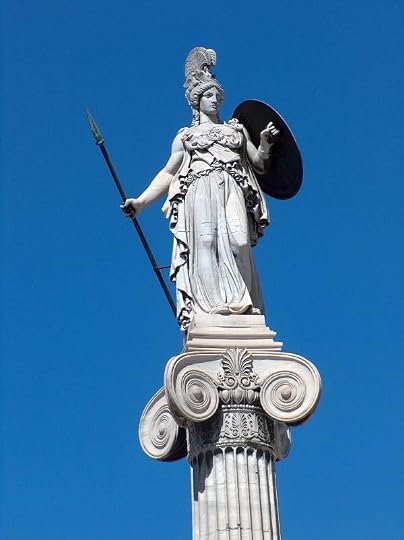
He’s asking the masters of modern science to give him back his Athena, the queen of the air, a being with “bright blue eyes”.
He speaks of light and air and the waters:… all defiled.
It’s a deep approach on Greek mythology…. in the four sides of matter: the heavenly fire of Apollo, the dominant spirit of Neptune over the waters,… and the earth mother, Demeter.
He wrote the essay when at a time of his life he was feeling broken, “lately”, in days and “strength”; in 1869, in Vevay, Switzerland.
He’s asking the masters of modern science to give him back his Athena, the queen of the air, a being with “bright blue eyes”.
He speaks of light and air and the waters:… all defiled.
It’s a deep approach on Greek mythology…. in the four sides of matter: the heavenly fire of Apollo, the dominant spirit of Neptune over the waters,… and the earth mother, Demeter.

January 16, 2018
Las dos primeras partes son absolutamente sublimes.
Want to Read
April 23, 2025Biblio.com US$43.31
July 17, 2011
very hard read for me. I almost didn't get through it.
Displaying 1 - 4 of 4 reviews