

What do you think?

The Clockmaker
The acclaimed French film The Clockmaker was based on this affecting study of a father and his teenage son, turned murderer.
Dave Galloway owns a jeweler's shop in a village in New York State. Deserted by his wife, he has raised his son, Ben, from infancy. He believes he has been a good father; and Ben, now sixteen, has never caused him any trouble. When news of the manhunt for his runaway son reaches him, Galloway begins the painful search for understanding. He finds the key in rebellions of the past - his own and his father's before him.
La fugue, la délinquance, le meurtre : en quelques jours, pour une amourette avec une fille de son âge, Ben Galloway, à seize ans, a commis l'irréparable. C'est dans la prison d'Indianapolis que son père, Dave, modeste horloger d'un village de l'Etat de New York, le retrouve. Mais le garçon se mure dans un silence hostile que n'entameront ni le procès, ni la condamnation à la prison perpétuelle. Comment, pourquoi cet enfant qu'il a élevé seul sa mère les a quittés quand il avait six mois - a-t-il pu devenir à ce point un étranger ? Qu'adviendra-t-il de l'enfant qui va naître de la brève union de Ben et de Lillian ?
Dave Galloway owns a jeweler's shop in a village in New York State. Deserted by his wife, he has raised his son, Ben, from infancy. He believes he has been a good father; and Ben, now sixteen, has never caused him any trouble. When news of the manhunt for his runaway son reaches him, Galloway begins the painful search for understanding. He finds the key in rebellions of the past - his own and his father's before him.
La fugue, la délinquance, le meurtre : en quelques jours, pour une amourette avec une fille de son âge, Ben Galloway, à seize ans, a commis l'irréparable. C'est dans la prison d'Indianapolis que son père, Dave, modeste horloger d'un village de l'Etat de New York, le retrouve. Mais le garçon se mure dans un silence hostile que n'entameront ni le procès, ni la condamnation à la prison perpétuelle. Comment, pourquoi cet enfant qu'il a élevé seul sa mère les a quittés quand il avait six mois - a-t-il pu devenir à ce point un étranger ? Qu'adviendra-t-il de l'enfant qui va naître de la brève union de Ben et de Lillian ?
124 pages, Paperback
First published January 1, 1954
About the author
Georges Simenon
2,694 books2,457 followersGeorges Joseph Christian Simenon (1903 – 1989) was a Belgian writer. A prolific author who published nearly 500 novels and numerous short works, Simenon is best known as the creator of the fictional detective Jules Maigret.
Although he never resided in Belgium after 1922, he remained a Belgian citizen throughout his life.
Simenon was one of the most prolific writers of the twentieth century, capable of writing 60 to 80 pages per day. His oeuvre includes nearly 200 novels, over 150 novellas, several autobiographical works, numerous articles, and scores of pulp novels written under more than two dozen pseudonyms. Altogether, about 550 million copies of his works have been printed.
He is best known, however, for his 75 novels and 28 short stories featuring Commissaire Maigret. The first novel in the series, Pietr-le-Letton, appeared in 1931; the last one, Maigret et M. Charles, was published in 1972. The Maigret novels were translated into all major languages and several of them were turned into films and radio plays. Two television series (1960-63 and 1992-93) have been made in Great Britain.
During his "American" period, Simenon reached the height of his creative powers, and several novels of those years were inspired by the context in which they were written (Trois chambres à Manhattan (1946), Maigret à New York (1947), Maigret se fâche (1947)).
Simenon also wrote a large number of "psychological novels", such as La neige était sale (1948) or Le fils (1957), as well as several autobiographical works, in particular Je me souviens (1945), Pedigree (1948), Mémoires intimes (1981).
In 1966, Simenon was given the MWA's highest honor, the Grand Master Award.
In 2005 he was nominated for the title of De Grootste Belg (The Greatest Belgian). In the Flemish version he ended 77th place. In the Walloon version he ended 10th place.
Although he never resided in Belgium after 1922, he remained a Belgian citizen throughout his life.
Simenon was one of the most prolific writers of the twentieth century, capable of writing 60 to 80 pages per day. His oeuvre includes nearly 200 novels, over 150 novellas, several autobiographical works, numerous articles, and scores of pulp novels written under more than two dozen pseudonyms. Altogether, about 550 million copies of his works have been printed.
He is best known, however, for his 75 novels and 28 short stories featuring Commissaire Maigret. The first novel in the series, Pietr-le-Letton, appeared in 1931; the last one, Maigret et M. Charles, was published in 1972. The Maigret novels were translated into all major languages and several of them were turned into films and radio plays. Two television series (1960-63 and 1992-93) have been made in Great Britain.
During his "American" period, Simenon reached the height of his creative powers, and several novels of those years were inspired by the context in which they were written (Trois chambres à Manhattan (1946), Maigret à New York (1947), Maigret se fâche (1947)).
Simenon also wrote a large number of "psychological novels", such as La neige était sale (1948) or Le fils (1957), as well as several autobiographical works, in particular Je me souviens (1945), Pedigree (1948), Mémoires intimes (1981).
In 1966, Simenon was given the MWA's highest honor, the Grand Master Award.
In 2005 he was nominated for the title of De Grootste Belg (The Greatest Belgian). In the Flemish version he ended 77th place. In the Walloon version he ended 10th place.
Ratings & Reviews
Friends & Following
Create a free account to discover what your friends think of this book!
Community Reviews
Displaying 1 - 30 of 69 reviews

July 4, 2012
Ancora lo conosco poco, anzi pochissimo, Simenon, ma penso che la sua lettura mi accompagnerà a lungo. E’ il leggere per il gusto di leggere, di essere intrattenuti senza dover allambiccarsi il cervello – la sua sottigliezza è impressionante, ma ciò che dice è immediatamente riconoscibile, l’abbiamo già provato – lo hanno già provato quelli che, oltre ad analizzare di quando in quando le proprie sensazioni, sono anche in grado e sono interessati, di quando in quando, ad immedesimarsi negli altri – è qualcosa di familiare, è l’uomo nei suoi innumerevoli pensieri, abbozzi di pensiero, nelle sue meschinerie, giustificazioni e azioni, gesti, movimenti quotidiani consapevoli e non, e questo è valido anche quando l’intreccio propone eventi eccezioniali come può esserlo un assassinio. Mentre leggo le sue pagine, mi viene spontaneo pensare a quante esperienze possa aver vissuto Simenon e quanto appieno debba aver goduto e sofferto, una forte sensualità vi è sempre, negata o espressa. O magari no, e possedeva solo un gran potere introspettivo, quasi divinatorio… Al di là della trama, il filo conduttore de “L’orologiaio di Everton” non è solo la constatazione che “…noi genitori siamo gli ultimi a conoscere i nostri figli” (pag. 125) – mi chiedo: chi conosce chi? – ma è la descrizione della prudenza del padre, Dave Galloway, uomo d’animo sensibile ma educato a mettersi sempre da parte, abituato a non partecipare appieno alla vita, a ritenere che gli altri valgano sempre più di lui, quasi a voler scontare chissà quale colpa (medesimo tema anche in “La finestra dei Rouet”). E questo diventa un peso per chi lo circonda e a volte qualcuno si ribella e agisce in modo plateale.
1954
Liegi 1903-Losanna 1989
1954
Liegi 1903-Losanna 1989

August 5, 2019
A Clockmaker, Dave Galloway, has a simple life, stuck to its routine. He works in his shop, fixing watches, goes to his apartment, which is above his shop, has dinner, once a week goes to see his friend, Musak, and plays backgammon with him or watches the game.
Dave has a son, Ben, whom he loves and cares about, almost to the point of hovering. He feels protective and yearns to be closer to him. Both he and his son were deserted by Ben's mother when Ben was a baby. Dave has done his best to be both mother and father to his son.
Dave recalls his son as he grew up. In grade school, he was bullied, in secondary school, he becomes increasingly distant to his father. Dave finds this troubling but he feels helpless to do anything.
One night he comes home to discover that Ben has run off with the girl next door. She's fifteen and Ben is sixteen. They have taken Dave's car and stolen thirty dollars from the girl's mother.
Again, Dave feels helpless. Why should he call the police? If they want to marry, let them marry.
If it were only so simple. Coming home from work the next day, Dave is met by police. His car has been deserted by the side of the road, another car has been stolen and the owner murdered and left on the side of the road.
We see the story transpiring through the eyes of Dave and he is not an interesting narrator. He is about as clueless a person as can exist. We learn why he married Ben's mother (he doesn't know) and we hear him pondering as to why his son might have become a killer. He has no idea, but most of the book is Dave trying to put the fragments of his life together to try and make sense as how he and his son arrived at this place and time.
Dave seems too numb to feel anything. But he rather seemed like that before.
When his son is finally apprehended Dave flies out to see him. With interest, but without emotion, Dave notices that his son and his now wife, are not ashamed or exhibit any remorse. If anything, Ben acts proud of his "accomplishment". He admits his guilt and sees no reason to deny it.
When Ben sees his father in the crowd, he shows contempt and refuses to talk with him. Even when they fly on the same plane back home, Ben with his wife, surrounded by police officers, Dave in another seat in the back, Ben never looks at or acknowledges his dad.
This bewilders Dave. He doesn't understand how his son could be so arrogant.
The story concludes with Dave deciding that it was about rebelling against forces that overpower a person.
His mother was domineering and pushed his father around. His father was a timid man who spent his life going from bank to bank to get loans to make a living. He dropped dead at a bank while waiting to see someone about a loan.
Once, his father had an affair. His one time rebellion against his wife, Dave's mother. In his turn, Dave married a woman he knew was immoral and would never be faithful. He knew she would eventually desert him, which she did and their baby, Ben. Neither of them ever saw her again. But to him, it was his rebellion. Now his son.
He murdered a man. That was his rebellion.
To take something so philosophically and stoically does not make sense. I get the feeling that Simenon, while nodding to the need for law enforcement, really sees nothing wrong with murder anymore than he considers adultery wrong. It's simply a route some people take.
His attitude reflects the nihilistic, existentialist culture that had risen out of the writings of Camus and Sartre. I suppose he was simply going with the popular flow.
The problem is that, while that angle makes sense in Simenon's novels that take place in France, it seems unnatural in an American setting.
The Clockmaker takes place in New York and a few midwestern states. I had to keep reminding me that the characters were American, because Simenon's writing is so entrenched in his French nationality, I had a hard time not imagining Dave standing around, lighting a cigarette and shrugging philosophically at the strange workings of fate, but, c'est la vie.
The only slice of light in the whole novel is when Dave's friend Musak rises to the occasion and rescues his friend from complete spiritual catatonia by making him supper and breakfast, making him go to sleep, waking him up and driving him to the airport to see his son.
I have to conclude the Georges Simenon wrote of something he had no personal experience with. The entire story comes across as theoretical, as though he had an idea about a father and son, what if the son turns out to be a murderer? How would the father react? It comes across as guesswork.
And Simenon guessed wrong.
Dave has a son, Ben, whom he loves and cares about, almost to the point of hovering. He feels protective and yearns to be closer to him. Both he and his son were deserted by Ben's mother when Ben was a baby. Dave has done his best to be both mother and father to his son.
Dave recalls his son as he grew up. In grade school, he was bullied, in secondary school, he becomes increasingly distant to his father. Dave finds this troubling but he feels helpless to do anything.
One night he comes home to discover that Ben has run off with the girl next door. She's fifteen and Ben is sixteen. They have taken Dave's car and stolen thirty dollars from the girl's mother.
Again, Dave feels helpless. Why should he call the police? If they want to marry, let them marry.
If it were only so simple. Coming home from work the next day, Dave is met by police. His car has been deserted by the side of the road, another car has been stolen and the owner murdered and left on the side of the road.
We see the story transpiring through the eyes of Dave and he is not an interesting narrator. He is about as clueless a person as can exist. We learn why he married Ben's mother (he doesn't know) and we hear him pondering as to why his son might have become a killer. He has no idea, but most of the book is Dave trying to put the fragments of his life together to try and make sense as how he and his son arrived at this place and time.
Dave seems too numb to feel anything. But he rather seemed like that before.
When his son is finally apprehended Dave flies out to see him. With interest, but without emotion, Dave notices that his son and his now wife, are not ashamed or exhibit any remorse. If anything, Ben acts proud of his "accomplishment". He admits his guilt and sees no reason to deny it.
When Ben sees his father in the crowd, he shows contempt and refuses to talk with him. Even when they fly on the same plane back home, Ben with his wife, surrounded by police officers, Dave in another seat in the back, Ben never looks at or acknowledges his dad.
This bewilders Dave. He doesn't understand how his son could be so arrogant.
The story concludes with Dave deciding that it was about rebelling against forces that overpower a person.
His mother was domineering and pushed his father around. His father was a timid man who spent his life going from bank to bank to get loans to make a living. He dropped dead at a bank while waiting to see someone about a loan.
Once, his father had an affair. His one time rebellion against his wife, Dave's mother. In his turn, Dave married a woman he knew was immoral and would never be faithful. He knew she would eventually desert him, which she did and their baby, Ben. Neither of them ever saw her again. But to him, it was his rebellion. Now his son.
He murdered a man. That was his rebellion.
To take something so philosophically and stoically does not make sense. I get the feeling that Simenon, while nodding to the need for law enforcement, really sees nothing wrong with murder anymore than he considers adultery wrong. It's simply a route some people take.
His attitude reflects the nihilistic, existentialist culture that had risen out of the writings of Camus and Sartre. I suppose he was simply going with the popular flow.
The problem is that, while that angle makes sense in Simenon's novels that take place in France, it seems unnatural in an American setting.
The Clockmaker takes place in New York and a few midwestern states. I had to keep reminding me that the characters were American, because Simenon's writing is so entrenched in his French nationality, I had a hard time not imagining Dave standing around, lighting a cigarette and shrugging philosophically at the strange workings of fate, but, c'est la vie.
The only slice of light in the whole novel is when Dave's friend Musak rises to the occasion and rescues his friend from complete spiritual catatonia by making him supper and breakfast, making him go to sleep, waking him up and driving him to the airport to see his son.
I have to conclude the Georges Simenon wrote of something he had no personal experience with. The entire story comes across as theoretical, as though he had an idea about a father and son, what if the son turns out to be a murderer? How would the father react? It comes across as guesswork.
And Simenon guessed wrong.

January 23, 2024
More than a dozen of Simenon's novels are set in the US, written during the ten years he spent there when he was in his 40s. Since a youngster, he had always wanted to visit and live there. Initially he headed for Quebec, where the language was less of an issue, and wrote Three Bedrooms in Manhattan, perhaps the most famous of his romans durs.
After a Maigret, (Inspector Maigret in New York's Underworld) he wrote a book not yet translated into English, La Jument- Perdue.
He divorced his then wife, and with better English, moved first to Maine, and then to Connecticut, embarking on a series of novels that what were to be know as les romans Américains, of which this is one of the later ones.
This is a character study of a man, Dave Galloway, a father of a 16 year old boy, in distress, looking back over his life to see if there is anything he could have done differently. Protagonists wracked by guilt is something of a favourite of Simenon. His son, Ben, has fallen in love with a younger girl, one of the first girls he has properly met, and the two of the elope in the father's car, to get married in Chicago. The car soon breaks down, and Ben commandeers another vehicle, shooting the driver, and continues the journey. As the police chase begins, he is soon headlines of the news.
Simenon writes particularly well about guilt, and this is one of the best examples of his work, though surprisingly long out of print in the UK. Galloway blames himself, that he grew up without a father, that his marriage broke down when the boy was a toddler. The press just make it worse; "how could a father not know he was raising a monster?".
“Do you know your son well, Mr. Galloway?” the police ask..
It was adapted as a film in 1974, L’Horloger de Saint-Paul starring Philippe Noiret and directed by Bertrand Tavernier.
From his American collection, 12 translations published over a ten year period, Simenon deserves recognition as one of the best American novelists of his generation, and yet, many of them lie sleeping, out of print, waiting for rediscovery, and perhaps even an exciting fresh translation.
And of course, for a brave publisher, there are those, such as that I mentioned above, and the likes of, Un nouveau dans la ville, which still await an English translation..
After a Maigret, (Inspector Maigret in New York's Underworld) he wrote a book not yet translated into English, La Jument- Perdue.
He divorced his then wife, and with better English, moved first to Maine, and then to Connecticut, embarking on a series of novels that what were to be know as les romans Américains, of which this is one of the later ones.
This is a character study of a man, Dave Galloway, a father of a 16 year old boy, in distress, looking back over his life to see if there is anything he could have done differently. Protagonists wracked by guilt is something of a favourite of Simenon. His son, Ben, has fallen in love with a younger girl, one of the first girls he has properly met, and the two of the elope in the father's car, to get married in Chicago. The car soon breaks down, and Ben commandeers another vehicle, shooting the driver, and continues the journey. As the police chase begins, he is soon headlines of the news.
Simenon writes particularly well about guilt, and this is one of the best examples of his work, though surprisingly long out of print in the UK. Galloway blames himself, that he grew up without a father, that his marriage broke down when the boy was a toddler. The press just make it worse; "how could a father not know he was raising a monster?".
“Do you know your son well, Mr. Galloway?” the police ask..
It was adapted as a film in 1974, L’Horloger de Saint-Paul starring Philippe Noiret and directed by Bertrand Tavernier.
From his American collection, 12 translations published over a ten year period, Simenon deserves recognition as one of the best American novelists of his generation, and yet, many of them lie sleeping, out of print, waiting for rediscovery, and perhaps even an exciting fresh translation.
And of course, for a brave publisher, there are those, such as that I mentioned above, and the likes of, Un nouveau dans la ville, which still await an English translation..
Read
January 24, 2026Clock jump more than once
its heigh price
war of breath
nt caring balon
time to be mine
many red handed at same body
falling my though
road of blood junk with clock
its nt coin mask
no feeling anymore
kill a clock breath
be mine
stol loan
fall to save word
my sky go red my road unclean
pray to save soul
its heigh price
war of breath
nt caring balon
time to be mine
many red handed at same body
falling my though
road of blood junk with clock
its nt coin mask
no feeling anymore
kill a clock breath
be mine
stol loan
fall to save word
my sky go red my road unclean
pray to save soul

August 25, 2025
"Fino alla mezzanotte, forse anche fino all'una, Dave Galloway seguì la solita routine di tutte le sere, o, più esattamente, della sera del sabato, che differiva un po' da quella degli altri giorni.
Forse l'avrebbe vissuta in modo diverso, forse avrebbe cercato di godersela più intensamente, se avesse saputo che era la sua ultima sera da uomo felice... A quell'interrogativo, e a molti altri – per esempio se fosse mai stato davvero felice – gli sarebbe toccato in seguito sforzarsi di dare una risposta."
Un incipit significativo per una storia notevole, tra le migliori di Simenon lette finora.
Dave fa di mestiere l'orologiaio e conduce la sua tranquilla esistenza in una cittadina di provincia nello stato di New York. È padre orgoglioso: al figlio Ben, ora sedicenne, si è dedicato anima e corpo fin dall'abbandono della madre, avvenuto quando Ben era ancora neonato. Ma la sua vita, e quella felicità che pensava di possedere, è messa improvvisamente in discussione dall'inaspettata fuga del figlio. Un evento che porterà Dave a rivalutare il suo passato, il rapporto con il figlio e, soprattutto, a scoprire qualcosa di se stesso.
È una materia oscura, indecifrabile, inconscia quella che, contrapposta all'apparente ordinarietà borghese, muove le azioni di Dave, così come di molti altri protagonisti dei romanzi di Simenon. La stessa materia che induce noi lettori ad immedesimarci con loro, a porci le loro stesse domande, a renderci loro complici e partecipi del loro destino.
Forse l'avrebbe vissuta in modo diverso, forse avrebbe cercato di godersela più intensamente, se avesse saputo che era la sua ultima sera da uomo felice... A quell'interrogativo, e a molti altri – per esempio se fosse mai stato davvero felice – gli sarebbe toccato in seguito sforzarsi di dare una risposta."
Un incipit significativo per una storia notevole, tra le migliori di Simenon lette finora.
Dave fa di mestiere l'orologiaio e conduce la sua tranquilla esistenza in una cittadina di provincia nello stato di New York. È padre orgoglioso: al figlio Ben, ora sedicenne, si è dedicato anima e corpo fin dall'abbandono della madre, avvenuto quando Ben era ancora neonato. Ma la sua vita, e quella felicità che pensava di possedere, è messa improvvisamente in discussione dall'inaspettata fuga del figlio. Un evento che porterà Dave a rivalutare il suo passato, il rapporto con il figlio e, soprattutto, a scoprire qualcosa di se stesso.
È una materia oscura, indecifrabile, inconscia quella che, contrapposta all'apparente ordinarietà borghese, muove le azioni di Dave, così come di molti altri protagonisti dei romanzi di Simenon. La stessa materia che induce noi lettori ad immedesimarci con loro, a porci le loro stesse domande, a renderci loro complici e partecipi del loro destino.

December 14, 2016
This is one of the novels Simenon wrote while living in the United States, and he set it in New York State. Published in 1955, it could be his Gallic response to the growing market for juvenile delinquent stories -- Blackboard Jungle and Rebel Without a Cause came out the same year.
Dave Galloway runs a small jewelry and watch repair shop. He wife deserted him and their six-month-old son fifteen before the novel takes place. Dave has devoted his life to his son. The boy, on the run with his slightly younger girlfriend, commits a premeditated murder.
Working within his usual, novella length, Simenon gives us full characterizations of Galloway and a cast of believable minor characters. We learn his background and sympathize with his disorientation when confronted by the crime. Galloway has dedicated his life to his child, who has turned out to be a person he doesn't know at all.
Dave Galloway runs a small jewelry and watch repair shop. He wife deserted him and their six-month-old son fifteen before the novel takes place. Dave has devoted his life to his son. The boy, on the run with his slightly younger girlfriend, commits a premeditated murder.
Working within his usual, novella length, Simenon gives us full characterizations of Galloway and a cast of believable minor characters. We learn his background and sympathize with his disorientation when confronted by the crime. Galloway has dedicated his life to his child, who has turned out to be a person he doesn't know at all.

July 6, 2024
Eccolo il Simenon che mi piace! Cinque stelle d’obbligo! Rimane il mio scrittore preferito, senza dubbio…

April 18, 2015
“Siamo gli ultimi a conoscere i nostri figli”
I romanzi “americani” di Simenon esercitano, almeno su di me, un fascino inferiore rispetto alle storie ambientate in terra di Francia e Belgio: mi manca quell’atmosfera tipicamente francese novecentesca, parigina o della provincia, che pervade le sue storie migliori. Deve averlo pensato anche Bertrand Tavernier che traspose la versione cinematografica del libro a Lione, col titolo di “L’horloger de Saint-Paul”, affidando il ruolo del protagonista a un grande attore a quel tempo incarnazione del francese medio: Philippe Noiret.
L’orologiaio di Everton è un racconto estremamente cupo che parte dalla monotonia e ripetitività dei gesti dell’orologiaio e sfocia nella disillusione di un padre che bruscamente viene messo di fronte all’imprevedibile colpa del giovanissimo figlio: tutto il libro, ma soprattutto la seconda parte, è avvolto in un’atmosfera quasi sospesa, attraverso gli occhi dapprima increduli poi rassegnati del protagonista in uno stato di stordimento di fronte alla progressiva e inesorabile presa di coscienza degli eventi.
Benché nello scarno finale del romanzo l’orologiaio si aggrappi ad una nota di speranza rappresentata dal nascituro nipotino, si ha l’impressione che il destino continuerà ad essere ingrato nei confronti di questo debole e solitario pover uomo abbandonato da tutti. E a tal proposito appare strano che Simenon, più o meno a metà libro, abbandoni l’interessante personaggio di Musak, il laconico vicino che rappresentava una sorta di contrappunto al protagonista, uno dei pochi punti di riferimento e di appoggio nella sua altrettanto profonda solitudine esistenziale.
I romanzi “americani” di Simenon esercitano, almeno su di me, un fascino inferiore rispetto alle storie ambientate in terra di Francia e Belgio: mi manca quell’atmosfera tipicamente francese novecentesca, parigina o della provincia, che pervade le sue storie migliori. Deve averlo pensato anche Bertrand Tavernier che traspose la versione cinematografica del libro a Lione, col titolo di “L’horloger de Saint-Paul”, affidando il ruolo del protagonista a un grande attore a quel tempo incarnazione del francese medio: Philippe Noiret.
L’orologiaio di Everton è un racconto estremamente cupo che parte dalla monotonia e ripetitività dei gesti dell’orologiaio e sfocia nella disillusione di un padre che bruscamente viene messo di fronte all’imprevedibile colpa del giovanissimo figlio: tutto il libro, ma soprattutto la seconda parte, è avvolto in un’atmosfera quasi sospesa, attraverso gli occhi dapprima increduli poi rassegnati del protagonista in uno stato di stordimento di fronte alla progressiva e inesorabile presa di coscienza degli eventi.
Benché nello scarno finale del romanzo l’orologiaio si aggrappi ad una nota di speranza rappresentata dal nascituro nipotino, si ha l’impressione che il destino continuerà ad essere ingrato nei confronti di questo debole e solitario pover uomo abbandonato da tutti. E a tal proposito appare strano che Simenon, più o meno a metà libro, abbandoni l’interessante personaggio di Musak, il laconico vicino che rappresentava una sorta di contrappunto al protagonista, uno dei pochi punti di riferimento e di appoggio nella sua altrettanto profonda solitudine esistenziale.

May 30, 2022
Come sempre la scrittura precisa di Simenon è una magia dalla forza ipnotica che ti trascina, senza scampo, senza redenzione, fino all'ultima riga.
November 20, 2023
‘’E presto avrebbe parlato anche con il nipotino, per rivelargli il segreto degli uomini’’.
Simenon scriveva quasi solo capolavori. È incredibile.
Simenon scriveva quasi solo capolavori. È incredibile.

May 21, 2021
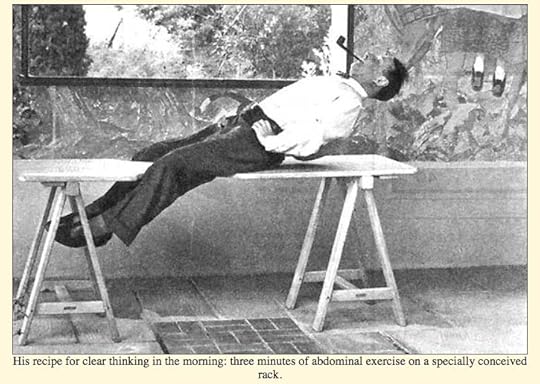
Simenon having a quick smoke while he powers through his three minutes of daily exercise.
Didn't the gaze of the three men reveal a shared secret life, a life, rather, that had been made to recoil upon itself? A look of timidity, almost a look of resignation, while the identical drawing in of the lips hinted at a suppressed revolt.
They were of the same breed, all three of them, the breed opposed to that of a Lane, or of a Musselman, or of his mother. It seemed to him that, in the whole world, there were only two sorts of men, those who bow their heads and the others. As a child, he had already thought it in more literal terms: the whipped and those who whip.
His father had bowed his head, spent his life soliciting loans from the banks, and it was while he was once again waiting in a banker's anteroom that he had died. Had not that irony of fate caused him to smile at the last moment?
Once only in his life had he accomplished an act that might pass for a revolt, and subsequently he had been made every day to pay for it; years later Dave's mother was still using the incident to besmirch his memory, saying to her son: "You'll never be anything but a Galloway!"
...
The first visit was the most sterile, because Ben had grown no tamer, continued to regard his father as though they were not both of the same kind.
Dave would take as much time as was needed to make him understand that each of the three had had his revolt, that each of the three was responsible, and that, outside prison, he was paying the same price as his son.
Hadn't all three imagined that they were going to set themselves free?
In terms of language and background details, there's something a little clunky about this. Simenon often misses the American expression in a way that takes you just a little bit out of the story, giving the story a feel that's too European or old fashioned. Also that the protagonist repairs watches and lives in an apartment over his shop (and spends his nights playing backgammon with a fellow artisan) doesn't strike me as a typical American from the time period.
On the other hand, the story itself and its emotional core is, as always with Simenon, on solid ground. We follow from the father's point of view as he realizes his son has run away, has committed a terrible crime, and is finally apprehended and sentenced. Once we realize what's going on everything feels inevitable in a real gut-punching way. All that's left is for the father to try and reconcile his love for his son with the devastation his son has caused. I don't think any writer alive today has written fiction so compelling about the phenomena of mass shooting and mass incarceration, and the heartbreak therein.

October 16, 2020
Classic Simenon, inizi e dopo due pagine non riesci a staccarti più.
Non certo il suo miglior libro né la miglior trama.
Ma i suoi racconti hanno qualcosa di strano, sembra quasi come Simenon avesse 100 modi diversi di vedere la vita, ma la conclusione sia sempre la stessa, una nostalgica amarezza.
Non certo il suo miglior libro né la miglior trama.
Ma i suoi racconti hanno qualcosa di strano, sembra quasi come Simenon avesse 100 modi diversi di vedere la vita, ma la conclusione sia sempre la stessa, una nostalgica amarezza.

February 4, 2020
"Ho proprio paura, signo Galloway, e questo vale per tutti, che noi genitori siamo gli ultimi a conoscere i nostri figli".
Dave Galloway orologiaio di Everton, ha un figlio, Ben, di 16 anni, Dave ha una vita ordinaria e ripetitiva, quasi meccanica, ha un amico, Musak, immigrato vent’anni prima dall’Europa con cui passa sistematicamente i Sabato sera guardando le partite di Baseball dalla sua veranda.
La vita scorre tranquilla, ripetitiva, costantemente uguale sino ad un Sabato sera quando, al rientro del padre dall’ennesima serata dall’amico, scopre che il figlio se ne è andato senza dire nulla e anche la sua fidanzatina quindicenne non si trova più.
Da quel momento per Dave Galloway la vita avrà un brusco cambiamento.
Che fine avranno fatto i due giovani? Perchè questa misteriosa fuga? Cosa riserverà il futuro per i ragazzi tanto quanto per questo padre che forse non conosceva così tanto il figlio come credeva?
“L’orologiaio di Everton” pubblicato da Simenon nel 1954 è un profondo e toccante romanzo drammatico che riesce a far vivere, grazie ad uno scritto molto cadenzato, un viaggio emozionale nella mente di un padre che di punto in bianco si ritroverà a fare i conti con lo svanimento di molte delle sue certezze più intime.
Vivremo, assieme al protagonista, un viaggio profondamente introspettivo, un racconto che saprà essere drammatico ma delicato al tempo stesso, profondamente empatico specie per chi magari nella realtà è padre a sua volta, personalmente essendo io genitore mi sono trovato durante la lettura a pormi domande “suggeritemi” dal racconto, cosa questa che trovo particolarmente interessante in un libro.
La scrittura è quella la classica e inconfondibile di Simenon, dettagliata, spesso amara, scorrevole ed immersiva tanto da trovare in diversi punti alcuni similitudini, per scelte stilistiche e narrative, con brani di "Quel fantastico Giovedì" di John Steinbeck.
Condivideremo un “viaggio umano” di un padre inghiottito dagli ingranaggi di un dramma “cadutogli” fra le mani senza un vero perchè e allora vivremo gli assalti di giornalisti assetati di notizie, la spietatezza di certi avvocati, il biasimo dei vicini ma anche l’inaspettato tatto di poliziotti e agenti dell’FBI, senza dimenticare gli amici veri, come Musak, che nel momento del bisogno sapranno essere validissimi aiuti.
Unico neo che mi sento di far notate è, forse, il non aver approfondito maggiormente l’aspetto psicologico del figlio che per quanto risulti con i suoi gesti centrale nel racconto, rimane come "umanità" molto sullo sfondo, quasi sfocato, facendo conoscere molto poco di lui e lasciando aperti diversi interrogativi sulla sua persona.
Un romanzo questo che alla conclusione lascerà sì l’amaro in bocca ma che vedrà anche germogliare semi di speranza e di adattamento al proprio futuro, un futuro che, senza un atto di ribellione, non si sarebbe nai presentato.
Dave Galloway orologiaio di Everton, ha un figlio, Ben, di 16 anni, Dave ha una vita ordinaria e ripetitiva, quasi meccanica, ha un amico, Musak, immigrato vent’anni prima dall’Europa con cui passa sistematicamente i Sabato sera guardando le partite di Baseball dalla sua veranda.
La vita scorre tranquilla, ripetitiva, costantemente uguale sino ad un Sabato sera quando, al rientro del padre dall’ennesima serata dall’amico, scopre che il figlio se ne è andato senza dire nulla e anche la sua fidanzatina quindicenne non si trova più.
Da quel momento per Dave Galloway la vita avrà un brusco cambiamento.
Che fine avranno fatto i due giovani? Perchè questa misteriosa fuga? Cosa riserverà il futuro per i ragazzi tanto quanto per questo padre che forse non conosceva così tanto il figlio come credeva?
“L’orologiaio di Everton” pubblicato da Simenon nel 1954 è un profondo e toccante romanzo drammatico che riesce a far vivere, grazie ad uno scritto molto cadenzato, un viaggio emozionale nella mente di un padre che di punto in bianco si ritroverà a fare i conti con lo svanimento di molte delle sue certezze più intime.
Vivremo, assieme al protagonista, un viaggio profondamente introspettivo, un racconto che saprà essere drammatico ma delicato al tempo stesso, profondamente empatico specie per chi magari nella realtà è padre a sua volta, personalmente essendo io genitore mi sono trovato durante la lettura a pormi domande “suggeritemi” dal racconto, cosa questa che trovo particolarmente interessante in un libro.
La scrittura è quella la classica e inconfondibile di Simenon, dettagliata, spesso amara, scorrevole ed immersiva tanto da trovare in diversi punti alcuni similitudini, per scelte stilistiche e narrative, con brani di "Quel fantastico Giovedì" di John Steinbeck.
Condivideremo un “viaggio umano” di un padre inghiottito dagli ingranaggi di un dramma “cadutogli” fra le mani senza un vero perchè e allora vivremo gli assalti di giornalisti assetati di notizie, la spietatezza di certi avvocati, il biasimo dei vicini ma anche l’inaspettato tatto di poliziotti e agenti dell’FBI, senza dimenticare gli amici veri, come Musak, che nel momento del bisogno sapranno essere validissimi aiuti.
Unico neo che mi sento di far notate è, forse, il non aver approfondito maggiormente l’aspetto psicologico del figlio che per quanto risulti con i suoi gesti centrale nel racconto, rimane come "umanità" molto sullo sfondo, quasi sfocato, facendo conoscere molto poco di lui e lasciando aperti diversi interrogativi sulla sua persona.
Un romanzo questo che alla conclusione lascerà sì l’amaro in bocca ma che vedrà anche germogliare semi di speranza e di adattamento al proprio futuro, un futuro che, senza un atto di ribellione, non si sarebbe nai presentato.

January 28, 2015
Who knew the day will come when I would give a 2-star rating to Simenon. My comfy writer; the writer I read so much by him and about him. The story is dry, the plot is nonexistent, the characters bland. There simply was nothing to get me going. This is supposed to be one of the good "romans durs" of Simenon but I recommend people skipping it. It's not worth it.
October 31, 2022
Dit boek, dat zich in de VS afspeelt, is niet typisch voor de "romans durs"van Simenon. Meestal speelt daarinde (seksuele) spanning tussen mannen en vrouwen een grote rol. Dat is in deze roman niet het geval. Het verhaal gaat over een eenzelvige en wat eenzame man die, nadat zij vrouw hem achterliet met hun 6 maanden oude zoontje, de jongen verder alleen opvoedde. Hij leeft voor zijn kind. Maar als zijn zoon 16 is vertrekt die ook, onaangekondigd, met een vriendinnetje. Hun vlucht verloopt niet zonder problemen, grote problemen. De vader blijft onvoorwaardelijk achter zijn zoon staan. De wanhoop, de zorgen en het verdriet van de vader worden mooi, levensecht en ontroerend beschreven.
Tot voor het einde was dit een van de beste boeken die ik van Simenon las. Dat einde viel me echter wel tegen. Het voelde aan of het er, om ervan af te zijn, was aangebreid. De vader vindt een voor hem logische verklaring voor familieproblemen die zich in de loop der jaren voordeden en put hieruit een soort van troost. Voor mij was de verklaring niet bevredigend en ze lostte zeker niets op. Dit was voor mij het enige minpunt aan deze bijzondere roman.
Tot voor het einde was dit een van de beste boeken die ik van Simenon las. Dat einde viel me echter wel tegen. Het voelde aan of het er, om ervan af te zijn, was aangebreid. De vader vindt een voor hem logische verklaring voor familieproblemen die zich in de loop der jaren voordeden en put hieruit een soort van troost. Voor mij was de verklaring niet bevredigend en ze lostte zeker niets op. Dit was voor mij het enige minpunt aan deze bijzondere roman.

September 19, 2024
Ένα από τα σκληρά μυθιστορήματα του Simenon, δηλαδή ένα από αυτά που μου αρέσουν και τον έχουν τοποθετήσει στους αγαπημένους μου συγγραφείς. Υπάρχει ένας φόνος, αλλά αυτός είναι το δευτερεύον στοιχείο, το πρωτεύον είναι η σχέση πατέρα και γιου.
Ο Ντέηβ Γκαλλοουεϋ είναι ένας τυπικός, πολύ τυπικός, μικροαστός ωρολογοποιός στο Έβερτον της Νέας Υόρκης. Πριν 15 χρόνια έχει εγκαταλειφθεί από τη γυναίκα του και ανατρέφει τον εξάμηνο, τότε, γιό του Μπεν. Ο Μπεν στα 16 του φεύγει με την φίλη του Λίλιαν και σκοτώνει έναν τυχαίο άνθρωπο στο δρόμο.
"Όλα αυτά δεν ήταν παρά μία παρεξήγηση. Οι πράξεις των άλλων μας φαίνονται πάντα την περίεργες γιατί δεν γνωρίζουμε τα πραγματικά αίτια."
"Του φαινόταν ότι σε όλο τον κόσμο υπήρχαν μόνο δύο είδη ανθρώπων, αυτοί που σκύβουν το κεφάλι και οι άλλοι."
Ο Ντέηβ Γκαλλοουεϋ είναι ένας τυπικός, πολύ τυπικός, μικροαστός ωρολογοποιός στο Έβερτον της Νέας Υόρκης. Πριν 15 χρόνια έχει εγκαταλειφθεί από τη γυναίκα του και ανατρέφει τον εξάμηνο, τότε, γιό του Μπεν. Ο Μπεν στα 16 του φεύγει με την φίλη του Λίλιαν και σκοτώνει έναν τυχαίο άνθρωπο στο δρόμο.
"Όλα αυτά δεν ήταν παρά μία παρεξήγηση. Οι πράξεις των άλλων μας φαίνονται πάντα την περίεργες γιατί δεν γνωρίζουμε τα πραγματικά αίτια."
"Του φαινόταν ότι σε όλο τον κόσμο υπήρχαν μόνο δύο είδη ανθρώπων, αυτοί που σκύβουν το κεφάλι και οι άλλοι."


April 20, 2020
Az eddigi legsúlyosabb, legirodalmibb Simenon, amelyet olvastam. Van bűneset, de mégsem igazi krimi a könyv, inkább valamiféle lélektani, borzongató rejtvény, mélymerülés néhány ember pszichéjébe, de - ami miatt igazán szeretem Simenont, és ami miatt nem válik erőlködővé, fantáziátlan favágássá, mint hasonló témák esetén más írók oly sokszor - egyszerű stílusban, más körülmények között hétköznapinak számító eseményeken keresztül előadva. Ez a szikár, életszagú mesélői stílus szerintem a legnagyobbak sajátja, és ma, a modern, cinikus irodalmi rokokó korában sajnos elég alulértékelt, nem gyakorolt és nem becsült.

July 30, 2022
Pur essendo tra gli scrittori più prolifici del novecento, devo ammettere la mia conoscenza piuttosto limitata di Simenon. Ho cercato un po' nel mucchio ed è venuto fuori questo romanzo scritto nel 1954. Protagonista è, come recita il ritolo, un orologiaio della provincia americana. La sua vita scorre metodica e tranquilla ma viene increspata dalla scomparsa del suo furgone e del figlio sedicenne. Quello che scoprirà e scopriremo nei pochi giorni successivi lo porterà a guardarsi dentro.
Prima di tutto non mi aspettavo l'ambientazione americana e invece poi ho scoperto che una parte della sua vita Simenon l'ha vissuta li e vi ha ambientato diversi romanzi. Non immaginavo che la storia fosse di una così drammatica attualità, sotto molti punti di vista. Il rapporto genitori-figli, il ruolo della stampa e della giustizia. Gli anni non sembrano per niente pesare su questo libro, con poche accortezze potrebbe essere benissimo ambientato ai giorni nostri. Forse a causa dello stile scarno e facilmente adattabile ma l'ho trovato veramente folgorante. La riduzione all'essenziale riguarda in più larga misura gli ambienti e l'ambiente che circonda la scena mentre trovo che i personaggi siano tutti tratteggiati piuttosto bene e i caratteri principali possono essere universali.
Bel libro, breve e avvincente che mi incuriosisce nell'approfondire la conoscenza di questo scrittore.
Prima di tutto non mi aspettavo l'ambientazione americana e invece poi ho scoperto che una parte della sua vita Simenon l'ha vissuta li e vi ha ambientato diversi romanzi. Non immaginavo che la storia fosse di una così drammatica attualità, sotto molti punti di vista. Il rapporto genitori-figli, il ruolo della stampa e della giustizia. Gli anni non sembrano per niente pesare su questo libro, con poche accortezze potrebbe essere benissimo ambientato ai giorni nostri. Forse a causa dello stile scarno e facilmente adattabile ma l'ho trovato veramente folgorante. La riduzione all'essenziale riguarda in più larga misura gli ambienti e l'ambiente che circonda la scena mentre trovo che i personaggi siano tutti tratteggiati piuttosto bene e i caratteri principali possono essere universali.
Bel libro, breve e avvincente che mi incuriosisce nell'approfondire la conoscenza di questo scrittore.

Read
August 17, 2019Dave Galloway ist Uhrmacher in der US-Kleinstadt Everton. Er repariert und restauriert alles, was kompliziert, fragil und mechanisch ist, und fährt dazu auch mit einer kleinen Werkstatt in seinem Transporter zu den Kunden. In der Wohnung über seiner Werkstatt lebt er mit Sohn Ben, den er allein versorgt, seit Ben circa ein halbes Jahr alt war. Nur wegen der Wohnung nah bei seiner Werkstatt ist Dave mit Ben überhaupt nach Everton gezogen. Daves Leben wird von seinem Beruf und seinen Vaterpflichten bestimmt. Außer dem Training der Baseballmannschaft zuzuschauen ist sein einziges Vergnügen das regelmäßige Backgammon-Spiel mit Musak, einem finster wirkenden Einwanderer, der auch als Handwerker arbeitet. Der heutige Spieleabend wird der letzte sorglose Abend für Dave sein. Unübersehbar braut sich über ihm eine Katastrophe zusammen; denn am nächsten Morgen wird Ben mit Daves Lieferwagen abgehauen sein.
Dave hat offenbar schon früher darüber gegrübelt, ob Ben glücklich ist und ob der Junge sich eher wie er selbst oder wie seine Ex-Frau Ruth entwickeln wird. Da Ben sein Verschwinden offensichtlich kühl und perfekt vorbereitet hat, muss sich Dave nun fragen, ob ihm in der Entwicklung seines Sohnes etwas Entscheidendes entgangen ist.
Simenon erzählt in wenigen Worten aus Daves Perspektive von der besonderen Vater-Sohn-Beziehung, aber auch von Daves Freundschaft mit Musak. Wie ein Maler zeichnet der Autor mit wenigen Pinselstrichen ein nüchternes Bild seiner Figuren und schafft so eine Stimmung, die die kommende Bedrohung von Anfang an spüren lässt. Als Leser ist man der Handlung stets ein paar Schritte voraus, während Dave lange am Bild seines Sohnes festhält, das von den Ereignissen längst überholt wurde. Dave glaubt noch immer, er müsste der Polizei und der Presse seinen Sohn erklären, während Ben längst Fakten geschaffen hat.
In Simenons Reihe der „Romans durs“ entstand „Der Uhrmacher von Everton“ 1954 in den USA und wurde im selben Jahr veröffentlicht. Im aufschlussreichen Nachwort interpretiert der Autor Philip Haibach den „Uhrmacher“ als eine umgedrehte Road-Novel mit einer in ihrer Heimat fest verwurzelten Hauptfigur. Mein erster Nicht-Maigret von Simenon war „Das Haus am Kanal“, ich vermute damals in der Diogenes-Ausgabe. Meine Verblüffung, wie genau Simenon den Alltag kleiner Leute beschreibt, hat sich bei diesem Buch wiederholt, hier verstärkt durch die Sicht der 50er Jahre, als ein alleinerziehender Vater noch lange nicht so selbstverständlich war, wie Simenon Dave darstellt.
Dave hat offenbar schon früher darüber gegrübelt, ob Ben glücklich ist und ob der Junge sich eher wie er selbst oder wie seine Ex-Frau Ruth entwickeln wird. Da Ben sein Verschwinden offensichtlich kühl und perfekt vorbereitet hat, muss sich Dave nun fragen, ob ihm in der Entwicklung seines Sohnes etwas Entscheidendes entgangen ist.
Simenon erzählt in wenigen Worten aus Daves Perspektive von der besonderen Vater-Sohn-Beziehung, aber auch von Daves Freundschaft mit Musak. Wie ein Maler zeichnet der Autor mit wenigen Pinselstrichen ein nüchternes Bild seiner Figuren und schafft so eine Stimmung, die die kommende Bedrohung von Anfang an spüren lässt. Als Leser ist man der Handlung stets ein paar Schritte voraus, während Dave lange am Bild seines Sohnes festhält, das von den Ereignissen längst überholt wurde. Dave glaubt noch immer, er müsste der Polizei und der Presse seinen Sohn erklären, während Ben längst Fakten geschaffen hat.
In Simenons Reihe der „Romans durs“ entstand „Der Uhrmacher von Everton“ 1954 in den USA und wurde im selben Jahr veröffentlicht. Im aufschlussreichen Nachwort interpretiert der Autor Philip Haibach den „Uhrmacher“ als eine umgedrehte Road-Novel mit einer in ihrer Heimat fest verwurzelten Hauptfigur. Mein erster Nicht-Maigret von Simenon war „Das Haus am Kanal“, ich vermute damals in der Diogenes-Ausgabe. Meine Verblüffung, wie genau Simenon den Alltag kleiner Leute beschreibt, hat sich bei diesem Buch wiederholt, hier verstärkt durch die Sicht der 50er Jahre, als ein alleinerziehender Vater noch lange nicht so selbstverständlich war, wie Simenon Dave darstellt.

April 28, 2016
Dave Galloway was a quiet clockmaker who was raising a teenage son on his own (his wife had run off fifteen years earlier leaving behind the son, Ben). He lived a quiet life, allowing himself a weekly visit to a cabinetmaker friend to watch baseball and play backgammon. It comes as a big surprise when he finds that Ben has run off with the fifteen-year-old daughter of his neighbor in his father's car.
But that is not all. Ben had shot and killed a passing motorist, robbing his car and money, and started driving to Illinois, whose marriage laws at the time permitted minors to marry without parental permission.
When Ben and his girl Lillie Hawkins are finally captured after a gunfight in which the boy runs out of bullets, Dave drops everything and flies to Indianapolis, only to find that Ben and Lillie were flying back to New York, where the murder was committed.
At no point does Ben actually want to speak to his father, who is eager to shower his son with forgiveness and understanding:
The Clockmaker: Originally Published in English as the Watchmaker is one of Georges Simenon's romans durs, the name the author gave to those stories not involving Inspector Jules Maigret. These novels tend to be more "hard" than the mysteries.
I have read several dozen Simenon novels and find this to be one of the best of them. I was astonished that Simenon, having set his story in upstate New York, had captured the American idiom so perfectly. There were no false notes, just the inevitably working out of the story of Ben's capture and Dave's growing self-realization.
But that is not all. Ben had shot and killed a passing motorist, robbing his car and money, and started driving to Illinois, whose marriage laws at the time permitted minors to marry without parental permission.
When Ben and his girl Lillie Hawkins are finally captured after a gunfight in which the boy runs out of bullets, Dave drops everything and flies to Indianapolis, only to find that Ben and Lillie were flying back to New York, where the murder was committed.
At no point does Ben actually want to speak to his father, who is eager to shower his son with forgiveness and understanding:
He no longer let himself grow impatient, was beginning to get used to the fact that everything turned out differently from what he hoped, and he did not lose courage, being convinced that it was he who would have the last word.But did Dave Galloway, in fact, have the last word? I do not wish to say fo as not to spoil the book for others.
The Clockmaker: Originally Published in English as the Watchmaker is one of Georges Simenon's romans durs, the name the author gave to those stories not involving Inspector Jules Maigret. These novels tend to be more "hard" than the mysteries.
I have read several dozen Simenon novels and find this to be one of the best of them. I was astonished that Simenon, having set his story in upstate New York, had captured the American idiom so perfectly. There were no false notes, just the inevitably working out of the story of Ben's capture and Dave's growing self-realization.

January 15, 2020
Sempre a indagare l'animo di personaggi particolari, diversi, che si ritrovano in situazioni estreme. Sempre a intrecciare misteri, ad alludere qualcosa che il lettore cerca disperatamente di decifrare fino alla fine. Sempre a ricostruire le atmosfere, i suoni, i colori, per farci entrare dentro il protagonista. Sempre una scrittura fluida, semplice, scorrevole, eppure capace di mettere addosso quella frenesia, quella voglia di divorare il libro. È sempre così che ho percepito Georges Simenon.
Stavolta l'uomo in cui l'autore ha deciso di scavare è un orologiaio che vive solo con il figlio, luce dei suoi occhi e del suo cuore. Ma proprio quel ragazzino lo metterà in una posizione terribile, che lo dividerà tra ciò che è giusto e ciò che l'amore lo spinge a fare. Ne L'orologiaio di Everton si passa dallo shock della scoperta al dolore, dalla negazione all'apatia del lasciarsi trasportare da quello che la vita propone. Non il mio Simenon preferito, ma ho apprezzato, e come al solito mi ha fatto molto riflettere.
Per altre opinioni librose: https://www.instagram.com/silvia_feli...
Stavolta l'uomo in cui l'autore ha deciso di scavare è un orologiaio che vive solo con il figlio, luce dei suoi occhi e del suo cuore. Ma proprio quel ragazzino lo metterà in una posizione terribile, che lo dividerà tra ciò che è giusto e ciò che l'amore lo spinge a fare. Ne L'orologiaio di Everton si passa dallo shock della scoperta al dolore, dalla negazione all'apatia del lasciarsi trasportare da quello che la vita propone. Non il mio Simenon preferito, ma ho apprezzato, e come al solito mi ha fatto molto riflettere.
Per altre opinioni librose: https://www.instagram.com/silvia_feli...

December 10, 2009
English title: The Watchmaker of Everton

October 12, 2018
This novel was really not what I expected at all from what it was told to me about its genre and author, and pretty meh at that. It had some interesting themes, though, but one of those should have been explored more and with more depth for me to actively enjoy the book:
- the theme of a parent not necessarily knowing their children well and not necessarily giving them everything emotionally / not necessarily noticing shift in their behaviour or getting how they feel
- the boy's motivation and personality
- what behaviour of a relative of a suspect can be helpful and what can be detrimental during a criminal investgation
- what could happen when two, personality-wise completely people get in a relationship and have a child together
etc.
But it was just a really dry, sort of uninteresting recall of two juvenile criminals getting caught by police and what happened to the father of one of them during the investigation, sprinkled with his thoughts written in a quite mundane way. The father character was also really boring... probably intentionally, but still, for me, it was not really enjoyable to read without a deeper psychological dive into any of the more interesting themes. Also, I found a lot of totally trivial and mundane things were written down that did not add to the story at all (like how to get into the flat of the clockmaker).
Also, for how short this novel was, the set-up part of the story just went on too long.
- the theme of a parent not necessarily knowing their children well and not necessarily giving them everything emotionally / not necessarily noticing shift in their behaviour or getting how they feel
- the boy's motivation and personality
- what behaviour of a relative of a suspect can be helpful and what can be detrimental during a criminal investgation
- what could happen when two, personality-wise completely people get in a relationship and have a child together
etc.
But it was just a really dry, sort of uninteresting recall of two juvenile criminals getting caught by police and what happened to the father of one of them during the investigation, sprinkled with his thoughts written in a quite mundane way. The father character was also really boring... probably intentionally, but still, for me, it was not really enjoyable to read without a deeper psychological dive into any of the more interesting themes. Also, I found a lot of totally trivial and mundane things were written down that did not add to the story at all (like how to get into the flat of the clockmaker).
Also, for how short this novel was, the set-up part of the story just went on too long.

July 6, 2025
ILL. Story of a man living with his 16 year old son in upstate NYC. He's a watchmaker and has been left by his wife after the child was born. Boring life- he has one good, but gruff older man friend with whom he plays backgammon once a week. One night the son does not come home. He has gone off, taken the man's car, a little money with a nearby young looking girl. they are on a runaway hoot and things go awry quickly and they kill a man on the road. National manhunt and our clockmaker is on the news looking clueless and stupid. Finally son- and girl- are found and they plead guilty and more or less say- yeah, too bad. It is stressed how little we know people. but the father is solidly behind the son and ultimately sees this "act of rebellion" on the son's part as akin to when he married the loose woman 20 years ago- against the advice of all. And his own father who also had a small act of rebellion too- so you see they are all part of the same rebellious tradition! but- how absurd... this son killed a man and laughs about it! but is it completely crazy. Well- not completely... but still.. we are staggered as the reader at the insular unknowability of all people are ... It's great. (though a bit of a stretch).

January 9, 2018
Il rapporto tra me e Simenon è abbastanza controverso. E' chiaro che abbiamo qualche problema di approccio, considerando che sono soltanto agli inizi riguardo alla lettura della sua estesa opera. E' fuor di dubbio che sia uno scrittore di livello, ma ancora non è scattata la scintilla, tra noi due.
Per quanto "L'orologiaio di Everton" sia un giallo di buon livello, con numerosi risvolti psicologici che possono indurre a riflettere, ancora non posso dire che tra me e lo scrittore belga si sia creata quella sinergia lettore-scrittore che avverto quando leggo, ad esempio, un McCarthy o un King. Devo dire, però, che il potenziale c'è e che la voglia di leggere altro, nel suo repertorio, è piuttosto viva.
E' una piacevole lettura, ma forse va fatta dopo aver letto quelli che sono i capolavori dello scrittore.
Per quanto "L'orologiaio di Everton" sia un giallo di buon livello, con numerosi risvolti psicologici che possono indurre a riflettere, ancora non posso dire che tra me e lo scrittore belga si sia creata quella sinergia lettore-scrittore che avverto quando leggo, ad esempio, un McCarthy o un King. Devo dire, però, che il potenziale c'è e che la voglia di leggere altro, nel suo repertorio, è piuttosto viva.
E' una piacevole lettura, ma forse va fatta dopo aver letto quelli che sono i capolavori dello scrittore.

December 31, 2023
Dave Galloway is a watch repairer by trade, living in Everton, New York, with a 16-year-old son named Ben, whom he adores but Ben is very cool towards him. Ben runs away with a 15 year old girl named Lillian Hawkins, stealing Dave's car in the getaway. From a friend of his, Ben has also purchased a revolver. The word comes that they have murdered a man and stolen his car, leaving Dave's car by the side of the road. Dave is determined to stand with his son, come what may, and the book deals with how Dave comes to understand Ben and himself. Ben's mother had left Dave when Ben was 6 months old and Dave had raised him by himself, trying his best. So how did Ben go wrong? The book is basically a psychological mystery and only superficially a murder mystery.

November 26, 2024
Decisamente un racconto cupo e malinconico, classico stile simenoniano, che parte dalla descrizione di un uomo e della sua vita monotona - scandita dai soliti gesti, dai soliti pasti, dalle solite facce - e marcata da un avvenimento tragico e, inizialmente, quasi inspiegabile.
Seguiamo Dave attraverso i suoi occhi e le sue riflessioni, passando da uno stato di incredulità ad uno stato di rassegnazione. Ho provato tenerezza nei suoi confronti, soprattutto alla fine, quando chiede all’amico un favore speciale che quasi mi ha commossa.
Sicuramente termina lasciandoci dell’amaro in bocca e l’ho trovato un po’ più lento rispetto agli altri suoi libri, ma mi è piaciuta l’ambientazione negli Stati Uniti e i suoi personaggi.
Seguiamo Dave attraverso i suoi occhi e le sue riflessioni, passando da uno stato di incredulità ad uno stato di rassegnazione. Ho provato tenerezza nei suoi confronti, soprattutto alla fine, quando chiede all’amico un favore speciale che quasi mi ha commossa.
Sicuramente termina lasciandoci dell’amaro in bocca e l’ho trovato un po’ più lento rispetto agli altri suoi libri, ma mi è piaciuta l’ambientazione negli Stati Uniti e i suoi personaggi.

April 14, 2026
Con L’orologiaio di Everton, Georges Simenon mostra un volto diverso da quello dei romanzi di Maigret. Qui non c’è il classico investigatore al centro della scena, ma un padre comune costretto a guardare suo figlio e sé stesso con occhi nuovi dopo un fatto sconvolgente.
È un romanzo asciutto, intenso e profondamente umano, costruito più sui silenzi e sulle emozioni che sul mistero. Simenon entra nell’animo dei personaggi con una semplicità disarmante e lascia il segno senza bisogno di effetti speciali.
Diverso da Maigret, ma ugualmente coinvolgente. Una lettura breve che resta dentro a lungo.
È un romanzo asciutto, intenso e profondamente umano, costruito più sui silenzi e sulle emozioni che sul mistero. Simenon entra nell’animo dei personaggi con una semplicità disarmante e lascia il segno senza bisogno di effetti speciali.
Diverso da Maigret, ma ugualmente coinvolgente. Una lettura breve che resta dentro a lungo.

December 29, 2018
I read this straight after "Red Lights" by Simenon - and it is in a similar vein. This time it is a crime story seen through the eyes of the father of the criminal. Again, no twists in the tail and no surprises. You can see each development coming a mile off. It is more by way of a story following the emotional state of the father as he gradually discovers the truth about what his son has done. Well written, but I nearly gave up reading it as I suspected I knew what was coming. I did. Interesting read for the emotional depth but not that great.
Displaying 1 - 30 of 69 reviews