

What do you think?

Presumption; or, the Fate of Frankenstein
Richard B. Peake's Presumption; or, the Fate of Frankenstein is an important milestone in the development of the Frankenstein legend. First performed on the stage in 1823, Presumption introduced elements to Shelley's original story which have since become iconic parts of Frankenstein's pop-cultural legacy.
Edited with an introduction by G. K. Koon.
Edited with an introduction by G. K. Koon.
64 pages, Paperback
First published January 1, 1822
Ratings & Reviews
Friends & Following
Create a free account to discover what your friends think of this book!
Community Reviews
Displaying 1 - 22 of 22 reviews

December 29, 2020
boring
February 1, 2026
Well, at least it has that audacity

March 23, 2021
The only presumption in this play was Peake thinking he could pull this off. Mary Shelley is rolling in her grave.
2.25
2.25

October 10, 2025
mira q no soy fan de la obra original, pero si fuese Mary Shelley me arrancaba de los pelos al leer esto

March 1, 2023
Fascinating as the cash-grab adaptation it is. Some adaptive gestures are of interest – such as the ending, which seems to prefigure Arthur Conan Doyle's "The Final Problem" – but overall, this excels mostly at condensing and rushing through some of the novel's highlights and generally focusing on the story's least interesting aspects.

December 6, 2020
2.5 stars actually

October 24, 2021
the Peake of bizarreness… a musical in which the monster is simultaneously 27 ft and 10’7 tall… followed by rock(y)s fall everyone dies 👍
This entire review has been hidden because of spoilers.

Read
February 7, 2023reads like a watt pad fanfic
January 13, 2026
Ojalá nunca me hubiera tenido que leer esto

November 9, 2025
Dreadful—but not in a good way.
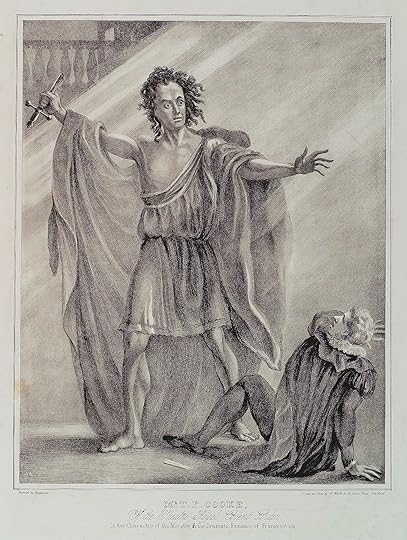
[Image: Poster used to advertise an 1823 production of Presumption. T.P. Cooke plays the Monster. Painted by Nathaniel Whittock & Thomas Charles Wageman]
Presumption; or, the Fate of Frankenstein by Richard Brinsley Peake is mostly of interest for its historical value. It is the earliest stage adaptation of the novel Frankenstein (1818) and according to scholar Leslie S. Klinger (2017), was “enormously popular” (p. 310) during its day. The popularity of the play led to the novel Frankenstein being republished, this time with author Mary Wollstonecraft Shelley’s name attached. During its first run, the book was published anonymously. Additionally, Presumption is a stage version that Mary Shelley herself saw. She went to a production of it with her father William Godwin on August 29, 1823. She reflected on viewing it to her friend Leigh Hunt, in a letter:
Reading it 200 years later, I find Presumption to be shallow and hokey. The many musical numbers feel terribly out of place, as does the love story between Henry Cavill and Elizabeth. Victor is bizarrely changed to being Elizabeth's brother and paired with Agatha, another lackluster romantic subplot. The attempts at humor are cringe-worthy. Other strange choices are made to condense the 300+ page novel into the confines of a play, including making the De Lacey family friends with the Frankenstein clan. The choice to portray the Creature—always referred to as “the Demon” here—as mute is somewhat interesting. It must have been a fun challenge for actors such as T.P. Cooke to play the role entirely in pantomime. However, I sorely missed the Creature’s dramatic and articulate monologues that the novel is filled with. The ending—with Victor and the Demon being killed in an avalanche—is a cop-out.
You can find much better stage adaptations of Mary Shelley’s great book in Ian Doescher’s Shakespeare-inspired Tragical History of Frankenstein (2020) and Nick Dear’s 2011 adaptation. The latter play was produced by National Theater in London in 2011, starring Benedict Cumberbatch and Jonny Lee Miller, and directed by Danny Boyle, and was recorded. Cumberbatch and Miller alternated the roles of the Monster and Victor each night.
Beyond bringing attention back to the novel, Presumption has had some lasting impacts. It inspired multiple other stage productions of Frankenstein and introduced the world to the idea of Victor having an assistant. In the book, he acted alone in creating a new life form. The dim-witted assistant Fritz is introduced, who would later be in the 1931 film as a hunchback played by Dwight Frye. The hunchback named Igor would not appear in the Frankenstein franchise until 1939’s film The Son of the Frankenstein, played by Bela Lugosi in a career-best performance.
******************************************************************************
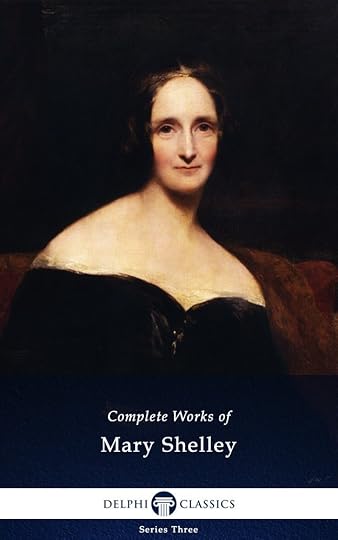
[Image: Book Cover]
Citation:
Shelley, M. (2015). Presumption; or, the fate of Frankenstein. In Complete Works of Mary Shelley (Kindle Edition, pp. 4899-4968). Delphi Classics. https://www.amazon.com/gp/product/B00.... (Original work published 1823)
Shelley, M. W. (2017). The new annotated Frankenstein (L. S. Klinger, Ed.). Liveright Publishing Corporation, a division of W.W. Norton & Company, Inc.
Title: Presumption; or, the Fate of Frankenstein
Author(s): Richard Brinsley Peake (1792-1847)
Year: 1823
Genre: Fiction - Stage Play: Horror, Science Fiction, Musical
Page count: 69 pages
Date(s) read: 11/8/25 - 11/9/25
Book 236 in 2025
******************************************************************************
“What have I cast on the world? a creature powerful in form, of supernatural and gigantic strength, but with the mind of an infant. Oh, that I could recall my impious labour, or suddenly extinguish the spark which I have so presumptuously bestowed.”
(Victor, Act II, Scene II, p. 4925)
[Image: Poster used to advertise an 1823 production of Presumption. T.P. Cooke plays the Monster. Painted by Nathaniel Whittock & Thomas Charles Wageman]
Presumption; or, the Fate of Frankenstein by Richard Brinsley Peake is mostly of interest for its historical value. It is the earliest stage adaptation of the novel Frankenstein (1818) and according to scholar Leslie S. Klinger (2017), was “enormously popular” (p. 310) during its day. The popularity of the play led to the novel Frankenstein being republished, this time with author Mary Wollstonecraft Shelley’s name attached. During its first run, the book was published anonymously. Additionally, Presumption is a stage version that Mary Shelley herself saw. She went to a production of it with her father William Godwin on August 29, 1823. She reflected on viewing it to her friend Leigh Hunt, in a letter:
But lo & behold! I found myself famous!—Frankenstein had prodigious success as a drama & was about to be repeated for the 23rd night at the English opera house. The play bill amused me extremely, for in the list of dramatis personæ came, ⸻ by Mr. T. Cooke: this nameless mode of naming the [unnameable] is rather good. On Friday Aug. 29th Jane[,] My father William[,] & I went to the theatre to see it. Wallack looked very well as F—he is at the beginning full of hope & expectation—at the end of the 1st Act. the stage represents a room with a staircase leading to F workshop—he goes to it and you see his light at a small window, through which a frightened servant peeps, who runs off in terror when F. exclaims "It lives!"—Presently F himself rushes in horror & trepidation from the room and while still expressing his agony & terror ⸻ throws down the door of the laboratory, leaps the staircase & presents his unearthly & monstrous person on the stage. The story is not well managed—but Cooke played ⸻'s part extremely well—his seeking as it were for support—his trying to grasp at the sounds he heard—all indeed he does was well imagined & executed. I was much amused, & it appeared to excite a breathless eagerness in the audience—it was a third piece a scanty pit filled at half-price—& all stayed til it was over. They continue to play it even now.
Reading it 200 years later, I find Presumption to be shallow and hokey. The many musical numbers feel terribly out of place, as does the love story between Henry Cavill and Elizabeth. Victor is bizarrely changed to being Elizabeth's brother and paired with Agatha, another lackluster romantic subplot. The attempts at humor are cringe-worthy. Other strange choices are made to condense the 300+ page novel into the confines of a play, including making the De Lacey family friends with the Frankenstein clan. The choice to portray the Creature—always referred to as “the Demon” here—as mute is somewhat interesting. It must have been a fun challenge for actors such as T.P. Cooke to play the role entirely in pantomime. However, I sorely missed the Creature’s dramatic and articulate monologues that the novel is filled with. The ending—with Victor and the Demon being killed in an avalanche—is a cop-out.
You can find much better stage adaptations of Mary Shelley’s great book in Ian Doescher’s Shakespeare-inspired Tragical History of Frankenstein (2020) and Nick Dear’s 2011 adaptation. The latter play was produced by National Theater in London in 2011, starring Benedict Cumberbatch and Jonny Lee Miller, and directed by Danny Boyle, and was recorded. Cumberbatch and Miller alternated the roles of the Monster and Victor each night.
Beyond bringing attention back to the novel, Presumption has had some lasting impacts. It inspired multiple other stage productions of Frankenstein and introduced the world to the idea of Victor having an assistant. In the book, he acted alone in creating a new life form. The dim-witted assistant Fritz is introduced, who would later be in the 1931 film as a hunchback played by Dwight Frye. The hunchback named Igor would not appear in the Frankenstein franchise until 1939’s film The Son of the Frankenstein, played by Bela Lugosi in a career-best performance.
******************************************************************************
[Image: Book Cover]
Citation:
Shelley, M. (2015). Presumption; or, the fate of Frankenstein. In Complete Works of Mary Shelley (Kindle Edition, pp. 4899-4968). Delphi Classics. https://www.amazon.com/gp/product/B00.... (Original work published 1823)
Shelley, M. W. (2017). The new annotated Frankenstein (L. S. Klinger, Ed.). Liveright Publishing Corporation, a division of W.W. Norton & Company, Inc.
Title: Presumption; or, the Fate of Frankenstein
Author(s): Richard Brinsley Peake (1792-1847)
Year: 1823
Genre: Fiction - Stage Play: Horror, Science Fiction, Musical
Page count: 69 pages
Date(s) read: 11/8/25 - 11/9/25
Book 236 in 2025
******************************************************************************

December 8, 2021
At first I thought this could not be as tedious as people said, but as the actions are told the plot gets more and more boring and empty.
Anyone can read it in a short while but, without a doubt, I believe that there are many plays far better than this one to recommend.
Anyone can read it in a short while but, without a doubt, I believe that there are many plays far better than this one to recommend.

October 9, 2024
As an adaptation is horrible, by itself maybe it can entertain a kid. Substance was not found.
However I am very grateful to this play because it's thanks to it that frankestein became popular and is for that reason that I got to read the masterpiece written by Shelley
However I am very grateful to this play because it's thanks to it that frankestein became popular and is for that reason that I got to read the masterpiece written by Shelley

September 15, 2025
I’m glad everyone agrees this kinda sucks and is this kinda dumb… I wonder how Mary Shelley saw performed and enjoyed it, except that she was just delighted to have her writing adapted

October 25, 2025
Genuinely buns compared to the original novel
November 14, 2025
what did they do to the poor creature ???

June 16, 2016
This is hilariously bad.
Contains chirpy songs.
The eloquent monster doesn't get a line of dialogue.
It all takes place in what seems like a day.
Islamophobia included.
Someone says 'egad' in all seriousness.
Was a big inspiration for the far superior James Whale 1931 Frankenstein movie, so it's worth a look for that I guess. But it just appallingly misses everything which makes the book materpiece.
Worst fanfiction ever.
Contains chirpy songs.
The eloquent monster doesn't get a line of dialogue.
It all takes place in what seems like a day.
Islamophobia included.
Someone says 'egad' in all seriousness.
Was a big inspiration for the far superior James Whale 1931 Frankenstein movie, so it's worth a look for that I guess. But it just appallingly misses everything which makes the book materpiece.
Worst fanfiction ever.

Read
June 11, 2020Had read this some 30+ years ago; very melodramatic (in the original sense, too, as it has a number of songs). Pretty much for theatre & literature scholars, and Frankenstein completists. There was also an essay by Mrs. Shelley on the production she saw in 1823.

June 15, 2020
the first adaption of the novel, only five years after publication, which shelley herself saw in her lifetime and quite enjoyed apparently. much more similar to all the film adaptations than the novel itself. the songs are quite silly and i pictured them as sung by slaughter

January 31, 2016
After a recent viewing of the 1931 film (and as a longtime fan of both Shelley's), I noticed in the credits that it was based loosely on this play -- itself based even more loosely on the book.

March 13, 2022
19th century fanfiction with a deus ex machina ending what can i say

January 23, 2023
you will never be mary shelley
Displaying 1 - 22 of 22 reviews