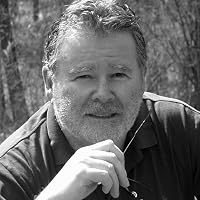
Offering a new interpretation of the life of Robert Frost, a biography of the great poet chronicles Frost's private life, including a long-time romance with his secretary, his work, and his influence on modern poetry
Jeffrey Meyers, a Fellow of the Royal Society of Literature, has recently been given an Award in Literature by the American Academy of Arts and Letters. Thirty of his books have been translated into fourteen languages and seven alphabets, and published on six continents. He lives in Berkeley, California.
I am only passing familiar with Frost's work - you know the ones: Mending Wall, The Road Not Taken, Stopping By Woods On A Snowy Evening, The Pasture - but have always been interested in his reputation and esteemed place in our culture. The awards are many: 4 Pulitzer Prizes, numerous honorary degrees, among a whole host of other honors.
Having read another biography by Meyers, and it was well done, I ordered this volume from my local library.
There is an unfortunate dualism inherent in biographies of famous people. They move in wide circles, meeting and interacting with the famous and not-so-famous, but at some point, while interesting, it becomes overwhelming for the reader (me) to try to keep track of all the connections. Meyers can always refer back to his notes to refresh himself, but for me to remember, for example, an obscure acquaintance from Frost's childhood who, at a much later date, reappears as a significant figure in Frost's old age... Well, it's just too much. Kudos to the author for assembling the facts for us, but readers be prepared to put in some effort to keep the actors straight.
However, losing track of the players did not seriously affect my enjoyment of the biography. Frost led a very interesting, if tragic, life and there is no shortage of significant events to hold the interest. He at times seemed to be his own worst enemy, but clearly knew his calling from early on and resolutely stuck to his forte throughout his adult life. His family, children especially, suffered.
Frost excelled at poetry, but was fascinatingly weak in other areas. He couldn't take criticism well, had a very competitive streak, and showed childish jealousy when in a position to hear other poets speak. When one guest speaker took the stage, Frost 'accidentally' tripped and disconnected the lighting for a short while; when the lighting was restored he tripped yet again and knocked over the speaker's water glass. On another occasion, while sitting on the stage when a guest poet was speaking he managed somehow to set his hand-held notes afire, causing a commotion as he put out the flames and waved away the smoke. End result of each incident: attention taken away from the speaker and put onto Frost himself.
In spite of being somewhat sickly during his youth, Frost seemed to grow robust with age and lived until his late 80s.
Meyers is occasionally guilty of confusing the reader (me) by using too many pronouns. For example, he may write of so-and-so meeting with Frost and then continue with, 'He told him...' or, 'then he proceeded to...' leaving us to guess which of the participants said or did what. Again, relative to the whole bio, it's a small point.
As I finished it, I was much MUCH more open to Frost's talents and his unique vision for poetry.
Very well constructed, revealing and intimate.
You discover something which I love to tell everyone all the time- Frost was so not the country bumpkin poet everyone takes him to be. There's quite a bit of rabid pessimism here and the anecdotes are there to prove it. His philosophical probing was more subtle than many have noticed and his grace is part of that.
When I finished it, the radio was on and it was playing U2's "Bad" (a song I love and have always loved) and somehow the rippling guitar chords and spare, gasping vocals meshed georgeously with the last few pages of the book. A sweet moment.
I was inspired to pick up this book, after hearing Sam Hazo lecture about Robert Frost. I have always like Frost's poetry, but really knew little about him as a person, or his life. The biography was a little difficult, almost text book-like and I had to keep referring to my (complete and unabridged) The Poetry of Robert Frost. I feel like I need to read all the poems now, though I sometimes found the very long ones, well too long. Poetry seems to be much better when listened to, rather than read. (Did Sam Hazo say that?)
Frost was a difficult person, a difficult husband and father. (Having just read West of Sunset, fiction about F. Scott Fitzgerald, I can't help but wonder if all writers are flawed, not just in a normal, but a heightened way...)
"In Florida Frost met a popular novelist and a prominent poet. The tall, blond, florid Hervey Allen, fifteen years younger than Frost, was born in Pittsburgh, attended the U.S. Naval Academy and limped badly after being wounded while fighting in France during World War I." (207) (I marked this passage because I had never heard of this Pittsburgh poet and wanted to remember him.)
The following quote comes from John F. Kennedy's "eulogy" of Robert Frost.
"When power leads a man toward arrogance, poetry reminds him of his limitations. When power narrows the areas of man's concern, poetry reminds him of the richness and diversity of his existence. When power corrupts, poetry cleanses." (353)
I think my own ignorance of poetry and poets kept me from enjoying this book more. The author is a "poetry insider", and throughout the book makes repeated references to other (?obscure) poets, critics, and literary contemporaries of Frost that I had never heard of. If I knew who they were and their significance, the book in general would have been much more meaningful. Plus, Frost is not that sympathetic of a guy; he's insecure, often petty and petulant, and a poor father. Apparently his official biographer - someone named Lawrance Thompson - wrote a scathing post-mortem biography of Frost, seriously damaging his reputation. This book is supposed to be a more fair and balanced account of the man, in which case I would hate see Thompson's work. Positives include some of the explanations of Frost's poems, and their inspirations, and highlighting how Frost's poems often contained allusions or borrowed themes/phrases from great literary works including the Bible and Shakespeare.
Very helpful. I got a great introduction to Frost's troubled family life, and the acrimony of literary ... success / criticism / jealousy / envy / training. I was challenged by the book structure...of topics falling in a rough chronological order, but with each topic containing redundant historical information. In the end I come away with the conclusion that Robert Frost was the greatest American poet since the American Renaissance (mid 19th century), getting there through work, grit, talent, determination, and reputation-climbing, all at the expense of his family. He comes across as a fascinating man, but one who was hard to live with or work with.
The text was easy to read, but very perfunctory...fact by fact.
This biography sizzles. I never expected to find out so much about the revered poet of New England. His family is shown as a real pain and his mistress Kay Morrison as essential to his mature life. Frost is shown as a practical and eccentric character, capable of using academia to advance himself as a published poet. His work sold like hotcakes and in his later years he basked in his fame even though his fellow poets weren't always flattering to him. Forty four honorary degrees, four Pulitzers. Not bad. No Nobel Prize, probably because of his conservative republican politics. Sheds some light on the Witness Tree section.
"Emotional and insecure, he turned to poetry to direct his life and give it meaning; and poetry influenced and sometimes determined some of his most crucial decisions. He used Shelley's paean to free love to justify sleeping with Elinor, gave her the poems in Twilight to persuade her to marry him and was lured to the Dismal Swamp by its poetic associations." (33)
Though I'm familiar with quite a bit of the poetry of Robert Frost I had no knowledge of his life. Terribly sad; losing four children before he died. He had no faith base and I wonder if his life would have been eased if he had. I think it sure helps! Can't believe he'd have an affair and know his lover was sleeping with others...