Only by wedding bells could Lady Olivia Egan climb out of her late father's mountain of debt. Her choices were dismal—boring Mr. Antrobus and debauched Sir Greville—but even they were better than the notorious rakehell Damien St. Clair, who pursued her not for love but for revenge!
Librarian Note: There is more than one author in the Goodreads database with this name.
Born Sheila O'Nions in 1928 in Birmingham, England, UK. During the Second World War, her family moved to Southport, Lancashire, where she met Des Walsh, son of the Thomas Walsh, who had a jewelry store at 39 Chapel Street since 1926. In 1950, Sheila married with Des Walsh, and they had two daughters, Fran Walsh and Tess Walsh. Sheila worked during years in her husband's familiar jewelry store, with her husband, her husband elder brother Gerard and his wife Dorothy[2].
In 1971, Sheila joined the Southport Writers' Circle, and years later, in 1986 was elected life president. In 1980 she became the vice-president of the Romantic Novelists' Association, and later elected Chairman (1985-1987).
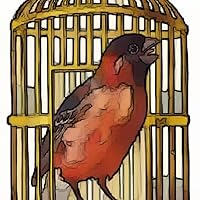
Her debut novel, The Golden Songbird, won the Netta Muskett award for new writers from the Romantic Novelists' Association, and in 1984, her novel, A Highly Respectable Marriage won the Elizabeth Goudge award.
This book is definitely an old-fashioned sort of romance, and an old-fashioned sort of Regency. It was set convincingly in the time period (1817, since they said they were commemorating the second anniversary of the Battle of Waterloo), which is always nice. Even though I can definitely enjoy the more fluffy, wallpapery historicals, it's nice to get that more realistic feeling from a book. It was a very satisfying read, and I enjoyed the understatedness of it - the characters, the slow build of the plot, and so on.
(For those who are curious, though this is a typical traditional Regency with no sex or content beyond kissing and some brief caressing, there is some thinking about sex/the awareness of sex throughout the book that made me feel like it was a bit sexier than the average.)
I really appreciated that though the hero was the wicked high-handed darkly handsome type, he was never an out and out asshole. I thought he was definitely cocky, arrogant, but, you know, pretty sweet. The book brought through a lot of emotion from him without going over the top or outright stating much of it. He seemed to respect the heroine more than a lot of other heroes of his type ever seem to, and partly because of that, I bought them as a couple. I really believed that he cared about her, as a person, not just as a possession or lust object. I liked that she had the power to hurt him (and how he got stiff and arrogant when he was hurt; it fit with his background) but he never acted like a pouty little child over it. I loved the last scene with them; it really sold their romance to me. I liked that he treated Pom with respect and was good to her brother, not just in terms of his actions but how he treated him. I liked the heroine, too. She didn't have a lot of flaws, mind you, but she was sweet and proud and likable and I bought her as a duke's daughter, which doesn't happen very much. I mean dukes are so rare and so high ranking and such a big deal, but she felt like a duke's daughter, and I appreciated that a lot. I also liked that she liked pretty dresses and was excited about her new outfits and going to her first ball and all of that. She felt like a real girl to me. Her emotions rang very true to me, and as a result I got very invested in her character. I also liked her brother and her relationship with her brother (I think it reminded me of my relationship with my own younger brother, and how we might be if by some bizarre chance we were the son and daughter of an impoverished duke in Regency England, lol).
I really liked how well drawn the minor characters were, too, though I had to roll my eyes that her friends were the oldest and second oldest daughter of their family and named Jane and Elizabeth (though their characters weren't much like the P&P girls). I also thought the secondary romance was cute, and I really liked Pom and was vaguely glad he didn't end up with anyone, somehow, because I felt like that would have felt forced and overly "neat" or cutesy. He struck me as a very "Heyer-y" character, honestly.
In terms of negatives - hoo boy, there is a lot of Orientalism in this. A LOT. I knew there would be going in, and it kind of annoys me that a book that was so well written and so fulfilling and so sweet in so many ways was so full of this stuff, but yeah, it's all the heck over. That the book couldn't seem to make up its mind on the nationalities of the characters didn't help. The fact that Hassan was from Algeria, like, okay, I can accept that because the hero traveled a lot, so maybe he picked him up on his travels. But the two characters from India named Mahomet and Achmed were more than a little eyebrow-raising.
[SPOILERS TO FOLLOW]
Not to mention the whole oh the hero has a priceless Indian treasure thing. Like yeah, I get that the maharajah gave it to him, but the whole "gave it to a white man because he couldn't trust his own (Indian) son" storyline wasn't great to begin with, and I didn't like the whole vibe, because it's not like Britain never made off with Indian stuff and carted a whole ton of it back with them whether the Indians liked it or not anyway. What with the Indian people trying to kill him for having their diamond it was a little uncomfortably reminiscent of justifying real life events through a lens of fictional respectability (oh the old maharajah wanted him to have it because he was such a great pal! when in reality the British kind of didn't worry about that kind of thing at all). Hassan's life debt thing and his whole characterization being Inscrutable Loyal Servant Guy Who Defines Himself With Service wasn't great, and probably the most egregious part was when the hero was facing off with the Indian villains at the end and the narrator was like "they could have been taken for members of the same race" or something to that effect because like . . . what. Why was that in there? The hero was an Irish white guy? Okay? If you wanted him to be Indian, you could have gone with that, except then he wouldn't be a mysterious Anglo-Irish illegitimate nobleman I guess? But it sort of just called attention to the fact that the hero COULD HAVE BEEN INDIAN THIS WHOLE TIME and this appropriation of Indian culture and cultural artifacts would never have had to happen. Also, the heroine wearing a sari was dubious to me, even if the hero's half-Indian daughter gave it to her. And so on and so forth. Orientalism and appropriation galore. Racial problems, okay. I get this was written in the 80s, but it's still worth remarking on, I think.
This is why the book only got three stars from me. I enjoyed it enough for four stars, but I'm a white person who gets to be able to do that, you know? To just set aside the Orientalism and decide to enjoy it anyway. A lot of people aren't in that position, and the race issues and cultural issues are pretty bad, so even though I get that this book is older, it loses a star for that. (If it were more recent, I'd knock off all the stars for it, but yeah.)
There were also some pacing issues near the end, especially in terms of how they just suddenly broke through all their reticence and understood each other at the masquerade (though I guess I could see how the romantic setting would make them feel caught up and more into each other, I didn't think it worked all that well as the resolution of their emotional arcs/romance), and [SPOILERS AHEAD] I didn't like the random "let's make the heroine a damsel in distress to wrap up this minor villain plot with random Indian aphrodisiacs" thing at the end at ALL, especially because it led to the hero having some more alpha asshole tendencies than he'd had so far. Oh, well, it wasn't a dealbreaker in terms of his characterization or personality, and I liked that her brother helped and was there for her, but like, it was a little "menfolk riding to the rescue of their women" for me, and also I didn't think it fit the structure of the rest of the book well. The rest of the book was really well-structured, I thought, so that was annoying. The ending scenes with the hero and heroine did a lot to make up for the weakness of "they just suddenly looked into each other's eyes and understood each other" and helped sell the romance really well. A well done denouement can be a really good thing.
There were also at least five typos I noticed, which was also a vague annoyance.
I really liked that Lady Bryony was never villainized and that she was both jealous of the heroine and still liked her. I really liked that women, like, spoke, and had friendships, and were cute and interesting and had a variety of personalities and interactions and that there were older women and they weren't all useless. And I liked the heroine's guardians weren't total idiots and that they actually cared about her. I felt like Society was actually convincing as Society in this, and that's rare enough that I always really appreciate when I get that feeling. I really felt like the characters were part of high society in the Regency period.
I wonder if Sally Jersey would have ever dreamed that she'd have this weird immortality in Regency romance novels as a minor character. I think I see her and Countess Lieven appear in Regency romance the most of the patronesses of Almack's. I feel like you could write a decent monograph on why those two are the most attractive to writers for that purpose or something.
Anyway, I really, really enjoyed this, and I found it a great read, really enjoyable and satisfying and sweet, in just the old-fashioned way I like, but the race issues and Orientalism are just a hugely glaring part of this book, so, like, be warned, everyone. It's also weird because we have two other romance novels by the same author, written after this one, and I really couldn't get into those at all and didn't enjoy them. Interesting, anyway.
This entire review has been hidden because of spoilers.
Found Damian a very temperamental character and Olivia in a dither with the decisions she has to face. The story has too many plots which hampered the overall quality.
Sem brilho. Da pra ler, se ignorar a parte da Índia. Aí eu fui ler Kate e o Marquês. O Marquês de Saint Clair, Blaise Saint Clair e sua propriedade Kimberley. E Kate é irlandesa. Só coincidência
I think there are more exclamation marks in this book than 10 typical other books combined... it got distracting. I was imagining the characters yelling at each other most of the time, which wasn't very realistic. The story was ok, but predictable.