Jump to ratings and reviews
Rate this book

The American Poetry Series #5

The House on Marshland

Rate this book
Louise Glück was born in New York City in 1943, and was raised on Long Island. Of her previous collection of poems, `Firstborn', published in England in 1969, John Fuller wrote in `The Listener': "Her words are alive and her perceptions have strength. This is a very genuine and enjoyable first book."

48 pages, Paperback

First published June 1, 1976

Loading...
Loading...

About the author

Louise Glück

100 books2,214 followers
American poet Louise Elisabeth Glück served as poet laureate of the United States from 2003 to 2004.

Parents of Hungarian Jewish heritage reared her on Long Island. She attended Sarah Lawrence College and later Columbia University.

She was the author of twelve books of poetry, including: A Village Life (2009); Averno (2006), which was a finalist for The National Book Award; The Seven Ages (2001); Vita Nova (1999), which was awarded The New Yorker's Book Award in Poetry; Meadowlands (1996); The Wild Iris (1992), which received the Pulitzer Prize and the William Carlos Williams Award of the Poetry Society of America; Ararat (1990), which received the Rebekah Johnson Bobbitt National Prize for Poetry from the Library of Congress. She also published a collection of essays, Proofs and Theories: Essays on Poetry (1994), which won the PEN/Martha Albrand Award for First Nonfiction.

In 2001, Yale University awarded Louise Glück its Bollingen Prize in Poetry, given biennially for a poet's lifetime achievement in his or her art. Her other honors include the Lannan Literary Award for Poetry, the Sara Teasdale Memorial Prize (Wellesley, 1986), the Pulitzer Prize for Poetry in 1993 for her collection, The Wild Iris . Glück is the recipient of the National Book Critics Circle Award ( Triumph of Achilles ), the Academy of American Poet's Prize ( Firstborn ), as well as the Massachusetts Institute of Technology Anniversary Medal (2000), and fellowships from the Guggenheim, Rockefeller foundations and the National Endowment for the Arts.

In 2020, Glück was awarded the Nobel Prize in Literature, "for her unmistakable poetic voice that with austere beauty makes individual existence universal."

Glück also worked as a senior lecturer in English at Williams College in Williamstown, Massachusetts, served as a member of the faculty of the University of Iowa and taught at Goddard College in Vermont. She lived in Cambridge, Massachusetts, and teached as the Rosencranz writer in residence at Yale University and in the creative writing program of Boston University.

Ratings & Reviews

What do you think?
Rate this book

Friends & Following

Create a free account to discover what your friends think of this book!

Community Reviews

5 stars
153 (21%)
4 stars
296 (40%)
3 stars
235 (32%)
2 stars
38 (5%)
1 star
4 (<1%)
Displaying 1 - 30 of 123 reviews
Profile Image for Ilse.
560 reviews4,568 followers
August 14, 2024
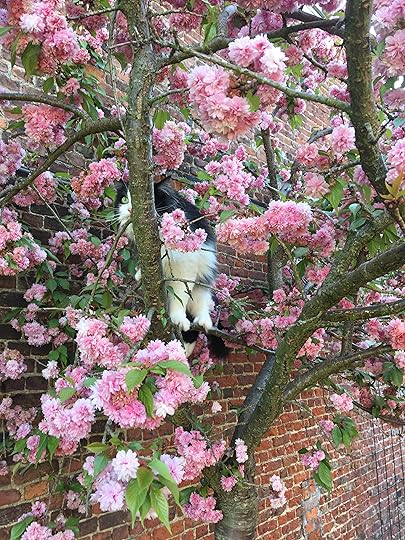
Flowering Plum


In spring from the black branches of the flowering plum tree
the woodthrush issues its routine
message of survival. Where does such happiness come from
as the neighbors’ daughter reads into that singing,
and matches? All afternoon she sits
in the partial shade of the plum tree, as the mild wind
floods her immaculate lap with blossoms, greenish white
and white, leaving no mark, unlike
the fruit that will inscribe
unraveling dark stains in heavier winds, in summer.


Profile Image for Henk.
1,248 reviews393 followers
November 24, 2022
This second bundle is more accessible and clear in theme and setting, while retaining a slightly mysterious, ambiguous tone of voice that asks for careful reading
And the deer -
how beautiful they are,
as though their bodies did not impede them.

- Messengers

The House on Marshland, the second bundle dating from 1975 of the Nobel laureate 2020 is a marked improvement versus Firstborn: Poems.

The first part of the bundle gave me the feeling of being dropped in a dark forest, with Hansel and Gretel, during Christmas time. The Magi, the nativity scene and Jeanne d’Arc make an appearances amid poems featuring bleak forests and parents both kind and distant.

The second part more captures love lost, or at the cusp of being lost, with a you that Louise Glück addresses her poems towards, often coming back:
desire called
love into being.

- Northwood path
Profile Image for Brooke ☯︎.
974 reviews55 followers
February 20, 2026
Immersed in Nature
This gave me a sense of fascination and wonder for the intricacies of nature, and how it parallels our human nature. LG's 2nd book of poems, published 1975. The asters, white lilac, copper beech, moss, snowdrops, azalea, and the deer! Gardeners and nature lovers will surely delight in this collection. After reviewing my notes, I am rounding up to 5, this was so fire. *snap, snap!* Enjoy some highlights:

Messengers
"You have only to wait, they will find you.
The geese flying low over the marsh,
glittering in black water.
They find you.

And the deer--
how beautiful they are,
as though their bodies did not impede them.
Slowly they drift into the open
through bronze panels of sunlight."

For Jane Myers
"Sap rises from the sodden ditch
and glues two green ears to the dead
birch twig. Perilous beauty--"

Gemini
"There is a soul in me
It is asking
to be given its body"

Love Poem
There is always something to be made of pain.
Your mother knits.

12.6.71
The moon throbbed in its socket
Where the spruces thinned
three deer wakened and broke cover

Northwood Path
in the dark you came
to need
you would do it again

The Fortress
"....this is
the proper pain. The lights are out. Love
forms in the human body."

The Letters
Look how the leaves drift in the darkness.
We have burned away
all that was written on them.

Japonica
You stood there,
your hands full of flowers.
How could I not take them
since they were a gift?
Profile Image for Alan.
735 reviews285 followers
Read
November 24, 2022
Slightly more evocative now, where what Glück is putting down is increasingly syncing with my experiences. The ripples are stronger in this collection. Again, my poetry “reviews” are just blank spaces for me to note down things I liked for record keeping - I often don’t feel adequately prepared or informed to analyze or criticize poems. If they make me feel emotions, then great. Seriously. At that point, in the words of the Ukrainian boxer Oleksandr Usyk, I am feel. I am very feel.

I liked these ones a lot:

- The Magi
- Flowering Plum
- Nativity Poem
- Departure
- Poem
- The Letters

This one really touched me, Departure:

My father is standing on a railroad platform.
Tears pool in his eyes, as though the face
glimmering in the window were the face of someone
he was once. But the other has forgotten;
as my father watches, he turns away,
drawing the shade over his face,
goes back to his reading.

And already in its deep groove
the train is waiting with its breath of ashes.


And because I couldn’t leave it at that, here is another poem called Poem:

In the early evening, as now, a man is bending
over his writing table.
Slowly he lifts his head; a woman
appears, carrying roses.
Her face floats to the surface of the mirror,
marked with the green spokes of rose stems.

It is a form
of suffering: then always the transparent page
raised to the window until its veins emerge
as words finally filled with ink.

And I am meant to understand
what binds them together
or to the gray house held firmly in place by dusk

because I must enter their lives:
it is spring, the pear tree
filming with weak, white blossoms.

Profile Image for Connie  G.
2,180 reviews719 followers
March 30, 2019
"The House on Marshland" is Louise Glück's second book of poetry. This collection is rather bleak and directed inward. She wrote poems about childhood, mythology, religion, and nature. She also included love poems, but they are about the difficulties of love, and emotional pain.
Profile Image for Miglė.
Author 21 books488 followers
October 15, 2020
Gana ankstyvas rinkinys, 1975 metų, bet vienintelis buvo Mažvyde - šiandien grąžinsiu, galėsite ir jūs paimti paskaityti:)

Yra tikrai gražių eilėraščių, tam tikras sunkumas priminė Paulį Celaną, jei Celanas būtų amerikietė. Kažkaip lenda į galvą, kad tai "amerikietiškas" poezijos stilius, nors nežinau, ar taip sakyčiau, jei nežinočiau jos tautybės, lol.

šešėliai pelkėse, greiti gyvūnų judesiai ir lėti - žmonių, vandeny atsispindintis mirusios sesers veidas, laukimas, laukimas, mirties neišvengiamumas, atgimimo viltis ir nežemiškos jėgos pažadas - jei atrodo kaip jūsų dalykas, imkite paskaityti.
Profile Image for Adriana Scarpin.
1,777 reviews
October 9, 2020
THE MURDERESS

You call me sane, insane—I tell you men
were leering to themselves; she saw.
She was my daughter. She would pare
her skirt until her thighs grew
longer, till the split tongue slid into her brain.
He had her smell. Fear
will check beauty, but she had no fear. She talked
doubletalk, she lent
her heat to Hell’s: Commissioner, the sun
opens to consume the Virgin on the fifteenth day.
It was like slitting fish. And then the stain
dissolved, and God presided at her body.
Profile Image for Gumble's Yard - Golden Reviewer.
2,284 reviews1,830 followers
January 6, 2021
Morning quivers in the thorns; above the budded snowdrops
caked with dew like little virgins, the azalea bush
ejects its first leaves, and it is spring again.
The willow waits its turn, the coast
is coated with a faint green fuzz, anticipating
mold. Only I
do not collaborate, having
flowered earlier. I am no longer young. What
of it? Summer approaches, and the long
decaying days of autumn when I shall begin
the great poems of my middle period.


This is the sophomore collection of poetry by the 2020 Nobel Laureate – and certainly starts to show more cohesion – both as individual poems and as a collective – than her debut Firstborn: Poems.

Having finished the volume I was not surprised to find on research that the most quoted, remarked and anthologised poem in the collection is "Gretel in Darkness" – a wonderfully powerful sequel to the Grimm fairy tale, which begins arrestingly

This is the world we wanted.
All who would have seen us dead
are dead. I hear the witch's cry
break in the moonlight through a sheet
of sugar:


Before turning into a tale of female PTSD in the grounds of male forgetting and even demonisation of women as Hansel and their father both try to block out what has happened and (in light of the actions of a wicked stepmother and a evil witch) exclude women-hood from their newly safe world, the first of which agonises Gretel who remembers only too clearly “the spires of that gleaming kiln” and her own part “my brother … I killed for you”; and the second of which threatens her own exclusion as she matures from girlhood.

The other highlights of the collection for me are those that point to themes that coalesce further in the poet’s subsequent collections (making the poets words above in the poem “To Autumn” look prophetic).

For example:

“The Magi”, “Jeanne d’Arc” and “Abishag” point to the poems narrated by legendary, biblical (or later) mythological figures, which starts in The Triumph of Achilles.

“The School Children” with its tale of children, armed with apples by their mothers, approaching school reminded me of the two poems of children coming out of school in Ararat.

“Departure” – ostensibly a brief poem about her father waiting by a train has deeper undertones of his death – explored at length in Ararat – while “Abishag” (a rewriting of the tale of the Shunammite bedwarmer in 1 Kings) if an exploration of young women left behind after the death of the patriarch and ostensible hero of the story, the other key theme of the Ararat collection.

A collection then to read to see the poet’s ideas starting to form.
35 reviews3 followers
July 20, 2007
Oh, Louise. "Instruct me in the dark." This is a book about compression, about the physics of emotion. Unflinching. Possessed. More a live animal than a book of poems, this is one of my top ten books, regardless of genre.
Profile Image for Pyramids Ubiquitous.
606 reviews33 followers
October 18, 2024
A sincere and brief early poetry collection from Gluck. It doesn't burn like her later works, but the talent is certainly there. Focus is on nature in most poems.

Favorites:
All Hallows
The Murderess
Brennende Liebe
Here Are My Black Clothes
The Letters
Profile Image for rose.
78 reviews
August 23, 2021
Louise Glück older poem collection just feel very different when you’ve started reading them after you’ve read her newer works first. That in no way means that her older poems are bad or not well written. They surely set the first layer to many more to come and build up what now has become her poetry.
Profile Image for Clement.
117 reviews7 followers
February 15, 2026
A interesting but inconsistent collection of poetry with the best poems being the few where Glück is reflecting on the art of poetry, the poem about Jeanne D’Arc, the poem titled Departure, and the poem about the biblical character Abishag.
Profile Image for Kat.
227 reviews
Read
January 5, 2021
my father is standing on a railroad platform.
tears pool in his eyes, as though the face
glimmering in the window were the face of someone
he was once. but the other has forgotten;
as my father watches, he turns away,
drawing the shade over his face,
goes back to his reading.

and already in its deep grove
the train is waiting with its breath of ashes

- departure
Profile Image for Peter Rock.
Author 35 books340 followers
December 24, 2023
Yikes. Jeez. Whoa. Wow.


Gratitude

Do not think I am not grateful for your small
kindness to me.
I like small kindnesses.
In fact I actually prefer them to the more
substantial kindness, that is always eying you,
like a large animal on a rug,
until your whole life reduces
to nothing but waking up morning after morning
cramped, and the bright sun shining on its tusks.


12.6.71

You having turned from me
I dreamed we were
beside a pond between two mountains
It was night
The moon throbbed in its socket
Where the spruces thinned
three deer wakened & broke cover
and I heard my name
not spoken but cried out
so that I reached for you
except the sheet was ice
as they had come for me
who, one by one, were likewise
introduced to darkness
And the snow
which has not ceased since
began
Profile Image for Kat.
47 reviews
March 12, 2018
As with Firstborn, I look forward to finding out what was going on in Glück's life and how that may have influenced her in its writing, but I purposely read it without any referents in order to see what I'd make of it on its own.

This is a collection concentrated on the fecund decay of autumn and the paradox of life at peak ripeness so soon before its end. This metaphor is projected onto life and death and the realms in between, as in one of my new favorite poems about the Persophone myth,"Pomegranate," and onto mundane subjects rendered wondrous and painfully, achingly beautiful and ephemeral like a marriage in its death throes even at the dawning of a new life born of that union.
Profile Image for Candace.
Author 1 book19 followers
November 30, 2009
I first encountered this book of poetry in the mid-70s, and some of the poems have stayed with me ever since. Perhaps most of all, "Gretel in Darkness," which begins:

"This is the world we wanted.
All who would have seen us dead
are dead. I hear the witch's cry
break in the moonlight through a sheet
of sugar: God rewards.
Her tongue shrivels into gas . . ."

Wow. This woman really knew how to do it.
Profile Image for Aitana Monzón.
Author 10 books67 followers
Read
June 24, 2024
“Love,
the key is turned. Extend yourself”

“This is
the proper pain. The lights are out. Love
forms in the human body.”
Profile Image for iris irimia.
157 reviews11 followers
Read
August 16, 2024
«There is nothing now. To learn / the lesson past disease / was easier»
Profile Image for Martin.
110 reviews12 followers
January 13, 2021
What do you think about if you hear about a „house on marshland“? Well, I guess every reader has to answer the question for himself. But I would guess that most of us, including myself, have a vivid image in our mind. We have a starting point for our journey. And as we follow the way of breadcrumps like Hansel and Gretel (there is a very interesting poem called „Gretel in Darkness“ in the first part) through the poems, we have a guideline. The poems act as this guideline, and some of them tell really interesting stories. At least in the first part.

There are two parts, „All Hallows“ and „The Apple Trees“. Although they bear similar names/topics, the poems included in these parts are very distinct. The poems in the „All Hallows“ part are bigger in scale and show us the world from an outsider’s perspective (most of them). We hear about ponds, trees and hills, about far islands and magi on their gold route. Many also feel like distant memories of childhood, the good and the bad.

The poems in „The Apple Trees“ part are more introspective, much like the poems in Glück’s first collection of poetry „Firstborn“. The poems here still bear much tragedy and a pessimistic point of view of the narrator. But they share the same problems as the poems in „Firstborn“: I think they are boring.

This collection of poetry is in general a visible development after the messy „Firstborn“. They still lack a good use of words, but not as much as the first collection. But they try to tell stories (at least in the first part), and my mind did enjoy the ride along these stories. I especially liked the following poems: „Gretel in Darkness“, „Archipelago“, „The Magi“, The Murderess“, „Nativity Poem“, „Abishag“ and „Japonica“.
Profile Image for holly.
371 reviews3 followers
March 6, 2021
"the darkness lifts, imagine, in your lifetime. there you are--cased in clean bark you drift through weaving rushes, fields flooded with cotton. you are free. the river films with lilies, shrubs appear, shoots thicken into palm. and now all fear gives way: the light looks after you, you feel the waves' goodwill as arms widen over the water; Love, the key is turned. extend yourself--it is the nile, the sun is shining, everywhere you turn is luck."

"i think now it is better to love no one than to love you. here are my black clothes, the tired nightgowns and robes fraying in many places. why should they hang useless as though i were going naked? you liked me well enough in black; i make you a gift of these objects. you will want to touch them with your mouth, run your fingers through the thin tender underthings and i will not need them in my new life."

the only poetry i've ever loved as much as ariel. literally in disbelief at how good
Profile Image for Elena.
522 reviews12 followers
Read
October 12, 2025
"And then spring/ came and withdrew from me/ the absolute/ knowledge of the unborn"

The Magi

"so/ desire called/ love into being."

"Far away you turn your head:/ through still grass the wind/ moves into a human language"

"Tomorrow it will be autumn.
We will sit together on the balcony
watching the dry leaves drift over the village
like letters we will burn"


"But death
also has its flower"
Profile Image for Maisie Smith.
154 reviews
November 30, 2024
“You read a passage by Glück and think, Ah yes, of course, this is how it is” — Fiona Sampson

Slow, intentional, and bated, Sampson’s words encapsulate the experience of reading Glück, and this collection in particular.

Favorites: “The Pond”, “For My Mother”, “Messengers”, “Nativity Poem”, “Gemini”, “Pomegranate”, “The Fire”, and “Under Taurus”
Profile Image for giuseppe manley.
108 reviews4 followers
Read
May 23, 2019
not sure how I managed to sleep on Gluck so long because this stuff is great
Displaying 1 - 30 of 123 reviews