Jump to ratings and reviews
Rate this book

Is God Happy? Selected Essays

Rate this book
'The most esteemed philosopher to have produced a general introduction to his discipline since Bertrand Russell' Independent

In these essays, one of the most important thinkers of the twentieth century writes about communism and socialism, the problem of evil, Erasmus and the reform of the Church, reason and truth, and whether God is happy. Accessible and absorbing, the essays in Is God Happy? deal with some of the eternal problems of philosophy and the most vital questions of our age.

Leszek Kolakowski has also written on religion, Spinoza, Bergson, Pascal and seventeenth-century thought. He left communist Poland after his expulsion from Warsaw University for anti-communist activities. From 1970 he was a fellow of All Souls College, Oxford.

'His distinctive mix of irony and moral seriousness, religious sensibility and epistemological scepticism, social engagement and political doubt was truly rare ... a true Central European intellectual-perhaps the last' Tony Judt, The New York Times Review of Books

327 pages, Paperback

First published January 1, 2009

75 people are currently reading
1413 people want to read

About the author

Leszek Kołakowski

132 books230 followers
Distinguished Polish philosopher and historian of ideas. He is best known for his critical analysis of Marxist thought, especially his acclaimed three-volume history, Main Currents of Marxism. In his later work, Kolakowski increasingly focused on religious questions. In his 1986 Jefferson Lecture, he asserted that "We learn history not in order to know how to behave or how to succeed, but to know who we are.”

In Poland, Kołakowski is not only revered as a philosopher and historian of ideas, but also as an icon for opponents of communism. Adam Michnik has called Kołakowski "one of the most prominent creators of contemporary Polish culture".

Kołakowski died on 17 July 2009, aged 81, in Oxford, England. In his obituary, philosopher Roger Scruton said Kolakowski was a "thinker for our time" and that regarding Kolakowski's debates with intellectual opponents, "even if ... nothing remained of the subversive orthodoxies, nobody felt damaged in their ego or defeated in their life's project, by arguments which from any other source would have inspired the greatest indignation."

Ratings & Reviews

What do you think?
Rate this book

Friends & Following

Create a free account to discover what your friends think of this book!

Community Reviews

5 stars
124 (35%)
4 stars
145 (41%)
3 stars
66 (18%)
2 stars
9 (2%)
1 star
4 (1%)
Displaying 1 - 30 of 38 reviews
Profile Image for Justin Evans.
1,716 reviews1,145 followers
April 30, 2016
I dock a star not for the essays themselves, but for the choice, most particularly the choice to have 143 pages of cold-war style damn-them-commies pieces at the start of the book. Now, I'm no friend of Soviet Eastern Europe, and I'm glad K spoke out against it, and that he did so far more intelligently than many other commentators. His short piece "What is Socialism?" is wonderful, as is his 'letter' to E. P. Thompson. But that was by far the least interesting part of the book. By far the best is the middle section on religious themes, including the title essay. The third section, mostly how-we-live-now philosophical reflections, is solid, but some of the pieces seem a little too pat; the most obvious example being his piece on natural law, which says the concept is a useful one for limiting positive law, makes a good case that natural law has been abused in the past (my natural law favors me; yours favors you; can they both be natural?)... but then says natural law invalidates legislation that isn't the kind of legislation liberals want. So, natural law wasn't natural in the middle ages? Or was it something else? Hard to tell.

But K's essays are always worth reading, because he's one of the few actually dialectical thinkers who can write for a broad audience. He mocks Leninist 'dialectics' as relativism + power, which is fair and right; K's dialectics is of a different order: "Strong beliefs easily breed fanaticism; scepticism, or the lack of beliefs, easily breeds mental and moral paralysis." And since there is no middle way, we just have to be on guard against both problems.
Profile Image for Jonfaith.
2,153 reviews1,749 followers
July 29, 2023
Without the joy of truth we would no longer be rational creatures.

Very reminiscent of George Steiner, though the range of this collection appears narrow by design. I believe it was Steiner who noted the poetic achievement of the Poles and Irish in 20C verse. Catholic nations just adjacent to the hubs of power. Thus we have philosophy from the periphery and what surfaces here is a pragmatism which longs for Grace. I have no specific issue with that, but it doesn’t compel me. I likely lack the gene for Volksgeist. Not hoping for Deliverance either.

Did want to note the sadness I felt when reading My Correct Views on Everything, a letter (in response) to EP Thompson. It reminded me of Wilson/Nabokov letters and felt simply unfortunate.
297 reviews1 follower
May 29, 2013
Definitely one of the great intellectuals of the 20th century.

While Kolakowski made his name as a serious critic of Marxism-Leninism-Stalinism, I found them still highly relevant as there seem to be people who seriously believe that such an ideology is still meaningful.

His essays on religion touched me deeply. I read and re-read his essay on theodicy and never fail to find something "new."
Profile Image for Jim Robles.
436 reviews44 followers
January 4, 2015
A delightful read! Clear and luminous! I recommend it!
Professor Kolakowski has a firm grasp of the challenges we face, especially in the environmental arena. He recognized, at least as early as 1997 (p. 322), that water will be the major challenge of this century. His last line (p. 323) captures very well where we are today: "I do not say that we are rushing towards catastrophe; only that, like Alice, we must make a huge effort and run very fast to stay in same place."
In this context we should remember just exactly what The Cheshire Cat told Alice:

"Would you tell me, please, which way I ought to go from here?"
"That depends a good deal on where you want to get to," said the Cat.
"I don't much care where –" said Alice.
"Then it doesn't matter which way you go," said the Cat.
"– so long as I get somewhere," Alice added as an explanation.
"Oh, you're sure to do that," said the Cat, "if you only walk long enough."

In Poland, Kołakowski is not only revered as a philosopher and historian of ideas, but also as an icon for opponents of communism. Adam Michnik has called Kołakowski "one of the most prominent creators of contemporary Polish culture".[7][8]
http://en.wikipedia.org/wiki/Leszek_K...

I did not start an "index" of names as I read. I regret that now. Alternatively, this book really should have its own index.

I. Socialism, Ideology and the Left

If 1984 was the hypothesis, then this is a fine report on an confirming experiment (p. 110, etc.). If you do not have time to read the book, then I would recommend 'The Lives of Others' (for a serious view) or 'Moscow on the Hudson' (for a somewhat humorous view).

If you are still in denial, when we were in Prague and Budapest I did "ask around" for someone to tell me that it was not that bad: that it was not an Evil Empire. I did not find them. This included the evening spent, getting "palinka-ed" in the home of Janos (an economist) and Susan (who taught Russian back in the day, and teaches English now) who lived through it.

As a left-of-center moderate, I have been frustrated by the insularity and self-indulgence that makes the Left so ineffectual in influencing policy: after reading "The Heritage of the Left," I think I will just let any remaining hope go. Professor Kolakowski trenchantly captures (p. 87, 121, etc.) the Machiavellian valueless aspect of much to today's liberalism. He also captures (p. 106) the problem with objective truth, as well (p. 108, 130, etc.) the "What is the Matter with Kansas?" confusion that characterizes much of today's Left.

The p. 135 ". . . teems with instances when you shift the subject and try to make yourself believe that I said something you think I should have said on the basis of some general beliefs you attribute to me. I am sure you do this unconsciously . . . " is consistent with my experience: you - should? - know who you are. p. 136. "Hence your desperate attempts to force me to say something I have not said."

II. Religion, God and the Problem of Evil

The p. 148 claim that "they also believed that he fulfilled the promises of the Old Testament about the Messiah and that his mission was attested to by his resurrection" is - I think - not quite correct. Jesus was markedly different than any Old Testament of a Messiah: believers did find other prophetic verses - that did not mention "Messiah" - that they believed Jesus fulfilled.

In what follows Professor Kolakowski seems to treat the Gospels as though they transmit a single consistent message, without recognizing the ambiguities and conflicts between them.

"Erasmus and his God" is very good on clarifying the differences between Erasmus and Luther, and on Erasmus' continuing relevance to Christians and non-Christians.

I have to disagree with Professor Kolakowski's assertion (p. 194) "that history is a series of accidents." Our failure to know the laws of history does not mean there are not laws. As I have written elsewhere we have autonomy (freedom to pursue what we want), but not free will (the ability to change what we want). I have a similar issue with p. 222: the assumption that "we would have no reason to hold their unpunctuality against them and berate them for it," ignores the evolutionary imperative.

The p. 196 - 200 "An Invitation from God to a Feast" is wonderful. What the Humanist fails to point out (on p. 198) is that, while God is just, the picture that Pascal paints of God is, to the best of our ability to understand, of an unjust being: I struggle to see how this can be a good thing. Rather than solving a problem, it creates another problem: a personal relationship with a being beyond our understanding is problematic. p. 199 captures the nonbeliever's predicament: God denies him grace and makes him a reprobate miscreant; for this God judges him; I do not understand the difference between this and my judging a software program that runs exactly as I intentionally programed it to.

I have railed elsewhere against the adulation we grant to those (collegiate and professional athletes, movie stars, professional musicians, etc.) who contribute nothing to society beyond "entertainment." Professor Kolakowski gets this spot on in discussing idolatry, (p. 207 -208), "But there is a mass phenomenon today which really does seem to deserve the name, and it plays a significant role in people's lives. It is the worship of celebrities: rock stars, actresses, sportsmen.

III. Modernity, Truth, the Past and Some Other Things

"In Praise of Snobbery" is painfully on target.

Professor Kolakowski is dead wrong (p. 230) on the efficacy of the death penalty as a deterrent: in his "horrid tortures in the public square" seems to be oblivious of our history in which, for example, pickpockets worked the crowds at hangings of pickpockets in Merry Old England.

He is also wrong in asserting (p. 249 - 250) that Natural Law does not tell us that Capital Punishment is wrong: it is simply never right to take the life of a defenseless nonthreatening human being. Given the rest of his discussion of Natural Law, how he gets this wrong is difficult to understand.

Professor Kolakowski understands that it is the rule-of-law that lets us overcome tribalism and live in a civil society: p. 266. "What makes us a society is the power of law: . . . . "

He recognized, I think (p. 273 - 274), that our environmental and population future is problematic. Also p. 313. Water on p. 322! Conclusion on p. 323!

The essay "On Our Relative Relativism" captures, as I take it, the struggle between "realism" and "nominalism." If as Professor Kolakowski posits our choice is a reflection of (p. 286) need, then I confess I need physical realism and radical moral realism, as reflected in Natural Law. He captures (p. 287) the danger we face in, "Strong beliefs easily breed fanaticism; scepticism, or the lack of beliefs, easily breeds mental and moral paralysis: pursuing The Golden Mean here, would seem to require the continuing search for THE TRUTH.

The "Is There a Future for Truth?" conclusion - Yes! - is, of course, TRUE. As Professor Kolakowski finishes (p. 297), "Without the joy of truth we would no longer be rational creatures." What is problematic is the future of those who do not realize this, and join the quest.

The discussion in "On Reason (and Other Things)" (p. 299), "We can say that a tree exists, and we know more or less what we mean. But what does it mean to say that God exists?" recognizes (I cannot say captures.) the vast gulf between us an our creator. We exist with Kant's Pure Intuitions of time and space. Our creator exists - see Augustine's "Confessions" - outside of time (p. 305 "beyond time"). I will not speak for believers, but, for me, this makes the idea of a personal relationship a flagitiously arrogant absurdity. (p. 305. ". . . reconciling these two images of God borders on the impossible.")

The last paragraph (p. 306) of this essay pellucidly captures our current quandary on "Good and Evil."

"Lot's Wife or The Charms of the Past" was "removed by the censor." The Ministry of Truth, in 1984, would have had a similar reaction.

In "Our Merry Apocalypse" p. 314, written in 1997, "But those airports will not be built; they cannot be built. So the dreams of the Chinese and the Indians ill never be realized." We live in a world where less than half the population has access to commercial power: what do we really wish for? Professor Kolakowski understood the implications of my footprint.com.

For philosophy in general, and my studies in particular, p. 318. - "Where it is going it admittedly does not know, and nor does anyone else, but that is a different story." Press on!

The first book I have finished this year.

p. 25. Anthropologists generally use the word 'culture' in a neutral, non-value-ladder sense, to denote the various systems of communication particular to a given society: law, tradition, educational institutions, the mechanisms of power, religious belief, art, family relationships, sexual norms, etc.; and all these things can of curse be described without any value judgements and without presupposing that some cultures are higher or lower than others.

p. 43. It would be difficult to think of books of this kind written by Leftists - whether European or American. I mean books that explain and analyze, in historical or psychological terms, the Leftists' own misguided commitments, wrong beliefs, and false hopes.

p. 45. . . . but if there was something enduring in Leftist politics, it was this: in any conflict between a tyrannical and democratic country, the tyrants were right and democracy wrong: . . .

p. 54. In both cases the overriding ideology stressed the idea of social justice and proclaimed that some chosen parts of mankind (a superior race or nation, a progressive class or vanguard party) had the natural right to establish uncontrolled rule by virtue of historical destiny.

p. 75. . . . but by an elaborate 'philosophy,' implying that the victims deserve annihilation for metaphysical, historical, or moral reasons.

p. 87. Throughout the world, ideologies and parties which define themselves as 'left' support nationalist movements and label them as progressive, ' even the most extreme of them, if on an international plane they happen to be damaging to the United States, to any Western European country, or Israel.

p. 102. Many authors (Kucharzewski was one of the first) saw in Soviet Russia a direct extension of the czarist regime; . . . .

p. 104. their labour will have been gradually reduced to the necessary minimum, and free time will be enjoyed in the pursuit of cultural creativity and high-quality entertainment.

p. 106. Thus the 'progressive' becomes the 'true,' whether or not this truth could be confirmed by universally accepted scientific procedures.

p. 108. the party really does know better than society what societies' genuine (as opposed to empirical) desires, interests, and thoughts are.

p. 118. The national health service, you say, is impoverished by the existence of private practice

p. 133. . . . in a world where the great Apocalypse can most likely be triggered by a war between tow empires both claiming to be perfect embodiments of Marxism.

p. 138. The more society depends on the complex technological network it created, the more problems have to be regulated by central powers, the more powerful state bureaucracy becomes, the more political democracy and 'formal' bourgeois' freedom are needed to restrain the ruling apparatus and to secure of individuals their shrinking rights to remain individuals.

p. 144. Philosophers and Jesus

p. 146. But in the apprehension of Jesus we attain at once the full awareness of our fall and the hope of a possible cure; and it is this that constitutes Christian faith.

p. 151. No action mattes unless it springs from a desire to do God's will. We all have duties toward the world, but no rights; no claims on it and not right to expect anything from it. . . . It is divided into the chosen and the cast out, . . .

p. 157. . . . there is no proposal more modest and not that, when taken seriously, has provide more dramatic conflicts, that the idea that there are no chosen national, no people beloved above all others by God or by History and entitle thereby to impose their leadership over others in the name of any cause.

p. 184. . . . nothing, except the wandering itself, is unquestionably given.

p. 185. From somewhere beyond all our achievements and experiences emerges, unfailingly, the apocalyptic warning: 'Because thou sayest, I am rich, and increased with goods, and have need of nothing; and knows not that thou art wretched, and miserable, an poor, and blind, and baked.' (Revelation 3:17)

p. 190. The Gospels proclaim solidarity with the poor, the defenseless, the unfortunate and the oppressed; but we have no Gospel that premises a world without evil, suffering or conflict.

p. 204. . . . and indeed should, treat our neighbor as an end in himself, . . .

That is precisely Kant's Categorical Imperative.

p. 205. Jesus taught that the Day of Judgment was imminent, . . .

p. 214. Must we, then, accept Schopenhauer's dismal doctrine that all pleasant feelings are purely negative, namely the absence of pain?

p. 226. To turn up one's nose at snobbery is to cut off the most viable (psychologically speaking) sources of progress.

p. 232. In countries where eh death penalty has been abolished, this generally came about through a legislative decision against the opinion of the majority of the population. The same can be said of the abolition of witch-hunting.

p. 234. That is, we may still believe that evil is a real characteristic of life and that we carry in us a kind of moral intuition that enables us to recognize it as such.

Has he been exposed to the British Sentimentalist school?

p. 237. Self-deception is easy, and we often attribute to ourselves nobler motivations that we actually possess.

p. 247. According to this view, the, natural law is present in the world, but it does not logically presuppose a legislating personal God.

p. 255. Substance, memory, anticipation, body and an identifiable beginning - these are the five elements (four if we set aside the first as empirically inaccessible) which together make up personal identity.

p. 263. Even if we admit hat the desire to assert one's identity by hostile expansion is by no means always and everywhere inevitable, either truth remains(however Nietzschean it may sound) the it is ultimately the stuff of which most of the world's history is made.

p. 271. According to Marxist doctrine, there are no eternal ideas; every product of culture is a disguised expression of the real interests of various social classes.

p. 272. Messianic hopes justified all means, all forms of violence, which might bring millenarian happiness closer.

p. 284. The virtual extinction of village life in the developed areas of the world has destroyed the spiritual organization of space as a guarantor of stability and eroded trust in tradition, which formerly provided people with a number of basic moral norms and the belief in an order of things that bestowed meaning on life.

p. 288. Believers who have never experienced doubt know that there is such a book, and even where it is to be found. I is the text given or dictated by God: the Bible or Koran. (The sacred books of the Oriental religions, much s they are revered by believers, do not enjoy this kind of unshakable authority; they are a source of great wisdom but not a transcription of God's words.)

p. 295. As rational animals, we want to know how we came into the world: was it simply as a result of parental reproductive activities?

p. 300. . . . . and lust for knowledge is considered on of the very worst sins.

p. 305. But in order to gain a spiritual hold over the Roman Empire, Christianity had to turn for support to Greek Philosophy.

p. 310. . . . a person is his past, and the past is all that he is.

John Locke would love this.

p. 315. Together with the mythological dimension we have also lost (or destroyed) our belief natural law.

p. 321. Thus does the free market support despotism and slavery.

Jim
http://www.linkedin.com/in/jimrobles
Profile Image for JCJBergman.
351 reviews128 followers
August 18, 2024
Where has Kołakowski been all my life? In truth, a few weeks ago I curiously typed in "Polish philosophers" into Google and he promptly arose. The collection of essays sounded interesting and I took the plunge. Kołakowski's knowledge is far reaching and it shows. He has the political prowess of Hannah Arendt and the philosophical acumen of Bertrand Russell. I purchased his book "Metaphysical Horror" halfway through reading this collection because of how refreshing and excellent he is.

I will not recite what the Goodreads bio describes about this collection of essays, but what I will say is that Kołakowski's insights are incredibly well rounded and balanced. Because he understands the damage of ideological thinking - whether political or philosophical - he only presupposes the minimal amount and maintains an admirable sense of intellectual honesty. This could not be said about many empiricist philosophers of contemporary times. Enough of my praise. Just read this collection yourself if you desire a lucid, genuine thinker critically assessing ideology, Marxism, Nazism, Socialism... and questions of God, and the inevitability of human meaning-making.

I will share, as usual, some of my favourite passages:

“[T]he very conditions which facilitate the seizing of power make it particularly difficult to hold on to it in the long run. Power which is threatened and concentrates all its political effort on itself becomes an end in itself; it becomes power for its own sake. Communists, when they assume power, know in theory that it is only a means to an end, that of liberating society, and that in time it will self-destruct. But power has its own rules of evolution, and they are unyielding and merciless. The harder power is to maintain, the more it must surround itself with an aura of adoration and promote a cult for its own worship. It is all too easy to forget that power is the instrument of a class and the spokesman for the interests of that class. To put it more specifically: 'The time will come,' we say, 'for all the purposes to which this power is supposed to be put; for the moment the important thing is to maintain it.' But this 'moment' goes on for years, until it turns out that it is too late: power has become an end in itself. It has stopped being the instrument of the class which seized it and become the instrument of those who possess it. The apparatus of power has spread like a malignant growth and no longer seeks justification for its existence in the common interest. As an apparatus of power it has its own interests: the interests of a caste or an autonomous organization which continues to hide behind the façade of the Great Rallying Cry. And the ideology of those who rule becomes the ruling ideology. This simple observation we owe to Marx.” (p. 11)

“This use of the lie is interesting not only politically but epistemologically as well. The point is that if physical records of certain events and their recollection in human minds are utterly eradicated, and if consequently there is absolutely no way anybody can establish what is 'true' in the normal sense of the word, nothing remains but the generally imposed beliefs, which, of course, can be cancelled again the next day. There is no applicable criterion of truth except for what is proclaimed true at any given moment. And so the lie really becomes truth, or at least the distinction between true and false in their usual meaning has disappeared. This is the great cognitive triumph of totalitarianism: it can no longer be accused of lying, because it has succeeded in abrogating the very idea of truth.” (p. 56)

“At one time, capitalism appeared horrifying because it produced misery; later, it turned out to be horrifying because it produces such abundance that it kills culture.” (p. 66)

“This mental and moral sterilization of society is, however, blistered with dangers. It works so long as the totalitarian regime, in dealing with its subjects, requires only ordinary passive obedience.
If, in a moment of crisis, it requires personal motivation as well, the machinery fails. Stalinism was brought to such a crisis during the war with Germany, when the only way to mobilize the mass of Russians for defence was virtually to forget Marxism-Leninism and to use specifically Russian historical symbols and national feelings as an ideological weapon. An ideal totalitarian society consisting of malleable objects is strong in relatively stable conditions but very vulnerable in unstable ones. This is one of the reasons that a perfect totalitarian regime (or 'the higher stage of socialism') can never be built.” (p. 60)

“Without the market, the economy would collapse (in fact, in ‘real socialism' there is no economy at all, only economic policy). But it is also generally recognized that the market does not automatically solve all pressing human problems. The concept of social justice is needed to justify the belief that there is a 'humanity' - and that we must look on other individuals as belonging to this collectivity, toward which we have certain moral duties.
Socialism as a social or moral philosophy was based on the ideal of human brotherhood, which can never be implemented by institutional means. There has never been, and there will never be, an institutional means of making people brothers. Fraternity under compulsion is the most malignant idea devised in modern times; it is a perfect path to totalitarian tyranny. Socialism in this sense is tantamount to a kingdom of lies. This is no reason, however, to scrap the idea of human fraternity. If it is not something that can be effectively achieved by means of social engineering, it is useful as a statement of goals. The socialist idea is dead as a project for an ‘alternative society.' But as a statement of solidarity with the underdog and the oppressed, as a motivation to oppose Social Darwinism, as a light that keeps before our eyes something higher than competition and greed - for all of these reasons, socialism - the ideal, not the system - still has its uses.” (p. 72-3)

"God can of course be rejected as morally dangerous, denied as unacceptable to reason, cursed as the enemy of humanity or excommunicated as a source of bondage. But the Absolute could be replaced by something finite and non-absolute only if it were really forgotten. And if this were possible, there would no longer be any need to replace it. So the object could be attained only once there was no need for it. But the Absolute can never be forgotten. And the fact that we cannot forget about God means that He is present even in our rejection of Him.” (p. 193-5)

“Manifestations of pseudo-religious worship are omnipresent in our culture, and their ubiquity naturally prompts questions about their source. What kind of deep, innate human need explains the phenomenon of modern idolatry? If God is dead, if we expelled Him from our world and forced Him to hide in His impenetrable solitude, why do we go on manufacturing imitations, or rather caricatures, of past forms of religious worship? There is a strong temptation to suspect that this is a modern form of the hypothetical anthropological invariant, and we are not sure how to define it.” (p. 208)

"[I]t seems safe to say that we have seen the demise of secular history as the grounding for existence and the source of meaning, and that the third Christian millennium, which is almost upon us, will have to rediscover our old religious roots — so that we can survive.” (p. 276)

“We are born into a world of incomprehensible chaos. With time we succeed in acquiring tools which enable us to control that chaos: they are reason and what is known as religion or — as it has become fashionable to call it in recent decades — the sacred. The role of reason is to provide explanations of physical phenomena and enable us to predict and control them, that of religion to reveal the meaning of the world. Religion's ambitions are greater than reason's, for religion encompasses the meaning of the whole, and the whole is something reason will never be able to grasp.” (p. 300)
Profile Image for Bookmuppet.
140 reviews22 followers
July 27, 2023
The essay "My Correct Views on Everything" alone is worth it. The selection here is interesting, with the essays on Christianity being the least interesting to me (with one exception, about which I will say more below).

In the unsparingly ironic "My Correct Views on Everything," Kołakowski offers a succinct critique of utopianism:

Utopians are people who dream about ensuring for mankind the position of pensioner and who are convinced that this position is so splendid that no sacrifices (in particular no moral sacrifices) are too great to achieve it.

This does not mean that socialism is a dead option. I do not think it is. But I do think that this option was destroyed not only by the experience of socialist states, but because of the self-confidence of its adherents, by their inability to face both the limits of our efforts to change society and the incompatibility of the demands and values which made up their creed. In short, that the meaning of this option has to be revised entirely, from the very roots.

And when I say 'socialism' I do not mean a state of perfection but rather a movement trying to satisfy demands of equality, freedom and efficiency, a movement that is worth the trouble only as far as it is aware not only of the complexity of problems hidden in each of these values separately but also of the fact that they limit each other and can be implemented only through compromises. We make fools of ourselves and of others if we think (or pretend to think) otherwise. (...) Absolute equality can be established only within a despotic system of rule which implies privileges, i.e., destroys equality; total freedom means anarchy and anarchy results in the domination of the physically strongest, i.e., total freedom turns into its opposite; efficiency as a supreme value calls again for despotism and despotism is economically inefficient above a certain level of technology. If I repeat these old truisms it is because they still seem to go unnoticed in utopian thinking; and this is why nothing in the world is easier than writing utopias.


And in "Lot's Wife or the Charms of the Past," the Biblical story of Sodom and Gomorrah works almost too well as a vehicle for describing the practical creation and enforcement of paradise:

The so-called sin of Sodom, recent studies have shown, is a myth – a fairy tale, fabricated by enemies of that city to evoke disgust and turn people against it. Even in Scripture the story is far from clear. The truth is that the inhabitants of Sodom ended up in conflict with the higher powers for entirely different reasons. They decided that everyone was equal, free and endowed with the right to life, and they issued an edict declaring equality, universal freedom and the abolition of the death penalty. In order to give this edict the necessary force, they also issued the following supplementary decrees:

1. Whoever denies that people are free and calls for the imprisonment of anyone whosoever shall be imprisoned for an indefinite term.

2. Whoever denies that everyone is equal and calls for the introduction of inequality shall be sentenced to slavery and deprived of all rights.

3. Whoever calls for the introduction of the death penalty shall be sentenced to death, the sentence to be carried out immediately.

In order to enforce these decrees the Sodomites organized a vast network of secret police whose task it was to eavesdrop on people, in their houses and in the street, and to proceed to the immediate arrest of anyone heard to express opinions not in conformity with them.


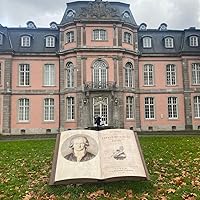
The note attached to this 1957 essay, for today's reader -- who is able to read both -- complements the layered parable: "This essay was written as part of a collection of Biblical tales, but was removed by the censor. It remained unpublished in Poland until after the fall of communism."
Profile Image for Peter Blair.
114 reviews
December 9, 2025
Kołakowski can be very funny, and this book has some very quotable moments. There's a couple of the essays that were especially good; others pack less of a punch.

He has an interesting zigzag approach to questions that takes you over the map intellectually. It can be weirdly compelling to read in its way but it's not always clear what, if anything, it adds up to intellectually. He will often leave threads hanging, and he is perhaps more interested in defining the contours of a question or lightly probing a topic than really landing somewhere.

One is not always convinced that he has sufficient technical grasp of the thinkers / topics he is covering, though perhaps one should expect a certain amount of that in this kind of essay format. His writing about Christianity—despite his scholarly expertise in some periods of Christian history—felt at times amateurish. But it was interesting to see someone approach some of these questions in the way he does. He also has a "common sense-ist" approach to both political and religious questions which can be thin, but he wears this approach lightly in way a way that makes it work a bit more. His political reflections (and his preoccupation with the concept of truth) are obviously shaped by his experience as an ex-Marxist who lived in Communist Poland—what a reader makes of every detail of where this leads him may vary, but he remained alert to the need to continue to think.

Tony Judt describes Kołakowski specifically as a "true Central European intellectual" and there definitely was something non-Anglo about the "feel" of these essays, which I appreciated (and which was in part why I picked them up)
Profile Image for Jack Fleming.
82 reviews25 followers
December 16, 2024
Vladimir Putin, currently failing to bomb the people of Ukraine into acquiescence is quoted as saying that the fall of the Berlin Wall in 1989 and subsequent collapse of the Communist system was "the greatest geo-political catastrophe of the twentieth century." There are many on the left who might be tempted to agree with him. It has become commonplace ever since to lament wistfully that, though a noble ideal, Communism is flawed because it relies on Human nature being good and co-operative rather than selfish and greedy. There are many critics on the right who might agree with this, wishing that human nature was better than it is, but arguing that, in its absence, Capitalism is the only viable economic system that protects individual rights while allowing for human vice. What most of these critiques have in common is that they come from people who never actually lived under the Communist system, and thus have no innate understanding of what this 'noble cause' actually felt like, for those living under its rule.

Leszek Kolakowski however, understood the system perfectly well. Born in Poland during its Liberal post WWI iteration, he was twelve when the Nazis came, and eighteen when the Soviet tanks rolled in, cleansing the country of Fascism but installing a puppet Communist regime in its place, answerable to Stalin and the Kremlin. Kolakowski grew up a committed Marxist and a talented scholar who served as professor of Philosophy at Warsaw University well into the 1960's. However, over the years his experience of actually-existing Communism changed him and he began to see that the problems of Communist societies were not merely the result of corrupt individuals or flaws in human nature but inherent in the idea to begin with, going all the way back to Marx and the notion of a Utopian society. He eventually split with the Communists and was expelled from Poland in 1968, settling at Oxford where he taught for many years. His magnum opus 'Main Currents of Marxism' published in the mid 70's, was a significant contribution to the intellectual destruction of Communism.

In that book Kolakowski argued that, far from being a good idea gone wrong (as many leftists still naively claimed) Communism was actually a terrible idea executed successfully. That is to say, the famines, the Gulags, the show trials can only be understood in the context of a society which has decided (or had it decided for it) to pursue perfection as the crow flies. When the Bolshevik faction took power in Russia in 1917 claiming to be the Vanguard of the Proletariat they were not simply historical actors but, according to Marx-Leninism, the predestined Historical agents of change, speaking for the oppressed workers and heralding the destruction of the Bourgeoisie. Given this historical role, what else could it lead to, but cruelty, as the declared enemies of the people were to be done away with, in the name of Salvation? Kolakowski was not the first thinker to notice the religious overtones of much of Marxist teleology, but he was perhaps the most perceptive. Communism was a belief system, as rigid and inflexible as any religious dogma, and just as capable of driving human beings to evil. Like Medieval Crusaders, they were motivated by a deep need to cleanse the world of evil and to bring about the great future that had been forsworn to them in their holy book.

With his deep knowledge of the texts and the system, he was able to show the flaws and inconsistencies in Marxism and its central tenet, Dialectical Materialism, right back to its foundations. Unlike most of the Westerners who pledged allegiance to the Hammer and Sickle from afar, he could explain what it felt like to grow up in a Communist country, where deportations, secret police, show trials and food shortages were not just things to be found in novels, but were a fact of everyday life. Kolakowski was feted as one of the great Anti-Communists but ended his political career as a Social Democrat, wanting to combine the freedoms of the Market system with the humaneness of a strong social safety net. This noble vision he himself recognised as being perhaps too weak to last long, lamenting that "The trouble with the social-democratic idea is that it does not stock or sell any of the exciting ideological commodities which totalitarian movements — communist, fascist, or leftist — offer dream-hungry youth. It has no ultimate solution for all human misfortune; it has no prescription for the total salvation of mankind; it cannot promise the firework of the final revolution to settle definitively all the conflict and struggles."

Kolakowski became an increasingly devout Catholic over the years, a better avenue, he believed for Utopian ideas, but he recognised that the yearning for such revolutionary movements, particularly among the young, was never far from the surface in human affairs, and that much like the Rats in Albert Camus' La Peste 'the virus is always dormant, waiting for the next opportunity.' In the meantime the challenge he left the rest of us was to stay united, build social solidarity and make the individual human being the centre of our political and economic activity. As the bombs continue to rain down on the innocent in Ukraine, we can only hope that a tyrant like Putin, trained in the Soviet system, has failed to learn the obvious truth that revolutionary movements invariably burn themselves out until all that's left is the terror of what will happen once the killing stops.
Profile Image for Naim Frewat.
207 reviews9 followers
September 25, 2023
- Poland, Krakow, the American bookstore
- Have never heard of him but he's an authority among Polish scholars
- Born in 1927 died in 2009
- Doctorate in Philosophy with a focus on the history of modern philosophy and his work also covers the philosophy of science
- Rabidly anti communism, censored multiple times since 1956 and then expelled in 1968, banned from teaching. This yr saw also the banning of Jewish thinkers as well
- This book is a posthumous publication, with an introduction by his daughter Agnieszka.
- This book is divided into 3 sections:
- Socialism, Ideology and the left
- Religion, God and the Problem of Evil
- Modernity, Truth, the Past and Some Other Things
- I didn't like the editing, surprisingly there are many typos and grammatical errors and, for the last section, I would have ordered the essays differently to introduce some concepts first and then develop them later especially that this book is not an academic one and yet some of the essays were published in academic contexts.
- The essays run from 1953 up until 2003 and for some essays, before I finished them, I looked at the year of publication, thinking there was some kind of foreseight in them, but no he was fairly within his time. The essays all follow a classical structure: intro, body, conclusion. In general, the essays are a mix of rigor, sarcasm and humor. There are sections I didn't understand and there are essays and sections that made me laugh, like for example his essay on unpunctuality; it seems he wasn't.
- Regularly failing to fulfil people's expectations regarding the specific time at which our actions will take place, expectations following assurances from our side: I will be at the café at 10
- People indulge in the premises that permit me to be at the café at 10
- Even if I promise to commit to come to the café at 10, I am merely making a prediction about facts and normally facts I am to produce either depend on my free will or are independent of it. If they are independent of my free will, then my promises cannot be taken seriously because there are infinite number of variables factors that prevent my prediction
- If the fact is dependent on my free will then 1) either my present behavior is merely a prediction of my future decision but it is not in itself a decision: in this case, I had not yet decided to come to the café at 10 but still predicted, and so I should have said: "I will come or not, depending on what I decide" otherwise my promise is false.
- if the fact is dependent on my free will then 2) by making my promise I am also making my decision, depriving myself of the freedom to choose between two possibilities. Consequently, my future behavior ceases to depend on my free choice, for it is determined by certain facts in the past (me having made my decision).
- But then my promise becomes an attempt to describe my consciousness, sepcifically, the act of deciding through a description of certain non-exsitent external events, which is my future behavior of coming to the café at 10
- If my interlocutor takes my declaration seriously, he must have some knowledge about the rules which govern the connection between my states of consciousness and my future behavior
- Only someone who is notoriously punctual can turn out to be unpunctual because only a person who fulfils the expectations of others on his punctuality can fail to fulfil those expectations; in other words, to say of someone that he is notoriously unpunctual is absurd
- The category I enjoyed reading the most was the first one on Socialism because it is filled with humor, expressed by someone who experienced socialism from the inside, who read all of the communist literature and who was courageous enough to express it, almost unfiltered. The opening essay sees him describing the average communist militant as someone who equates communism with the image of a better world, without bothering to understand how can Marxism or Leninism or Stalinism lead to that world. He goes on showing how this world is built like a house of cards and that socialist leaders know that if you pull one card, the entire thing crumbles down; this is why, in his opinion, censorship and repression are brutal in these countries.
- In another essay, he asks what is socialism and goes on providing 81 statements answering this question, the one I liked the most is: a state where history is in the service of politics
- In another essay in that category, Communism as a Cultural Force, Kolakowski states that the causes embraced by communists around the world had nothing to do with Communist doctrine such as the oppression of one people by another as in the 3rd World Countries or the protests against censorship (very funny); there is nothing communist in the October Revolution's slogans of "peace" and "land for the peasants"
- In his essay, What is Left of Socialism, published in 1995, his opening paragraph that Marx was a german writer, very learned, who died 119 years ago, lived in the age of steam and never saw a car, a telephone or electric light in his life. That he's worth reading ceratinly but that his writings can still explain anything in our world is a doubtful matter. He explains how five of Marx's most important contributions to political thinking have all turned out to be false (p. 64-66). I think such essays are essential to demistify untouchable figures (hopefully soon for Darwin).
- There are reflections in this section that, even though they originated in socialism, go beyond it, such as when he says: "Are racist and chauvinist tendencies more threatening or less when they are wrapped in universalist, humanitarian and pacifist phraseology?"
- To conclude that section, what I particularly liked in this section on socialism, is his "demonstration" about how the socialist ideal became embodied in the communist theory of the single party and in doing so he showed the contempt that Communism in its soviet form had for the proletariat. That is because both Marx and Lenin had little respect for the proletarian thinking before it progressed to its mature form. To Communists, Marxism is true because it had "scientific" truths about the class struggle and because it articulated the interests of the most progressive class, the proletariat. For Lenin, however, this class, unaided, had only a bourgeois consciousness, because a society torn by class struggle can only produce two ideologies and since the bourgeois controlled all means, it follows that the peoletariat, unaided by an all-controlling parry, would fail to produce its own ideology.
- In my opinion, the same is being replicated in today's approach to identity: because the white man is biased since birth, unaided by an awakened party or group or council, he cannot comprehend the realities of any other identity.
- The second section on Religion, God and the Problem of Evil, the first essay is on Jesus Christ - Prophet and Reformer and Kolakowski takes an approach that other Christian thinkers had taken before him, namely to look at Jesus Christ without presupposing their faith, any referencing to dogmatic texts and Kolakowski was interested in the philosophical Jesus knowing quite well that Jesus is not a philosopher. He isn't accommodating at all in this 1956 essay, rather bold for a deeply Catholic Poland even if of Communist appearance. I particularly enjoyed how Kolakowski summarizes each philosopher's interpretation of Jesus; for Hegel, he was a phase in human-historical knowledge and a sensory manifestation of God when man conceives of God as something in which he participates. Of course on the other end is Kierkegaard, to whom is always contemporary and Christ as a person is a sterile item of historical information for us but he is constantly true for Christians who make him contemporary to them. Probably two sides of the same coin? Even though he states that he will not look at the Epistles of St. Paul, he does very briefly touch on them and treats St. Paul independently of Jesus, a mistake, in my opinion. Though he does demonstrate the "Reformer" trait of Jesus and he stretches this reformation all the way to us, bringing along with him Marx whose belief in the solidarity of the proletariat is directly traced back to Jesus, I failed to see the Prophet trait. The essay closes on an important point which was more or less previous expressed by Chesterton when he said: The world is filled with Christian ideas gone mad and Kolakowski, still focused on treating the Philosophical Jesus in this essay, urges us to pay attention to the abstraction that we're doing of Jesus' values in their non-Chrsitian form, running the risk that the demise of Christianity will inevitably erode the historical meaning of the existence of Jesus.
- The other essay I liked in this section is titled: Leibniz and Job: The Metaphysics of Evil and the Experience of Evil. Here also Kolakowski does a fantastic job in simplifying the concept of evil as it was thought of by the Stoics, Augustine, Leibniz and others, especially the difference between moral evil and suffering and the various nuances of omnipotence, the Leibnizian being the most solid of them (laws of math and the universe), still I find the story of Job despite the multitude of essays I've read, Youtubes I've watched and Podcasts I've listened to, I still don't understand it rationally and so when non-fiction and philosophy fail, I'm always happy to know that fiction provides the better interpretation and so I leave you with this poem which Kolakowski included in this essay in which Robert Frost puts words in God's mouth towards Job. The poem is titled "A Masque of Reason":
- I've had you on my mind a thousand years
- To thank you someday for the way you helped me
- There's no connection man can reason out
- Between his just deserts and what he gets.
- Virtue may fail and wickedness succeed...
- Too long I've owed you this apology
- For the apparently unmeaning sorrow
- You were afflicted with in those old days.
- But ut was of the essence of the trial
- You shouldn't understand it at the time.
- I had to seem unmeaning to have meaning...
- My thanks are to you for releasing me
- From moral bondage to the human race.
- The only free will there at first was man's,
- Who could to good or evil and he chose.
- I had no choice but I must follow him
- With forfeits and rewards he understood
- I had to prosper good and punish evil.
- You changed all that. You set me free to reign.
- You are the Emancipator of your God.
- The last essay I want to talk about in this section is on Erasmus, and of course chosing Erasmus for a topic demonstrates the classical philosophical learning of Kolakowski, eclipsed by the more modern Luther. Erasmus lived between the 15th and the 16th centuries which were centuries of a degenerate papacy and, as a result, almost everyone in these centuries was talking about the need for reforms. Specifically, Erasmus understood Christianity as a religion of Love not Law and saw exactly the opposite in his lifetime when transactions governed the papacy and Erasmus saw Christianity as a religion of Faith rather than Works. But a faithful relationship with a personal God would not justifiy the existance of an organized Church. Christianity is simple and fit for every layman to understand and does not need the bloatedness of rituals or ceremonial pompousness which characterized -and continues to in diluted ways- the Church. But despite Luther counting on the support of Erasmus at the start of his schism from the Church, Erasmus never joined Luther in his efforts because of profound differences between the two; and in summarizing swathes of historical epochs and spectrums of philosophical thought lies the real pleasure in reading Kolakowski. On this confrontation Kolakowski says: Christianity is the continuation of the good aspects of man's nature (Erasmus) not the triumphant consquest of nature by super-nature (Luther). This view of man as a vessel of evil, corroded by original sin, which must be smashed before human nature can give way to the sactifying power of God's grace has and will always remain the original sin of Lutheranism.
- The last two sections on Religion and on Modernity seem to me to be a bit related because in the last section on Modernity, the frequently discussed topic is that of Truth whether in Justice, History or Relativism. There are 11 essays in this last section and Natural Law makes its appearance in maybe 9 of them and Natural Law has been mostly developped by Saint Thomas Aquinas to say that there is a Universal Truth and so laws are to be deduced rather than formulated. It's a very Catholic approach to morality and this section confused me the most about Kolakowski. Was he a Catholic philosopher? It seems so from his attacks in that last section of the book on Empiricism, the Enlightenment, Historicism and basically anything relativist. He has a profound problem with Hume for ex. Atheism to him is what mankind should not sink into at all costs. He says he's not a Catholic philosopher and even not a believer and that's also possible because, at the same time, he could also be a genuine critic in that he is demonstrating that all of these schools of thought or ideologies when taken to their extreme, to the ultimate point of their logic, fail to enlighten man, produce nothing that is meaningful however useful it might be and - not only do they fall short of- but are the root causes of modern Man's anxiety in a godless age. I felt this ideology of his, very well sumnarized in the essay before last titled : Lot's Wife or the Charms of the Past. Even though this 1957 essay was not published in communist Poland until after the fall of communism, I felt it invited us to look at much more than the pre-communist past and into well intentioned utopian tenets which when collectively applied to society are impossible to exist simultaneously and are necessarily mutually exclusive, rendering our search for the ultimate ideology, the One Truth, an oscillating pendulum's movement never capable of attaining the Absolute in a world without an Absolute God.
- Which brings me to the essay which asks Is God Happy? And unfortunately, this is the weakest essay in that collection and I'm glad I did not cheat in that bookstore and started ploughing through that essay which served as an excellent marketing trick because I probably would have dropped the book and missed Kolakowski's intellect, knowledge and humor. In short, it's an essay about happiness, "something we can imagine but not experience." It's a 2006 essay, written towards the end of his life and so I'd like to use the old age card as an excuse for this essay.
- The glaring weakness of these essays is a fault inherent to the essay form itself; in other words, the essay doesn't permit the "proving" of a statement and that the reader of the essay must rely on the credibility of the author to accept statements like "There was almost no Communist involvement in the February's Revolution" or in the last category when talking about Truth : "I believe there is gaudium de veritate, we simply like knowing things quite apart from any practical benefits to be derived from knowledge" or "It seems safe to say that no ideology [...] is immune to the danger of being used as an instrument of oppression and slavery."
Profile Image for Richard.
267 reviews
June 13, 2017
I have long had an interest in Kolakowski's work, developed mostly second-hand. This volume offers 27 essays (10 translated into English from the Polish for the first time) divided into three sections: "Socialism, Ideology, and the Left"; "Religion, God, and the Problem of Evil"; "Modernity, Truth, the Past and Some Other Things."

While each essay gave grist to mill, I found LK's treatment of Erasmus and his concerns both enlightening and startling as it played into the general distaste the volume showed for organized religion, i.e., churches which, according to LK, have been mimicked by the totalitarian structures that had so affected his twentieth-century life. Still, LK certainly maintains a spiritual bent throughout this collection, sustaining a battle with what he calls "scientism" and secularization.

In the third section, "The Demise of Historical Man" presents a pertinent contemporaneous argument: "It has often been claimed that to be human is to be historical; that mankind robbed of historical consciousness is a monstrosity, even a contradiction in terms; and that collective memory, crystalized in historical knowledge, is not only a necessary condition but the very foundation of our self-identification as beings that live in community--that is, as humans. This commonplace is hardly controversial" (p 264). We might be able to recognize a symptom of this robbery in the contemporary US in which major administration officials manifest a belief in a global survival of the fittest without attending to historical outcomes. LK wrote: "The doctrine according to which the interplay of colliding egoisms in a society based on greed ultimately brings universal happiness [has] proved highly dubious in light of the effects of the Industrial Revolution" (p 267). And still another striking observation [and all of this published in 1989!]: "It seems unlikely that traditional historicism will find this way {back to the meaning we have lost] for us: unlikely that were could ever again be persuaded to put our faith in history as it actually is. If anything, we seem, rather, to be witnessing a new longing for the old historicity. In defiance of all rational expectations, the need to establish one's identity through tribal membership, to define oneself through the values of a national culture, is not fading; it is getting stronger. (And we know the dangers to which this quite understandable need gives rise when it degenerates into militant chauvinism.)" (p 270)

These insights indicate but a small sample of what LK presents in this exceptional volume.
Profile Image for Ben Thurley.
493 reviews31 followers
July 15, 2013
Is God Happy? Selected Essays is an engaging collection of essays on philosophy, history, politics, theology and culture which are organised under three broad themes: the first on “Socialism, Ideology and The Left”, the second on “Religion, God and the Problem of Evil” and finally, “Modernity, Truth, The Past and Some Other Things”. Kolakowski is a clear-eyed observer of modernity and post-modernity, and had first-hand experience of the socialist systems he writes about, having been banned from teaching or publishing because of the politically provocative nature of his writing in his native Poland.

All of the essays offers something of interest, his reflections on religion are interesting and insightful, though occasionally marred by a terminological or historical slip. The melancholy I find implied in the collection's title – can an all-knowing God be happy or satisfied, knowing the existence of evil and suffering in the world? – is mirrored in Kolakowski's approach to epistemology and our culture's approach to truth. He is both sceptical of claims to certainty and the absolutising of certain forms of knowledge, but uncompromising in rejecting a strong relativism and defending both the idea of truth and the importance of the sacred dimension in human existence. There is an unavoidable and tragic contradiction, then, at the heart of human experience in that we cannot live without Truth. But neither can we find it.

Profile Image for John.
978 reviews21 followers
July 8, 2021
There is a lot of great essays in this collection, from three topics, namely socialism, religion, and misc philosophy(as I would put it). The best essays are to be found in the socialism category. Leszek Kołakowski has some great insight into the socialist movement especially from a polish point of view, and as a professional, he is great at putting the theory to the test in sometimes very poignant ways. He is of course critical of marxism, socialism, and this communism, and although it's difficult to put a finger on his views based on what he criticizes, he criticizes very fairly and well.

I can accept the inclusion of religious topics here as a kind of secondary part, they are not too bad, but when I was reading the third part of more miscellaneous philosophical takes I was a bit discouraged as it was not the reason I picked up this book. It's not really a stab on the writing, it is just that I like it better when an essay collection keeps to one or two broader topics.

The style is refreshingly not western, but also sometimes feels too academic. There are a few times I miss him defending his point rather than talking around or criticizing others' views. I have mixed feelings about some essays here, from what I feel is a mixed collection, but I'm not unhappy I read this and I am going to indulge in some Kołakowski in the future if I get the chance. A good acquaintance!

Profile Image for Toby Newton.
260 reviews32 followers
November 7, 2014
A collection of really absorbing, challenging and provocative essays - the author has balls and says what he means without pussy-footing or prevarication ... and much of it is uncomfortable reading for a post-Enlightenment liberal pussy-footing prevaricator like me. Kolakowski is good at hunting down the magic thinking and the blind spots that characterize most lazy ideologues and, having read the essays with growing unease and discomfort, I found my own "positions" exposed on plenty of occasions. It's difficult to establish exactly what Kolakowski would endorse as reputable philosophizing or politicizing, as just about every big name gets a bit of a kicking somewhere, but given the stakes (Meaning, Truth, God), possibly this isn't surprising.
5 reviews
March 15, 2017
An exceptional collection of essays from a deeply provocative and intriguing philosopher. This collection covers several topics important to the author's life ranging from socialism, history, and theology to light and amusing moments. Kolakowski offers his insights into the foibles and struggles of the human condition. Included are essays composed early in his life along with later ones that give the reader insight into the subtle changes in thought and direction in Kolakowski's life. Also enjoyable is Kolakowski's rejoinder to E.P. Thompson's open letter from 1973 that humanely shreds Thompson's preconceptions.
Profile Image for Arash Farzaneh.
Author 2 books8 followers
May 14, 2013
There are moments of sheer brilliance in this compilation of essays. However, at the same time there is repetition and a strong bias at work. It does not diminish the enjoyment of this book but makes it at times one-sided in its views. Yet I highly recommend this book for those who enjoy thinking about politics, life and religion, and especially anyone who likes philosophy.
Profile Image for Alan Alves.
12 reviews
October 25, 2017
This is a book that every person who feels so sure about things in life supposed to read. People who likes to standing flags, exalt idols and protect things that they have no deep knowledge. This is a book who brings trues, they are hard sometimes but they are necessary. This is a book for destroy your sand castle. Very polish, straight and honest.
Profile Image for Kristen.
378 reviews5 followers
June 25, 2013
There are some beautiful ideas in this book. I like this author's heart. The title essay was beautiful. I have found the question to be a great conversation starter no matter what a person's religious views/nonviews; the answer reveals how they view humanity.
Profile Image for Flavius.
3 reviews
February 29, 2020
A collection of essays from one of the most important European thinkers of the 20th century. Kolakowski's mind is subtle and his critique of socialism, as a former enthusiastic supporter, sharp and thought-provoking.
Profile Image for Jonathan.
138 reviews9 followers
May 4, 2013
Some of the essays in this book are quite good.
Profile Image for Todd Dills.
Author 10 books15 followers
January 8, 2014
Great read for anyone who has been afloat aboard ships of shallow thought amid work routine for too long. Perfect way back in to real mindfulness.
Profile Image for the_deepest_black.
236 reviews6 followers
Read
October 7, 2022
"[Kartezjusz] chciał cały gmach nauki od podstaw odbudować [...] i uczynić z nich system spójny, wewnętrznie powiązany, precyzyjny, do pewności niezawodnej prowadzący i ponadto w zastosowaniu praktycznym skuteczny, tak by człowieka przez technikę uczynić 'panem i posiadaczem' natury. Matematyka była tu wzorem - jedyna nauka, co pewność niepodważalną i jasność pełną osiągnęła. Wyrzucić zaś trzeba odziedziczone ze scholastyki lub antyku pojęcia, co nic nie wyjaśniają i nigdzie nas nie prowadzą" .

Pamiętamy wszyscy nieśmiertelne słowa umierającego Sokratesa: 'Krytionie, winien jestem koguta, Asklepiosowi'. Znaczy to chyba tyle: tu oto kończy się choroba zwana życiem" (15).

###

"Szczęście jest możliwe w naszych warunkach, ale tylko w przypadku niektórych dzieci. Dziecko poniżej lat pięciu żyjące w kochającej je rodzinie i nieświadome żadnych wielkich cierpień ani śmierci innych ludzi, jest być może szczęśliwe. Powyżej wieku pięciu lat jesteśmy przypuszczalnie za starzy na szczęście" (139).

"Prawomocność niewiary wyraża się nieraz przez głos ludzi pychą naładowanych, o nieomylności własnej przeświadczonych; takich ludzi mentalność jest wielce podobna do mentalności fanatyków religijnych (76).

"Nie istnieje żadne logicznie dopuszczalne przejście od wiedzy empirycznej - jakkolwiek można by ją rozszerzać - do nieskończoności" (60).

"Zawiera się w tej filozofii [Nietzschego] rodzaj uniwersalnego, na byt rozciągniętego imperializmu: prawem bytu jest ekspansja, a byt nie zna dobra i zła. Innymi słowy: cokolwiek jakkolwiek się rozszerza, niszcząc czy pochłaniając swoje otoczenie, nie tylko nie może być osądzane według reguł normatywnych, obyczajowych, cywilizacyjnych, wedle zasad przyzwoitości, praw ludzkich i tym podobnych fantasmagorii, ale w ekspansji swojej objawia zdolność do życia, a więc jest rzeczywiste i tym samym prawomocne" (36-37).

"Że każda osoba ludzka jest ośrodkiem godności, której naruszenie jest złem - to założenie jest bez sensu w dominujących prądach ówczesnej filozofii i, co ważniejsze, w dominujących [...] nastawieniach i modach naszej cywilizacji" (110).

"Nie jest jasne, dlaczego ja czy ktokolwiek miałby w tę kartę praw jednostkowych wierzyć jako prawdę. Jest to przecież arbitralna konwencja różnych państw, odwoływalna i tymczasowa jak wszystkie konwencje państwowe, i nie mamy powodu mniemać, że mówi ona o czymś, co jest naprawdę, niezależnie od tych konwencji, że jednostka jest prawdziwie nosicielem tych prawd, a nie że są one jej przypisane dowolną decyzją polityków" (153).

"W odróżnieniu od języka obowiązków język praw ludzkich jest niejasny i rzadko jesteśmy pewni, jak daleko rozciąga się ważność danego prawa, czyli jaka jest dokładnie jego treść" (229).

"Czymże jest lista praw człowieka? Czym jest jej napisany w duchu Rousseau artykuł 1, wedle którego wszyscy ludzie rodzą się wolni i równi w swej godności i prawach, obdarzeni rozumem i sumieniem? Jest to typowy język ideologiczny przebrany w taki styl, jakby chodziło o stwierdzenie pewnego faktu, choć nikt nie potrafi powiedzieć, jak można by ustalić ów fakt osobliwy, że ludzie rodzą się wolni i równi, że wszyscy są posiadaczami rozumu i sumienia" (232).
Profile Image for Nichita Damian.
7 reviews1 follower
December 2, 2025
I would have gave it 3.5 stars if it was possible. First section of the book was very enjoyable with a lot of good analyses but Leszek creates a somewhat of a relationship, a direct relationship (although he mentions the discussion is long and complicated) between democracy and liberty, which i believe cant be true at the same time. The second part of the book, where there are the essays on religion i found pretty superficial. His arguments are easily debunkable islamist or skeptic atheist arguments. He made some crazy assertions like: Jesus never claimed to be God, which shows to me that he is an absolutely great historian of ideas and marxism, but not a great theologian. Also he concentrates only on the roman church and later humanism and schism in western/central Europe. The third section is very interesting and full of great conclusions. Overall, very good thinker, kinda cringe he puts democracy and liberty together and kinda cringe arguments relating to religion.
Profile Image for Josh.
110 reviews1 follower
April 28, 2024
No, God probably is not happy, Kołakowski argues, but then the question arises: are we? That step—from the metaphysical, the absolute to the pragmatic and particular—is on display in all these essays. A Polish refugee from Communist, Soviet oppression, Kołakowski knew that philosophical questions can have immense practical ramifications. In this collection he brings erudition, humor, and a tremendous analytic mind to questions about Marxism, relativism, idolatry, and grace, while always keeping in mind the human dimension. For a healthy dose of realist optimism, pick up this book. You won’t be disappointed.
128 reviews
May 17, 2024
One of the best books I have ever read. I tried my best to read as slowly as I could. Amazing mind, amazing ideas and such a pointer in the right direction for us humans. I believe that Kołakowski and I share certain basic positions on society, and so it is such a relief to find that I am not alone in my ideas for my next book. “The more society depends on the complex technological network it created, the more problems have to be regulated by central powers, the more powerful state bureaucracy becomes, the more political democracy and ‘formal’ ‘bourgeoise’ freedom are needed to restrain the ruling apparatus and to secure for individuals their shrinking rights to remain individuals.”
197 reviews
March 2, 2023
interesting stuff. i've never read any late 20th century critiques of marx so a lot of those were great to read. good religion and christianity stuff. some of my favorite parts were the discussions on truth and relativism, historicism, the secularization of his (and our) age, and all the critiques of the enlightenment. for the most part i liked his perspectives :)
Profile Image for K.
69 reviews7 followers
July 29, 2019
The first half of the book, examining Kolakowski's numerous essays on Marxist political theory and Soviet/Communist practice, is fascinating due to the author's own historical trajectory. The rest, dealing with numerous theological and philosophical topics, is somewhat subpar.
Profile Image for Will.
288 reviews92 followers
March 21, 2017
Since I read this on the heels of Kołakowski's My Correct Views on Everything (2005), I got to skip about four-fifths of it. That's how much is reprinted from that previous collection. The remainder consists of eleven short essays, ten of which are newly translated into English. Of those eleven, none are particularly interesting. The two with the most interesting titles, "In Praise of Unpunctuality" and "In Praise of Snobbery," are disappointingly bland.
Profile Image for Graychin.
874 reviews1,832 followers
September 6, 2019
Leszek Kolakowski is important for his stance against Communism in his native Poland, but I’m afraid I found most of the essays collected here weak tea.
Displaying 1 - 30 of 38 reviews

Can't find what you're looking for?

Get help and learn more about the design.