This National Book Award-nominated novel lovingly traces the making of low-budget horror film. First published in 1971, it is a stunning, verbally agile tribute to Roger Corman-style phantasmagoric cinema. Simon Moro, an aging star, is making his last picture, an adaptation of Poe's The Raven. As Moro's life reels toward its macabre end, the narrative reels backward to show its surprising beginning. Brower has taken the B-movie genre in all its gory glory and transformed pop material into literature, creating a Dickensian tale of America and a brilliant portrait of artistic loser run amok.
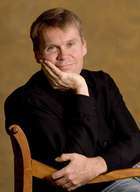
By way of a short biography, I have been a writer, variously employed, over the last half century. I started out in magazines during the 50s, most prominently in Esquire, but then went with LIFE, largely covering politics throughout the 60s and early 70s. Over the decades, however, I've published in most of America's major periodicals, Harper's, Smithsonian, New York Times Magazine, New York, et al., way back, SatEvePost, and inevitably, Reader's Digest.
But in the late 70s, I turned to TV, and helped start "20/20" over at ABC—producing and writing for Hugh Downs ("We're in touch. So you be in touch.")—and later creating "3-2-1-Contact" for Children's Television Workshop. Since then, I've worked intermittently for the Ford Foundation, at the Justice Department as Attorney General Dick Thornburgh's chief (and only) speechwriter, and later at the Center for Strategic and International Studies (CSIS) on a series of policy initiatives,especially on early heathcare proposals and deficit "hawkery."
In due course, I've written eight books, including Other Loyalties, a collection of political profiles, and Putting America's House in Order, an early attempt in 1996 to address the debt/deficit problem that has finally overwhelmed our present economy. I have also written fiction for which I won an O. Henry Prize in 1968, as well as other literary awards since. And I am the author of three novels. My second novel, The Late Great Creature, was nominated for the National Book Award in 1973, and is being republished this month, forty years later, by Overlook Press, a NYC literary house determined to revive worthy books that have stood the test of even these parlous times.
Deliciously macabre and kinky, a perfect Halloween book. Brower has Joan Didion's insight about "the business" without her sneaking superiority. He knows his Poe, his Isherwood, and his Corman - if you can imagine that unholy trinity - and his deadpan warp puts the book in a category with Charles Portis or Errol Morris. Too many comparisons, I know, but all in the service of a basic message - read this!
I waited my whole life (so far) to read this book and I was thrilled to discover how fantastic and fantastical and clever and funny and raunchy it is. It's a window into another world--Hollywood B-rate horror filmmaking in the mid-20th century--but it's remarkably contemporary in its take on celebrity culture and what it means to "go too far" in a world where the boundaries of taste, propriety and even sanity seem always to be shifting. It's also a garden of delights for Edgar Allan Poe fans. Overlook is reissuing the book in trade paperback this fall. If you love Hollywood history, horror/noir, Poe, great wordplay, wicked humor and/or just plain wickedness, you will find much to love about this rediscovered classic. (Yes, the author is my father but that does not make me as partisan as you might think. Read it!)
It's incredible that this 1971 novel got within whistling distance of the National Book Award.
The first section is written in the wild (yet curiously, occasionally Carverian) style of the New Journalism (the journalist as a character in his own reportage, up to and including salaciously bedding the aging bombshell "Hazel Rio") behind the scenes of a low-budget horror - the second is from the transcribed tapes of Roger Corman (or at least a fictional stand-in with a penchant for flashing) as he plans a countown clock paranormal PR stunt at the (ha ha!) home next to Edgar Allan Poe's home to both rid himself of a troublesome star, Simon Moro, and whip asses into cinema seats - the third is the diary of aforementioned troublesome star (some fictional mix of Karloff, Lorre, Lugosi and Price) scratched into the lid of his own coffin (edit: Karloff, yes, Lorre, some, Lugosi, definitely, but Price -and I didn't cotton to this until section four which featured a Sears Catalogue excerpt - is satirized as the predatory gay actor/art collector Quincy Adams)
- the plot synopsis of the edited-to-shreds two+two-reel Christmas tree tinfoil terror Ghoulgantua is a highlight
- "The Final Manuscript" (the coffin lid) contains an extended, poetic diatribe against the vacuity of the two-tribe American political system and the sheer ridiculousness of the "vote - it matters!" mindset (the game is rigged, yo - just seance Edgar A.P. who was plied with drink and wheelbarrowed from polling station to station in his last hours to stuff ballot boxes) - also, the attack on talk-show entertainment as a true American monster, Conrad Veidtesque grim grinning stealer of the peace of late night contemplation and soulsearch (remember: when that Daily Show sellout dipshit went full Hunger Games and did a skit with all-singing, all-dancing Rockette vaccine needles). Anyways, I read this section with soft whistles and awe as to how it so much related to now
- "I am very, very tired and one reason is that I have been masking my own moral fatigue. Like most people, I took America as a stimulant, when it is really a depressant." (pg. 204)
I wanted to to give this three stars but in the end, I don't think I "got" this book, so I couldn't do that. But as always, ratings are a reflection of the rater more than the thing being rated.
I always like it when I read books in proximity to each other that overlap, such as when I read A Certain Justice right after The Middle Temple Murder & The Paradise Mystery which are separated by 80 years but take place in the same location. In this case, I had just finished The Colony, set in '60s Hollywood, which made it dovetail nicely with The Late Great Creature, which is set at the same time but written about 20 years later.
This is basically an epistolary novel split into three parts: Notes of a journalist writing about the mysterious C. Moro, a horror icon; The tapes of a producer, Terry, who is trying to salvage the movie he made with Moro after a (real) severed finger went missing on set and turned up on The Tonight Show; the final writings of C. Moro.
So, I loved the premise. Moro is sort of a cross between Boris Karloff, Peter Lorre and Tommy Wiseau, who has made it his mission in life to create moments of genuine horror. Finding that genuine horror isn't really welcome in the film industry (very true), he tries creating an atmosphere of horror around himself. He has a mysterious past, he likes to randomly drug strangers, he's a pedophile, he's actually undead, etc. etc. etc.
Brower does just a great job of weaving in entirely fictitious but familiar-feeling horror movies, and the '60s saw the deaths of Peter Lorre (1964), Basil Rathbone (1967) and Boris Karloff (1969), and the director here is named Terry (Terence Fisher directed a lot of Hammer films) and the starlet is named Hazel Rio (Hazel Court was a '50s/'60s scream queen), and the whole premise of the movie made in the first section is to be based on "The Raven".
Roger Corman did an actual comedy based on "The Raven" and this movie is clearly not that, but the way they talk about how Terry makes movies reminds me a whole lot of Corman, especially his Poe cycle.
Ultimately, much is resolved by the final section. We learn Moro's true roots, though I was in the end confused as to whose name was what. I can't explain my confusion without risk of spoilers, though, so I'll skip. It wasn't that important.
What ultimately brought it down to three stars—besides the fact that the denouement was obvious the moment Terry explains his plan in part two—is that the why is not as compelling as his actions would suggest. I found the concept of Moro performing his antics as an attempt to create an aesthetic more interesting than the idea that he was trying to, I dunno, prevent another World War or whatever it was he was after.
Ultimately, that's perhaps my bias: I would rather see this done for fun than for "a purpose".
Brower's 1968 tongue in cheek novel is critically acclaimed but it really takes a bit of contemplation. It's smartly written and changes style.. Hemingway one minute, then Faulkner, and several other writers. . He uses several literary devices, changes point of view, delves off into a few tangents but does present the reader with an intriguing protagonist in Simon Moro.
It turns out our perverted, complex film actor and former Soldier of the Austrian Empire and model for Nazi propaganda, is loved and hated by most of America. As a whole,, The author most effectively pays homage to horror movies, Hollywood, theater, and show business general. EP Poe is a recurring theme.. The Raven would be Moros last film before he fades in a staged death and shipped "home" to Germany by his odd brothers Cosmo and Rudy who run the family cemetary in Jersey.
This is a bizarre story, perhaps the craziest I've read and THAT is saying something. Moro is Lugosi, Karloff and Lon Chaney with an even darker Mr Hyde like dark side. He is a pedophile apparently or at least a pervert. But that is not a shock especially in 1968 among the acting community.
Terry is the first narrator and writer who describes Moro, indulges in heavy sex with Hazel, the fading ingenue and plans the whole scheme to write a novel and produce the movie. His role evolves and confuses the reader.
There is a dose of crude realism a la Henry Miller and the novel seems pornographic at times. Dead fingers, blowjobs, S an M.. it's all here. The final third is perhaps the most coherent part and presents our hero ghoul most believably.
This novel is not really horror but it's a fun tribute to the genre. It truly is an experience if you can get through the weird twists. Recommend.
I've seen that movie, too. TLGC is a kind of novel I haven't seen for a while and in fact the kind of novel most people would never try. A lot of writers like a straight narrative. Mr. Brower jumps into a situation of an unusual celebrity who seems to throw everyone into the weird zone. Welcome to the world of Simon Moro with his ribald and disturbing stories putting the rest of the world at arm's length. We see Moro through the eyes of an Esquire writer, through the eyes of those involved in a horror movie with the stars and the director. He confounds them all, being larger than life and so he is. Who is the real Simon Moro. They will never know. On to the book itself. The approach is the guide of the viewer at the time. Whether it's the writer, director, actor or actress. You get where they're coming from and sometimes switches can be confusing. Also is the dialogue where you have to retrace your steps to keep up. Dialogue can be difficult. The approach is admirable yet hard to achieve. Read between the lines and you might see the ending and it's entirely apropos.
One of those rare books becomes your favorite after you accidentally stumble on in the least expected of places (for me it was the bottom of a cardboard box of sci-fi and horror paperbacks at the annual Friends of the Library sale). Just a few years before Alice Cooper's debut, Brower essentially predicts the 4th wall breaking "movie monster come to life" concept that became the hallmark of shock rockers to come with his character Simon Moro - a German character actor from the 30's entering into a late career as a b-horror star. Loaded with allusions to and references to film history, including several scathing caricatures based on real life figures like Roger Corman, Vincent Price and others (Moro himself is heavily influenced by Peter Lorre), this book is already a treat for any classic monster fan. It really shines though, with its cutting commentary on the nature of popular media, the meaning of "horror" as entertainment, and the nature of celebrity.
I picked this up believing it would be...funny, but maybe more simple-funny than the twisty, sometimes you-had-to-be-there humor I encountered. And some of those unexpected accusatory lines drew blood. Fair warning, there's plenty of discomfort and queasy character statements (and actions--OMG, I learned a new term dealing with windows in this book).
Reading this wasn't always enjoyable. I did enjoy the various articles and diaries and blurbs that created the style of the entire book, which all emphasize the time period and allow a slight distance (this reminded me why I don't like horror while allowing me to make it to the end of the book).
Glad I read it, won't read it again, absolutely sure that I didn't catch every reference.
This novel has such an endearing premise, and it's only by the premise's grace that I made it to the end. This novel also has a deeply unlikeable narrator.
On a craft level, Brower performs some interesting literary acrobatics, but by the end, I felt distant from the novel's humor and its disdain for its own characters.
Also, the homophobia and sexism were distracting. Unfunny. Certainly not based. Weak-level work for a novel of horror showbiz.
Rezension: Brock Brower "Der Grosse Schrecken", mehrere Ich-Erzähler
Ersteindruck Das Cover vermittelt mir einen gut gestalteten stilistischen altmodischen Grauen. Ich finde, dass erst der letzte Satz des Klappentextes das Buch intressant macht - Handlung/Aktion hineinbringt: " Doch Simon Moro wäre nicht Simon Moro würde er seinem Credo nicht treu bleiben und die Präsentation in ein grausames und großartiges Spektakel verwandeln ..." Ich erwartete also ein Gruselbich der alten Schule im Kontext des Handwerks des Filmemachens.
Zusammengefasst Das Leben eines Mannes einem bestimmten Ziel verschrieben. Der Leser begleitet ihn auf eine Reise Rund um den Film und seiner Persönlichkeit. Die Psychologie eines Schauspielers alles läuft auf ein perfektes Ende hinaus.
Die ersten Seiten des ersten Teils (Der Journalist) ... sind durch eine klare biographisch-jounalistische Komponente geprägt. Im späteren Verlauf der ersten Seiten versucht der Autor einen psychologischen Faktor im Kontext des Makaberen einfließen zu lassen; dies gelingt teilweise, da doch anfänglich noch eine große Verwirrung beim Lesen herscht. Besonders intressant fand ich den Perspektivenwechsel zweier Personen im Bezug auf ein Ereignis (Beginn Moros Karriere in München).
Störend empfinde ich allerdings, dass Moro des öfteren im ersten Teil mit M. abgekürzt wird. Es bringt mich unnötig aus dem Lesefluss und das Wort ist ehrlich gesagt kurz genung um es auszuschreiben, selbst für einen Journalisten. Das Wort "Grosse" stößt auch unangenehm an mein Esthetikempfinden an (/ss/-->/?/). Der Schreibstil ist zwar gewöhnungsbedürftig (zu viele unnötige Einschübe), dennochbleibt die Geschichte intressant.
Die Raben, welche die Kapitelanfänge makieren tauchen auch bald im Buch auf. Das an Poe angelegte Filmmanuskript wird sinngemäß, ausschnithaft und sehr gut formuliert an den Leser herangetragen. Die Komentare des Journalisten dazuwischen nehmen dem Text allerdings wieder seinen Schwung. Szenenzusammenhänge werden so nicht immer klar.
Nach dem ersten Teil des Buches bleibt der Eindruck inen journalistischen unfertigen Artikel oder blose Notizen gelesen zu haben. Moro habe ich dadurch jedoch gut kennen gelernt.
Ab der Seite 193 ... (Terry - Filmproduzent - zweiter Teil - Abschrift von Tonbandaufnahmen) Der HC wechselt und nun folgt der Leser: Terry, dem Leiter des Filmprojektes. Der Bezug mit Moro bleibt erhalten, da er eingespannt wird für die PR. In der Verhandlungsszene über die geeignete PR und was für Simon Moro dafür herrausspringt bekam ich den Eindruck, dess fast eine intime Anziehung zwischen den beiden herrscht. Terrys Charakter wurde für mich trotz seiner beschriebenen Taten nicht deutlich. Seine Taten sprechen nicht für seine Gedanken. Auch in diesem zweiten Teil bleibt jedoch die Unübersichtlichkeit, besonders deutlich in den Dialogen.
Der vorletzte Teil gehört ganz Moro. Er gibt ihm eine andere Persönlichkeit ohne Rätsel und erbahrmungslos Ehrlichkeit. Endlich erfährt man die Details, die man schon am Anfang des Buches gerne wissen wollte. Es wird/ist wirklich sehr spannend.
Der letzte Teil "die Abschlussseite" über die möchte ich kein Wort verlieren, denn schließlich möchte ich das Ende nicht verraten.
Die Berufung des Autors wird es wohl nie sein ein Journalist zu werden (hoffe ich). Das Romanschreiben liegt ihm schon eher.
This book was not at all what I had expected from viewing the cover art -- a naked lady standing on the back of some man-bat hybrid (not Batman, no). This is a fairly poignant, very well-written account of the final days of an aging horror star, someone in the vein (har har) of Karloff or Lugosi, and a man who is himself shocked and disgusted by modern America's desensitization to fear, to true horror, to the uncanny. Really an interesting, and perhaps very important, question: If we truly do not react to, or even feel, honest fear, if we are no longer capable of feeling truly afraid, what does that mean? My intuition is that a person truly without fear is a person with nothing to lose, no inhibitions, no filters, no regard for consequence; in short, a sociopath.
Brock Brower's novel is a kind of miracle. It's a dazzling fireworks display of linguistic dexterity. It's the hilarious and ultimately deeply moving story of an entirely imaginary and completely imagined master of the art of acting in horror films circa 1930-40. This book predated "Ed Wood" by about twenty years but I would swear there are large swaths of that screenplay that were lifted from this narrative. You will not believe the acuity with which Brower rotates the narrative point of view, unfolding the story and revealing so much. I will read this book again and again - it's a blast. Where has this book been all my life?
This seemed like a good idea when I started it, looked like it might be fun, but I just wasn't getting it. Maybe it takes an Industry insider to appreciate this, or maybe a big fan of horror movies, which I am not, particularly. I gave it 54 pages and wasn't enjoying it at all. Enough.
I was so interested in this story. It sounded like such unique tale. I just couldn't get into how it was written. I just couldn't make sense of how the story was unfolding. I barely understood the words on the page.