Rabbit loves the winter. He knows a dance, using a traditional Iroquois drum and song, to make it snow--even in springtime! The other animals of the forest don't want early snow, but Rabbit doesn't listen to them. Instead, he sings and dances until more and more snow falls. But how much snow is too much, and will Rabbit know when to stop?
This stylish and oh-so-funny story is a modern take on a traditional Native American fable from master storytellers Joseph and James Bruchac.
I didn't realize it when I picked it up, but this is an Iroquois story. That was a nice surprise, as I haven't read many of those.
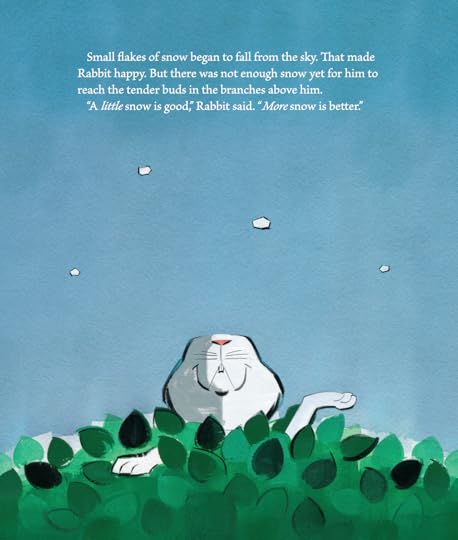
Rabbit loves the snow because it helps him reach the tender buds on the trees. So, one summer, he decides to sing his snow song to make it snow. At first, some of his friends like the summer snowfall. But Rabbit, never satisfied, keeps doing his snow dance and the snow continues to fall until all the trees in the forest are covered. But Rabbit didn't count on one thing: the summer sun. He finds that his obsession with snow comes back to bite him in the end.
The story here is cute and well done. I'm not as enamoured with the illustrations, although they do complement the story nicely.
This is a nice book that tells a story about greed. It's also a little legend about why the rabbit has such a small tail.
Rabbit loves the winter and the snow. Even though it is summer, Rabbit decides it should snow. His friends warn him that he shouldn't do a snow dance in the summer. However, Rabbit is impatient and sets off to get his drum and perform his dance. When snow begins to fall, he is unsatisfied with just a little sprinkling and he dances and dances, creating a blizzard. This allows him to reach the top of a tall tree to get tender buds. He decides there is enough snow, and falls asleep in the top of a tree.
This is a porquoi tale that explains why Rabbit's tail is so small. It also teaches the importance of patience and listening to the wisdom of others. The illustrations are wonderful. I especially love the illustration when the snow is so deep that Rabbit can reach the tender buds on the top of the trees.
Our Imagination Library book this month. My kids thought this retelling of an Iroquois folk tale was a lot of fun, especially the rhythmic chanting when Rabbit was beating his drum.
A story inspired by an Iroquois legend, about patience, selfishness, and how the rabbit lost its tail. Quite good! Great for discussion, or just to read.
Cute telling of an Iroquois legend about why rabbits have short tails. My son particularly enjoyed rabbit’s snow chant, and spent the next two hours running around the house yelling it, so maybe not a bedtime story. 😂
This Iroquois folk tale tells the story of how rabbits ended up with a short puffy tail. Rabbit is impatient one summer for the snow to come. He decides that even though it isn't the right season for snow, that he is going to make it snow. He gets out his drum and chants the chant he uses in the winter to make it snow and it snows in the summer time, much to the chagrin of the other animals. After all of his hard work, Rabbit falls asleep at the top of a tree. While he sleeps, the snow melts and he is stuck at the top of the tree. This book has a repetitive nature and is fun for children to participate in while a book is read aloud. It is creative and interesting and the text isn't too difficult or long for reading to young children. This book is great for any grade level. It can be used to teach folktales and stories about why things are the way they are. I would use this book in first grade as part of a unit of study on folktales. We could compare this story to other stories that explain why things are the way they are. This book would be great for teaching the lesson or message of the story, as the rabbit learns an important lesson in this book. This book is a WOW book for me because it tells a folk tale, but makes it fun for children who are reading or listening to the story. I like the way it has repetitive chants that the students can join in on to make the story more interactive. I like the way Bear says "that's almost as impossible as stopping the sun from rising", which is a reference to the story of how Chipmunk Got His Stripes. It would be great to read both stories and discuss that small reference, though it might be over the heads of young children. This book seemed to be more young-child friendly than many of the other folktales I have read.
This Native American Folklore not only teaches students about the seasons. It also teaches students the importance of having patience and listening to others. Rabbit was selfish and did not want to listen to his friends’ advice. He caused himself big problems by making it snow during the summer. The illustrator really brings this book to life. This book is geared to early elementary students and does a great job of teaching children to be patient...if they don't want to lose their tail.
Story to explain why rabbits have a short tail. Rabbit wants snow in the summer for selfish reasons. He ignores the appeals from other animals and causes it to snow so deep that most of the trees are buried. He falls asleep on a tall branch and the snow melts. He doesn't realize this and jumps from the branch. As he falls, pieces of his tail get caught on branches. Also explains pussy willows. Use with younger readers to introduce myths and stories to explain natural events.
Native American fable retold in this picture book for PK-grade 2. Impatient rabbit wants snow in summer and chants his way to getting his wish…but at a price. Lots of opportunity for extension after reading the book for the sheer fun of it. Info about animal adaptations is mixed with descriptions of the summer and winter seasons and the chant done by rabbit can be imitated by readers/listeners.
Thanks for sending this book, Dolly’s Imagination Library.
I, personally, have a bit of trouble appreciating pourquoi stories. But this is awfully cute. I love the art, too; though it looks slapdash cartoony, it's really got a lot of special going on. And the theme is hugely important, about not being impatient or selfish, but knowing that there is a right time and place for everything. I highly recommend this book for kid appeal and adult satisfaction.
Another huge favorite this year. I hadn't read this since March, but on the last day of school kids were still running around hollering "I want it, I want it, I want it right now!"
In March, I stopped accepting reread requests because the after school providers had had it with the chanting; unfortunately one of the kids had it in his independent reading bag and would read it to kids himself.
Have you ever wondered why a rabbit has a short tail? This fun and connectable folktale of the rabbit will keep elementary students engaged till the end. Teachers can use this book and have students create a story as to why an animal may look the way it does, as a way to reinforce the meaning of a folktale.
I picked this as an auxiliary book for the Arboretum Library's Bookworms storytime. Our intended audience for that is ages 3-6, this might be a little on the older side, however I like to display a range of books on the theme of the month. It is perfect for that. I love how the tale tells about the natural environment and the seasons and then the fantastical ending surprises and explains.
The story of how Rabbit got a tiny tail. This is a great book to discuss seasons and how animals react and how they have to prepare for the different seasons. It can be discussed to see if it would snow if we sang a song like Rabbit. It is a god book to remind students that just because you want something, it is not always the best for everyone else, we must be patient.
A traditional Iroquois story retold by James & Joseph Bruchac about a time when Rabbit had a long tail and short patience. A cautionary tale for anyone wanting lots of snow Right Now, no matter the season or the needs of your fellow creatures.
The repetition and chanting would make this an excellent read-aloud for preschool through elementary audiences.
This is a traditional Iroquois fable about a very impatient rabbit. Rabbit once had a long beautiful tail. This story will tell you how it came to be that rabbits now have a small fluffy tail, and where pussy willows come from. A fun story for late winter.
A great example to share either during storytime or one on one readings. This tale shows consequences and what happens when you're selfish. The sentences are simple enough with good repetition to keep kids interested.
This is a humorous retelling of a traditional Iroquois folktale about a rabbit who makes it snow in the summer. The other animals are annoyed, and Rabbit ends up losing pieces of his long beautiful tail thanks to his folly. The pictures are fun and the refrain of the song is very catchy.
This is a story time book read aloud from a library somewhere. The story explains how rabbit's have small tails now. It has to do with a little rabbit who was impatient for snow to come so he sang and danced a special snow dance. I won't spoil the ending...get it? the ending...
I love that this is an updated take on an Iroquois folktale. I read this to 4th grade, and they really enjoyed it, even got into chanting along with the story. My only wish, is that the rabbit had learned a bigger lesson.
A cute story that recognizes its Native American roots. I enjoy old fables that try to creatively explain how certain things came to be. The illustrations were unique in both form and color, which was refreshing!
Good for preK - 2nd grade. Fun story, straightforward plot, good rhythm and repetition, large colorful illustrations. Would be good for storytime - adding dance, drum and singing along. Teaches patience and listening to others.
Based on a traditional Iroquois story, this folktale is full of mischief and lots of fun. Rabbit loves snow but what happens in the forest when he decides to make it snow in summer? A great story to introduce the concept of choices and consequences and learning to think of others.
(3☆ Got something out of, but wouldn’t read again) Cute story. My 4-year-old daughter laughed & giggled at the song. I liked how there was character development in the rabbit. How he learned a lesson.
Rabbit wants it to snow right now, and he knows the song to make it snow. But the other animals aren't ready for it to snow yet. Cute story and illustrations.
An Iroquois story used to tell how rabbit got his tail. Funny. Nicely illustrated. The Bruchacs make a nice addition to the indigenous children’s book cannon.