What do you think?
Rate this book


Charlotte, die es als junge Rot-Kreuz-Schwester ins bürgerkriegsgeschüttelte Rußland des Jahres 1921 verschlagen hat, läßt in dem Jungen die ganze Poesie des Fin de siècle aus dem Paris ihrer Jugend erstehen und baut in Aljoscha allmählich eine Gegenwelt zum trostlosen Sowjetalltag auf. Außerhalb der wundervollen Ferientage nämlich sieht Aljoschas Leben anders aus: Stalinistische Prachtbautenkälte und Waffenfabriken bestimmen das Bild seiner Heimatstadt, einem Riesenmoloch an der Wolga. Die Schule formt ihre Kinder nach dem Muster junger Sowjetmenschen, westliche Feindbilder werden ihnen eingeprägt und die verzauberten Sommerabende auf dem Balkon der Großmutter rücken bald wieder in weite Ferne.
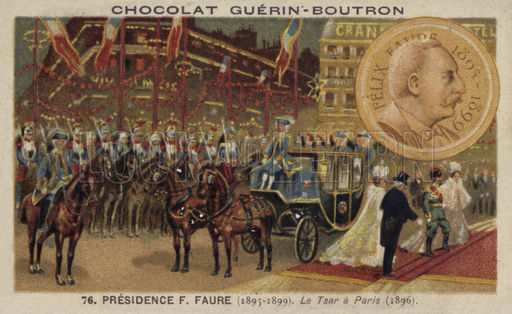
Ganz behutsam, in epischer Breite, führt uns der 1957 in Sibirien geborene Andreï Makine in die Welt von Charlottes Erzählungen ein. Immer gieriger saugt Aljoscha die Anekdoten der Großmutter in sich auf, die von einem Treffen mit Marcel Proust ebenso zu berichten weiß wie vom Zarenbesuch in Paris, und die ihrem Enkel vermittels Madame Bovary erste zart-erotische Empfindungen einimpft.
Dies alles ist für Aljoscha nicht nur einfach. Die von der Großmutter beschworene Idealwelt droht, ihn seiner eigenen Identität zu berauben. Er wird ein Suchender. Und doch bleibt diese Suche nur ein Stochern im Nebel der Vergangenheit, der sich erst im Verlauf einer späteren eigenen Reise in das Paris seiner Großmutter lichtet. --Ravi Unger
Paperback
First published December 6, 1995
The choice of events was more or less subjective. Their sequence was chiefly governed by our feverish desire to know, by our random questions…for us the exact chronology mattered little! Time in Atlantis knew only the marvelous simultaneity of the present.
…still in this present, which never passed away, we came upon a quiet little bistro, the name of which Charlotte spelled out to us, smilingly, as she recalled it: Au Ratafia de Neuilly. “This ratafia,” she would elaborate, “the patron served it in silver scallop dishes…."
We were discovering that a meal, yes, the simple intake of food, could become a theatrical production, a liturgy, an art....
In truth, we were beginning to lose our heads: the Louvre; Le Cid at the Comédie-Française; the deputies in a boat; and the comet; and the chandeliers, falling one after the other; and the Niagara of wines; and the president’s last embrace…And the frogs disturbed in their winter sleep! We were up against a people with a fabulous multiplicity of sentiments, attitudes, and viewpoints, as well as manners of speaking, creating, and loving.
For at last I was coming back to life. Living in the happy simplicity of orderly actions: shooting, marching in file, eating millet kasha from aluminum mess tins. Letting oneself be carried along in a collective movement directed by others, by those who knew the supreme objective, who generously relieved us of all the burden of responsibility, making us light, transparent, clear.
I had to recreate the topography of its high places & holy places through the thick fog of the past. But the greatest initiation was to understand how one could be French. Charlotte had imprisoned me in this fantasy world of the past while I cast absent-minded glances back at my real life. I no longer belonged either to my time or my country.Makine's prose is eloquent in reframing the past & merging it with the narrator's present life; his description of Charlotte's horrible wartime experiences & her gradual recognition of her long-absent husband, twice declared dead, as they walked toward each other on a country road is stunningly projected. A similar tableau is cast when the ravaged Charlotte is kept alive on a frigid night by the warmth of a dying saiga (antelope), shot & like Charlotte left for dead on a desolate stretch of land.
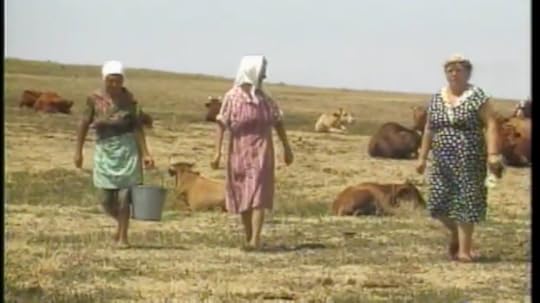
On this little nocturnal circus & I felt wonderfully foreign to Russia & like a bear after a long winter was awakening within myself. The woman brought with her a ponderous & powerful breath of Russian life--a strange amalgam of cruelty, compassion, drunkenness, anarchy, invincible joie de vivre, tears, willing slavery, stupid obstinacy, & unexpected delicacy....With growing astonishment, I discovered a universe previously eclipsed by Charlotte's France.