By shedding light on the many factors that can intervene and create inaccurate testimony, Elizabeth Loftus illustrates how memory can be radically altered by the way an eyewitness is questioned, and how new memories can be implanted and old ones changed in subtle ways.
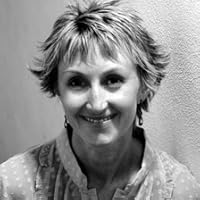
Elizabeth F. Loftus is an American cognitive psychologist and expert on human memory. She has conducted extensive research on the malleability of human memory. As well as her prolific work inside the laboratory, Loftus has been heavily involved in applying her research to legal settings; she has consulted or provided expert witness testimony for hundreds of cases. Loftus has been recognized throughout the world for her work, receiving numerous awards and honorary degrees. In 2002, Loftus was ranked 58th in the Review of General Psychology’s list of the 100 most influential psychological researchers of the 20th century, and was the highest ranked woman on the list.
Loftus received her Bachelor of Arts degree in mathematics and psychology with highest honors from the University of California, Los Angeles in 1966. She received her MA in 1967 and Ph.D in 1970 (both in mathematical psychology and both from Stanford University). She has taught at many universities, including the University of California at Irvine and the University of Washington. Loftus has been the president of the Association for Psychological Science (1998–99), the Western Psychological Association (1984, 2004-5), and the American Psychology-Law Society.
This book took me a while to get through for a couple of reasons. One, it's a fairly dry read. Not hard to read, by any means, but very much "here's the research, here's what we've found to be the case". There are some real cases included that make it less dry, but this is not a breezy summer read. Second, much of the information in this book is not new to me. Having read other stuff about memory and the foibles of eyewitnesses, I was aware of a lot of what was discussed. It was very interesting to see how the actual experiments were performed and see the actual results, but nothing was terribly surprising for me. Finally, this book is a bit out-dated, having been written in the late seventies. It is interesting that, as far as I'm aware, a lot of the results discussed in the book have gone on to be further confirmed in the intervening years. But some of the references are pretty dated, and you never really forget that you're reading information from the seventies.
That being said, I think this is a great book, and an important one for people to read. Especially with the thought that any of us could end up on a jury and have to decide the fate of a person, possibly with eyewitness testimony. People who are absolutely certain that eyewitnesses are the pinnacle of proof against criminals definitely need to be exposed to this information. If there's an updated version of this, I'd probably recommend it over this version, but either way, it's worth a read.
Elizabeth Loftus is a memory researcher. She presents a lot of excellent information about eyewitness testimony in this book including eyewitness identification of suspects, which is related to memory issue. The three main categories of consideration when it comes to memory are the original perception of an event and its storage, the retention period, and the retrieval of events from memories. Suffice it to say that there are so many pitfalls at each of these stages that using eyewitness testimony as the sole evidence to convict someone should be against the law. The writing is a bit on the dry side (Dr. Loftus is a scientist, not a journalist or novelist) but it is fascinating if you are interested in this subject.
Loftus is easily the most prominent name in eyewitness testimony, and for good reason. Her experiments are innovative for both psychology and criminal law.