A portrait of a marriage, a meditation on faith, and a journey of conquest and self-discovery, Island of Wings is a passionate and atmospheric novel reminiscent of Wuthering Heights.
July, 1830. On the ten-hour sail west from the Hebrides to the islands of St. Kilda, everything lies ahead for Lizzie and Neil McKenzie. Neil is to become the minister to the small community of islanders, and Lizzie, his new wife, is pregnant with their first child. Neil's journey is evangelical: a testing and strengthening of his own faith against the old pagan ways of the St. Kildans, but it is also a passage to atonement. For Lizzie -- bright, beautiful, and devoted -- this is an adventure, a voyage into the unknown. She is sure only of her loyalty and love for her husband, but everything that happens from now on will challenge all her certainties.
As the two adjust to life on an exposed archipelago on the edge of civilization, where the natives live in squalor and subsist on a diet of seabirds, and babies perish mysteriously in their first week, their marriage -- and their sanity -- is threatened. Is Lizzie a willful temptress drawing him away from his faith? Is Neil's zealous Christianity unhinging into madness? And who, or what, is haunting the moors and cliff-tops?
Exquisitely written and profoundly moving, Island of Wings is more than just an account of a marriage in peril -- it is also a richly imagined novel about two people struggling to keep their love, and their family, alive in a place of terrible hardship and tumultuous beauty.
KARIN ALTENBERG is senior advisor to the Swedish National Heritage Board and is a fellow of the Linnean Society. She is currently at work on her second novel. She lives in London.
The first amazing thing about this elegant but profound debut novel is that its author, Karin Altenberg, is Swedish, writing in a language not her own. She writes with a lucid clarity that nonetheless perfectly complements the style of its time, the second quarter of the Nineteenth Century. I might quote numerous passages in which she goes further, to shift and refract English like a poet in her native tongue, but I realize that to do so would be untrue to the spirit of the book, which talks of life in a harsh environment, and where flights of fancy and sudden stabs of beauty are the prized exception rather than the rule.
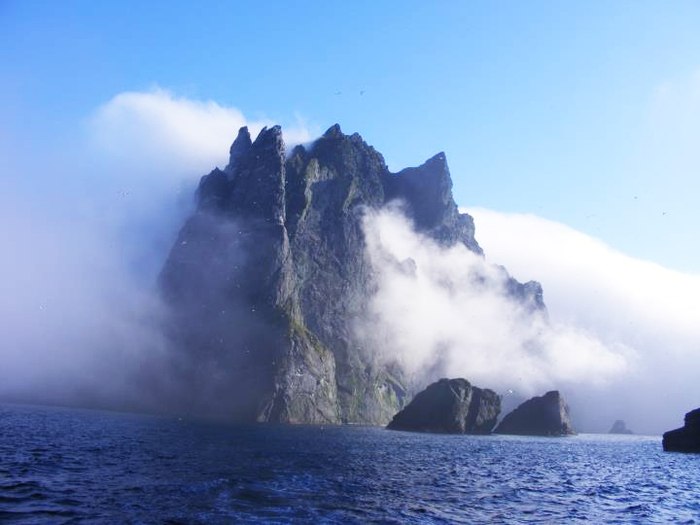
The novel is a fictionalized account of the stay on the islands of St. Kilda by its first minister, the Rev. Neil MacKenzie and his wife Elizabeth, from 1830 to 1843. I know several of the closer Scottish islands, but have never visited St. Kilda, which is over forty miles from the Outer Hebrides, a group of rocky islands and sea stacks piercing the raw Atlantic. Its cliffs, which are the highest in Britain, are home to millions of sea birds whose flesh and feathers constituted virtually the sole livelihood of the inhabitants until the islands were forcibly evacuated in 1930. Some years ago, I happened to see a music-theater piece in Gaelic about the islanders, whose extraordinary adaptation to their vertical world and ultimate fate moved me greatly. Altenberg captures all this beautifully, but she goes further by making her book a penetrating study both of colonialism and the crushing grip of organized religion.
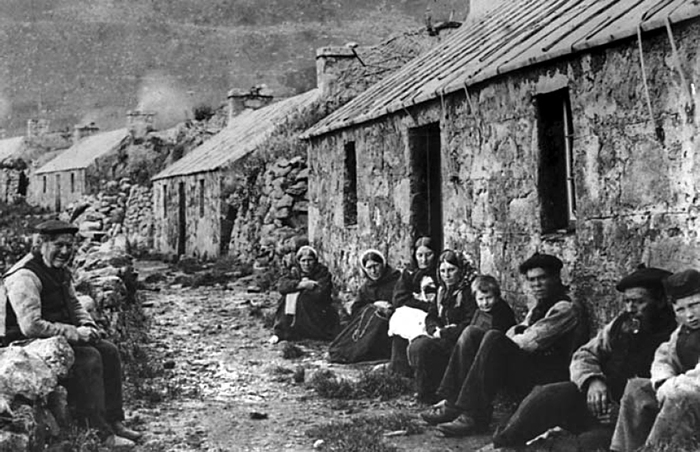
When Neil McKenzie arrives on Hirta, the only inhabited island, he finds a people still living in prehistoric sunken dwellings among the warmth and droppings of their animals, a people still mired in pagan superstition. It is his clear calling to spread Christianity and bring these near-savages to the light, a God-given opportunity to atone for a personal failure in his past that we will learn more about as the book continues. If he dimly recognizes some Utopian elements in a society where all property is held in common and decisions are made in communal meetings where all attend, he sees this merely as fertile ground in which to sow the Gospel seed. By example, force of will, and hard work, he gets the islanders to learn the catechism, attend his sermons, and build a modern village where each house has its separate piece of walled land. Proud of his work, he does not heed the advice of an early visitor: "Do you not understand that as you take authority of their souls and minds they will turn to you as to a God? Do you not fear the consequences of your tuition?" With the slow inevitability of tragedy, we see all this happen. MacKenzie, though committed to his faith, is a narrow and weak man at heart, and this island will destroy him.
The center of sympathy in the book, though, is the minister's wife Lizzie, who comes to St. Kilda as a new bride. Unlike her husband, she cannot speak Gaelic, and so must depend entirely on him for conversation until he gets her an English-speaking servant from the mainland. With the loss of her first three children to accident and illness, and of her husband to the self-imposed demands of his mission, she falls prey to a loneliness that has her questioning her own faith and even the meaning of love. But—and here's the last amazing thing—despite her loneliness, despite the bleak environment, despite the slow destruction of the islanders' way of life, Karin Altenberg still manages to fill her book with warmth and beauty, and a sense of life as stirring as the wind and waves around St. Kilda itself.
I only read this because the author is a relative of mine, my moms cousin. I met her last year during a family reunion and we talked about it and it really caught my interest. Then a few weeks ago I visited my parents and saw it in their bookshelf so I decided to borrow it. First of all the writing is beautiful and ive seen other reviewers saying it’s very well done considering English is her second language which I definitely agree with
This historical fiction novel takes place in the early 1800´s and is about Rev. Neil Mackenzie’s arrival to ”Save the souls” of the primitive community on the remote St. Kilda Island
The story is really beautiful! I dont think I have ever read anything taking place in Scotland before and I really enjoyed seeing the environment and the way it was described! I enjoyed the exploration of the themes physical and emotional isolation
You can also tell how much research she has put into this historical fiction novel which I really appreciated!
Sometimes it could be bit slow and the chapters are sooooooo long but overall I liked it a lot
Side note I’ve seen pictures of her house and office which is sooo beautiful, I want to work there 😩 a perfect place to sit and write!
I was really looking forward to reading this novel - I'd picked a couple of books based in the Scottish Highlands and Islands for my visit to the Highlands, and I thought that that idea behind the book was really interesting - the author has obviously done a lot of research into the subject, by writing a fictional story based on historical fact, and I admire the amount of work she has put into it. But I just really didn't like the style of writing. I love descriptive books that sweep me away, but the descriptions here felt kind of stilted and forced. I felt no identification with the characters at all, in fact I felt utterly removed from them. There is far too much 'telling' of the story, and I think I found the way it was written, in the third person, too impersonal. I was incredibly disappointed and in fact gave up before reaching the end as I wanted a good book to fall into for my holiday. So I picked up Night Waking by Sarah Moss, another novel touching on a similar theme & place, which thankfully was much, much better.
(3.5) An accomplished and atmospheric novel set on the remote British island of St. Kilda between 1830 and 1843, inspired by the story of the historical MacKenzie family. (Minor spoilers follow.) As in Lucy Caldwell’s The Meeting Point, the main character is a missionary’s wife, Lizzie MacKenzie, who finds herself isolated in an unfamiliar environment where religious and linguistic differences make assimilation difficult. A theme in both novels is the cooling of the relationship with a distant husband, accompanied by the temptation to have an affair with a ‘dark’ (racially other) attractive stranger.
In Island of Wings about 80% of babies seem to die within eight days of birth, of unexplained and torturous seizures. Altenberg explains in her afterword that the cause was neonatal tetanus, possibly caused by the unsterilized knives used to cut umbilical cords or the high percentage of metals in the soil from buried seabird corpses, and the mortality rate was nearer 60%. Lizzie miscarries a baby, and then loses twins to the eight-day sickness, but goes on to have six healthy babies during their stay on St Kilda.
The novel has a bit of a meandering plot – moved along only when strangers arrive on the island – but Jane Housham was perceptive in noting in her Observer review that “Stark dichotomies lend structure where plot, inevitably, plays less of a role.” Pairs of opposites like civilization versus savagery, outsiders versus natives, organized religion versus superstition, and compassion versus cruelty form the backbone of the book, along with the strong sense of place. My favorite incidents were, in fact, the visits from strangers: the naturalist brothers, who are disciples of Bewick from Northumberland; and Solano, the injured Spanish convict with whom Lizzie falls in love.
The prose is good, if occasionally purplish, and there is only the rare reminder that English is not Altenberg’s native tongue. She is in fact Swedish, but studied for an archaeology PhD at the University of Reading, of all places! Her deep knowledge of the social and natural history of St Kilda sets this historical novel a cut above the average.
I almost liked this book. The writing is strong, but I just didn't care much for it (the second star is for the strong writing.) This is partly because it's historical fiction based on real people and events, which I don't generally care for unless the real people are minor characters in the story, and even then that's usually better for me if the book is funny. Outside of comedy, I prefer my fiction to be about fictional characters.
But also this is rather dark and dreary throughout, which rather matches the feel of the weather and landscape on the island. Some call this literary, but I see this as a mainstream historical fiction based on real events and diaries, etc. But it gets my goat to read thoughts, motives and many other things put into real people that as she admits were made up.
This book focuses a lot on the couple who moved there and their marriage which is one of the reasons it got dark since they lost their first three children, etc. (they are real people so that's no spoiler.)
What was interesting was learning about the community of people who lived on this island (in great filth and it was hard to read some of the descriptions) and I did love their sense of community and no ownership which I am quick to point out works only in small populations such as this where it's always been that way, where there is no way to build wealth and where they depend on each other for their very survival and apparently no crime.
I read this book for three challenges. My Around the World challenge which I can knock Scotland off my list because this book takes place on the the island of St. Kilda which is off the coast of Scotland. I also read this for my RCC Challenge, and the NetGalley 2012 Reading Challenge.
My first love is history, I had to sit through hours and hours of The History Channel, The Discovery Channel, National Geographic Channel etc. as a kid thanks to my dad so unlike a lot of other kids, I actually love history. This has translated into a great love for historical fiction and while you haven't seen me review a lot of these titles don't worry :) The reviews are coming I'm just trying to branch out an explore other genres.
I wasn't sure what to expect from this book. I was kind of hesitant to read it because I learned that the book wasn't originally published in English and sometimes when a novel gets translated things get lost...in translation. Sorry, I had to say it. Anyways, I was a little concerned but I quickly realized my fears were misplaced.
Karin Altenberg has written a beautiful novel that is based on a real man Neil McKenzie who really was a reverend on the Island of St. Kilda. I thought that Karin did a fantastic job for getting the tone of her novel perfect. In my opinion she did an excellent job of recreating life during that time. Most of all I love how you could sense that she wrote every word with conviction.
The author also has a gift at creating characters that actually evoke emotions. Lizzie, Neil's young wife was my favourite character. I hated how Neil treated her and made her feel weak and stupid. However I'm glad to see that she grew as a character throughout the whole novel. I felt so bad for her. She's thrust into a new life, on an isolate island where her husband is the only one that can speak English with her, she's also coming to terms with her impending motherhood and struggling to find the real Lizzie.
I personally HATED Neil. The way he treated Lizzie was abhorrent to me and the fact that he treated her so poorly to make up for his own mistakes sickened me. However, just because I hate Neil and wanted to strangle him at several points in the book I feel that Karin wrote him very realistically. I did not agree with Neil much throughout the book if ever. I know that he went to St. Kilda with good intentions but I think he failed the islanders in a lot of ways. Most of all I hated how he looked down on them from his holier than thou pedestal that he placed himself on. It really irritated me but it worked for the novel as a whole.
I also enjoyed the setting. I felt as if I were actually in the places where scenes in the book took place. She was descriptive without overdoing it and that enabled her to write the scenes beautifully. It's wonderful to find an author who is skilled at making the reader feel as if they are present in the novel.
I think that this book was rich in history and though I didn't always see eye to eye with Neil I think that Karin Altenberg is extremely adept at creating characters, she makes them so realistic you can't help but admire her skill in writing. The novel as a whole is a great example of a debut author writing a fantastic piece of historical fiction.
I would have absolutely no problem recommending this book to anyone. I especially recommend it to lovers of historical fiction and those who may be new to the genre. It's great book and is now one of my new favourites. I can see myself reading this one again and again.
*I received a copy of this book from the publisher via NetGalley in exchange for my freehonest review.
I am unable to finish reading this book because it feels like a TV docudrama meant to reveal life on treeless Hirta in 1830, what day-to-day life was iike for the native St. Kildans living there, and what life was like for a minister and his wife who moved there from Scotland.
The idea for this book is absolutely fascinating to me, and I admit, I have loved learning about the dwelling places of the inhabitants and their way of life, surviving on birds for the most part. I am fascinated by the character of Lizzie, wife of the minister, who lives an almost completely isolated life on the island, shut away in the minister's house next to the church, unable to speak the language of the St. Kildans.
The problem I am having is that I cannot seem to get into the shoes of Lizzie or care much for her, other than watching from a distance to see how she struggles. Same with her husband, the minister, and the local St. Kildans. I am watching them all from a distance.
I will skim through the rest of the book, as I want to find out what happens to Lizzie and the rest. The skimming will allow me to skip the many details of hunting for birds and the like. I do not want a lesson in the social history of Hirta. I want a story about people, their feelings, a problem to be solved, with the social history part on the side.
Later - FINISHED SKIMMING.
This skimming allowed me to find more and more things about this book that totally irritated me. The conversations between husband and wife seemed stilted and weird. One chapter was devoted to a shipwrecked pirate whom Lizzie nursed back to health and then experienced a "bodice-ripper" moment with him, and later a similar but not so enjoyable "bodice-ripper" moment with her husband.
Much of the dialogue between any of the characters felt contrived, or like a badly-written play.
All sorts of "telling" instead of showing went on, throughout the book.
My half-reading and half-skimming of this book did succeed in two ways for me:
(1) I learned about the history of Hirta (thanks to Wikipedia), including the phenomenon of "neonatal tetanus" and the early deaths of many of the St. Kildans' infants.
(2) My belief about the silliness of book awards has been confirmed. HOW DID THE PEOPLE BEHIND THE ORANGE PRIZE PUT THIS POORLY WRITTEN BOOK ON THE LONGLIST?
Yet, of course, I want the people behind the Orange Prize to continue with their longlists and shortlists, for it is from these lists I get ideas for my next "to-read" books. Sometimes you win, sometimes you lose, and in this case, it was not a win for me.
I chose this book as it appeals to my longing for escape, I love to read about women who have settled somewhere remote and alien to their usual surroundings and you can't get much more remote than the Isle of St Kilda.
This book tells the account of the lives of true couple Reverend Neil McKenzie and his wife Lizzie who in 1830 take up residence on the Scottish Island of St Kilda to bring Christianity to the barely civilised, superstitious Gaelic speaking islanders who live in mounds of earth, eat little but seabirds and are resistant to change. Life on St Kilda is hard, barbarous and pitiless and deprivation and hardship are a way of life.
Its a brutal yet beautiful location and Lizzie finds the isolation devastatingly lonely yet finds a solace in the wildness and freedom of the island. Unable to communicate with the islanders she finds it hard to get to know them and as her husband becomes increasingly moody and hurtful towards her she struggles to cope.
Battling to cope with the death of her firstborn drives a wedge between the couple and leads Lizzie to seek companionship with the local women, united in tragedy as the mortality rate of newborns is terribly high on the island most dying within a week of birth.
The book describes an unusual setting, the struggles of a difficult relationship made harder by having to rely so heavily on each other for companionship despite having been virtual strangers when wed. Life must have been incredibly lonely and hard for this young bride in an era when breaking away from the constraints of conventional life was virtually impossible and when women did seize the opportunity of escape there was no going back and they just had to make do with what was thrown at them.
A fascinating look at life on an island like no other, although in some parts I found the story dragged but overall a worthwhile read especially for anyone who has an interest or curiosity about the setting of St Kilda.
I have been a history buff since the dawn of time, or at least since I first read the Little House on the Prairie books by Laura Ingalls Wilder. I fell in love with being able to live life as others did, even if it was vicariously. I picked this book because the New Hebrides Islands were an area that I had never explored before, which intrigued me. I had read many books about and taking place in Scotland, but never anything in this particular area. The first thing that amazed me about this book was the author's portarayal of the lives of the Islanders and how bleak it was. The next amazing thing was that the Reverend McNeil and his wife were actaul historical characters, and not just fictional characters that the author used to describe the story. The story of the lives of the Reverend and his wife was fascinating, as was the underlying history. There were many characters that engendered both interest and sympathy. In short, I was not disappointed in Karin Altenbergs portrayal of the lives of The Reverend McNeil and his wife, their time on the Island of St. Kilda, and the lives of the Islanders. As with a lot of the good historical fiction that I have read, this book has enticed me to read and learn more about the Reverend McNeil, the Island of St. Kilda, and the changes in the Church of Scotland that were occurring at this time. In my mind there is no higher praise than that.
Schottland, 1830: Der junge Pfarrer Neil Mackenzie zieht mit seiner Frau Lizzie nach St. Kilda, der abgelegenen Insel jenseits der Hebriden, um dort ein Gemeindewesen aufzubauen. Für ihn ist es Pflichterfüllung, für seine Frau eine Reise in die Einsamkeit. Denn auf der Insel wird nur Gälisch gesprochen, das sie nicht beherrscht. Zudem herrschen auf der Insel schockierende hygienische Zustände, und der junge Pfarrer macht sich die Verbesserung der Lebensumstände, aber insbesondere die Bekehrung der Inselbewohner zu einem reinen Christentum zur Lebensaufgabe. Denn den tief verwurzelten Aberglaube der Menschen gilt es auszumerzen.
Fiktionalisierte Romanfassungen des Lebens historischer Personen gehören zu meinen liebsten Lesestoffen. Auch Karin Altenbergs Charaktere haben wirklich gelebt und sie vermag es, sie mit einer tiefgehenden Charakterzeichnung wiederauferstehen zu lassen. Neil ist pragmatisch, ein Kind seiner Zeit, der die euphemistisch ausgedrückte “Umsiedelung” der schottischen Landbevölkerung für notwendig hält. Die Zivilisation schreitet voran, alte Sitten und Gebräuche oder gar Glaubensvorstellungen haben in der Moderne keinen Platz. Dass Neil sich ausgerechnet auf die abgelegene Insel St. Kilda oder Hirta schicken lässt, ist teilweise auch seinem schlechten Gewissen geschuldet, denn bei einem Seeunfall, den er überlebte, starb ein Freund. Neils Ambitionen auf St. Kilda schlagen in überzogenen Ehrgeiz und Arroganz um, er beginnt, sich mehr und mehr als Herrscher der Insel zu sehen, und gegenüber seiner jungen Frau entwickelt er ein völlig unberechtigtes Misstrauen. Er wird hart und kalt, hat kein Verständnis für ihre Bedürfnisse und ihre zaghaften Versuche, sich an die Sitten der Inselbevölkerung anzupassen. Lizzie, die ihm vermeintlich so sehr unterlegen ist, die Sprache nicht spricht und sie auch nie lernt, besitzt hingegen ein ausgeprägtes Einfühlungsvermögen, sie erkennt Neils Fehler und mangelnde Empathie. So leidet sie nicht nur unter der Einsamkeit auf der Insel, sondern auch unter der zunehmenden Entfremdung von ihrem Mann. Letztlich ist sie der stärkere der beiden Charaktere
Die Schilderungen des Insellebens lassen den Leser erschaudern, die hygenischen Zustände, die Behausungen sind für uns aus heutiger Sicht schier unglaublich. Dies schlägt sich auch in der äußerst hohen Säuglingssterblichkeit nieder, einer der tragischsten Aspekte der Inselhistorie. Andererseits leben die Bewohner im Einklang mit der Natur, sie sind gänzlich frei und haben eine flaches demokratisches System, das regelrecht utopisch erscheint. Die größte Rolle für die Wirtschaft der Insel spielen die Seevögel, deren Bejagung uns heute freilich etwas grausam anmutet. (Wer würde heute noch einen Papageientaucher essen ;-))
Wer weiß, dass St. Kilda letztendlich verlassen wurde, wird das Buch auch mit Melancholie lesen. Tatsächlich verließen die letzten Bewohner 100 Jahre nach dem Einsetzen der Handlung die Insel. So zeugen heute nicht mehr nur die steinzeitlichen Anlagen, sondern auch die verlassenen Häuser des während der Handlung neu gebauten Dorfes von der einstigen Besiedlung.
Mir hat das Buch sehr gut gefallen, ich werde gerne mehr von Karin Altenberg lesen.
I thought this looked like an interesting read and as I know nothing of St Kilda decided to give it a go.
It reminded me a lot of Lillian Beckwith's memoirs about her years in a croft in the Outer Hebrides (I think) and therin the reason that I gave up about 25% of the way (reading it on a Kindle) through.
I'm sure the writer did excellent research, very sure. But the endless descriptions of the craggers going for the birds, and MacKenzie's indifference to his wife's suffering and the wife never really making any effort to learn the local language annoyed me.
But mostly the reason I stopped reading is that it seemed to be excellent research gone to waste: if this had been a non-fiction account of life on St Kilda in the 19th Century it would have been a better use of that research.
A slow, depressing read. The synopsis of the book calls it "a richly imagined novel about two people struggling to keep their love, and their family, alive in a place of terrible hardship and tumultuous beauty." In huge contrast, the couple did nothing of the sort. It was frustrating to see them repeatedly not even try to talk to each other or grow close. They just let things go down whatever path things wanted to go down, which in a marriage inevitably means growing apart and not understanding each other. The husband was cruel, and both spouses kept their distance. Disturbing. There is no hope in this book, and the blurb is grossly misleading.
This is a sorry case of someone trying to get some extra mileage out of their dissertation. It may be that St. Kilda is archeologically interesting; however, Altenberg doesn't have enough understanding to characters and plot to actually share that with readers. The main character, a preacher, is so one dimensional it's a miracle his slightly better drawn wife actually stays with him. I kept hoping something would happen -that there would actually be some development of the protagonists but no - the story peters off into nothingness.
This book was a goodreads giveway and a gift. Historical fact combines with fiction in the story of Rev. Neil MacKenzie's arrival to "Save the souls" of the primitive community on the remote St. Kilda Island, in the early 1800's. Physical and emotional isolation are the themes with which Altenberg weaves a melancholy tale. Vivid sensory imagery depicts the setting and the forces of nature with haunting accuracy.
I couldn't even make it halfway through this poorly written book. I found myself rolling my eyes over painfully worded thoughts and conversations that neither furthered any semblance of plot or developed a character. All I'm walking away with is an idea of lots of dead birds and a remote island. My time is too valuable to spend on books that just aren't very good.
Couldn't get into the story and had a hard time connecting our sympathizing with any of the characters. the author definitely did her research on the history of the place, and it really showed and I loved learning that aspect; however, the story itself felt forced and cold.
The Island of Wings tell the story of a minister and his wife who go to the remote St. Kilda islands of Scotland in 1830. Neil and Lizzie MacKenzie have only been married a short time when Neil decides he has been called to spread Christianity to some remote area. When they go to the island, Neil becomes obsessed with his mission of not only converting the souls of the inhabitants but also changing their lifestyles to what he considers to be more modern and beneficial. At that time, the inhabitants were living pretty much in the manner of the ancestors who had been living there for hundreds of years. Life is harsh and brutal on the islands but one of the most difficult situations is the frequent death of newborns. Almost 60% of the babies die within 8 days after birth.
As Neil becomes more and more obsessed with what he sees as his mission, their marriage deteriorates even though they go on to have several children. I won't go any further into the plot to avoid spoiling it for others.
Although the novel is based on real people, the author admits that the personalities are fictional. Neil MacKenzie was the more interesting of the 2 characters because his character is more deeply developed. I felt anger toward him through so much of the novel because of his beliefs that the inhabitants were basically 'savages' and needed to be improved in all areas of their lives---it reminded me how the white settlers regarded the Indians of the United States and also how missionaries often approached people in other lands. Neil was definitely one of the 'hell and damnation' type of preachers. I do think author's descriptions of Neil's thoughts and sermons were very true to the formal beliefs of many ministers of that time. Neil also saw himself as 'commander' of the inhabitants. There are many depressing aspects of this novel and at times it was tough going to keep plodding through it.
The redeeming aspects of this novel for me was the knowledge I gained of the beliefs and practices of ministers within the Church of Scotland at that time in history and of the people and culture of the St. Kilda islands of Scotland
The cover blurb proclaims that this book is about love and loss in a marriage. It is true. That is in here. Neil and Lizzie MacKenzie would have faced challenges enough in their new marriage by becoming missionaries to the remote Scottish islands of St Kilda, basically a few rocks way out in a stormy ocean, covered with aggressive, stinking seabirds. Communication and supplies from the outside world come only once or twice a year by boat. Lizzie doesn't even speak the language (Gaelic) of the few families on the island, who live the same way there ancestors did a thousand years ago.
Their marriage is made even more difficult because Neil MacKenzie really needed serious therapy. He was suffering survivor guilt from a shipwreck years ago where his friend had drowned and he had lived. This caused him to be emotionally distant (and sometimes cruel) with his wife, and driven and overbearing with his parishioners. It was almost surprising that Lizzie and Neil managed to have as many tender moments (and as many children) as they did.
But this book is not really about the MacKenzies and their marriage. This book is about St Kilda. It is about the stark, cathedral-like beauty of the "stacks" (towers of rock), and rocky bays. It is about the flora and fauna: so many birds that the cliffs look like they are made out of white rock because white feathers cover every inch of them, and also rugged sheep, and fish, and seals. It is mostly about the people who live there, their traditions, and living conditions, and marriage customs.
The people live in rock houses built by their ancestors. They are more like burrows. There are no windows. They must be entered on hands and knees. The animals live inside, and the floor is covered with a layer of filth that accumulates all winter, and is shoveled out in the spring. The smell makes the visitors gag, but the locals are used to it. They sing and talk all day. They work the land in common, fertilizing the fields with rotted bird carcasses. Their one great sorrow is that most of the babies die within eight days. They didn't know, but we do, that this was from tetanus.
This really is St Kilda's story, and I found it fascinating. I recommend to anyone who reads it to Google images of St Kilda, and see for yourself the scenes described in the book. I believe the author truly loves St Kilda, and that shines in some of the book's lyrical passages. Neil and Lizzie MacKenzie are real historical characters. The real history of St Kilda that lies outside the scope of this book is also interesting, that eventually (in 1930) the island would be abandoned, and all of its inhabitants relocated, because life there was just too hard for the last few remaining. The MacKenzie's church and house, and the stone cottages Neil helped build for the people, remain. And of course, the rocks and birds remain.
I didn’t love Island of Wings and I didn’t hate it. I was interested enough to continue to see what happened and at times found it horrific and fascinating but overall, I’m just not sure this novel was for me. Island of Wings is a historical novel about the Island of St Kilda, the inhabitants and a Reverend and his wife who are posted there to guide the ‘savages’ into modern life. Based on real people, the novel is a fictitious account of their life there, with historically accurate events and details.
Religious fanatics don’t appeal to me in any way, so the Reverend’s quest for redemption didn’t keep me reading. Instead, I loved his wife’s story. Lizzie’s plight among people that she couldn’t communicate with and who lived a completely foreign life to her with an increasingly distant husband was intriguing. I kept wondering what I would do in such a situation and with limited resources and in a time that a woman wasn’t able to make bold moves regarding herself or her family.
Her loneliness was palpable and heart wrenching and I enjoyed watching her initially try to cope and eventually understand the natives more than her husband who was trying to lead them. The relationships she cultivated with the other women was heart warming and there was one scene in particular that actually had me giggling and yet another gagging.
The pagan superstitions and rituals were fascinating and I found the attempts of the Reverend to crush them both irritating and amusing when unveiled how entrenched they were to island life.
The mysterious deaths of babies on this island broke my heart many times over and the entire way through the novel I wanted to know why. I was finally rewarded in the notes and acknowledgements, so if you’re interested in why the neonatal rate on the island was so high, keep reading.
The details and description of the Island were both gruesome and fascinating. They lived on such barren land, yet the inhabitants somehow managed to survive. The details of all the birds eventually blended together for me, with the exception of how the islanders survived winter and the stench which was described many times over and actually had me gagging in certain instances.
There were really long passages in this novel which I tended to grow cross eyed at and I had to check early on that St Kilda was a real place and where it was located as for some reason I apparently missed it. But that said, there was enough in Island of Wings to maintain my interest and keep me flipping pages.
Reverend Neil Mackenzie, a Church of Scotland minister, and his pregnant wife, Lizzie, travel to Hirta, in the St. Kilda group of the outermost Outer Hebrides. The minister has a sense of calling and speaks Gaelic. His wife does not speak the language, does not understand the society and feels very much an outsider. Karin Altenberg is Swedish; although there is absolutely nothing wrong with her English in this novel, she may have an understanding of the barriers of language and culture and some sympathy for the outsider. Lizzie could have come across as anti-social and judgemental, but the author makes her more complex. She never learns to speak the language in fourteen years on the island, but does start to appreciate and understand the people more. The landscape, weather and isolation of St. Kilda are an important part of the story. The descriptions of seabirds, egg and chick collecting, the cliffs, rocks and sea, ancient structures and the effect all these had on the islanders are very well done. The traditional St. Kildan way of life was harsh, but the inhabitants did not see themselves as primitive or poverty stricken. They were probably healthier than many people of the time. The Mackenzies' attempts to improve the islanders would have met some resistance from them. He did improve conditions for the inhabitants however, including reorganising island agriculture, and was instrumental in the rebuilding of the village. With help from the Gaelic School Society, Mackenzie and his wife introduced formal education to Hirta, beginning a daily school to teach reading, writing and arithmetic and a Sunday school for religious education. The Mackenzies were greatly missed when they eventually left the island and the islanders joined the more rigid Free Church. The book is mainly about the Mackenzies' marriage, but it is set in a real place, using real events and characters and perhaps the history could have been more accurate. As Mackenzie was from Argyll, it would have been the Argyll clearances which forced his family to emigrate, not the Sutherland ones. The Abolition of the Slave Trade Act was in 1807. Neil Mackenzie was not the first minister on the island. The neonatal tetanus which killed several children was at its peak in the late nineteenth century, after the Mackenzies had left. It was almost certainly introduced and spread by tourists from the mainland who were in daily contact with horses, not by seabirds or any local custom of rubbing their oil on newborn babies. (Speculation about why author dislikes seabirds so much has been removed, as it could have been considered personal.)
In 1830, Reverend Neil Mckenzie and his young wife, Lizzie, make their way to the remote island of St Kilda to start a new life and bring Christianity to the Pagan inhabitants.
Poor, poor Lizzie. She is an English speaker on an island where everyone speaks Gaelic, except her husband, who is more interested in saving souls than keeping his wife company. It must have been an incredibly lonely life for her in the early days, isolated from the rest of the world. The infant mortality rate on the island was shockingly high and Lizzie suffers along with the other women, finding a bond amongst tragedy. Whilst based in fact, and the personal aspect of Island of Wings is fictional, it is not difficult to imagine this would have been the case.
The history books may have Mackenzie down as a man who brought civilised ways to St Kilda but Altenberg rewrites him as a man obsessed with religion, blind to the needs of those around him and zealous with the desire to turn the islanders to Christianity. The islanders themselves, seem rather tolerant of the missionary but it doesn't work both ways and I found myself feeling anger towards him. It may have been normal for the day, but the idea of forcing religion on people is awful and he comes across as quite oppressive. He is too worried what other people may think of him and some of the thoughts he has about his wife are unforgivable. He even treats his children with coldness.
The writing is evocative of the landscape with its beauty and its harshness. It is indeed an island of many wings, with birds playing a crucial role in both their survival and their superstitions. I found the history of the island and how they coped fascinating. I recently read of the guga culls of modern day Lewis in Peter May's The Black House and it was interesting to see the origin of the custom. The harvest of seabirds was essential to survival, with food being scarce and no regular supplies brought in from the mainland.
In the end, St Kilda was not a viable place to live and the island is now uninhabited, although the native sheep still roam the hillsides. Read for the descriptions and the history, especially if you have an interest in the evolution of religion in the Highlands and Islands. The plot isn't particularly strong, being based on historical events on an island where not much happens but there is a strong human element to it.
This years’ Orange has given me a couple wonderful treats including Island of Wings by Karin Altenberg.
In 1830 the Reverend Neil MacKenzie and his wife Lizzie arrive on the island St. Kilda to do missionary work. The MacKenzies are hopeful, in love and happily expecting their first child. They are full of vigorous believe that their efforts to educate the populace of the island on all topics but especially God will set them all on the right path. And. If the island happens to turn more British during the process? So much the better. Don’t think that because the topic is religion and the island is in Scotland not Africa or Asia that Island of Wings isn’t also about colonialism.
St. Kilda was settled a thousand years before the MacKenzies arrived to do a makeover by Gaelic speaking Norsemen. Arriving at St Kilda the young couple is shocked to discover a place that seems medieval compared to the luxuries they left behind. Although only 40 miles off the coast of Scotland, the island might was well be 400 miles away for all the comfort that is there. A few times a year the taxman would come to the island to collect revenue and to drop off supplies otherwise the islanders provide for themselves what they need. This is a hardscrapple place to live. The islanders are raggedly dressed, their homes are filthy, malnutrition is rampant and one in three newborns does not survive their first week.
These challenges that met the MacKenzies are quickly compounded. Only Neil speaks Gaelic so Lizzie’s isolation is immediate. Lizzie’s child is still born and the wretched bleakness of the lives around her further forces Lizzie into her own world. Neil’s efforts to convert the natives are hardly successful and his plans to reorganize how they do their farming have dire consequences.
In a spare writing style Karin Altenberg has done four things very well in Island of Wings: history, geography, people and politics. She has given us intriguing historical details, a world impossible to imagine, characters that change not because they grow older but because of circumstance and experience and a powerful lesson in the politics of faith. Island of Wings is an impressive, thoughtful novel.
I will always give a book 50 pages before I decide whether or not to continue reading. I gave this book 83. I really wanted it to be good - I wanted to feel everything that happened to the characters, the country, the land. Unfortunately, it didn't hit the mark.
I found myself skimming over the words as quickly as possible, trying to read a point of action within the narrative. I adore nature writing, so tried to cling onto any beautiful descriptions of the land, but even that fell flat. I wish that the author could've referenced a few of the early naturist writings beforehand - perhaps to have a look at how native "savages" are considered, even if the colonisers work side-by-side with them. The characters tended to be very stereotypical of our opinions of the time, saying exactly what the reader wants them to say. Unfortunately, this is where the substance is lost. I found that characters had very little opinion or substance, nor did they seem as though they felt any emotion at all. The blurb sets up for an action packed story set in a stunning setting, but that's the most interesting piece of writing within the first 100 pages.
“At last the firm ground of Hirta, our lost Eden!”
Neil McKenzie is a minister, called to serve the people of St Kilda, the most remote part of the British Isles, in 1830. His new and pregnant wife Lizzie follows him, despite speaking no Gaelic and having no company when her husband is away. Can they ever be happy in such an abandoned place?
The writing about nature is undeniably beautiful and skilful; I cannot imagine writing like this in my first language, never mind a second (Altenberg is Swedish). However, the book is so, so bleak and dreary. No end of childhood births, no particular plot progression within 120 pages (at which point I stopped); everything is as grey as the sky and sea which surrounds the island.
The political environs of the time were somewhat alien to me and not explained at all, so I think you need a decent background in Scottish and church history around 1830, as well as an understanding of missions.
I don't go in for historical fiction as a rule, and would not categorize this as such, although it does use as its protagonists a real-life Church of Scotland minister and his wife.
What attracted me to it is the setting: St. Kilda, a tiny island west of the westernmost islands of the Outer Hebrides, which was evacuated of its last few dozen residents in the 1930s after thousands of years of human habitation. No reported serious crimes in the island's history, and none of its citizens ever fought in a war, as far as is known. No money economy until its last years, either.
Reading about the way of life on the island in the first half of the 19th century is fascinating in itself, and the depiction of the spiritual crises and strains of isolation and outsider status on the marriage of the minister and his wife is compelling, too.
Not a plot-driven novel; this one's strengths are setting and characters.
Occasionally, one is totally absorbed by a book and this was such a book. For some time I have been fascinated by the St-Kilda archipelago, particularly thanks to the album 'Hirta Songs' by Scottish folk singer Alasdair Roberts, and for many years I have been a massive fan of Scotland in general. So, in a sense, I supposed I could not go wrong with this book (which is referred to on the cd).
The author did a lot of research into life on St.-Kilda in the 19th century, she visited the island, and her characters and story are based on true facts.
I feel the story had potential to be elaborated even further, especially the side story about the castaway.
Being interested in religion as well, I also found the duality intriguing between faith on the one hand and the impact of the natural environment on the other hand on the minds of the St Kildans, and on its newcomers.
It will not be easy to become just as engrossed in the next novel I shall be reading.
Based on real people and events, this novel is set on an isolated island west of Scotland's Hebrides Islands over the course of the 1830s and early 1840s. A young Presbyterian missionary takes a wife and sets out to Christianize and modernize the natives. Thoroughly committed to his mission, he is conspicuously lacking in empathy for his parishioners or even for his wife and growing family. She, meanwhile, who never even learns the Gaelic that the natives speak, is empathetic and wise but is verbally abused by her husband whenever she displays her empathy and wisdom. The tone and language are often awkward, and I longed for more complexity in the characters in what could have been a moving story.
This book will make a great book club selection and I have already listed it for our own Contemporary Fiction Book Club Reading List 2012. Historical Fiction, richly imagined and revealed characters, incredible decriptions, a grand adventure brought to light,. Think The Piano Tuner or Letters From Yellowstone or even Abide with Me. St Kilda certainly made a fascinating backdrop for the thwarted dreams and woes of this minister and his new bride determined to keep their love and mission alive in these remote islands.
I had to give this book the highest rating because it is not very often one finds a writer who can paint pictures and emotions with words. In taking the real life minister Neal and his wife Lizzie and creating a fictionalized account of their lives on St. Kilda in the 1830's Altenberg has given the reader a novel that is historically interesting and emotionally rich. The isolation as well as the beautiful setting is flawlessly described so that the reader feels that they are actually on these islands as this story enfolds. Wonderful book! ARC provided by Net Galley.