Opening with a powerful cycle of elegies for her long-distant, half-brother, this major new collection by one of our bestselling poets then goes on to include both serious and funny poems about women and poems about the precarious balance of nature, ending with the beautiful, life-affirming "The Art of Blessing the Day." 160 pp.
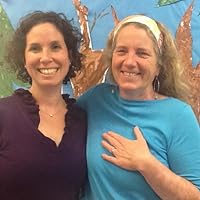
Marge Piercy is an American poet, novelist, and social activist. She is the author of the New York Times bestseller Gone to Soldiers, a sweeping historical novel set during World War II.
Piercy was born in Detroit, Michigan, to a family deeply affected by the Great Depression. She was the first in her family to attend college, studying at the University of Michigan. Winning a Hopwood Award for Poetry and Fiction (1957) enabled her to finish college and spend some time in France, and her formal schooling ended with an M.A. from Northwestern University. Her first book of poems, Breaking Camp, was published in 1968.
An indifferent student in her early years, Piercy developed a love of books when she came down with rheumatic fever in her mid-childhood and could do little but read. "It taught me that there's a different world there, that there were all these horizons that were quite different from what I could see," she said in a 1984 interview.
As of 2013, she is author of seventeen volumes of poems, among them The Moon is Always Female (1980, considered a feminist classic) and The Art of Blessing the Day (1999), as well as fifteen novels, one play (The Last White Class, co-authored with her third and current husband Ira Wood), one collection of essays (Parti-colored Blocks for a Quilt), one non-fiction book, and one memoir.
Her novels and poetry often focus on feminist or social concerns, although her settings vary. While Body of Glass (published in the US as He, She and It) is a science fiction novel that won the Arthur C. Clarke Award, City of Darkness, City of Light is set during the French Revolution. Other of her novels, such as Summer People and The Longings of Women are set during the modern day. All of her books share a focus on women's lives.
Woman on the Edge of Time (1976) mixes a time travel story with issues of social justice, feminism, and the treatment of the mentally ill. This novel is considered a classic of utopian "speculative" science fiction as well as a feminist classic. William Gibson has credited Woman on the Edge of Time as the birthplace of Cyberpunk. Piercy tells this in an introduction to Body of Glass. Body of Glass (He, She and It) (1991) postulates an environmentally ruined world dominated by sprawling mega-cities and a futuristic version of the Internet, through which Piercy weaves elements of Jewish mysticism and the legend of the Golem, although a key story element is the main character's attempts to regain custody of her young son.
Many of Piercy's novels tell their stories from the viewpoints of multiple characters, often including a first-person voice among numerous third-person narratives. Her World War II historical novel, Gone To Soldiers (1987) follows the lives of nine major characters in the United States, Europe and Asia. The first-person account in Gone To Soldiers is the diary of French teenager Jacqueline Levy-Monot, who is also followed in a third-person account after her capture by the Nazis.
Piercy's poetry tends to be highly personal free verse and often addresses the same concern with feminist and social issues. Her work shows commitment to the dream of social change (what she might call, in Judaic terms, tikkun olam, or the repair of the world), rooted in story, the wheel of the Jewish year, and a range of landscapes and settings.
She lives in Wellfleet on Cape Cod, Massachusetts with her husband, Ira Wood.
I loved reading these poems. I expected the overtly political feminist rage, thinking this would be something like Diane di Prima poems. But I didn't expect everything around and beyond the slogans. Odes to deer and cats and grackles, and an interiority that travels deep -- "all the way / down into the octopus cave / where I would seize my own self / like a precious living conch."
There's something about this balance -- writing of both white supremacy and lost cats; abortion clinics and crows; the Holocaust and octopus caves -- that gives this poetry power and relevance. Also: beauty.
Last stanza from "Season of breakage," and words for our time:
Our virtue is to become wise as gods, knowing we are helpless as maggots, and go on out of the burning house into the winter that will kill or renew us.
This is my first foray into Marge Piercy's poetry, and it a was a bit of a mixed bag for me but a mostly positive experience.
It opens on her "Brother-less" cycle, a series of poems about her recently deceased estranged brother. These poems were more interesting to read than really enjoyable for me, but the last one "Endless End" was deeply relatable.
The next section of poems is explicitly feminist, and had lots of bangers, but the best was "A Day In The Life" which was about an abortion clinic worker. Some of the poems had a weird tone to them that just felt very "feminism of the previous century" sort of vibe, which isn't my jam decades into the new century, and I felt like they would have been more impactful to me if I'd read them a decade ago. It isn't inherently bad, but reading them made me feel like I was studying a second wave feminist text more than actually enjoying some feminist poetry. To be clear though, several of the poems were great, like the previously mentioned one and the titular poem.
Her nature poems were evocative and filled with lovely imagery, even if they didn't always move me the way I wanted to be moved. I really didn't enjoy that like half a dozen poems that featured animals (both nature themed or pet related) had explicit animal death--not because I don't think people should write about those things but because I personally am not up for reading about it and it was a recurring theme here.
The explicitly Jewish poems were some of my favourites of the collection, including "Kaddish," "Matzoh," "Breadcrumbs," and of course "The Art of Blessing the Day." This wasn't particularly surprising to me as I was introduced to her work through my rabbi.
Overall, this isn't a collection I particularly loved, but it did bring me a number of individual poems I loved.
Marge Piercy uses a lot of sensory in her poetry. She has a powerful voice. This book was a mixture of feminism, nature, and reflection of the authors own life experiences. The read started off strong but about halfway through the book I started losing interest. Two poems that really stuck out to me from this book, the "Duet that Trails Off," and "After the wind abated, he walked out and died." I reread both several times I liked them so much.
“When will women not be compelled to view their bodies as science projects, gardens to be weeded, dogs to be trained? When will women cease to be made of pain?”
I always appreciate poetry from a feminist perspective, and Marge Piercy provides words for feelings all women know too well.
Stand up now and say No More. Stand up now and say We will not be ruled by crazies and killers, by shotguns and bombs and acid. We will not dwell in the caves of fear. We will make each other strong. We will make each other safe. There is no other monument.
A few of my favorite lines out of "For two women shot to death in Brookline, Massachusetts". But honestly I was overwhelmed by the power and honesty of all of these poems. I have marked so many pages and a lot of these poems are easily some of my new favorites. Piercy's writing is bold and strong and raw and her words are so empowering. Absolutely love it!
3.5, as there were times I couldn't wait to get home and continue reading and times when I was dreading diving back into the skillful world of Piercy's 13th collection.
Listen, I'll be honest: for me, nature poems are tedious and there's a section and a half of leaves and geese and trees. That is really my only complaint and it's entirely because of my personal tastes.
The rest of the collection was fabulous. In fact, and I realize this is an unfair statement, it's almost too polished. She's just so skilled, so artful, so knowledgable (as this collection ends with her describing old age). There's something deeply charming about a collection about being a woman opens up with very touching poems about her step-brother and their differences and what he taught her.
My favorite poems in this collection are "Mean," "Duet that trails off," "The grey flannel sexual harassment suit" and "A quick and quiet one," which oddly enough is a nature poem.
I'm not the biggest fan of "nature" poetry. (By which I mean, if you write it, and you aren't Mary Oliver, I tend to take issue of that.) So, when I picked up this little gem in San Francisco -- pleased as punch to find some Piercy poetry, which is impossible to track down in STL for some reason -- I was more excited about the sections that did not focus extensively on, well, deer for instance. But, as usual, Piercy disarms me. 90% of the poems in this collection are top of the line -- hitting complex topics (family, memory, death, etc) with astounding precision. I expect this book will grow lovingly tattered, in time.
Some must-reads from this collection: Brother-less seven: Endless end; For Two Women Shot to Death in Brookline, Massachusetts, The Retreat; My Boa; The World from Below; Growing Up Haunted; and definitely (DEFINITELY) The Descent of Orphee.
This is one of my favorite poetry collections thus far. Marge Piercy writes about love, life, death, and seasons with a strong woman's voice. My favorite poem in this collection is the final entry, The Art of Blessing the Day This is the blessing for rain after drought: Come down, wash the air so it shimmers, a perfumed shawl of lavender chiffon. Let the parched leaves suckle and swell. Enter the skin, wash me for the little chrysalis of sleep rocked in your plashing. In the morning the world is peeled to shining.
I've been reading Piercy's poetry collections spanning her career to see how her feminism has developed since she first started publishing. This collection, published in 1997, is softened compared to her early anger in To Be of Use. There are some strong poems about abortion in the beginning section and a good poem on self image toward the end, but as a whole, I am disappointed by the waning of Piercy's feminist poetry. If you're looking for that, I suggest her earlier collections. This one is more about the mundane, nature, and getting older.
Poems about family, womanhood, society, myth, and love.
from What are big girls made of?: "When will women not be compelled / to view their bodies as science projects, / gardens to be weeded, / dogs to be trained? / When will a woman cease / to be made of pain?"
from A warm place becomes a cold place: "A black hole / where there used to be shining. / Energy is sucked there / transformed into spite."
from Duet that trails off: "The birds have eaten the crumbs. / The iron has rusted like old blood. / The glass mountain is opaque with age. / The key lies on the bottom of the sea."
My first book of M. Piercy poems. I'm also teaching it in my Creative Writing class. Loved it. Her poems are accessible, important, moving, political, historical. You could use this book to teach a history class, a creat. writing class, a women's studies class, a lit class. It's the perfect choice for teachers. Fave poems: the title poem, also Brotherless, and the elegy to Audre Lorde.
After reading quite a few of Piercy's poems on line I was happy to find this collection in a local bookstore. A quick perusal suggests that I'm in for a very big treat. And the cover! Can't miss with a Minoan fresco, can you?
Excellent, excellent collections of poems. So far, this is my favorite of her collections. I think she must have been about my age when she wrote them - so many speak to who I am now, and where I've been. I may have to buy two copies, so I can loan one out :)
I fell in love with Marge Piercy many years ago because of her comparison between women and bonsai trees. Now that I have read an entire collection of her works, I am an even bigger fan. I'm actually looking forward to writing about these for my class!
In some ways, I think this book should be regarded as even more moving and iconic than Piercy's The Moon is Always Female, especially because of the excellent 'A day in the life,' about a terrorized abortion clinic employee. This is some of Piercy's best work overall.
I love Marge Piercy's way of seeing both sides of a situation yet maintaining her feminist view without insulting the male gender too much. I found sympathy for some men in here as well as some anger too. Perfect quick read.
I could care less for her nature poetry, but no one has a better handle on narrative poetry than Marge Piercy. Her poems on her dead brother and on feminism are unparalleled for me.