

What do you think?
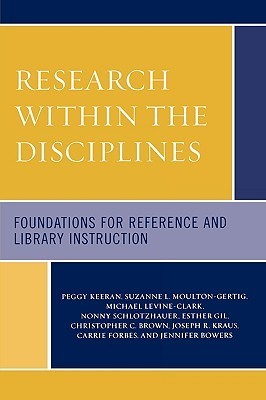
Research Within the Disciplines: Foundations for Reference and Library Instruction
Research lies at the heart of all academic disciplines. Research Within the Foundations for Reference and Library Instruction is an expansion of that concept. The book provides an overview of research practices and literacy standards in the various disciplines_humanities, music, social sciences, business, government publications, engineering, and sciences_to help shape library instruction and reference assistance. Conceived and developed by the reference librarians at the University of Denver, the book grew out of team discussions about teaching research and writing within the disciplines. The book's main objective is to provide a degree of orientation toward conducting research within specific disciplines and across others. The volume includes separate chapters on the broad disciplines covered in undergraduate education, as well as concluding chapters addressing interdisciplinary research and the role of instruction as a means of developing effective researchers. The continued necessity of understanding the foundations of research, whether within the physical library or via the electronic environment, remains an underlying concern, and the advice put forth by this team of practicing academic librarians is an important step to achieving this goal.
280 pages, Paperback
First published April 1, 2007
Ratings & Reviews
Friends & Following
Create a free account to discover what your friends think of this book!
Community Reviews
Displaying 1 - 4 of 4 reviews
January 18, 2018
This books provided useful snapshots of how library research habits and librarian support varies by discipline. The resource lists are less useful from a proactive perspective, but would be helpful for someone new to a discipline or facing a question beyond their usual specialty. Certainly all new librarians should take a look at this title.

December 2, 2010
Like a lot of books for library instruction, this mostly consists of articles that are themelves reference guides to other literature, although it does have the advantage of being subject-based, and of taking the time to examine the specific information needs of various academic disciplines from a user-based perspective. Probably most librarians will find it is most useful in introducing them to areas with which they are not already familiar - for me this was particularly the chapters on engineering and business. Other chapters include those on the humanities generally, music and history, the social sciences, government documents, the sciences, interdisciplinary research and the instructional role of the librarian. This last chapter appears to be based on the most up-to-date research, and may be of use to many who would not otherwise be interested in the book. In all, it lives up to its promise and delivers what is asked for, but does not do so in an especially creative or interesting manner.

January 10, 2011
Focuses mostly on reference/research services in the academic/college setting. Each chapter is fairly narrow in focus, with some overlap between chapters.
The final chapter seems unnecessary, and might be better placed as an introduction than a conclusion, were I the editor.
The final chapter seems unnecessary, and might be better placed as an introduction than a conclusion, were I the editor.

January 17, 2011
So damn boring I couldn't finish it.
Displaying 1 - 4 of 4 reviews