Paperback in very good condition. Covers are a little scuffed. Edges and corners are slightly bumped and rubbed. Page block and page edges are tanned. Pages are otherwise clear and binding is sound. LW
Sue Tilley is an author and model, as well as manager at the government’s Department for Work and Pensions in London’s West End. Born in 1957 in south London, Tilley became involved in the London art scene in the late 1970s, leading to her close relationship with Leigh Bowery. In 2008, a painting of Tilley by the portraitist Lucian Freud become the world’s highest-selling painting by a living artist, going for $34 million at Christie’s Fine Arts Auction House in New York. Tilley continues to write, model, and pursue other projects in London.
I feel conflicted reviewing this book. On one hand, I couldn’t put it down as it was obviously interesting due to his life. On the other, it describes behaviour that I can’t support and don’t think should be celebrated, but is brushed over in the book as ‘outrageous’ or ‘classic Leigh’. I refer mainly to how he treated people, his sexual harassment of friends and strangers alike and his racial slurs used to name his works. I can appreciate it was ‘a different time’ but there are some behaviours that should never be accepted and now I feel a bit sad that he was… well a bit of a dick.
I don't think there could have been anyone better to write a biography about Leigh Bowery than his close friend, Sue Tilley. Tilley paints a portrait of an icon that is not two dimensional, she writes both about Bowery's generous spirit and his selfish and sometimes sadistic antics. And I don't think this perspective could have been provided by anyone other than someone who knew Bowery intimately. There were actually times I had to put the book down because what I'd just read had been particularly grotesque/disgusting/mean.
I just wish this book had a structure... which it doesn't. Tilley jumps about on the chronology of Bowery's life so reading this book I felt somewhat disorientated. It's hard to get a sense of someone's evolution and how they've progressed through life when the way of telling it is disjointed and confusing. At points I felt that I'd read the same or at least similar stories multiple times.
The last portion of the book, about Bowery's death, stands out to me as one of the most touchingly written and sad things I've read. In this part of the book, Tilley's affection for Bowery and his affection for her is most evident, and it was a really stark reminder of the realities of HIV/AIDS in that time and even now.
I would recommend this book to anyone that has a casual interest in Leigh Bowery and the London queer scene of the 80s and 90s, but go into it knowing that it's unlikely you will get a completed picture of who Bowery was. And, you can more or less get the same information as the book from Tilley's various appearances on podcasts and interviews.
Asistí a la exposición de Bowery en el Tate Modern en marzo del 25. Nada más salir compré este libro. Es agosto y acabo de terminarlo con sentimientos encontrados.
Por un lado, el libro. Es bonito pensar Sue Tilley, amiga de Bowery, escribió esta biografía a modo de tributo tras la muerte de su amigo. La cosa es que la redacción es bastante deficiente y carece de un órden lógico. Parece Teo va al Parque.
Por otro lado, Leigh. No paro de pensar en esta cosa trillada de que el personaje se zampa a la persona. Bowery era un genio, es innegable: marcó la escena de la época, es inspirador y se puede ver su influencia en muchas cosas que consumimos a día de hoy. A mi me gusta lo grotesco, lo inmundo y lo retorcido, puedo mancharme los tobillos de mierda. Mi problema ha sido que, entre tanta cagada, no he encontrado ni un ápice de crítica en Tilley al ver de cerca la humillación y abuso al que Bowery sometía a la gente de su alrededor.
Me gusta Leigh Bowery, igual que mucha gente de la escena de los Club Kids y así. La cosa es que me niego a obviar lo perverso bajo el pretexto de que esta peña era prolífica y digna de admiración. Me ha faltado algo de reflexión sobre esto en el texto. No es oro todo lo que reluce.
“6.6.92 ‘Glasgow. We’ve had great audiences here - they don’t just clap - they stomp their feet as well! They don’t just throw flowers - they throw money also! They don’t just want one’s autograph - they want to have full sex with one too! It’s been marvellous’”.
Strange how familiar yet transcendent he seems - so many references to places and people I know (he went on tour with my old printmaking teacher). So interesting getting to know such a creative person so intimately, never known anyone to live that uncompromisingly. Can’t believe he died in such a horrible way. Thank you Jess for buying me such an inspiration for free creative expression 🩷 but yeah crazy guy
Guessing this was meant to be a celebration of his life, work and art? Don’t know what’s worse his friends having to wear tights when he was sexually frustrated incase he tried to do anything, or just the constant harassing people to try have sex with him as well the constant power imbalance he had to have over people.
Went from loving and appreciating Leigh Bowery to being like almost sickened but had to finish.
One thing that was cool, I suppose, is seeing the evolution and all the different icons being mentioned
Parts were definitely fun to read but the writing was lacklustre. Tilley’s lack of real critique around Bowery’s occasional horrible behaviour somewhat deified him and took away a sense of depth/complexity. Feel like this was only made up for within the last few chapters about his death, which were touching.
Käisin Tate Modernis tema näitusel (see oli epic!) ja hakkasin kohe peale seda raamatut lugema, see oli täielik komm!
Ma ei ole pikka aega lugenud raamatut, mis nii palju põnevust ja emotsioone tekitaks. Juba ainult selle pärast väärib see 5 tärni. Olenemata sellest, et raamatu autor pole kirjanik ja tema kirjutamise stiil oli mitmeti kohmakas, ei häirinud see mind, sest mul oli lihtsalt nii põnev! Autor oli Leigh lähedane sõber, ma arvan, et ei leidu õigemat inimest tema loo jagamiseks. Tänu sellele säilis raamatus inimlikkus, draama, kunst ja mahlased klubiseiklused. Nagu istuksid sõbrannaga pärastlõunal kohvikus ning ta jagab oma möödunud õhtu hullumeelseid seikasid.
Even if you think you're not familiar with Leigh Bowery, you've probably seen something inspired by him. Hailed as a fashion legend, Leigh became known for the outlandish creations he wore on the London club kid scene in the 1980s. This is a book written about Leigh's short but colourful life, by his close friend Sue Tilley.
What makes this book special is the clear love the author has for Leigh - you can tell that she cared about him deeply because she doesn't apologise for anything he did, she just tells you the truth. She also includes a section at the end of the book about what his old friends are up to now, and stories and anecdotes from those who still miss him.
If you're interested at all in people, read this. He was a fashion icon, a legendary performer, a muse - but above all - he was a fascinating person who wanted to encourage others to be exactly who they wanted to be without shame.
I bought this book at the Tate Modern, which was doing an exhibit on Leigh Bowery. As a huge fan of Boy George’s musical TABOO, I was deeply moved by the exhibit. The fashion was beautifully preserved and high quality, and all the details in the musical were so accurate to who Leigh really was. I had to know more about him and how he created these looks. This book absolutely scratched that itch and I ended up crying when he died, just as I had to hold back tears while walking through the Tate Modern. This is not just a beautiful portrait of a thrillingly original artist, it is also a story of friendship. Loved every page. Wish I had been there. Thank you for making me feel like I was, Big Sue. ❤️💛💚
Brilliantly written and both funny and sad in equal measure. I couldn't put this down and read it in one go. She Tilley's words truly being Leigh to life. Highly recommended.
Note: I purchased the kindle version of this book and it does not contain any of the photos of images. I would recommend buying the book for the best experience as there are quite a few photos to enjoy.
For any Bowery fan this is a must. I made sure to see the Taboo run on Broadway back in 2003/2004. Leigh Bowery was a true original. This book was written by his closest friend who is a character in Taboo and featured prominently in the Charles Atlas documentary, The Legend of Leigh Bowery. This book is a wonderful companion piece to the documentary.
While I can 100% agree that Bowery was one of the most influential icons in his era and did many inspiring things for fashion & art - I just can’t see past the fact that he was a terrible person. And also the writing style wasn’t my favourite, too choppy for me to appreciate.
Not The best Written None Fiction/ but, it was written by his closest friend, and companion & its the only one that documented most of the late Artist life.
I picked up this biography from the gift shop of the Tate’s recent exhibition on Bowery, wanting to know more about the magical figure which I found the exhibition did not portray, more sketched, a full figure of.
It is a wonderful collection of stories, told in an elliptical fashion, that at times can weary (and if like me you are looking for psychoanalysis or a fuller sense of Bowery, may frustrate). But eventually what does ring true, and through, is the sense that Bowery was one of those people who are impossible to define, to box in, to ever fully know, regardless of whether he is alive or not.
I did feel like a tighter approach to chronology would have helped - I like that the chapters are themed rather than follow a strict through line of his life, but sometimes stories would jump around in the timeline of Bowery’s most active period (~1982-1994), and this could make it difficult to discern a narrative of his life; which is again, possibly intentional, but does make for a more difficult reading experience than is necessary.
I did appreciate that the biography does not shy away from what might be deemed a bit “problematic” in today’s culture, and I am grateful for that even in this newly published edition of the book. The exhibition at the Tate would mention some of the more unsavoury parts of Bowery’s life and work, but never displayed it - whereas here you get Bowery warts and all, which I appreciate for the unvarnished honesty.
It is a smashing collection of stories and anecdotes, and one I honestly find quite inspiring in a way. Bowery is such a fascinating persona, and his work on the body, shame, attention, awkwardness, is very interesting. I also have to say that I found the final chapters, on his illness, death, and legacy, to be extremely moving and haunting - Tilley’s writing really comes into its own here, oddly enough when she perhaps has more freedom to describe how she experienced an event.
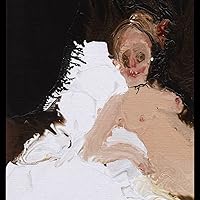
Fête worse than death: Sue Tilley’s memoir of someone who deserves the much-abused term icon is warm, funny and heartfelt. The tragedy of Leigh Bowery is not so much that he died so young (though that is tragedy enough for his family and friends), or that a creative career was cut short (the public never misses what it does not get), but that there’s a sense here that he never totally found himself. His genius splayed across clothing design, tailoring, performance art, body modification, music, night club promotion and muse to Lucian Freud, as well as to countless friends who took courage and inspiration from their outlandish friend. Had he lived longer, he might have settled on his genius. But what he did achieve was true to himself and originality taken to the extreme. As a child, I remember being struck by the terse summation of Mozart on a record sleeve note: “A short life, but an active one, producing works of great beauty.” Ditto.
While the content may seem to offer a nuanced appraisal of Leigh Bowery as an individual, the author employs an apologetic tone that allows her to render any critical evaluation of behaviors such as bullying, harassment, and humiliation irrelevant to the 'genius' of her dear friends. This tone is disturbingly problematic in several instances, particularly in the offhand description of Nicky Crane as a mere 'tough bisexual skinhead' and the omission of his participation in racist assaults and his involvement in establishing the fascist group Blood and Honour. Similarly, referring to Derek Jerman and Oscar Moore as 'professional victims' feels gratuitously offensive.
Agreeing with other reviews that the combination of timeline jumping and constant name dropping made this at times a confusing read. However, i loved this book and getting to know leigh through Sues eyes. Visionaries arent often great people and leigh was no different, i found myself really disliking him as a person at times and admiring him at others. Nontheless I cried the whole chapter describing the time leading up to his death and cant help but think an outstanding talent was taken from the earth too soon. Would definitely recommend to anyone with even a slight intrest in fashion, art or the early london club scene.
The more I read books about the scene that Leigh and many other club kids lived in I always end the book sad. This book was beautiful and honest. Out of nowhere I was reminded of the sadness in Leigh’s life throughout the last few chapters, but, was lightened by the beautiful tribute this book was. Do I respect every choice Leigh Bowery made? Not at all, but, I do respect the artistic life he taught. This book shows you the real Leigh Bowery leaving every nasty detail inside of it.
An incredibly interesting, if at times flawed biography of another incredibly interesting and flawed person. Obviously a lot of what was done in the 80s wouldn’t fly today. I feel like I got to know a little bit of Leigh Bowery, reading this biography by his best friend, and I would recommend it to anyone interested in nightlife, gay history, or queer culture. Profoundly moving and jarring when so many of the interesting people referenced in the book died when they were younger than I am now.
3.5 - I am so fascinated and inspired by Leigh Bowery and loved learning more about his life (despite how confronting some of his behaviours were). I also really appreciate that one of his closest friend wrote this book, it really gave it a beautiful touch. My only hang up is because of that I found the writing to be a bit clunky and repetitive. Obviously I don’t hold that against the writer as she describes herself as a “complete novice” and it’s not really the point.
Sue Tilley had a front-row seat to the outrageous life and times of Leigh Bowery and we get an entertaining recounting of them. It covers his early life, his outrageous antics, the vulnerable moments and also the times when he could be downright nasty. What a life he led and it's great to read this while the Tate Modern exhibition is on.
A fascinating homage to a vibrant, eclectic and controversial figure. I loved devouring this after attending the Leigh Bowery exhibition at the Tate Modern as I was keen to gather all the information I could on Leigh. Sue is a loving author who doesn’t shy away from the less desirable parts of Leigh, which made for a nuanced and entertaining read.
We just got back from a couple of weeks in London where we were lucky enough to see the Leigh Bowery exhibit currently showing at the Tate Modern. It’s a beautifully curated exhibit, and I picked up this biography in the museum bookshop. Exhibition and book informed each other wonderfully; I recommend both.
Loved thisssss. When I went to the Tate exhibit, my mum’s friend said that I wouldn’t be able to understand how shocking his look was in the 80s. I think it’s safe to say his look, and most of what he was getting up to, is still pretty shocking. Main takeaway is that you can be as nasty and feral as you like as long as you can make your friends laugh.
I went to see an exhibit a this incredible human and had such a desire to learn more and understand who Bowery was. This book does this in a a beautiful way. You can tell the author understood who Leigh Bowery was in a nuanced and deep way