

What do you think?

Oedipus at Stalingrad
A new translation of a renowned, hilarious, and cautionary satire of life in upper-class Berlin shortly before World War II follows the social-climbing career of young Traugott von Jassilkowski as he attempts to conquer the German aristocracy.
289 pages, Hardcover
First published January 1, 1954
About the author
Gregor von Rezzori
44 books104 followersGregor von Rezzori was born in 1914 in Chernivtsi in the Bukovina, then part of the Austro-Hungarian Empire and now part of Ukraine. In an extraordinarily peripatetic life von Rezzori was succesively an Austro-Hungarian, Romanian and Soviet citizen and then, following a period of being stateless, an Austrian citizen.
The great theme of his work was the multi-ethnic, multi-lingual world in which he grew up and which the wars and ideologies of the twentieth century destroyed. His major works include The Death of My Brother Abel, Memoirs of an Anti-Semite and his autobiographical masterpiece The Snows of Yesteryear.
He died in his home in Donnini, Italy in 1998.
The great theme of his work was the multi-ethnic, multi-lingual world in which he grew up and which the wars and ideologies of the twentieth century destroyed. His major works include The Death of My Brother Abel, Memoirs of an Anti-Semite and his autobiographical masterpiece The Snows of Yesteryear.
He died in his home in Donnini, Italy in 1998.
Ratings & Reviews
Friends & Following
Create a free account to discover what your friends think of this book!
Community Reviews
Displaying 1 - 15 of 15 reviews

September 6, 2014
[Revised, pictures added 2/22/23]
A reviewer is always on shaky ground writing about what he or she expected to find in a book but failed to find, but I’ll go there anyway.
This novel was published in 1994 as a translation of a German work written in the early 1950s, right after World War II. It’s about Germany in the 1930s so I thought it would focus on what it was about German society that led up to WW II and the Holocaust. If any of that is in here, I failed to see it. It's a mix of comedy and satire.
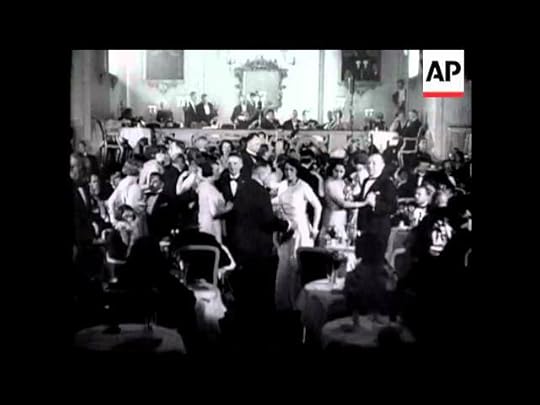
There’s a lot about German class distinctions and German nobility - does your name carry a 'von' or not? We see all this through the eyes of a young man from the provinces trying to shake his quasi-peasant upbringing and get ahead in fast-paced Berlin. He believes his ladder for social climbing will be found in his wardrobe choices and in the culture of Berlin’s nightclubs and social parties at the time. Did young German women really dance topless at house parties in the 1930s? (I’m reminded of the young man from a peasant background trying to claw his way up the social ladder in Paris in Balzac’s Pere Goriot.)
It turns out it’s mainly a lot about Freud and sex – thus the title. Our hero ends up marrying a beautiful blonde bar hopper who would have been called a ‘loose woman’ in that era. The author insists on calling her ‘the thoroughbred’ throughout the novel – in dozens and dozens of references. The book makes so many obscure references to German culture that it really needs a glossary or footnotes to make many of the references to plays, songs, political figures and historical events intelligible to the non-German reader.
The writing is dense and at times flamboyant; I found a 350-word sentence. Often the author talks to the reader as if he were sitting next to us in a bar. I suppose that’s a plus but still a bit of chore to get through it all, thus my rating of ‘3.’
It's hard to describe the ethnicity of the author (1914-1998) as anything but ‘European.’ He was born in Austria-Hungary in an area that was later part of Ukraine and then Romania. He spent much of his life in Austria and Italy with sojourns in Paris and the US. While he wrote in German, he was fluent in Romanian, Italian, Polish, Ukrainian, Yiddish, French, and English.
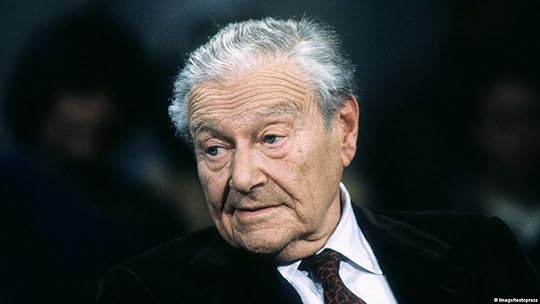
He wrote about 15 novels; almost all available in English. His best-known work on GR is Memoirs of an Anti-Semite. He was also a scriptwriter and an actor in stage plays.
Top image is a still from a video on YouTube “Berlin Night Club 1930”
The author from dw.com
A reviewer is always on shaky ground writing about what he or she expected to find in a book but failed to find, but I’ll go there anyway.
This novel was published in 1994 as a translation of a German work written in the early 1950s, right after World War II. It’s about Germany in the 1930s so I thought it would focus on what it was about German society that led up to WW II and the Holocaust. If any of that is in here, I failed to see it. It's a mix of comedy and satire.
There’s a lot about German class distinctions and German nobility - does your name carry a 'von' or not? We see all this through the eyes of a young man from the provinces trying to shake his quasi-peasant upbringing and get ahead in fast-paced Berlin. He believes his ladder for social climbing will be found in his wardrobe choices and in the culture of Berlin’s nightclubs and social parties at the time. Did young German women really dance topless at house parties in the 1930s? (I’m reminded of the young man from a peasant background trying to claw his way up the social ladder in Paris in Balzac’s Pere Goriot.)
It turns out it’s mainly a lot about Freud and sex – thus the title. Our hero ends up marrying a beautiful blonde bar hopper who would have been called a ‘loose woman’ in that era. The author insists on calling her ‘the thoroughbred’ throughout the novel – in dozens and dozens of references. The book makes so many obscure references to German culture that it really needs a glossary or footnotes to make many of the references to plays, songs, political figures and historical events intelligible to the non-German reader.
The writing is dense and at times flamboyant; I found a 350-word sentence. Often the author talks to the reader as if he were sitting next to us in a bar. I suppose that’s a plus but still a bit of chore to get through it all, thus my rating of ‘3.’
It's hard to describe the ethnicity of the author (1914-1998) as anything but ‘European.’ He was born in Austria-Hungary in an area that was later part of Ukraine and then Romania. He spent much of his life in Austria and Italy with sojourns in Paris and the US. While he wrote in German, he was fluent in Romanian, Italian, Polish, Ukrainian, Yiddish, French, and English.
He wrote about 15 novels; almost all available in English. His best-known work on GR is Memoirs of an Anti-Semite. He was also a scriptwriter and an actor in stage plays.
Top image is a still from a video on YouTube “Berlin Night Club 1930”
The author from dw.com

January 26, 2015
Corrían los años de 1938-1939 y el terrible azote de la guerra se erguía amenazador por toda Europa, por esta razón casi todos los países de ese continente alistaban a su juventud entera para combatir en diversos frentes. Toda la juventud masculina fue enviada al frente excepto Gregor Von Rezzori quien por su condición de apátrida evitó el servicio militar y esto le permitió instalarse en Berlín para observar bajo una mirada tan atenta como aguda a aquella sociedad ya un tanto envilecida para luego poderla “inmortalizar” en esta obra. Un poco de esto trata “Edipo en Stalingrado”.
Gregor Von Rezzori fue un escritor de habla alemana, creo que poco difundido pero ahora algunas editoriales empiezan a rescatar su obra. Como antecedente leí sus libro autobiográfico llamado “Memorias de un Antisemita” que me pareció estupendo y me hice el propósito de regresar a este autor. Lo hice pronto ya que la Editorial Sexto Piso editó Edipo en Stalingrado a un buen precio aquí en México.
Esta novela está escrita en primera persona con la particularidad de que el narrador pareciera estar charlando directamente con un individuo en uno de los cafés de aquellos que abundaban en el Berlín de aquellos años y ese contertulio es precisamente el lector. A pesar del excelente trabajo del traductor José Aníbal Campos, Licenciado en Filología Germánica por la Universidad de la Habana, hay segmentos del texto en donde se pierde un tanto el sentido debido a la utilización de modismos de la época y me parece que también porque está elaborado pensando en un público contemporáneo alemán, versado sobre las costumbres, usos, modas y lenguaje de esa época por lo que por momentos no se comprende a cabalidad el significado de alguna idea o frase.
La narración está cargada de tintes irónicos, a veces demasiado abundantes y para mi gusto, en algunos capítulos, se da un uso excesivo de metáforas y digresiones que tienden a lo ampuloso y se puede llegar a perder el hilo de la obra que transcurre, como ya se dijo, en Berlín de los tormentosos años 1938-1939 y donde se nos muestra un poco el proceso de transformación por el que está pasando aquella noble y sensible sociedad para transitar hacia otra sumamente superficial y banal. Eso sí, es asombroso el detalle con que el autor narra cada gesto, cada detalle en el vestir, cada cara, cada cuerpo es descrito con un lenguaje pródigo, cáustico y pormenorizado a más no poder. Este estilo en el lenguaje llega a ser excelso en los capítulos en los cuales narra la interacción entre los personajes de la novela. Realmente considero que Von Rezzori es un maestro de este tipo de narración.
El autor narra con gran prestancia, detalle y largueza aquellas costumbres, convenciones y formalismos de la sociedad alemana, incluso es capaz de profundizar en la psicología de los personajes y de tan sólo unos plumazos los llega a diseccionar por dentro describiendo acuciosamente cada una de sus intenciones ocultas tras cada palabra o cada gesto y que él sabe hacernos llegar de una manera muy vívida.
La sombra del aristocrático e irredento conquistador de mujeres que fue Gregor Von Rezzori, se proyecta sobre el personaje principal de la novela llamado Traugott Von Yassilkovsky, originario de Prusia Oriental quien es un muchacho acicalado, elegante y con aspiraciones a convertirse en un gran aristócrata. Él anhelaba pertenecer a ese gran y privilegiado mundo de la más alta alcurnia que se estaba gestando por aquellos años y al cual se podía acceder de varias formas.
Traugott deseaba ser uno de esos “Junkers”, una especie de “niños bien” de aquellos años, hijos de acaudaladas familias pertenecientes a la élite y que se dedicaban a una vida de ocio y placer, al buen vestir, a refinar la apariencia y a obtener el reconocimiento de sus iguales, haciendo de estas banalidades su objetivo de vida y del cual derivaban todos sus placeres.
Los primeros capítulos del libro transcurren entre francachelas y pasatiempos que nos muestran cómo el espíritu de la época empezaba a pasar por un proceso de degradación en los intereses de los jóvenes. ¿Dónde habían quedado esas contemplaciones del Universo y cómo era que ahora ya no se preguntaba los jóvenes qué relación había entre su espíritu, su tiempo y el Universo? Ahora sólo se cuestionaban qué era lo que habrían que ponerse para dar un paseo vespertino: un chaleco con dos botones o uno con tres botones. Además de esta disolución del espíritu, el autor también aborda la manera en que la individualidad humana se va diluyendo o más bien se integra a una sola masa humana; ahora formamos parte de un todo, la individualidad se extingue paso a paso.
Los personajes secundarios aparecen y desaparecen por ahí sin tener mucho peso en la historia, a excepción de la “rubia de raza”, mujer aria imponente y seductora, de formas untuosas quien termina casándose con el protagonista y que lleva en su personalidad el suficiente atractivo para que la sombra de Freud aparezca en algunos capítulos al hacer referencia a nuestro subconsciente y sobre todo a la importancia de la sexualidad en el juego de la vida. Al parecer Von Rezzori conocía muy bien las teorías y postulados de Sigmund Freud ya que expone con conocimiento de causa el comportamiento humano según esas teorías del grandísimo psicoanalista Vienés.
Otro personaje importante es la ciudad de Berlín a la que el autor le otorga protagonismo y la presenta constantemente a través de sus calles, sus edificios, sus parques, sus monumentos y los lugares frecuentados por la sociedad “Junker” de aquella época, así como el entorno que emanaba de ella el cual empezaba a enrarecerse de una manera notable ya que el nazismo asienta sus reales y la segunda guerra mundial está por iniciar.
El final del libro es coronado por una serie de alegatos existencialistas, conceptos morales y divagaciones sobre la vida, la muerte, el suicidio, la guerra, el significado de la existencia, citando aquí y allá frases, aforismos y obras o pensamientos de varios filósofos.
Estilista de gran calidad en la narración autobiográfica, Gregor Von Rezzori en esta ocasión nos regala una obra que está entre la novela, la autobiografía, el ensayo y una especie de guion cinematográfico, mezcla ésta que propicia un tanto la falta de continuidad en la tensión dramática de la obra; sin embargo no niego que admiro el estilo de este gran autor europeo.
Gregor Von Rezzori fue un escritor de habla alemana, creo que poco difundido pero ahora algunas editoriales empiezan a rescatar su obra. Como antecedente leí sus libro autobiográfico llamado “Memorias de un Antisemita” que me pareció estupendo y me hice el propósito de regresar a este autor. Lo hice pronto ya que la Editorial Sexto Piso editó Edipo en Stalingrado a un buen precio aquí en México.
Esta novela está escrita en primera persona con la particularidad de que el narrador pareciera estar charlando directamente con un individuo en uno de los cafés de aquellos que abundaban en el Berlín de aquellos años y ese contertulio es precisamente el lector. A pesar del excelente trabajo del traductor José Aníbal Campos, Licenciado en Filología Germánica por la Universidad de la Habana, hay segmentos del texto en donde se pierde un tanto el sentido debido a la utilización de modismos de la época y me parece que también porque está elaborado pensando en un público contemporáneo alemán, versado sobre las costumbres, usos, modas y lenguaje de esa época por lo que por momentos no se comprende a cabalidad el significado de alguna idea o frase.
La narración está cargada de tintes irónicos, a veces demasiado abundantes y para mi gusto, en algunos capítulos, se da un uso excesivo de metáforas y digresiones que tienden a lo ampuloso y se puede llegar a perder el hilo de la obra que transcurre, como ya se dijo, en Berlín de los tormentosos años 1938-1939 y donde se nos muestra un poco el proceso de transformación por el que está pasando aquella noble y sensible sociedad para transitar hacia otra sumamente superficial y banal. Eso sí, es asombroso el detalle con que el autor narra cada gesto, cada detalle en el vestir, cada cara, cada cuerpo es descrito con un lenguaje pródigo, cáustico y pormenorizado a más no poder. Este estilo en el lenguaje llega a ser excelso en los capítulos en los cuales narra la interacción entre los personajes de la novela. Realmente considero que Von Rezzori es un maestro de este tipo de narración.
El autor narra con gran prestancia, detalle y largueza aquellas costumbres, convenciones y formalismos de la sociedad alemana, incluso es capaz de profundizar en la psicología de los personajes y de tan sólo unos plumazos los llega a diseccionar por dentro describiendo acuciosamente cada una de sus intenciones ocultas tras cada palabra o cada gesto y que él sabe hacernos llegar de una manera muy vívida.
La sombra del aristocrático e irredento conquistador de mujeres que fue Gregor Von Rezzori, se proyecta sobre el personaje principal de la novela llamado Traugott Von Yassilkovsky, originario de Prusia Oriental quien es un muchacho acicalado, elegante y con aspiraciones a convertirse en un gran aristócrata. Él anhelaba pertenecer a ese gran y privilegiado mundo de la más alta alcurnia que se estaba gestando por aquellos años y al cual se podía acceder de varias formas.
Traugott deseaba ser uno de esos “Junkers”, una especie de “niños bien” de aquellos años, hijos de acaudaladas familias pertenecientes a la élite y que se dedicaban a una vida de ocio y placer, al buen vestir, a refinar la apariencia y a obtener el reconocimiento de sus iguales, haciendo de estas banalidades su objetivo de vida y del cual derivaban todos sus placeres.
Los primeros capítulos del libro transcurren entre francachelas y pasatiempos que nos muestran cómo el espíritu de la época empezaba a pasar por un proceso de degradación en los intereses de los jóvenes. ¿Dónde habían quedado esas contemplaciones del Universo y cómo era que ahora ya no se preguntaba los jóvenes qué relación había entre su espíritu, su tiempo y el Universo? Ahora sólo se cuestionaban qué era lo que habrían que ponerse para dar un paseo vespertino: un chaleco con dos botones o uno con tres botones. Además de esta disolución del espíritu, el autor también aborda la manera en que la individualidad humana se va diluyendo o más bien se integra a una sola masa humana; ahora formamos parte de un todo, la individualidad se extingue paso a paso.
Los personajes secundarios aparecen y desaparecen por ahí sin tener mucho peso en la historia, a excepción de la “rubia de raza”, mujer aria imponente y seductora, de formas untuosas quien termina casándose con el protagonista y que lleva en su personalidad el suficiente atractivo para que la sombra de Freud aparezca en algunos capítulos al hacer referencia a nuestro subconsciente y sobre todo a la importancia de la sexualidad en el juego de la vida. Al parecer Von Rezzori conocía muy bien las teorías y postulados de Sigmund Freud ya que expone con conocimiento de causa el comportamiento humano según esas teorías del grandísimo psicoanalista Vienés.
Otro personaje importante es la ciudad de Berlín a la que el autor le otorga protagonismo y la presenta constantemente a través de sus calles, sus edificios, sus parques, sus monumentos y los lugares frecuentados por la sociedad “Junker” de aquella época, así como el entorno que emanaba de ella el cual empezaba a enrarecerse de una manera notable ya que el nazismo asienta sus reales y la segunda guerra mundial está por iniciar.
El final del libro es coronado por una serie de alegatos existencialistas, conceptos morales y divagaciones sobre la vida, la muerte, el suicidio, la guerra, el significado de la existencia, citando aquí y allá frases, aforismos y obras o pensamientos de varios filósofos.
Estilista de gran calidad en la narración autobiográfica, Gregor Von Rezzori en esta ocasión nos regala una obra que está entre la novela, la autobiografía, el ensayo y una especie de guion cinematográfico, mezcla ésta que propicia un tanto la falta de continuidad en la tensión dramática de la obra; sin embargo no niego que admiro el estilo de este gran autor europeo.

March 27, 2026
https://kansasbooks.blogspot.com/2026...
"-¿Es necesario que lo expresemos todo todo siempre? ¿Acaso nunca ha visto en lo que se convierten las cosas cuando se las llama por su nombre?
Lo que ocurre entre dos personas, en tanto permanece impronunciado, preserva todas sus posibilidades. Las etiquetas son como máscaras rígidas a través de las cuales no se puede ver ni la mentira ni la cabeza de la medusa de la verdad. ¿No deberíamos dejar las cosas entre nosotros tal y como están, bajo la magia de todas esas posibilidades inagotadas en el juego de reflejos de la fantasía...?"
Esta es la segunda novela que leo de Gregor von Rezzori y todavía recuerdo el impacto que me causó en su momento “La muerte de mi hermano Abel" por la riqueza expresiva de Rezzori, esa narración indirecta en la que mezclaba todo sin seguir un orden y sin embargo, todo aparecía controlado. A mi crónica de "La muerte de mi hermano Abel" me remito y aunque "Edipo en Stalingrado" es una novela magnífica, esa primera que leí suya me pareció una absoluta obra maestra, entre ambas hay casi veinte años. "Edipo en Stalingrado" no busca simplificar la realidad, sino todo lo contrario, la realidad aparece muy ambiguamente en un continuo estado de inestabilidad y fragmentación, lo que la convierte en una lectura muy densa en muchos momentos. La capacidad de combinar una prosa que roza la erudición es otro de sus rasgos distintivos y cuando nos ponemos con él, podemos tener la impresión de que Rezzori no nos guía sino que obliga al lector a que se abra camino por sí mismo, en un texto en el que no explica casi nada, en que parece que no hay una claridad inmediata dejando zonas en la más pura ambigüedad para que las desentrañemos. De alguna forma obliga al lector a que intuya más que comprenda lo que está leyendo y esto hará que la lectura resulte una experiencia menos lineal y más una experiencia íntima. Esa mezcla es lo que hace que Rezzori pueda resultar a veces impenetrable, pero a mí me parece un autor profundamente fascinante.
"¿Es que tengo que decirle lo desgarrador que resulta el esfuerzo de expresarse, el tormento de la incapacidad para hacerse entender...? El lenguaje...¿Cómo lo definió el señor Wilhelm von Humboldt? Esa labor del intelecto humano, que se repite eternamente, de habilitar el sonido articulado para expresar el pensamiento."
La historia de Edipo en Stalingrado se sitúa en el Berlín de 1939, en ese momento previo a la Segunda Guerra Mundial en el que todo parece seguir en orden… pero ya no lo está. La sociedad que describe Gregor von Rezzori es una sociedad burguesa que mantiene las formas —las visitas, las conversaciones, las normas—, pero que por dentro está vacía. No hay un derrumbe visible, sino algo más inquietante: una sensación de normalidad envenenada, como si la catástrofe ya estuviera presente sin haber estallado todavía. Rezzori no “habla” del nazismo de forma directa, pero lo hace visible de manera indirecta, a través de atmósferas, comportamientos y formas de percepción. Más que describir un régimen, muestra cómo ese régimen se filtra en la vida cotidiana y en la subjetividad. Los personajes de la novela se reúnen en un lugar que parece el centro neurálgico de este proceso de cambio: el bar de Charley que de alguna forma deja ver lo que la sociedad a simple vista oculta, un lugar que todavía estará dando la espalda a lo que se desarrolla en las calles con el auge del nacionalsocialismo, un lugar que funcionará como metáfora de la ceguera de los alemanes que hacían la vista gorda la oscuridad que se avecinaba. "Pues cavilaba profundamente, invadido por la melancolía, como suelen hacer los hombres que están a punto de realizar un sueño largamente acariciado e intuyen de repente la decepción que les deparará la realidad." No hay un argumento especialmente lineal ni muy narrativo, sino que la novela se compone de capítulos que bien podrían funcionar como estampas independientes de la vida en Berlin con un hilo conductor que será el personaje protagonista, Traugott von Yassilkovski, un joven que vive en el Berlin de 1939 justo a punto de reventar por los aires.
"¿Qué sabemos acerca del origen y el poder de la ilusión? ¿De ese instinto más que innato en el hombre de entregarse al autoengaño? Porque sucedió que él la miró con los recatados ojos del pretendiente, y ya ve: ella le pareció pura, tan pura como el azul estandarte de aquel cielo ecuestre, pura como las plateadas y azules tinturas de su escudo, recatada y maternal."
La historia no avanza a través de grandes acontecimientos, sino mediante escenas cotidianas: encuentros, visitas, momentos aparentemente insignificantes que, sin embargo, dejan una sensación extraña porque el lector intuye que lo que ocurre en la calle, no es precisamente lo que está reflejando con su día a día el personaje protagonista. Uno de los aspectos más llamativos del relato es la forma en que aparece el deseo. “Y él amó y odió todo una vez más, y ya ve: el odio y el amor se trastocaron, y odió su amor de otros tiempos y amó, con el corazón celoso, sus antiguos odios." No hay relaciones claras ni conflictos abiertos, sino una tensión difusa, especialmente en la manera en que Traugott mira a las mujeres. Su mirada no es inocente: hay algo ambiguo, incómodo, como si rozara constantemente un límite que nunca llega a nombrarse. Aquí es donde entra lo “edípico”, pero de una forma muy distinta a la clásica. No hay tragedia ni revelación, sino más bien una perturbación silenciosa, una sensación de que algo no está bien sin que sepamos exactamente qué.
"¡Bienaventurados los pobres de memoria! ¡Y bienaventurados aun los que pueden proceder con ella a su arbitrio!
Porque, ¿qué es a fin de cuentas la verdad, le pregunto? ¡Y es que esta vida, de hecho, no es más que un sueño, un sueño en el que cada uno puede tejer su verdad como dentro de un capullo, una crujiente de algodón de la autolegimitación!"
El estilo de Rezzori refuerza esta sensación de incertidumbre y opacidad, su escritura no explica demasiado, pero sugiere, lo que puede resultar un tanto frustrante para el lector porque Rezzori usa la digresión de una forma muy diferente a como otros autores que conozco la emplean convirtiendo la lectura en una mezcla de socarronería, humor soterrado y situaciones totalmente surrealistas en las que Rezzori se carcajea del viejo mundo que todavía se agarraba, por ejemplo, a la correcta colocación del nudo de la corbata o a los hábitos en el vestir en una cacería. Muchas cosas quedan en el aire, y eso puede hacer que la lectura sea un poco desconcertante. Pero precisamente ahí está su fuerza: en la capacidad de crear una atmósfera en la que lo importante no es lo que pasa, sino lo que el lector pueda imaginar. En conjunto, Edipo en Stalingrado es una novela que no busca contar una historia cerrada, sino transmitir una sensación: la de un mundo que, antes de derrumbarse, ya está profundamente dañado. Y en medio de ese mundo, un personaje que no entiende del todo lo que ocurre, pero que, de alguna manera, lo encarna. Incluso habiendo sido una novela compleja para mí, leer a Rezzori siempre me compensa. Esa mezcla de dificultad y deslumbramiento es, probablemente, lo que hace que su literatura no se agote y siga resonando mucho después de haberla leído. Es un autor que no lo pone fácil pero a cambio ofrece una de las prosas más exquisitas a las que he podido acceder porque siempre capta lo más esquivo, lo más elusivo de la condición humana: las zonas más escondidas del deseo, la memoria y la experiencia.
"¿Quién, santo cielo, pretende convencernos de que en realidad no estamos ciegos, de qué todo ese absurdo teatro no está teniendo lugar únicamente dentro de nosotros, como un reflejo en nosotros, muy en el fondo de nuestros ojos ciegos: ilusión y apariencia de todas las cosas, esas cosas familiares, cosas queridas, cosas odiadas, indiferentes, cosas queridamente odiadas, entrañablemente indiferentes..."
♫♫♫ Purcell: Oedipus: Music For A While, Z583 (Andreas Scholl) ♫♫♫
"-¿Es necesario que lo expresemos todo todo siempre? ¿Acaso nunca ha visto en lo que se convierten las cosas cuando se las llama por su nombre?
Lo que ocurre entre dos personas, en tanto permanece impronunciado, preserva todas sus posibilidades. Las etiquetas son como máscaras rígidas a través de las cuales no se puede ver ni la mentira ni la cabeza de la medusa de la verdad. ¿No deberíamos dejar las cosas entre nosotros tal y como están, bajo la magia de todas esas posibilidades inagotadas en el juego de reflejos de la fantasía...?"
Esta es la segunda novela que leo de Gregor von Rezzori y todavía recuerdo el impacto que me causó en su momento “La muerte de mi hermano Abel" por la riqueza expresiva de Rezzori, esa narración indirecta en la que mezclaba todo sin seguir un orden y sin embargo, todo aparecía controlado. A mi crónica de "La muerte de mi hermano Abel" me remito y aunque "Edipo en Stalingrado" es una novela magnífica, esa primera que leí suya me pareció una absoluta obra maestra, entre ambas hay casi veinte años. "Edipo en Stalingrado" no busca simplificar la realidad, sino todo lo contrario, la realidad aparece muy ambiguamente en un continuo estado de inestabilidad y fragmentación, lo que la convierte en una lectura muy densa en muchos momentos. La capacidad de combinar una prosa que roza la erudición es otro de sus rasgos distintivos y cuando nos ponemos con él, podemos tener la impresión de que Rezzori no nos guía sino que obliga al lector a que se abra camino por sí mismo, en un texto en el que no explica casi nada, en que parece que no hay una claridad inmediata dejando zonas en la más pura ambigüedad para que las desentrañemos. De alguna forma obliga al lector a que intuya más que comprenda lo que está leyendo y esto hará que la lectura resulte una experiencia menos lineal y más una experiencia íntima. Esa mezcla es lo que hace que Rezzori pueda resultar a veces impenetrable, pero a mí me parece un autor profundamente fascinante.
"¿Es que tengo que decirle lo desgarrador que resulta el esfuerzo de expresarse, el tormento de la incapacidad para hacerse entender...? El lenguaje...¿Cómo lo definió el señor Wilhelm von Humboldt? Esa labor del intelecto humano, que se repite eternamente, de habilitar el sonido articulado para expresar el pensamiento."
La historia de Edipo en Stalingrado se sitúa en el Berlín de 1939, en ese momento previo a la Segunda Guerra Mundial en el que todo parece seguir en orden… pero ya no lo está. La sociedad que describe Gregor von Rezzori es una sociedad burguesa que mantiene las formas —las visitas, las conversaciones, las normas—, pero que por dentro está vacía. No hay un derrumbe visible, sino algo más inquietante: una sensación de normalidad envenenada, como si la catástrofe ya estuviera presente sin haber estallado todavía. Rezzori no “habla” del nazismo de forma directa, pero lo hace visible de manera indirecta, a través de atmósferas, comportamientos y formas de percepción. Más que describir un régimen, muestra cómo ese régimen se filtra en la vida cotidiana y en la subjetividad. Los personajes de la novela se reúnen en un lugar que parece el centro neurálgico de este proceso de cambio: el bar de Charley que de alguna forma deja ver lo que la sociedad a simple vista oculta, un lugar que todavía estará dando la espalda a lo que se desarrolla en las calles con el auge del nacionalsocialismo, un lugar que funcionará como metáfora de la ceguera de los alemanes que hacían la vista gorda la oscuridad que se avecinaba. "Pues cavilaba profundamente, invadido por la melancolía, como suelen hacer los hombres que están a punto de realizar un sueño largamente acariciado e intuyen de repente la decepción que les deparará la realidad." No hay un argumento especialmente lineal ni muy narrativo, sino que la novela se compone de capítulos que bien podrían funcionar como estampas independientes de la vida en Berlin con un hilo conductor que será el personaje protagonista, Traugott von Yassilkovski, un joven que vive en el Berlin de 1939 justo a punto de reventar por los aires.
"¿Qué sabemos acerca del origen y el poder de la ilusión? ¿De ese instinto más que innato en el hombre de entregarse al autoengaño? Porque sucedió que él la miró con los recatados ojos del pretendiente, y ya ve: ella le pareció pura, tan pura como el azul estandarte de aquel cielo ecuestre, pura como las plateadas y azules tinturas de su escudo, recatada y maternal."
La historia no avanza a través de grandes acontecimientos, sino mediante escenas cotidianas: encuentros, visitas, momentos aparentemente insignificantes que, sin embargo, dejan una sensación extraña porque el lector intuye que lo que ocurre en la calle, no es precisamente lo que está reflejando con su día a día el personaje protagonista. Uno de los aspectos más llamativos del relato es la forma en que aparece el deseo. “Y él amó y odió todo una vez más, y ya ve: el odio y el amor se trastocaron, y odió su amor de otros tiempos y amó, con el corazón celoso, sus antiguos odios." No hay relaciones claras ni conflictos abiertos, sino una tensión difusa, especialmente en la manera en que Traugott mira a las mujeres. Su mirada no es inocente: hay algo ambiguo, incómodo, como si rozara constantemente un límite que nunca llega a nombrarse. Aquí es donde entra lo “edípico”, pero de una forma muy distinta a la clásica. No hay tragedia ni revelación, sino más bien una perturbación silenciosa, una sensación de que algo no está bien sin que sepamos exactamente qué.
"¡Bienaventurados los pobres de memoria! ¡Y bienaventurados aun los que pueden proceder con ella a su arbitrio!
Porque, ¿qué es a fin de cuentas la verdad, le pregunto? ¡Y es que esta vida, de hecho, no es más que un sueño, un sueño en el que cada uno puede tejer su verdad como dentro de un capullo, una crujiente de algodón de la autolegimitación!"
El estilo de Rezzori refuerza esta sensación de incertidumbre y opacidad, su escritura no explica demasiado, pero sugiere, lo que puede resultar un tanto frustrante para el lector porque Rezzori usa la digresión de una forma muy diferente a como otros autores que conozco la emplean convirtiendo la lectura en una mezcla de socarronería, humor soterrado y situaciones totalmente surrealistas en las que Rezzori se carcajea del viejo mundo que todavía se agarraba, por ejemplo, a la correcta colocación del nudo de la corbata o a los hábitos en el vestir en una cacería. Muchas cosas quedan en el aire, y eso puede hacer que la lectura sea un poco desconcertante. Pero precisamente ahí está su fuerza: en la capacidad de crear una atmósfera en la que lo importante no es lo que pasa, sino lo que el lector pueda imaginar. En conjunto, Edipo en Stalingrado es una novela que no busca contar una historia cerrada, sino transmitir una sensación: la de un mundo que, antes de derrumbarse, ya está profundamente dañado. Y en medio de ese mundo, un personaje que no entiende del todo lo que ocurre, pero que, de alguna manera, lo encarna. Incluso habiendo sido una novela compleja para mí, leer a Rezzori siempre me compensa. Esa mezcla de dificultad y deslumbramiento es, probablemente, lo que hace que su literatura no se agote y siga resonando mucho después de haberla leído. Es un autor que no lo pone fácil pero a cambio ofrece una de las prosas más exquisitas a las que he podido acceder porque siempre capta lo más esquivo, lo más elusivo de la condición humana: las zonas más escondidas del deseo, la memoria y la experiencia.
"¿Quién, santo cielo, pretende convencernos de que en realidad no estamos ciegos, de qué todo ese absurdo teatro no está teniendo lugar únicamente dentro de nosotros, como un reflejo en nosotros, muy en el fondo de nuestros ojos ciegos: ilusión y apariencia de todas las cosas, esas cosas familiares, cosas queridas, cosas odiadas, indiferentes, cosas queridamente odiadas, entrañablemente indiferentes..."
♫♫♫ Purcell: Oedipus: Music For A While, Z583 (Andreas Scholl) ♫♫♫
September 25, 2016
Obra excesiva, que desborda los límites de la novela, del lenguaje, de la capacidad de propio lector, rabelesiana, joyciana, sin argumento, con una serie de descripciones, introspecciones y digresiones que van conformando un fresco de la sociedad alemana justo antes de que se lanzara a la inmensa cacería del 39 que la autodestruirá. Su complejidad fascina y agota a partes iguales y su barroquismo verbal, a ratos muy americano, ha encontrado a José Aníbal Campos su mejor representante al verterla modélicamente al castellano. Y por encima de todo está su humor, un humor cruel, deformando cualquier realidad a pura caricatura, que es la mejor manera de expresar el horror.

December 11, 2018
Dieses Buch versucht in den Fußstapfen der vielen köstlichen Komödien der 20er Jahre zu stehen und verwendet all deren Ingredienzien: Karikaturen des Adels und des Militärs, Kneipenszenen mit einer Schnapskunde, die Remarque erblassen lassen würde, schnelle Dialoge und kenntnisreiche Zitate. Leider ist das Ergebnis eine Aneinanderreihung von Herrenwitzen der 50er Jahre à la Nick Knatterton, ja das beste an diesem Roman sind die auserlesenen Zitate aus anderen Werken, die v. Rezzori seinen Kapitel voranstellt. Der Humor der 20er Jahre ist verloren gegangen, es bleibt die Albernheit der 5oer.

October 19, 2024
La scrittura di von Rezzori fa il libro: travolgente, debordante, il filo logico va e viene. Non si arriva a nulla ma il percorso è costellato da pagine indimenticabili.
June 17, 2013
I re-read Gregor von Rezzori’s novel Oedipus at Stalingrad in early May--it’s been about 18 years since my first read. The book, written in the 1950s, drops Freud into the heart of late 1930s Nazi Germany. The protagonist, Traugott von Jassilkowski, marries and then stews in a prototypical Freudian case study dealing with his “tendency toward debasement.” The novel’s obsession with Freud relates, rekindles and re-examines Wilhelm Reich’s Mass Psychology of Fascism, a prominent reading of the German war effort and the post-war reconstruction. To this end, the narrator, a gabby barfly well-up on Freud, excels at drawing parallels between textbook cases and the debased tendencies of the era:
“It would be both conceivable and desirable to reinvigorate stunted erotic instincts with new impulses—perhaps through the planned use on a broad popular basis of the psyche’s masochistic urge, which might alleviate at least for a while the catastrophic impotence afflicting manhood today.”
I have a very long review of it at my blog (WARNING SPOILERS, MORE FOR THOSE WHO READ IT): http://exhibitxbuffalo2.blogspot.com/...
“It would be both conceivable and desirable to reinvigorate stunted erotic instincts with new impulses—perhaps through the planned use on a broad popular basis of the psyche’s masochistic urge, which might alleviate at least for a while the catastrophic impotence afflicting manhood today.”
I have a very long review of it at my blog (WARNING SPOILERS, MORE FOR THOSE WHO READ IT): http://exhibitxbuffalo2.blogspot.com/...

March 11, 2025
Its high-neurotic style comes pretty close to being essentially antagonistic to the reader, and occasionally just reading two pages can feel a bit exhausting, but Von Rezzori remains very fun and equally intense as a stylist. even when I’m not fully on board he’s worth reading.
November 23, 2022
Rezzori: Nostalgia and Language (Review of: Anecdotage, Oedipus at Stalingrad, The Hussar/An Ermine in Czernopol, Orient Express)
Anecdotage, its title punning on the writing memoir in old age, is a late work by Rezzori but has thematic continuities with his earliest novels, particularly The Hussar (also translated as An Ermine in Czernopol) and Oedipus at Stalingrad. Rezzori states that he is writing ‘against the shadow-play of the present’ (27), deploying in this his still keen weapons of scepticism, cynicism, irony and sarcasm - his unique voice. In Anecdotage Rezzori’s scepticism is focussed on his (negative) experiences at the Sri Aurobindo ashram in India, but from this the memoir moves back and forth between his witnessing the Anschluss in Vienna; post-war Berlin 1947-8 (where he worked for a time in radio broadcasting); and his reflections on the Romanian revolution of 1989: the past, or a personal idea of the past, is always present in Rezzori’s writing.
Rezzori describes himself as a ‘Nineteenth Century man of letters at the threshold of the Twenty-First Century’ (26), but his concern with what he calls the ‘metasizing’ (37) currents at play in European culture - arising from, principally, the mass-media - is very modern, perhaps, even, post-modern. Rezzori pits himself against mass society (something he has always done in his novels) arguing that he is a moralist because of his ‘melancholic disposition’ and having a choler that stems from his belief that the ‘demonic’ is always at work in, and may undermine, any culture, particularly mass culture. However, the demonic can be combatted by ‘laughter’ (115), irony and sarcasm. In confronting the demonic – be it fascism or the benighting populist trends of the mass-media - Rezzori counters with his own ‘private mythologies’: his love of the German language, and nostalgia for the landscape and culture of Czernopol/Bukovina (148).
*
Anecdotage may be a late work, and consciously autobiographical, but it develops themes found in Rezzori’s early fiction. One example of this is his frustration with what he sees as the inherent inadequacy of written language. Rezzori is frustrated by writing because of its inability to catch the multivalency of our thoughts, reflections, and it thus baffles the writer’s urge to convey feelings and thoughts, meanings which seem to ricochet off obdurate words:
For years now I’ve been trying to recapture that crucial moment when the verbal thought and sensation linked to it become like the two rails of a train track and meaning detaches itself from the word and then disintegrates altogether: transformed into images that possess their own pictographic syntax and grammar – and I tumble down the dark hole… (80)
This theme is articulated by the narrator of Oedipus at Stalingrad when describing how the anti-hero, Baron Traugott, falteringly attempts to speak in defence of the ‘honour’ of the Vamp after a drunken bunch of habitues of Charley’s Bar sexually assault her at a party:
What we are dealing with here is nothing less than the ultimate failure of language. Surely, Locke should have written more than a single chapter on the inadequacy of words: all the exalted platitudes that have been uttered in the course of the past five thousand years should have convinced us by now that what is most profound cannot be articulated. (37-8)
It is interesting that Rezzori makes Traugott an advertising copywriter, which in the author’s critical view of the demons of the 20th century must damn him. But Traugott’s dubious baronetcy and ambition to join the ranks of the true aristos via his courtship of the ‘Thoroughbred’, makes him into a somewhat ridiculous (although always sympathetically so) throwback to the stilted mores of 19th century European society. As an advertising man, Traugott manipulates words for the advertorial work he does for the Gentleman’s Monthly but even in this kind of literary endeavour his writer’s block also relates to the problem of writing:
…visions drift, dreamlike and melodiously enticing, like Rhine maidens on an opera stage, while beneath them the words, melted into raw bell meal, are rolled about by slowly undulating, constantly groping and testing tentacles…114-5
*
In Rezzori’s very early novel, An Ermine in Czernopol, the inadequacy of writing is related to the way nostalgia echoes in so much of what we wish to articulate, to write about:
For years I wasn’t able to pick up a book or look at a picture that I had studied then without feeling the vague stimulus of a deeper recognition, an impact that strikes the core of our being, the sense of déjà vu mingled with nostalgia that comes when we reencounter motifs from our childhood and we regret having lost the power to experience the world in a way that brought us closer to the essence of things. 325
Rezzori often reflects on his early life in Czernopol and Bukovina – that area of eastern Europe which, in political terms, is nationally indistinct: tugged back and forth between Russia, Poland and Romania (or now, in 2022, between Ukraine and Russia). For Rezzori it is an example of how a particular place and time often serves to reflect on present experience, and in this acts as an antidote to the failure of writing . The hybridity, or at least juxtaposition, of cultures in Czernopol/Bukovina is critical, there was an ‘intermediate sphere of reality’ (157) - that ‘every language [there] was corrupted’ (224). Rezzori’s yearning for this intermediate realm of reality, is, however, not just of place and time but of signification, of a logogram:
It was as if I had captured its essence in a kind of logogram, an equation elevated to a mathematical formula, and perhaps it is due to this abbreviation and abstraction of memory that today I no longer know whether the city of Czernopol existed in reality, or merely in one of my dreams of drafts. 342
*
Despite the pervasive cynicism in Rezzori’s literary voice, either in fiction or memoir, it is generally a sympathetic voice, implicitly humanistic. It rejects the treacherous ideals of mass identities, nationalism, and the ersatz forms of identity pedalled by the mass media. The same voice is found in his late novel, Orient Express in which Aram, a millionaire businessman experiencing a life crisis (divorce etc.), derides the misappropriation of the past in the service of advertising represented by the Orient Express. Aram is described as having similar attitudes to those bluntly articulated by Rezzori in Anecdotage: cynicism (90), sarcasm (99) and is godless (‘anything smacking of religion filled him with repugnance’ 83).
The word Orient takes on wider metaphorical meanings – suggesting how western culture is disoriented, its late 20th century’ generation being rootless denizens ‘not able to live in their particular historical present’. Aram consoles himself with memories of being ‘at home’ – but in this novel Czernopol is replaced by other areas now in Romania, in Dobrudja and the resort Technirghiol. Like Czernopol, these places act, harking back to the metaphor in Anecdotage of how a perfect state of linguistic signification is like converging rails, as a critical point of reference to assess the present:
He was travelling on two parallel lines, so to speak, on this Disney-land choo choo, in two adjacent, separate, realities that took turns pursuing one another: the one ahead looking back, the other falling further behind with its eyes facing the front. The actual present lay somewhere between, like a kind of relay station, a field of awareness on which the questing contacts met. 125-6
Ideas of converging time and change are constantly at broached in this novel, marked early on when Aram loses his trusted Omega and ends up with a cheap digital watch, which he later throws into the English Channel. But in a kind of Proustian nod (but with a political edge) he argues that present time and feelings of nostalgia may be how different lines, of times, of writing, might meet:
Just as in dreams two separate conditions often flow together into one, each transparently contained in the other, so too consciousness of illusion was contained in the momentarily recaptured world of that time, its breath of life suddenly wafted back and, with it, the knowledge of how he’d breathed it then. 109
*
But Rezzori never provides a clear answer to the problem he felt in the inadequacy of writing, of being a writer. It is a problem that in one way or another a literary writer of any hue, realist or modernist, is always troubled by. Modern language philosophy, i.e. from Wittgenstein to Derrida, warns against the chimera of attaining perfect (or, Rezzori’s more limited quest, adequate) linguistic meaning. By its very nature producing the ideal word, sentence, writing, is inevitably influenced by the conjuncture of many different lines (‘or rails), not just one or two: by the time of the mind, of narrative time, of discursive time, the reader’s time and, not least, by the political legacies that have manipulated and then pervaded a mother tongue and its literature. In the end, Rezzori limited himself to a working solution by recourse to the time of his past experience, of writing mindful in that critical spirit.
Anecdotage, its title punning on the writing memoir in old age, is a late work by Rezzori but has thematic continuities with his earliest novels, particularly The Hussar (also translated as An Ermine in Czernopol) and Oedipus at Stalingrad. Rezzori states that he is writing ‘against the shadow-play of the present’ (27), deploying in this his still keen weapons of scepticism, cynicism, irony and sarcasm - his unique voice. In Anecdotage Rezzori’s scepticism is focussed on his (negative) experiences at the Sri Aurobindo ashram in India, but from this the memoir moves back and forth between his witnessing the Anschluss in Vienna; post-war Berlin 1947-8 (where he worked for a time in radio broadcasting); and his reflections on the Romanian revolution of 1989: the past, or a personal idea of the past, is always present in Rezzori’s writing.
Rezzori describes himself as a ‘Nineteenth Century man of letters at the threshold of the Twenty-First Century’ (26), but his concern with what he calls the ‘metasizing’ (37) currents at play in European culture - arising from, principally, the mass-media - is very modern, perhaps, even, post-modern. Rezzori pits himself against mass society (something he has always done in his novels) arguing that he is a moralist because of his ‘melancholic disposition’ and having a choler that stems from his belief that the ‘demonic’ is always at work in, and may undermine, any culture, particularly mass culture. However, the demonic can be combatted by ‘laughter’ (115), irony and sarcasm. In confronting the demonic – be it fascism or the benighting populist trends of the mass-media - Rezzori counters with his own ‘private mythologies’: his love of the German language, and nostalgia for the landscape and culture of Czernopol/Bukovina (148).
*
Anecdotage may be a late work, and consciously autobiographical, but it develops themes found in Rezzori’s early fiction. One example of this is his frustration with what he sees as the inherent inadequacy of written language. Rezzori is frustrated by writing because of its inability to catch the multivalency of our thoughts, reflections, and it thus baffles the writer’s urge to convey feelings and thoughts, meanings which seem to ricochet off obdurate words:
For years now I’ve been trying to recapture that crucial moment when the verbal thought and sensation linked to it become like the two rails of a train track and meaning detaches itself from the word and then disintegrates altogether: transformed into images that possess their own pictographic syntax and grammar – and I tumble down the dark hole… (80)
This theme is articulated by the narrator of Oedipus at Stalingrad when describing how the anti-hero, Baron Traugott, falteringly attempts to speak in defence of the ‘honour’ of the Vamp after a drunken bunch of habitues of Charley’s Bar sexually assault her at a party:
What we are dealing with here is nothing less than the ultimate failure of language. Surely, Locke should have written more than a single chapter on the inadequacy of words: all the exalted platitudes that have been uttered in the course of the past five thousand years should have convinced us by now that what is most profound cannot be articulated. (37-8)
It is interesting that Rezzori makes Traugott an advertising copywriter, which in the author’s critical view of the demons of the 20th century must damn him. But Traugott’s dubious baronetcy and ambition to join the ranks of the true aristos via his courtship of the ‘Thoroughbred’, makes him into a somewhat ridiculous (although always sympathetically so) throwback to the stilted mores of 19th century European society. As an advertising man, Traugott manipulates words for the advertorial work he does for the Gentleman’s Monthly but even in this kind of literary endeavour his writer’s block also relates to the problem of writing:
…visions drift, dreamlike and melodiously enticing, like Rhine maidens on an opera stage, while beneath them the words, melted into raw bell meal, are rolled about by slowly undulating, constantly groping and testing tentacles…114-5
*
In Rezzori’s very early novel, An Ermine in Czernopol, the inadequacy of writing is related to the way nostalgia echoes in so much of what we wish to articulate, to write about:
For years I wasn’t able to pick up a book or look at a picture that I had studied then without feeling the vague stimulus of a deeper recognition, an impact that strikes the core of our being, the sense of déjà vu mingled with nostalgia that comes when we reencounter motifs from our childhood and we regret having lost the power to experience the world in a way that brought us closer to the essence of things. 325
Rezzori often reflects on his early life in Czernopol and Bukovina – that area of eastern Europe which, in political terms, is nationally indistinct: tugged back and forth between Russia, Poland and Romania (or now, in 2022, between Ukraine and Russia). For Rezzori it is an example of how a particular place and time often serves to reflect on present experience, and in this acts as an antidote to the failure of writing . The hybridity, or at least juxtaposition, of cultures in Czernopol/Bukovina is critical, there was an ‘intermediate sphere of reality’ (157) - that ‘every language [there] was corrupted’ (224). Rezzori’s yearning for this intermediate realm of reality, is, however, not just of place and time but of signification, of a logogram:
It was as if I had captured its essence in a kind of logogram, an equation elevated to a mathematical formula, and perhaps it is due to this abbreviation and abstraction of memory that today I no longer know whether the city of Czernopol existed in reality, or merely in one of my dreams of drafts. 342
*
Despite the pervasive cynicism in Rezzori’s literary voice, either in fiction or memoir, it is generally a sympathetic voice, implicitly humanistic. It rejects the treacherous ideals of mass identities, nationalism, and the ersatz forms of identity pedalled by the mass media. The same voice is found in his late novel, Orient Express in which Aram, a millionaire businessman experiencing a life crisis (divorce etc.), derides the misappropriation of the past in the service of advertising represented by the Orient Express. Aram is described as having similar attitudes to those bluntly articulated by Rezzori in Anecdotage: cynicism (90), sarcasm (99) and is godless (‘anything smacking of religion filled him with repugnance’ 83).
The word Orient takes on wider metaphorical meanings – suggesting how western culture is disoriented, its late 20th century’ generation being rootless denizens ‘not able to live in their particular historical present’. Aram consoles himself with memories of being ‘at home’ – but in this novel Czernopol is replaced by other areas now in Romania, in Dobrudja and the resort Technirghiol. Like Czernopol, these places act, harking back to the metaphor in Anecdotage of how a perfect state of linguistic signification is like converging rails, as a critical point of reference to assess the present:
He was travelling on two parallel lines, so to speak, on this Disney-land choo choo, in two adjacent, separate, realities that took turns pursuing one another: the one ahead looking back, the other falling further behind with its eyes facing the front. The actual present lay somewhere between, like a kind of relay station, a field of awareness on which the questing contacts met. 125-6
Ideas of converging time and change are constantly at broached in this novel, marked early on when Aram loses his trusted Omega and ends up with a cheap digital watch, which he later throws into the English Channel. But in a kind of Proustian nod (but with a political edge) he argues that present time and feelings of nostalgia may be how different lines, of times, of writing, might meet:
Just as in dreams two separate conditions often flow together into one, each transparently contained in the other, so too consciousness of illusion was contained in the momentarily recaptured world of that time, its breath of life suddenly wafted back and, with it, the knowledge of how he’d breathed it then. 109
*
But Rezzori never provides a clear answer to the problem he felt in the inadequacy of writing, of being a writer. It is a problem that in one way or another a literary writer of any hue, realist or modernist, is always troubled by. Modern language philosophy, i.e. from Wittgenstein to Derrida, warns against the chimera of attaining perfect (or, Rezzori’s more limited quest, adequate) linguistic meaning. By its very nature producing the ideal word, sentence, writing, is inevitably influenced by the conjuncture of many different lines (‘or rails), not just one or two: by the time of the mind, of narrative time, of discursive time, the reader’s time and, not least, by the political legacies that have manipulated and then pervaded a mother tongue and its literature. In the end, Rezzori limited himself to a working solution by recourse to the time of his past experience, of writing mindful in that critical spirit.

August 14, 2022
This is a satirical view of the Berlin upper class in 1938 just before the war. The scintillating narrative style of Rezzori comes through as he skewers the foibles of those who imagine they can benefit in these turbulent times. Having enjoyed other works by von Rezzori this is a treat that adds to my reading life.

March 28, 2013
A well told story of a social-climber in pre-WW2 German. Rezzori's prose is a wonderful combination of biting social satire and lyrical descriptions.

February 26, 2025
Un protagonista: il barone prussiano Traugott von Jassilkowski. Una figura sullo sfondo, che ne condiziona la vita: sua madre. Una cornice: la Berlino fine anni 30, con i suoi locali, i suoi viali, la sua vita fuori dal tempo e dallo spazio. Uno spettro, un'ombra appena accennata: il regime nazista, con i suoi riti e i suoi carnefici. Ed infine la guerra, che tutto divora, anche il barone. Con una prosa ricca di digressioni che, mi si permetta, appare spesso eccessiva ai limiti dell'autocompiacimento, Von Rezzori tratteggia un affresco desolante dell'alta borghesia tedesca che fu complice più o meno consapevole del consolidamento del regime nazista. Non per tutti: il classico romanzo che ami o odi, e se lo odi te ne accorgi presto, con la tentazione di interromperne la lettura anzitempo.
July 17, 2025
Young man tries to climb the ladder, and faces many detours along the way.

August 13, 2025
satirico. Scomodo. Sociale.

March 3, 2013
Much as I like Rezzori's work, I found this one rather bizarre. Set in 1930's Berlin following the scrapes of landed nobility, full of references to Freud and written in the 1950's - it just seemed a little frivolous and "of its time". Freud is not really my cup of tea, so a whole novel taking the piss out of Freud in a backhanded way was a bit much !
I think it was more my fault that I wasn't in the mood for such an eclectic work, and will maybe give it another try sometime. I did find some parts very funny but was left flat overall. I've enjoyed Rezzori's other works - especially The Death of my Brother Abel which is one of my favorite novels. I'll go and read that again instead .
I think it was more my fault that I wasn't in the mood for such an eclectic work, and will maybe give it another try sometime. I did find some parts very funny but was left flat overall. I've enjoyed Rezzori's other works - especially The Death of my Brother Abel which is one of my favorite novels. I'll go and read that again instead .
Displaying 1 - 15 of 15 reviews