

What do you think?

Little Sister Snow
Little Sister Snow, has been regarded as significant work throughout human history, and in order to ensure that this work is never lost, we have taken steps to ensure its preservation by republishing this book in a contemporary format for both current and future generations. This entire book has been retyped, redesigned, and reformatted. Since these books are not made from scanned copies, the text is readable and clear.
48 pages, Paperback
First published January 1, 1909
Ratings & Reviews
Friends & Following
Create a free account to discover what your friends think of this book!
Community Reviews
Displaying 1 - 12 of 12 reviews

March 24, 2010
The third day of the third month, which in the long ago was set apart as the big birthday of all little girls born in the lovely island, and was celebrated by the Festival of Dolls.
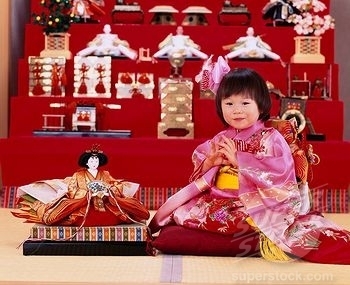
Hinamatsuri (hina means dolls and matsuri means festival) or the Doll’s Festival is celebrated on March 3rd throughout Japan for the well being of young girls , praying for their prosperous health.Isn’t it magnificent? Here is this country (Japan) who graciously honors a girl child through an ancient festival for their safety expunging the bad spirits from the dolls. For someone who grew up in the ‘Republic of XY Chromosome’ such rituals bring immense happiness, even if it is through reading a couple prose verses. And, then sadness looms when reflected over the surviving probabilities of a female foetus in my own country. Fortunately, lightning seems to have struck those ruthless bastards and nowadays January 24th is celebrated as 'National Girls Day' to prevent female foeticide and harassment against girls in India. But, that’s an entirely different controversial arena. This book does not veers towards political propagandas , but sometimes words take a whole new turn in one’s mind submerging in plethora of buried emotions. As I moved on to the next chapter, my heart dearly hoped the possibility of invalidating the UN inference of India being the deadliest country for a girl child. Arrgghhh!! See what a book does to me? It makes me go numb with painful memories. Let’s speak about petite Yuki Chan. Such a beautiful child; twirling underneath the pine tree, singing to baby Robin and hoping of not meeting the awful ‘fox spirit’ for being a rebellious kid and marveling at the peculiar demeanor of an American lad who prevents her from throwing the cat in the ditch.
It was as if for the first time the great book of life opened before her and, though unconscious of its meaning; the first word she saw spelled Duty.
Duty seems to be compelled word in a world prioritizing individualism concepts of familial infrastructures. It is seen as an honorable deed for a child to be dutiful and yet when the question looms over sacrificing one’s inhibitions for the welfare of the family, it becomes burdensome at times. Loneliness crawls in the darkest corner encumbering the heart with enveloped secrets and only a smile for the sunny horizon over troubled waters. Poverty undoubtedly plays a pivotal factor in deciding one’s actions and loyalties. Yuki San ( the honorific San is used for young adult women) was unaware of impoverished conditions and afterwards, ever since she knew that her marrying into a wealthy officer – Saito san would exonerate all the miseries, duty to withhold her family’s honor became her sole religion. Even today, irrespective to a family’s economical position, the thought of putting one’s parents in an old age home is inexcusable because a dutiful child will always look after the elderly parents, come what may.
Each day as the burden grew heavier she fought her battle with the bravery and courage of youth. With jests and chatter she served her parents' simple meals, constantly urging them to further indulgence of what she pretended was a great feast, but which in reality she had secretly sacrificed some household treasure to obtain. She deftly turned the rice-bucket as she served, that they might not see the scant supply. With great ceremony she poured the hot water into the bowls, insisting that no other sake was made such as this. Her determination to keep them happy and ignorant of the true conditions taxed her every resource, but it was her duty, and duty to Yuki San was the only religion of which she was sure. But one day a great event happened in the little home. Yuki San was called before her father and told, in ceremonious language, that a marriage had been arranged for her with Saito San, a wealthy officer in the Emperor's household. She laid her head upon the mats and gave thanks to the gods. Now her father and mother would live in luxury for the rest of their lives! Saito San was to her only a far-away, shadowy being, whom she was to obey for the rest of her life and whose house she was to keep in order. He was a means to an end, and entered into her thoughts merely as one to whom she was deeply grateful. Youth and all its joys were strong within her, and the pressure of poverty gone, her whole nature rebounded with delight. Many times had marriage been proposed for her, for the story of her beauty and obedience had spread, but her father guarded his treasure zealously, and it was not until an offer came, suiting his former rank and condition, that he gave his consent.
Duty as a religion. For richer or for poorer; till death do us apart. Isn’t it what all those sanctimonious vows are all about? Do not even get me started with certain vows recited during a Hindu marriage ceremony. With divorce being the common word among my friends and the most detested word to my mother, the idea of "being a dutiful wife, mind, body and soul" seems archaic for that matter of fact a verse to a funny limerick, but it means a lifelong commitment to my mother and several other Indian women. The close knit familial infrastructure where the wife does not wash her husband’s dirty laundry in public is still very much preserved in almost all marriages.
Each year the struggle of obsolete methods of business and the intricacies of progress plowed the furrows a little deeper in the man's face, and when his eyes that in youth had blazed with ambition grew wistful and troubled, he dropped them that his wife might not see. But what silence could hide from this frail woman any mood of the man she had served with mind and body and soul these many years? When she came to him as a shy bride on trial, she knew no such word as love. Duty was her entire vocabulary, and she asked nothing and gave all.
I reckon the very principle that Yuki’s mother adheres when she meant duty was her entire vocabulary. Not once did she let her daughter know about their extreme poverty or the pain that she endure during several still births to her husband fearing that her childless prospects would make her husband find another wife. Her happiness knew no bounds when Yuki was born as her fears of an abandoned future vanished.
Oh! My mother would have loved Yuki San for her unquestioned acceptance of an arranged marriage. Even with all those theatricals melodramas that my mother played every week, I personally still find the concept of arranged marriage rather annoying. Explain my grievances to my mother and she proclaims that I’m a lost case. However, it is still a huge part of our culture and proudly looked upon. Where does that put the idea of finding love? Do you stumble on love and then marry OR marry and then eventually find love in your husband? My mother would assume I just inhaled an empty paint can. Although Dick Merritt called Yuki his “little sister snow” for having a pure heart, she fell in love with this blue- eyed American and his homebound voyage made her a “love recluse” trying to find appeasing shelter in the heartening verses penned in a small morocco book. Yuki’s was one-sided love and many would say a ‘teenage puppy love’, yet the dilemma to pursue love or the religion of duty never gets old in an ethnically rich moralistic culture.
Ah, what funny little thing that heart is! In one half live the joyful. Other side have all the painful of life, and when the love come sometimes he knock at wrong door and give the hurtful ache to life.
Many a time, readers do get an exploratory sense of diving into a book and agglomerating the secreted essence of its text. This is one of those numerous plots that rise above a naive tale of a young Japanese girl falling in love with an American boy, assembling the cultural pillars of Japanese society.
For an author whose prose speaks volumes of cultural nuances, her biography is rather a modest paragraph. Born in 1863 in Kentucky, Ms. Little delineated an intricate cultural aspects broadening a canvas of a mystical Japan known for its pompous samurai and ghostly tales. Frances Little magnified the beauty of Japanese life for an ardent audience. It is an apt timing for me to re-read The Lady of the Decoration. A noble proposal indeed!
Hinamatsuri (hina means dolls and matsuri means festival) or the Doll’s Festival is celebrated on March 3rd throughout Japan for the well being of young girls , praying for their prosperous health.Isn’t it magnificent? Here is this country (Japan) who graciously honors a girl child through an ancient festival for their safety expunging the bad spirits from the dolls. For someone who grew up in the ‘Republic of XY Chromosome’ such rituals bring immense happiness, even if it is through reading a couple prose verses. And, then sadness looms when reflected over the surviving probabilities of a female foetus in my own country. Fortunately, lightning seems to have struck those ruthless bastards and nowadays January 24th is celebrated as 'National Girls Day' to prevent female foeticide and harassment against girls in India. But, that’s an entirely different controversial arena. This book does not veers towards political propagandas , but sometimes words take a whole new turn in one’s mind submerging in plethora of buried emotions. As I moved on to the next chapter, my heart dearly hoped the possibility of invalidating the UN inference of India being the deadliest country for a girl child. Arrgghhh!! See what a book does to me? It makes me go numb with painful memories. Let’s speak about petite Yuki Chan. Such a beautiful child; twirling underneath the pine tree, singing to baby Robin and hoping of not meeting the awful ‘fox spirit’ for being a rebellious kid and marveling at the peculiar demeanor of an American lad who prevents her from throwing the cat in the ditch.
It was as if for the first time the great book of life opened before her and, though unconscious of its meaning; the first word she saw spelled Duty.
Duty seems to be compelled word in a world prioritizing individualism concepts of familial infrastructures. It is seen as an honorable deed for a child to be dutiful and yet when the question looms over sacrificing one’s inhibitions for the welfare of the family, it becomes burdensome at times. Loneliness crawls in the darkest corner encumbering the heart with enveloped secrets and only a smile for the sunny horizon over troubled waters. Poverty undoubtedly plays a pivotal factor in deciding one’s actions and loyalties. Yuki San ( the honorific San is used for young adult women) was unaware of impoverished conditions and afterwards, ever since she knew that her marrying into a wealthy officer – Saito san would exonerate all the miseries, duty to withhold her family’s honor became her sole religion. Even today, irrespective to a family’s economical position, the thought of putting one’s parents in an old age home is inexcusable because a dutiful child will always look after the elderly parents, come what may.
Each day as the burden grew heavier she fought her battle with the bravery and courage of youth. With jests and chatter she served her parents' simple meals, constantly urging them to further indulgence of what she pretended was a great feast, but which in reality she had secretly sacrificed some household treasure to obtain. She deftly turned the rice-bucket as she served, that they might not see the scant supply. With great ceremony she poured the hot water into the bowls, insisting that no other sake was made such as this. Her determination to keep them happy and ignorant of the true conditions taxed her every resource, but it was her duty, and duty to Yuki San was the only religion of which she was sure. But one day a great event happened in the little home. Yuki San was called before her father and told, in ceremonious language, that a marriage had been arranged for her with Saito San, a wealthy officer in the Emperor's household. She laid her head upon the mats and gave thanks to the gods. Now her father and mother would live in luxury for the rest of their lives! Saito San was to her only a far-away, shadowy being, whom she was to obey for the rest of her life and whose house she was to keep in order. He was a means to an end, and entered into her thoughts merely as one to whom she was deeply grateful. Youth and all its joys were strong within her, and the pressure of poverty gone, her whole nature rebounded with delight. Many times had marriage been proposed for her, for the story of her beauty and obedience had spread, but her father guarded his treasure zealously, and it was not until an offer came, suiting his former rank and condition, that he gave his consent.
Duty as a religion. For richer or for poorer; till death do us apart. Isn’t it what all those sanctimonious vows are all about? Do not even get me started with certain vows recited during a Hindu marriage ceremony. With divorce being the common word among my friends and the most detested word to my mother, the idea of "being a dutiful wife, mind, body and soul" seems archaic for that matter of fact a verse to a funny limerick, but it means a lifelong commitment to my mother and several other Indian women. The close knit familial infrastructure where the wife does not wash her husband’s dirty laundry in public is still very much preserved in almost all marriages.
Each year the struggle of obsolete methods of business and the intricacies of progress plowed the furrows a little deeper in the man's face, and when his eyes that in youth had blazed with ambition grew wistful and troubled, he dropped them that his wife might not see. But what silence could hide from this frail woman any mood of the man she had served with mind and body and soul these many years? When she came to him as a shy bride on trial, she knew no such word as love. Duty was her entire vocabulary, and she asked nothing and gave all.
I reckon the very principle that Yuki’s mother adheres when she meant duty was her entire vocabulary. Not once did she let her daughter know about their extreme poverty or the pain that she endure during several still births to her husband fearing that her childless prospects would make her husband find another wife. Her happiness knew no bounds when Yuki was born as her fears of an abandoned future vanished.
Oh! My mother would have loved Yuki San for her unquestioned acceptance of an arranged marriage. Even with all those theatricals melodramas that my mother played every week, I personally still find the concept of arranged marriage rather annoying. Explain my grievances to my mother and she proclaims that I’m a lost case. However, it is still a huge part of our culture and proudly looked upon. Where does that put the idea of finding love? Do you stumble on love and then marry OR marry and then eventually find love in your husband? My mother would assume I just inhaled an empty paint can. Although Dick Merritt called Yuki his “little sister snow” for having a pure heart, she fell in love with this blue- eyed American and his homebound voyage made her a “love recluse” trying to find appeasing shelter in the heartening verses penned in a small morocco book. Yuki’s was one-sided love and many would say a ‘teenage puppy love’, yet the dilemma to pursue love or the religion of duty never gets old in an ethnically rich moralistic culture.
Ah, what funny little thing that heart is! In one half live the joyful. Other side have all the painful of life, and when the love come sometimes he knock at wrong door and give the hurtful ache to life.
Many a time, readers do get an exploratory sense of diving into a book and agglomerating the secreted essence of its text. This is one of those numerous plots that rise above a naive tale of a young Japanese girl falling in love with an American boy, assembling the cultural pillars of Japanese society.
For an author whose prose speaks volumes of cultural nuances, her biography is rather a modest paragraph. Born in 1863 in Kentucky, Ms. Little delineated an intricate cultural aspects broadening a canvas of a mystical Japan known for its pompous samurai and ghostly tales. Frances Little magnified the beauty of Japanese life for an ardent audience. It is an apt timing for me to re-read The Lady of the Decoration. A noble proposal indeed!

February 17, 2020
I quite enjoyed the cultural aspects of this story, but I had a hard time with the religion parts. I found it tragic that she would attend a mission school for several years and come away without any idea of Christianity as more than "a kind God" and no hint of Jesus. No wonder she returns to the traditions of her fathers because she doesn't understand why there's a difference between them.

April 9, 2023
a story of a Japanese girl at the beginning of the 20th century. As a child, she has a chance encounter with an American boy, who returns to Japan to stay with her family when she is a teenager, preparing for an arranged marriage. She falls in love with him, but he goes back to his American sweetheart and she steals herself for her destiny. I did not like the Americans get love, Japanese people don't point of the story, and there really wasn't even that much story, but the illustrations are lovely.

October 22, 2013
Quick! Name the bestselling American author of 1908? Surprise! You have no idea. You've never even heard about her, and there's nothing wrong with that. Her pseudonym was Frances Little and the book was The Lady of Decoration. I didn't read that, but I read her other book, Little Sister Snow. Japan spent two hundred years in isolation so that Sunday school teachers wouldn't write books like this about itself. Little Sister Snow manages a dollop of information on top of a big condescension pie. It would be easy to underestimate the Japanese army and their long-range flight capabilities if your first impressions of the country was a prosaic descriptions of peasants failing at globalism. Yuki-chan's parents wanted a child more than anything and eventually got a live one when they were already old and poor because of Yuki-chan's father's ununderstanding of the new economic order. The book opens with Yuki-chan's favorite sparrow being eaten by a cat. Yuki-chan chases the cat, intending to drown the motherfucker, when an American boy in a rickshaw knocks her down in the road, and, Dick Merrit, smiling, his eyes crinkling, with his nice blond hair hanging in a charmingly carefree way over his forehead, tells her not to drown that poor puss. Then Yuki-chan grows up to become Yuki-san and receive a letter from Dick Merrit, the American boy all grown up, asking if he can stay in Yuki's parents' house for some time, as he is coming to Japan on business and there are no hotels in the area. After I was extremely confused, Ms. Little backtracks to explain that the boy was the son of a teacher at the mission school Yuki-chan attended and they hadn't just met the once in a chance knocking-over. Adult Dick stays with Yuki-san and her parents. He is as loveable and charming as ever an American was and he and Yuki have some jolly times together. He teaches her English, she teaches him Japanese, they walk in the garden. There are some ham-fisted conversations where Dick explains the ever-loving kindness of the Christian God. Yuki falls in love with Dick, of course, although she's engaged to marry an officer she's never met. Duty, obedience, filial piety, and Dick's engagement to a woman offscreen in San Francisco prevent Dick and Yuki from getting together, but when he leaves, he leaves his diary behind and Yuki-san starts her own diary in the broken English that is her inner dialogue: "Ah, Merrit San, you the one big happy in all my life and I never forget all your kindful. You give me the good heart, like sun make flower-bud unclose. You telled me what is soul and purely, and you say be very good wife." Yuki, despite the American leanings in her heart, burns her diary and, at the end of the book, is going to the general's.
Gentle racism should ruin books for you, and I almost stopped listening to Little Sister Snow multiple times because of the eeeeeegh. But despite the charming pidgin inanities Yuki speaks in response to Dick's chummy exposition, Yuki is a good, strong girl character. Frances Little's biggest sin is presenting her in isolation. Japan was on the ascendant at the time, and showing a lonely little girl with absolutely no social contact except two elderly parents does not do the country justice. With no community, Yuki is an inconsequential waif waiting to be rescued by an American's smile, and not a Japanese person living on a dynamic island full of Japanese people. Yuki must face a non-choice between a gay (you know what I mean) American boy and an officer in the service of the Emperor whom her near-invalid parents have somehow managed to match her with. In the end, Little Sister Snow is not a book about Japan and the Japanese, it's only a book about American concepts of foreign foreigners (the kind who aren't European) in the decades before those foreigners started asserting themselves.
http://surfeitofbooks.blogspot.com/
Gentle racism should ruin books for you, and I almost stopped listening to Little Sister Snow multiple times because of the eeeeeegh. But despite the charming pidgin inanities Yuki speaks in response to Dick's chummy exposition, Yuki is a good, strong girl character. Frances Little's biggest sin is presenting her in isolation. Japan was on the ascendant at the time, and showing a lonely little girl with absolutely no social contact except two elderly parents does not do the country justice. With no community, Yuki is an inconsequential waif waiting to be rescued by an American's smile, and not a Japanese person living on a dynamic island full of Japanese people. Yuki must face a non-choice between a gay (you know what I mean) American boy and an officer in the service of the Emperor whom her near-invalid parents have somehow managed to match her with. In the end, Little Sister Snow is not a book about Japan and the Japanese, it's only a book about American concepts of foreign foreigners (the kind who aren't European) in the decades before those foreigners started asserting themselves.
http://surfeitofbooks.blogspot.com/

February 11, 2013
This book is purportedly about a little Japanese girl who grows up, falls in love with an American, and is conflicted between what her heart and her sense of familial duty demand.
I think it's a good example of the worst kind of American writing about foreign people or cultures. The author has no understanding of Buddhism, and she cannot restrain herself from trying to make her foreign heroine more admirable by having her, on incredibly little information, decide that Christianity is superior to the faith of her family and culture.
It's a nicely written story, but I feel that its underpinning philosophy is abhorrent.
I think it's a good example of the worst kind of American writing about foreign people or cultures. The author has no understanding of Buddhism, and she cannot restrain herself from trying to make her foreign heroine more admirable by having her, on incredibly little information, decide that Christianity is superior to the faith of her family and culture.
It's a nicely written story, but I feel that its underpinning philosophy is abhorrent.

May 1, 2014
The coloured illustrations are the best part of this book. They are lovely and detailed. As for the story itself, it started out interesting and then just kind of petered out. Perhaps the author lost interest? But then of course, from all the biographical information I can find online, the authoress never actually lived in Japan, so she couldn't go into much detail. That might explain why the "many" excursions that Yuki-chan and Merritt supposedly took together are not described at all, ever.
Forty pages (as per Gutenberg's ebook edition) really isn't enough time to flesh out a life, either. We are given the description of a Japanese house, and the Doll Festival, and a couple of temples, and that's about it. Yuki is so flat and narrow-sighted that she never even really looks at her prospective groom. There's no real point to this book. If it were directed toward a Japanese audience, it might be about the value of obedience and filial piety over personal feeling. But it's not. And for an American audience, there seems to be no point at all.
While I found no evidence that Yuki decided that Christianity was better than Buddhism (on the contrary, she says in so many words that she has no idea who God might be and whether or not any god at all is listening to her prayers, but she rather thinks no one is), one thing that did annoy me beyond telling is that the authoress makes Yuki speak in pidgin English, even when she is supposedly talking to herself or thinking her own silent thoughts. A Japanese person, thinking or talking in her own language to herself, would certainly speak fluent Japanese--which would be best rendered in sensible language, whichever it might be.
Forty pages (as per Gutenberg's ebook edition) really isn't enough time to flesh out a life, either. We are given the description of a Japanese house, and the Doll Festival, and a couple of temples, and that's about it. Yuki is so flat and narrow-sighted that she never even really looks at her prospective groom. There's no real point to this book. If it were directed toward a Japanese audience, it might be about the value of obedience and filial piety over personal feeling. But it's not. And for an American audience, there seems to be no point at all.
While I found no evidence that Yuki decided that Christianity was better than Buddhism (on the contrary, she says in so many words that she has no idea who God might be and whether or not any god at all is listening to her prayers, but she rather thinks no one is), one thing that did annoy me beyond telling is that the authoress makes Yuki speak in pidgin English, even when she is supposedly talking to herself or thinking her own silent thoughts. A Japanese person, thinking or talking in her own language to herself, would certainly speak fluent Japanese--which would be best rendered in sensible language, whichever it might be.
October 5, 2022
 🔻 Genre: Children’s fiction.
✔️Published in 1909.
👁 Point of view: Third person.
🖊 My review: Yuki Chan is a young Japanese girl who meets and American boy, Dick Merritt. Years later, they meet again, fall in love, but realize they have other obligations and duty that do not include them together. I like the sweet, gentle story, the descriptive scenes, and emphasis on duty and obligation. I also like how the author wrote the Yokohama Pidgin English for Yuki Chan (later named Yuki San when she became a woman).
🔥 Dénouement: Sweet and gentle, with a powerful punch.
🔲 Excerpts :
🔸 "Arigato—arigato," she said politely, as she bowed again and again.
🔸To Yuki Chan it was a challenge, and with outstretched hands and flying feet she gave chase to the whirling blossoms. Round and round the old tree, into the hedge, and up the sandy path she raced, her long sleeves spreading like tiny sails, her cheeks flushed to the same crimson as her flowery playmates.
🔸Little book, I weared you close to my breast many days. To-night I sleep with you tight to my heart. You gived me the courage to turn my face to the rising sun of the to-morrow. Sayonara.
🖋 The writing style: Smooth and easy, with a good rendering of a Japanese speaking English with an accent.
🗝 What I learned: A jinrikisha is a Japanese rickshaw.
💫 What I like best: The gentle story with a turn-of-the-century backdrop.
📌 Would I read this again? Yes.
🤔 My rating 🌟🌟🌟🌟🌟
◼️ Fun fact: The “Chen” after the name of unmarried girls is an honorific one.
🟣 Media form: Kindle version.
May 27, 2026
What a beautiful little book! I discovered this gem on my bookshelf and it is such a sweet copy! Written in 1909 this copy has beautiful plates with tissue paper protecting the art and in amazing condition for 117 years old!! The story is heartwarming and depicts Japanese culture.
June 6, 2012
Frances Little is the pseudonym of Fannie Caldwell. Per Wikipedia and Project Gutenberg websites, She lived in Kentucky, married and became Fannie Macaulay and spent a large amount of time living in Japan.
Ms. Little is known for another title The Lady of the Decoration. It was the bestselling novel of 1907 as determined by Publishers Weekly.
I downloaded the Free Kindle version of Little Sister Snow after surfing the children's ebook lists. This is a 505 location file that states there are illustrations. Like many of the free Kindle classics, the images are missing. What a shame.
Spoiler free description -
Yuki San is the young daughter of an old Japanese couple. She's spoiled, sassy, and quite naughty. The couple tried for many, many years to have a baby and finally Yuki was born. In their eyes she can do no wrong. She is their blessing and will care for them in their final years of life. One day Yuki decides to drown her kitten by throwing it into a gutter that leads to the ocean. Her plan is interrupted by an American teen, Richard Merrit. They go their separate ways but are brought together once again twelve years later. Yuki finds herself questioning everything. Her small, predetermined world is seen in a new light.
There is so much I could say about this short story. It didn't seem short at all. The impact on me was so great. I'm not sure I could accurately sum up my feelings so I won't even try.
It is a tale about family, duty, religion, and love. Frances Little wraps all of these elements together beautifully. The scenery is lovely and added an amazing voice to the storyline.
Readers who enjoy love stories, powerful messages, and a good cry need to pick up this ebook.
Ms. Little is known for another title The Lady of the Decoration. It was the bestselling novel of 1907 as determined by Publishers Weekly.
I downloaded the Free Kindle version of Little Sister Snow after surfing the children's ebook lists. This is a 505 location file that states there are illustrations. Like many of the free Kindle classics, the images are missing. What a shame.
Spoiler free description -
Yuki San is the young daughter of an old Japanese couple. She's spoiled, sassy, and quite naughty. The couple tried for many, many years to have a baby and finally Yuki was born. In their eyes she can do no wrong. She is their blessing and will care for them in their final years of life. One day Yuki decides to drown her kitten by throwing it into a gutter that leads to the ocean. Her plan is interrupted by an American teen, Richard Merrit. They go their separate ways but are brought together once again twelve years later. Yuki finds herself questioning everything. Her small, predetermined world is seen in a new light.
There is so much I could say about this short story. It didn't seem short at all. The impact on me was so great. I'm not sure I could accurately sum up my feelings so I won't even try.
It is a tale about family, duty, religion, and love. Frances Little wraps all of these elements together beautifully. The scenery is lovely and added an amazing voice to the storyline.
Readers who enjoy love stories, powerful messages, and a good cry need to pick up this ebook.
August 14, 2011
Read an older edition years ago, but would recommend it as a good read.

November 17, 2013
Beautifully written, but so sad, and ends on such a bittersweet note that it made me wish to weep.

December 5, 2014
Oh, that was horrible. A LITTLE Japanese girl hopelessly in love with a HUGE American man. She's writing about it in her diary, in pidgin. I rest my case.
Displaying 1 - 12 of 12 reviews