

What do you think?

Everyday Life in Ancient Rome
In Everyday Life in Ancient Rome, Lionel Casson offers a lively introduction to the society of the times. Instead of following the standard procedure of social history, he presents a series of vignettes focusing on the "ways of life" of various members of that society, from the slave to the emperor. The book opens with a description of the historical context and includes examination of topics such as the family, religion, urban and rural life, and leisure activities. This revised edition of Casson's engaging work, originally published in 1975 as Daily Life in Ancient Rome , includes two new chapters as well as full documentation of the sources.
184 pages, Paperback
First published January 1, 1975
About the author
Lionel Casson
53 books49 followersLionel Casson was a classicist, professor emeritus at New York University, and a specialist in maritime history. He earned his B.A. in 1934 at New York University, and in 1936 became an assistant professor. He later earned his Ph.D. there during 1939. In 2005 he was awarded the Archaeological Institute of America Gold Medal.
Ratings & Reviews
Friends & Following
Create a free account to discover what your friends think of this book!
Community Reviews
Displaying 1 - 22 of 22 reviews

June 22, 2017
Emperor Hadrian
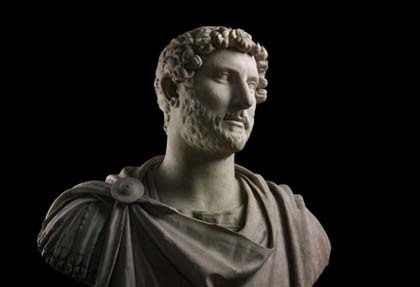
An excellent and accessible gateway to the world of ancient Rome providing a basic framework of daily life that will aid further studies. Besides, it also makes one want to further explore aspects of daily lives in much more detail as well as the trends of Roman history overall. Casson's interest in emperor Hadrian is obvious throughout the book. Fascinating material in every way. The famous poem written by Hadrian at the very end of his life ends the book and it carries a timeless quality. It makes me want to learn Latin.
Animula vagula, blandula,
hospes comesque corporis,
quae nunc abibis in loca
pallidula, rigida, dudula?
Nec ut soles dabis jocos.
Sweet soulkin, flittin, fair,
my body's guest and friend,
I wonder where you will end.
a ghostlet, stiffened, bare?
You'll miss your jesting there.

January 20, 2019
This is an approachable book on a topic dear to my heart: how did everyday people live in one of those periods where my school history books only talked about rulers and wars? Here, Lionel Casson focuses on Rome (and nearby) during the empire's Golden Age in the 2nd century.
Casson covers a wide range of experiences and issues, going for breadth rather than depth. The chapter titles sum them up well: the times; the family; on the farm; in the city; a Roman gentleman (Pliny the Younger); the slave; two resurrected cities (Pompeii and Ostia); the soldier; many gods; fun and games; on the road; the engineer; the emperor.
Although Casson is an academic expert, this is not aimed at an academic audience. The text doesn't include references, although Casson occasionally provides examples (e.g., describes artifacts that prove his point, or quotes from letters). He includes notes in the back with citations, and a good index, too. The more casual reader can skip all of that and just enjoy learning a bit about what they might have experienced had they lived in Rome during this time.
Casson's writing is easy to read, and entertaining. My main complaint is that he periodically said things that struck me as quite biased. This made me wonder about biases in his presentation of other material that I didn't notice, and about how these biases affected what he included versus what he omitted. For instance, he quotes an envoy of the Chinese court saying the Mesopotamians were "honest in their transactions, and there were no double prices." Casson adds in his own judgement, that this is, "probably the first and last time that has been said about Near Eastern tradesmen." Casson describes many religions and religious rituals and beliefs in a fairly neutral manner, but then expresses surprise that the higher ranks of society also accepted the "superstition" of astrology, which he openly disparages as "mumbo-jumbo," along with the "balderdash" of dream interpretations and the "quacks" that pose as oracles. Most of his descriptions of "life in Rome" turn out to be about life for men: he briefly mentions activities women weren't allowed to do, but does little to explore what women's lives were like, much less how sexism affected them. Perhaps the most egregious example is his coverage of slavery. Casson makes an excellent point, that the Roman economy was based on slaves, not only for manual labor and service, but for much of what we would consider white-collar work. Higher-ranked slaves were educated and able to work clerical and management jobs, even jobs we would onsider professional such as doctors and teachers, and they had good hopes for manumission (being freed by their owners). Yet you would think from his descriptions that being a slave was little different than being a poor Roman citizen, and in many ways, even better: we get nothing about the legal restrictions or dangers when one is owned, and he only gives examples of Romans who treated their slaves well. He presents outsiders selling themselves into slavery as a pretty good idea, as it eventually got them citizenship (if they survived long enough and pleased their masters, I would add). Only near the end of a long chapter on how very civilized slavery was in Rome does he mention, briefly, that sure, slaves in mines and ranches faced hardships.
Other than those blots, the book was informative and engaging. Whether the level of detail works for you depends on what you're looking for. Beyond general curiosity, I was primarily interested in background material for creating a similar society in a fictional fantasy world, and it worked quite well for that. If instead you're doing research to write historical fiction set in real-life Rome, this might be a good first step, but I think you'd want something more detailed.
Casson covers a wide range of experiences and issues, going for breadth rather than depth. The chapter titles sum them up well: the times; the family; on the farm; in the city; a Roman gentleman (Pliny the Younger); the slave; two resurrected cities (Pompeii and Ostia); the soldier; many gods; fun and games; on the road; the engineer; the emperor.
Although Casson is an academic expert, this is not aimed at an academic audience. The text doesn't include references, although Casson occasionally provides examples (e.g., describes artifacts that prove his point, or quotes from letters). He includes notes in the back with citations, and a good index, too. The more casual reader can skip all of that and just enjoy learning a bit about what they might have experienced had they lived in Rome during this time.
Casson's writing is easy to read, and entertaining. My main complaint is that he periodically said things that struck me as quite biased. This made me wonder about biases in his presentation of other material that I didn't notice, and about how these biases affected what he included versus what he omitted. For instance, he quotes an envoy of the Chinese court saying the Mesopotamians were "honest in their transactions, and there were no double prices." Casson adds in his own judgement, that this is, "probably the first and last time that has been said about Near Eastern tradesmen." Casson describes many religions and religious rituals and beliefs in a fairly neutral manner, but then expresses surprise that the higher ranks of society also accepted the "superstition" of astrology, which he openly disparages as "mumbo-jumbo," along with the "balderdash" of dream interpretations and the "quacks" that pose as oracles. Most of his descriptions of "life in Rome" turn out to be about life for men: he briefly mentions activities women weren't allowed to do, but does little to explore what women's lives were like, much less how sexism affected them. Perhaps the most egregious example is his coverage of slavery. Casson makes an excellent point, that the Roman economy was based on slaves, not only for manual labor and service, but for much of what we would consider white-collar work. Higher-ranked slaves were educated and able to work clerical and management jobs, even jobs we would onsider professional such as doctors and teachers, and they had good hopes for manumission (being freed by their owners). Yet you would think from his descriptions that being a slave was little different than being a poor Roman citizen, and in many ways, even better: we get nothing about the legal restrictions or dangers when one is owned, and he only gives examples of Romans who treated their slaves well. He presents outsiders selling themselves into slavery as a pretty good idea, as it eventually got them citizenship (if they survived long enough and pleased their masters, I would add). Only near the end of a long chapter on how very civilized slavery was in Rome does he mention, briefly, that sure, slaves in mines and ranches faced hardships.
Other than those blots, the book was informative and engaging. Whether the level of detail works for you depends on what you're looking for. Beyond general curiosity, I was primarily interested in background material for creating a similar society in a fictional fantasy world, and it worked quite well for that. If instead you're doing research to write historical fiction set in real-life Rome, this might be a good first step, but I think you'd want something more detailed.

June 9, 2021
I was surprised just how much I liked this book! It's not a glossy/glitzy history/archaeology book with tons of beautiful colored photos. Here, it's simply the words, the highly readable words. This is written in a nonacademic manner, but I learned an incredible amount. Each section, whether it's on religion, housing, farming, or anything else, focuses on how all levels of people experienced it: slaves, the poor, the middle class, the elite, and the emperors. While I've read some very dry history books about ancient Rome, this brought what I'd previously read to life. This is a definite A for me, so five stars here.

September 12, 2022
Absolutely delightful to read, so vivid and detailed it feels like getting a personal tour of the ancient world. Plus you have so much trivia with which to charm your friends: Did you know that there were female gladiators? Did you know that 9,000 wild animals were killed in the opening ceremony for the Colosseum? Did you know that the only reason we know what many ancient works of art looked like is that the wealthy had so many life-size replicas? Not to mention how much you learn about your own cultural heritage and how that affected the world (for better and for worse). It's essential reading for anyone born on this planet.

June 19, 2021
A survey of daily life in Rome during the first two centuries AD: how people dressed, ate, spent their time, lived, and had fun. Covers various walks of life. The chapter on slaves is refreshingly balanced, describing hardships but also opportunities for saving money and achieving freedom and citizenship. Another chapter on soldiers similarly describes their routes of upward mobility. There's also a masterful and interesting chapter on travel, a subject on which Casson wrote a separate book. Reading this book makes one want to learn more about areas not covered, such as money and finance.
Casson has a gift for sharing information and insights concisely. One can feel that his learning goes far beyond what is written here. This book should be a model of style for academic writers.
It is an excellent complement to a general survey such as M. Cary's brilliant "History of Rome".
Casson has a gift for sharing information and insights concisely. One can feel that his learning goes far beyond what is written here. This book should be a model of style for academic writers.
It is an excellent complement to a general survey such as M. Cary's brilliant "History of Rome".

February 3, 2017
This is a fascinating trip into the everyday lives of ancient Romans. We can learn history's major names and dates, but a book like this makes the history human. It's divided into chapters for different classes of society as well as aspects of everyday life. As usual when we explore different cultures, it's surprising to learn both how different and similar they are to our own. In particular, I found this interesting: Slaves often held respected positions such as clerks in the city, and overseers of farms in the country while the owner was away. They were freed quite commonly and gained full citizenship afterward. Conquested peoples did not have the full rights of a citizen, so they would sometimes volunteer to be a slave for a while, banking on being freed after some years, to gain full citizenship. In some occasions, it was possible for slaves to move up in the social hierarchy quite far. You also get to read real words from people living at the time, such as a letter written from a soldier to his family at home, and graffiti scratched into a wall.
This entire review has been hidden because of spoilers.
December 9, 2023
This captivating book took me on an extraordinary journey through time, transporting me to the heart of the Roman Empire two thousand years ago. Through vivid descriptions, I witnessed slaves ascending to the very top of social ladder, and experienced the awe-inspiring eruptions of the Pompeii volcano. The author skillfully brought to life the bustling world of ancient Rome, allowing me to join tourists on their freighter voyages and witness the pagan rituals. The thrilling spectacle of a gladiator show and the privilege of traveling alongside Emperor Hadrian added an extra layer of excitement to this remarkable read. Truly an exceptional book that left me in awe of the vividly depicted ancient world.

June 8, 2026
An incredibly intricate portrait of ancient Rome. I found it at my library and loved the first chapter so much that I bought the book so I could have it by my side as I write.
The chapter on travel blew my mind especially. About how tour guides were as talkative and showy as they re today, and people loved to see the amazing talking statue of Memnon and believed it really spoke, and formed mythos around it, and how people shopped back then and brought home touristy gifts just as they do today.
The chapter on travel blew my mind especially. About how tour guides were as talkative and showy as they re today, and people loved to see the amazing talking statue of Memnon and believed it really spoke, and formed mythos around it, and how people shopped back then and brought home touristy gifts just as they do today.

October 28, 2024
Enjoyable read ! The book presents us with a portrait of everyday life in the roman empire of the first and second century of the christian era ,an era that's viewed as the golden age of the empire. From the lives of the slaves to that of their Rich masters,from agriculture, military to the tourists of late antiquity..
I also found the last chapter about Hadrian to be extremely touching.
Would recommend it to anyone interested in roman life
I also found the last chapter about Hadrian to be extremely touching.
Would recommend it to anyone interested in roman life

January 2, 2021
This book was mentioned in the Laws of Human Nature by Robert Greene. That is why I picked it up... I forgot in which chapter, though. I think it was something with us people being molded by our times, whether we liked it or not. It is fascinating to see how people in Ancient Rome are so similar to us today.

March 13, 2021
Interesting work. I enjoyed the layout of each chapter as one individual topic. Thier lives were a lot like ours.
January 8, 2022
This was a great read! Very intriguing to read about the lives of these people!

March 12, 2022
Hardly encompassing, but interesting none the less.

June 19, 2017
An intriguing journey into the world of the Romans. I am reading this in the preparation for The Annals of Imperial Rome, and it was a fantastic introduction. The author is thoughtful in constructing a short but very informative book on the everyday lives of these ancient and well-known people. At times, I feel like venturing back and experiencing a day in the life of the Romans... they were so inventive and intelligent in their ways. Overall, a relaxing (and short) read on this old world... I recommend to any who want a good introduction to it.

September 26, 2009
What an excellently approachable little foray into the world of second century A.D. Rome. Divided into discreet chapters that treat different aspects of Roman life (e.g. The Soldier, Engineering, &c.) that, to my mind, follow the Girl's Skirt Rule perfectly. What makes this book so interesting, I think, is that it doesn't focus on the monumental personalities whose names we all know (but can say precious little about) and instead focuses on mundane questions of everyday life whose answers, for us living in a vastly different time and culture, are anything but commonplace. Recommended reading for any and all with an interest in ancient Roman culture!

August 4, 2011
This book first intrigued me several years ago when I came across it while browsing the shelves of a local bookstore. My upcoming trip to Italy this summer was the impetus I needed to order it and work my way through it. As you read it, you are transported to the streets of the center of one of the most powerful empires the world has ever known. The author discusses a variety of topics and includes illustrations and quotes to make the ancient world come alive to the modern reader. There was a bit of redundancy between chapters, but I enjoyed the history gleaned from the book and made sure to jot down the places that I want to visit!

October 6, 2015
Fascinating social history--and readable, to boot, Cason's book is a terrific look at the subject stated in its title. Chapters on the family, the city, architecture, and games all convey the author's enthusiasm for the subject. A reader can imagine Casson saying Isn't this interesting? every few sentences--and with reason. The book ends with a surprisingly moving portrait of Hadrian. When I read that the emperor's autobiography had been lost, I wished it hadn't been, and I thank Lionel Casson for inspiring me to wish that. Highly recommended.

November 21, 2014
This is not as indepth as Casson's Travel in the Ancient World which I greatly enjoyed, but it is a wonderful overview nonetheless. Add to that that it is the book which Isaac Asimov was so engrossed in that he completely forgot to fret over his daughter being very late when he was waiting to pick her up one day ... and you can see just how engrossing it is.

October 5, 2015
I had to read this for a class I am taking in college. I thought that it was going to maybe be a dry read and just not all that interesting. It was actually pretty good! The author incorporated humor into it that made it a very easy read. I read it in less than 24 hours. He touched on everything from Pompeii, the emperors, what each class' life was like in Roman society, and much more. Over all I really did enjoy this book :)

July 1, 2011
The author provides a look at how everyday people lived in Rome instead of just focusing on the ruling elite. He event explores the role of slavery.
August 27, 2014
Succinct, entertaining and well written! The author offers glimpses into the lives of rich and poor. More rich though since records of everyday life are scarce today.

February 6, 2016
Very factual not terribly interesting.
Displaying 1 - 22 of 22 reviews