To most, Josey Wales is a legend. A name whispered in the night to instill fear. Even those who think he's dead still tremble at the memory of his rage. But Josey is not dead—as the men who brutally attacked, tortured, and murdered his friends are about to find out. Josey will hunt them down—through the heart of Apache territory and right past Wanted posters with rewards for his dead body—because nobody crosses Josey Wales and gets away with it.
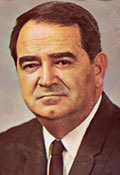
Asa Earl "Forrest" Carter was an American political speechwriter and author. He was most notable for publishing novels and a best-selling, award-winning memoir under the name Forrest Carter, an identity as a Native American Cherokee. In 1976, following the publication success of his western The Rebel Outlaw: Josey Wales, The New York Times revealed Forrest Carter to be Southerner Asa Earl Carter. His background became national news again in 1991 after his purported memoir, The Education of Little Tree, was re-issued in paperback and topped the Times paperback best-seller lists (both non-fiction and fiction). It also won the American Booksellers Book of the Year (ABBY) award.
Prior to his literary career as "Forrest", Carter was politically active for years in Alabama as an opponent to the civil rights movement: he worked as a speechwriter for segregationist Governor George Wallace of Alabama; founded the North Alabama Citizens Council (NACC) and an independent Ku Klux Klan group; and started the pro-segregation monthly titled The Southerner.
When I saw there was a sequel to The Outlaw Josey Wales (the Good Reads link doesn't seem to work, but it's on my "Westerns" shelf), I wondered why Clint Eastwood didn't film it. The original was a good sized hit, and the movie is now considered a cult classic. Then, about the mid way point, I saw a significant, unfilmable speed bump in what has to be one of the most violent rape scenes that I have run across in fiction. It's not gratuitous, it fits the context. And this is a novel of vengeance, so the stars get aligned in the end, but it is rough to read.
That long aside, or spoiler, or whatever, I feel is necessary if you want to pursue the Wales story some more. The novel also opens with a brutal scene that also is sexually sadistic, as a group of Rurales, led by a career driven maniac, invade The Lost Lady Saloon, which was Josey's in-town hang out at the end of the earlier novel. It's there some loyal friends get abused, and it's there that the Rurales end up on the list of a man with a remorseless Highland-Outlaw Code. And that's really what the book is about. The Code. It isn't just Josey's code, as he recognizes fellow travelers in a dying Mexican bandit, a stoic young Apache woman, and a seemingly lost gambler trying to find himself.
Carter is a complicated guy with a very controversial past. At one time he was a rabid racist and Klansman, but one who also wrote an award winning children's book. Somewhere along the line it seems he tried to reinvent himself (as a Cherokee!). He would die in a murky brawl with one of his sons. Some said he never changed. Maybe, but Josey Wales is not a racist story. If anything, it's the opposite, as Wales gathers the outcasts, the cripples, and the weak under his protection. The outlaw's guns seem firmly aimed at corruption and the arrogance of class and wealth. The Vengeance Trail is pulp, but also more than that. There's a rough genius to Carter, and I don't say that lightly. I wish he'd lived longer and given us more than two Josey Wales novels.
The Vengeance Trail of Josey Wales by Forrest Carter (Delacorte Press 1976) (Fiction - Western). This is the sequel to Gone to Texas, which is the book upon which the movie “The Outlaw Josey Wales” is based. This story finds Josey living quietly in a peaceable community after the excitement of the first book's adventures. The peaceful life ceases when a bad Mexican comes to town and forces Josey to act. This is a pretty good Western! As an interesting aside, author Forrest Carter. who also wrote the excellent The Education of Little Tree, was a noted segregationist, Ku Klux Klansman, and speechwriter for former Governor George Wallace of Alabama! (The Education of Little Tree was a memoir-style novel which, when published in 1976, was originally held out as an authentic autobiography of growing up with Cherokee grandparents in the mountains of Appalachia. This was later discredited as a literary hoax.) My rating: 6.5/10, finished 2010.
Though I was really looking forward to reading this one, I was forced to take my sweet time reading it thanks to complications in real life. Hate it when that happens! When at last I had time to read it again, I tore through it. This was a great western story I thought. There was tons of action, small fights, big fights, chases, ambushes... I loved it. Josey was as great a character as I remembered, but I also liked Pablo, Chato, and Ten Spot. There were some moments of humor too that had me giggling at the characters' wisecracks and whatnot. Escobedo was suitably villainous, and I liked how En-lo-e survived her experience with him and got away to wind up with a good ending. I enjoyed the setting too, charging through Mexico on a rescue mission. I think it would've made a good movie, too bad Eastwood can't reprise his role... I'm glad I got a copy of this, it was an entertaining read without a doubt.
Certainly not as bad as some reviewers have branded it, The Vengeance Trail of Josey Wales is a serviceable sequel to a really good Western novel.
This book put me in mind of several other books, most notably Fred Gibson's Savage Sam, the sequel to Old Yeller. Well, except with some graphic rape and murder. But the two sets of novels have some stuff in common, with Old Yeller and Gone To Texas both being superior novels with more original plots and both sequels being chase stories through the Old West.
But what was weird was that Vengeance Trail is bogged down with an abundance of description and history. And ... well ... a good deal of that kept putting me in mind of John Steinbeck. I would love to know if Forrest Carter had been reading Steinbeck before or during the writing of this book.
But enough of that. As I said, this is a serviceable sequel. All the characters are back, at least for a while, and there are some new ones. Josey is very much the patriarch of his little group, although Grandma certainly runs things in the house. But very little of the novel takes place under the baleful eye of Grandma Sarah.
Unlike in the first novel, Carter jumps us into the heads of multiple characters, and I think that was partly to flesh out a pretty thin and short novel. It isn't always a bad thing.
The downsides of the book are that Josey Wales is never wrong about his opponent. There are no surprises, nothing really going wrong, and so little suspense. The other thing was the inclusion of Geronimo. It's a personal preference not to include actual historical figures. Perhaps Carter saw himself as adding to Geronimo's legend.
Finally, for all the things Carter is accused of being in his life -- Klan leaders and such -- this book, like its predecessor, is very inclusive of all races, and women, and Carter seems to be extremely sympathetic to the plight of the poor, screwed-over Indians of Mexico.
It's funny how you can read a book and see it as one thing, but then find out something about the author that competently changes the message of something they wrote. I certainly have that trouble with both of Carter's Josey Wales books, "Gone to Texas" and "The Vengeance Trail of Josey Wales".
See when I first read these books in the late 1970's I had no idea that Forest Carter was actually Asa Carter, former Ku Klux Klan leader, committed segregationist and one time speech writer for Alabama governor George Wallace. And as such when I read the story of Josey Wales originally, I just saw it as just another well written western novel.
And to be clear, Gone to Texas which was later made into a brilliant western movie starring Clint Eastwood,and this book its sequel, are excellent, gripping novels about a man who like Job, loses everything, but then slowly regains everything he lost and more, only with gun fights.
In the end, both of these books are actually very good reads, and the reality is that if you don't know about Carters past, the stories come across in a completely different way. Unfortunately though, once the cat is out of the bag and you know just who Asa Carter is, the books take on a whole new layer and there is never any going back.
An imaginative, captivating bad-ass tale of honor, friendship and adventure. And for anyone who is preparing to decry the author for his bigoted past, yes, I'm aware of Carter's white supremacist douchery, but I'm talking simply about the story he tells here. The Vengeance Trail of Josey Wales is the sequel to Gone to Texas, the story on which the film The Outlaw Josey Wales was based. Carter can be a bit too lofty and adamant at times, but he kept me reading all the way through. If you like stories that keep you on the edge of your seat, you can't miss with this one.
It mostly reads like a spaghetti western, but there is more to the book than the bumpy, wild ride of violence through the Mexican desert. Small artistic moments and some drawn-out philosophical perspectives make for good additions for this enjoyable book.
I thought this was somewhat better written than the first book but still had it's weaknesses. There's excellent use of language but asides pull you out of the story too often. There are also some pretty long info dumps. The ending was pretty good, with some genuine emotion coming through, but I'm not sure if I would have been so engaged there if it had not been for my enjoyment of the movie, which was based on the first book and which really introduced these characters to me.
This one is much more graphic than the previous Josey Wales adventure. It's still a great story, but there are parts some folk might want to skim through.
Another book that has failed the illustrious 'rule of 50'
I read Forrest Carter's excellent 'Gone to Texas' last week and was very impressed. Sadly this sequel failed to live up to my expectations.
I read somewhere that after the success of 'The Outlaw Josey Wales' (based on Gone to Texas) Clint Eastwood was interested in making a sequel movie based on this book. He pulled the plug on the idea and the second movie was never made. I am guessing that he made this decision after actually reading the book.
The second book begins with the savage and violent gang-rape and murder of two women (written in nauseating detail) when Josey Wales hears about the incident he sets out with a handful of gunslingers to seek revenge. The group responsibile for the atroscities is a handful of Mexican bandits with a psychotic leader. They flee over the border into Mexico pursued by Wales and what insues in the predictable gunfights and all around slaughter.
The book is pretty awful from the very beginning. I can only speak for myself but I prefer not to read about the graphically depicted rape of two women by a gang of men in my relaxation time. That aside the story was boring and predictable and, I feel, badly written with random Spanish words and pigeon English used by the Mexicans which frustrated me beyond belief.
It had none of the charm and fun of the first book and wasn't worth finishing
Settled down with his adopted family, Josey Wales, now happily married to the young fair Jayhawker and living peacefully with the wise Indian, Indian women, Grandma and the Spanish Vasquezs from Santo Rio times are good. Then a storm from Mexico, in the name of Escobeto, sweeps into the small town where Josey was befriended. What happens next will force Josey to react under the guerilla code. Carters' sequel to "Gone to Texas" is a non stop action western thriller. With far deeper character development and a new protagonist, that in some ways resembles the criminal elements of current Mexico, Forrest Carter brings a deeper story of friendship, honor and vengeance.
It is a shame that Forrest Carter died at age 56. His books are great. Why Clint Eastwood did not make the sequel to "The Outlaw Josey Wales", I will not know. Unless Mr. Eastwood contacts me, an unknown author with a sharp jab and a shuffling gait.
Not Eastwood you nit, me. Anyhow I strongly recommend you stop slapping your alcoholic husband, come, put your underwear back on, get a piece of moldy bread from the kitchen and read this story.
Here is a spoiler - I think I may have wet myself.
It certainly is better than the last 3 books that I've read (none of them will even be mentioned hereafter). Great entertainment and it relates a tale after the movie "The Outlaw Josey Wales". It's too bad their are no more sequels.
'Gone to Texas'/'The Outlaw Josey Wales' was a hard act to follow and this sequel doesn't quite live up to it. The 'vengeance' is shoe-horned in a little and the new characters are overly simplistic. A grim read, as you might expect, but enjoyably simplistic.
Good book. At first glance it's just a western novel but Forrest Carter weaves in political and economic subtexts so you don't even realize you're learning something useful
Forrest Carter has a deep knowledge and feel for the era he's writing about. This book may have been one of his last, I'm not sure. Written in the mid 70's it was perhaps one of those works pushed for by his publisher to 'keep the pot boiling' but Carter still manages to avoid his editors' wish for a ''western'' by introducing some solid and sensitive characters. I've read a few other books by Forrest Carter the two outstanding being The Education of Little Tree and Watch For Me On The Mountain. This story teller has the gift for sure.
Not as good as GTT but still a decent read. Is historically accurate about Old Mexico. If you thought white American settlers were mean and cruel, they can't hold a candle to the Spanish. Not even close. I did find the prose got a bit flowery and waffled at times. Perhaps the success of GTT went to Forrest's head. I gave GTT a 4.5, but would not give Vengeance Trail more than a 4. Again, Forrest Carter's background didn't influence/reduce this story for me.
Carter was the Sacheen Littlefeather/Elizabeth Warren of western fiction. While Gone To Texas was a fine novel, the sequel is a trashy forerunner of the adult western paperback boom of the late 70s. Suspect Carter hacked it out for quick cash while the Outlaw Josey Wales movie was being prepped. Contrary to what one reviewer believed, this WAS made into an obscure movie directed by and starring Michael Parks. It's unwatchable but you can attempt to view it on pirated Youtube uploads.
I read this, mostly because I've watched "The Outlaw Josey Wales" movie a few times. This book was pretty brutal in some of its descriptions. It had some humor and some gutter humor, and an interesting account of the history of the Apache. Certainly not the romantic Western styles of some of the other Western authors I read. These bad guys were BAD...and Josey Wales had his revenge.
Great story! I do love the escapism found in a good story in which the protagonist is of the outlaw antihero variety- violent, clever and gritty but abides by an unwritten honor code who defends good from evil. Fun read!