Throughout these essays there runs a common the need to place the Reformation movement in its medieval context, and to bridge the ideological gaps between late medieval Renaissance, and Reformation studies.
The opening chapters consider late medieval thought and the emergence of the young Luther at the center of the Reformation movement. There follows a study of the impact upon Luther of the philological, spiritual, and philosophical traditions of sixteen-century Europe. These traditions are fully examined in order to discern what Luther and his followers silently ignored or rejected, and so to delineate what is new and original in early Reformation thought.
The remaining chapters move from Luther to the wider world of events marking the Reformation the Peasant War, the Copernican Revolution, the beginning of the Counter-reformation and the reformed initiated by the Council of Trent.
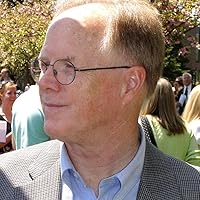
Heiko Augustinus Oberman was a Dutch historian and theologian who specialized in the study of the Reformation. After earning his doctorate in theology from the University of Utrecht in 1957, he taught at the Harvard Divinity School from 1958 until 1966 and then at the University of Tübingen, Germany from 1966 until 1988, when he became Regents Professor of History at the University of Arizona, Tucson.
This was more intense scholarship than I anticipated, but it felt like eating a good, full meal. Anyone interested in the intellectual beginning of the Reformation and its thinkers (with particular concern about late medieval nominalism's influence) should read this book. Oberman is on the cutting edge of scholarship, especially Luther scholarship, but the essays were written in the 1960s-70s. I have no idea what the more updated research would be on Luther; Oberman felt extraordinarily well-read and exhaustive.
In this volume of essays, Heiko Oberman carefully elucidates more nuanced understandings of key people, movements, and ideas in the late medieval and early reformation periods.