

What do you think?
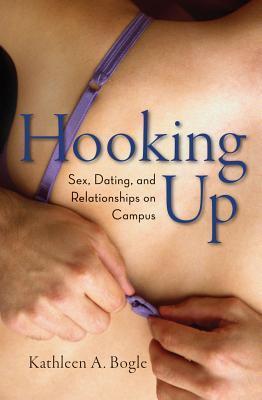
Hooking Up: Sex, Dating, and Relationships on Campus
A closer look into the new sexual culture on college campuses
It happens every In a haze of hormones and alcohol, groups of male and female college students meet at a frat party, a bar, or hanging out in a dorm room, and then hook up for an evening of sex first, questions later. As casually as the sexual encounter begins, so it often ends with no strings attached; after all, it was “just a hook up.” While a hook up might mean anything from kissing to oral sex to going all the way, the lack of commitment is paramount.
Hooking Up is an intimate look at how and why college students get together, what hooking up means to them, and why it has replaced dating on college campuses. In surprisingly frank interviews, students reveal the circumstances that have led to the rise of the booty call and the death of dinner-and-a-movie. Whether it is an expression of postfeminist independence or a form of youthful rebellion, hooking up has become the only game in town on many campuses.
In Hooking Up, Kathleen A. Bogle argues that college life itself promotes casual relationships among students on campus. The book sheds light on everything from the differences in what young men and women want from a hook up to why freshmen girls are more likely to hook up than their upper-class sisters and the effects this period has on the sexual and romantic relationships of both men and women after college. Importantly, she shows us that the standards for young men and women are not as different as they used to be, as women talk about “friends with benefits” and “one and done” hook ups.
Breaking through many misconceptions about casual sex on college campuses, Hooking Up is the first book to understand the new sexual culture on its own terms, with vivid real-life stories of young men and women as they navigate the newest sexual revolution.
It happens every In a haze of hormones and alcohol, groups of male and female college students meet at a frat party, a bar, or hanging out in a dorm room, and then hook up for an evening of sex first, questions later. As casually as the sexual encounter begins, so it often ends with no strings attached; after all, it was “just a hook up.” While a hook up might mean anything from kissing to oral sex to going all the way, the lack of commitment is paramount.
Hooking Up is an intimate look at how and why college students get together, what hooking up means to them, and why it has replaced dating on college campuses. In surprisingly frank interviews, students reveal the circumstances that have led to the rise of the booty call and the death of dinner-and-a-movie. Whether it is an expression of postfeminist independence or a form of youthful rebellion, hooking up has become the only game in town on many campuses.
In Hooking Up, Kathleen A. Bogle argues that college life itself promotes casual relationships among students on campus. The book sheds light on everything from the differences in what young men and women want from a hook up to why freshmen girls are more likely to hook up than their upper-class sisters and the effects this period has on the sexual and romantic relationships of both men and women after college. Importantly, she shows us that the standards for young men and women are not as different as they used to be, as women talk about “friends with benefits” and “one and done” hook ups.
Breaking through many misconceptions about casual sex on college campuses, Hooking Up is the first book to understand the new sexual culture on its own terms, with vivid real-life stories of young men and women as they navigate the newest sexual revolution.
225 pages, Paperback
First published January 1, 2008
Ratings & Reviews
Friends & Following
Create a free account to discover what your friends think of this book!
Community Reviews
Displaying 1 - 28 of 28 reviews

March 14, 2012
I would give this negative stars if I could. Its the equivalent of a pamphlet telling you about kids and "the marijuana". Only the Dowager Countess could learn something new from this book.
December 1, 2008
So I was craving a good sociology book, and I picked this one up after reading a review in a psych journal. It was pretty good, and reminded me of the day of my youth. However, it was also very depressing. The thesis is, girls want relationships and commitment, and guys want to hook up and get ass. The End. Conclusion: guys are the worst.

January 7, 2021
Konu güzel, araştırma güzel, sonuçlar ilginç. Ne yok? Patriyarka ile bağını kurmak yok. So close yet so far.

Read
March 5, 2009It happens every weekend: In a haze of hormones and alcohol, groups of male and female college students meet at a frat party, a bar, or hanging out in a dorm room, and then hook up for an evening of sex first, questions later. As casually as the sexual encounter begins, so it often ends with no strings attached; after all, it was “just a hook up.” While a hook up might mean anything from kissing to oral sex to going all the way, the lack of commitment is paramount.
Hooking Up is an intimate look at how and why college students get together, what hooking up means to them, and why it has replaced dating on college campuses. In surprisingly frank interviews, students reveal the circumstances that have led to the rise of the booty call and the death of dinner-and-a-movie. Whether it is an expression of postfeminist independence or a form of youthful rebellion, hooking up has become the only game in town on many campuses.
In Hooking Up, Kathleen A. Bogle argues that college life itself promotes casual relationships among students on campus. The book sheds light on everything from the differences in what young men and women want from a hook up to why freshmen girls are more likely to hook up than their upper-class sisters and the effects this period has on the sexual and romantic relationships of both men and women after college. Importantly, she shows us that the standards for young men and women are not as different as they used to be, as women talk about “friends with benefits” and “one and done” hook ups.
Breaking through many misconceptions about casual sex on college campuses, Hooking Up is the first book to understand the new sexual culture on its own terms, with vivid real-life stories of young men and women as they navigate the newest sexual revolution.
Hooking Up is an intimate look at how and why college students get together, what hooking up means to them, and why it has replaced dating on college campuses. In surprisingly frank interviews, students reveal the circumstances that have led to the rise of the booty call and the death of dinner-and-a-movie. Whether it is an expression of postfeminist independence or a form of youthful rebellion, hooking up has become the only game in town on many campuses.
In Hooking Up, Kathleen A. Bogle argues that college life itself promotes casual relationships among students on campus. The book sheds light on everything from the differences in what young men and women want from a hook up to why freshmen girls are more likely to hook up than their upper-class sisters and the effects this period has on the sexual and romantic relationships of both men and women after college. Importantly, she shows us that the standards for young men and women are not as different as they used to be, as women talk about “friends with benefits” and “one and done” hook ups.
Breaking through many misconceptions about casual sex on college campuses, Hooking Up is the first book to understand the new sexual culture on its own terms, with vivid real-life stories of young men and women as they navigate the newest sexual revolution.
February 14, 2017
Class Textbook
Read for a class. Interesting read about hooking up, but is a little dated. Still an interesting read if you are curious about college hookup culture.
Read for a class. Interesting read about hooking up, but is a little dated. Still an interesting read if you are curious about college hookup culture.

January 18, 2019
Sosyolojik bir çalışma. Senaryoların kişisel davranışları ve ilişkileri nasıl etkilediğini, güncel kadın erkek güç dinamiğini güzel ortaya sermiş. Çeviri güzel olsa da, çok fazla imla hatası vardı, bazı yerlerde anlamı değiştirecek derecede gözden kaçan ek hataları olmuş. İngilizcenin uzun cümle yapısına kurban giden, başıyla sonu uyumsuz cümleler okumayı zorlaştırıyordu.

October 10, 2022
Ugh! Didn't I read this already? Bad research, biases, assumptions, limited range of respondants, etc. AND it's really dated. It reads like it was dated even when it was new. Blah.

Read
April 1, 2024I read this for a paper I wrote in college. It was actually very interesting.

February 8, 2009
This is a very interesting study about how college students do relationships on campus. Bogle bases her research in personal interviews with 76 students on two campuses. This gives her research a very personal and anecdotal touch.
She does a great job identifying attitudes and motivations among the students, and supporting her conclusions from specific interviews with students.
Two things about Bogle's research really surprised me:
1. Most students aren't really participating in the hooking up scene on campus. Rather, there is simply a perception that this practice is universal. This perception is exaggerated in the press and campus community but is not based in fact. For example, some research has shown there to be a 30-40% virginity rate among college students. Yet, most students would likely comment that they don't know of any other students who are still virgins.
2. Once students graduate, they tend to return to a more traditional dating style of relationships. Hooking up is generally viewed as temporary and even somewhat immature (one student mentioned in an interview that he would never, ever have a long-term relationship with a woman who had sex with him on the first date).
I was encouraged by the tremendous opportunities for the Good News about Jesus Christ in this culture. Students are broken and unfulfilled, looking for something more. Rather than running away and trying to avoid the secular college campus, Christians should be embracing the opportunities to reach people with the transforming Christ.
I also found great pity for those participating in the hookup scene, who think to find satisfaction there. There is simply no comparison to the joys of marital sexual love.
I would recommend this book to anyone who wants to know about the current secular campus culture and about what sex and relationships really look like there. However, I would offer one warning: the details of Bogle's study are at times pretty explicit. She does not restrain or censor any of her research or interviews.
She does a great job identifying attitudes and motivations among the students, and supporting her conclusions from specific interviews with students.
Two things about Bogle's research really surprised me:
1. Most students aren't really participating in the hooking up scene on campus. Rather, there is simply a perception that this practice is universal. This perception is exaggerated in the press and campus community but is not based in fact. For example, some research has shown there to be a 30-40% virginity rate among college students. Yet, most students would likely comment that they don't know of any other students who are still virgins.
2. Once students graduate, they tend to return to a more traditional dating style of relationships. Hooking up is generally viewed as temporary and even somewhat immature (one student mentioned in an interview that he would never, ever have a long-term relationship with a woman who had sex with him on the first date).
I was encouraged by the tremendous opportunities for the Good News about Jesus Christ in this culture. Students are broken and unfulfilled, looking for something more. Rather than running away and trying to avoid the secular college campus, Christians should be embracing the opportunities to reach people with the transforming Christ.
I also found great pity for those participating in the hookup scene, who think to find satisfaction there. There is simply no comparison to the joys of marital sexual love.
I would recommend this book to anyone who wants to know about the current secular campus culture and about what sex and relationships really look like there. However, I would offer one warning: the details of Bogle's study are at times pretty explicit. She does not restrain or censor any of her research or interviews.

March 25, 2010
I read this book for my sociology 101 course last year, and I would be lying if I said that this book was not interesting. However, my class and I found issues with it.
1)Most of the quotations she puts in the text are riddled with ellipses. What exactly is Bogle trying to say, what with so many ellipses? It's possible that the subjects may have been long-winded in their interviews, but why are there ellipses in the middle of sentences? Why is almost every quotation this way?
2)Bogle's chosen groups. I believe that she points this out herself, but she interviews almost exclusively white middle- and upper-middle class white men and women. There isn't much of a difference between the private and public school environments out of which she chooses to interview.
3) Bogle does not interview people who do not hook up. These people could easily have had worthwhile information about how those who hook up are seen in society, but instead, Bogle chooses to focus on people who do hook up.
Overall, the book isn't bad, it just leaves you with some questions without going sufficiently deep into the societal meanings and practices surrounding hookups.
1)Most of the quotations she puts in the text are riddled with ellipses. What exactly is Bogle trying to say, what with so many ellipses? It's possible that the subjects may have been long-winded in their interviews, but why are there ellipses in the middle of sentences? Why is almost every quotation this way?
2)Bogle's chosen groups. I believe that she points this out herself, but she interviews almost exclusively white middle- and upper-middle class white men and women. There isn't much of a difference between the private and public school environments out of which she chooses to interview.
3) Bogle does not interview people who do not hook up. These people could easily have had worthwhile information about how those who hook up are seen in society, but instead, Bogle chooses to focus on people who do hook up.
Overall, the book isn't bad, it just leaves you with some questions without going sufficiently deep into the societal meanings and practices surrounding hookups.

October 27, 2009
As a sociology grad student, I loved reading this book, which was the continuation of Bogle's dissertation.
Being an adjunct professor who interacts with college students, and one who grew up in a college culture dominanted by the "hook up" script, as Bogle calls it, I could really relate to what the respondents in her book described.
Further, while this is a topic that mainstream media often addresses as a complete negative, Bogle balances her depiction of hooking up on college campuses with attention to both positive and negative consequences of this new type of "dating" that most people under the age of 30 can recognize and to which they can relate.
I read this book in one weekend....it is a good read filled with excellent excerpts from the interviews Bogle conducted with students at two rather diverse universities.
Being an adjunct professor who interacts with college students, and one who grew up in a college culture dominanted by the "hook up" script, as Bogle calls it, I could really relate to what the respondents in her book described.
Further, while this is a topic that mainstream media often addresses as a complete negative, Bogle balances her depiction of hooking up on college campuses with attention to both positive and negative consequences of this new type of "dating" that most people under the age of 30 can recognize and to which they can relate.
I read this book in one weekend....it is a good read filled with excellent excerpts from the interviews Bogle conducted with students at two rather diverse universities.

May 8, 2014
The opinions expressed by the interviewees in this book are so far from those held by any of the dozens of people I knew in college (a large, well-known private university in the Midwest from which I graduated a year ago) that I have to wonder how she selected them. (Yes, there's a methods section in the back of the book, but I'm sure some potential participants' responses were thrown out.)
I mean, I'm sure there were people like that at my school, especially the ones in the Greek system: guys who treated women like trash if they "put out" too "fast," women who desperately pursued unsatisfying casual sex in the hopes that it would lead to a Relationship, etc. But for the most part, students at my school had casual sex occasionally and both men and women tended to enjoy it.
I mean, I'm sure there were people like that at my school, especially the ones in the Greek system: guys who treated women like trash if they "put out" too "fast," women who desperately pursued unsatisfying casual sex in the hopes that it would lead to a Relationship, etc. But for the most part, students at my school had casual sex occasionally and both men and women tended to enjoy it.

February 15, 2015
A nice easy read for thinking about hook-up culture on campus. But, the book's narrow focus on straight, white, middle class hookups is such an oversight, in my opinion. I would love to see this study repeated on different kinds of college campuses (or with young people who are not in college) - I'm thinking an urban commuter school, a historically black college, a super hippie school, a super Christian school, a community college. So many directions to take this to start fleshing out the role that power and privilege play in the sexual lives of young people. It's the start of something really good.

September 19, 2012
I found Bogle's sample size to be incredibly small considering the fact that she performed one-on-one interviews with the people in her study considering that she compared students at two universities in addition to her comparison of the differing views between men and women. Her writing is solid; her research is in depth and easy to read. This book is a good example of how to incorporate qualitative research data into a publishable document.

April 5, 2013
This is definitely an interesting read for someone in my line of work. It felt a little outdated but there was a lot that was relevant to understanding the culture today's students are living in. The lack of clear definitions and the contrast from college to post-college life were enlightening. I appreciate the author's mention of the problematic nature of this culture and its contribution to the very concerning issue of sexual assault we are facing in college campuses.
July 29, 2008
The premise of this book is based on the fact that in the student culture, no one really "dates" anymore. Girls aren't necessarily going to college to meet their husbands and men aren't necessarily marrying their best girl as soon as they graduate. Dating is antiquated and has been replaced by the hookup.

September 3, 2011
This book discusses the sexual double standard women are subjected to on college campuses. Mainly, that if they have casual sex they are viewed as sluts or whores. She interviews many many actual college students from different campuses and compiles her findings. I wish I would have had this book to read in college -- it would have clarified so many things I was confused and angry about.

June 29, 2013
Despite the well-documented failings (small sample size, regional bias, etc.), this is a very smart book. Her stated intent is for it to function as a conversation starter, and on that level, it is very effective. A must-read for anyone involved in higher education (students, parents, faculty, staff, etc.).

Read
August 3, 2013Bogle's conclusions cannot be applied to all collegial environments. There are too many limitations with the study, all of which she freely acknowledges. However, it was an interesting look into a subculture that was very different from my college experiences. It was nice to see a nonjudgemental or hysterical protrayal of this phenomena.

March 5, 2014
Interesting book that looks at the phenomenon of "hooking up" on campus as a primary script for relationships between heterosexual students.
It was interesting and Bogle did a relatively good job showing how the this primary "relationship" mode in college benefits men more than women.
It was interesting and Bogle did a relatively good job showing how the this primary "relationship" mode in college benefits men more than women.
March 10, 2020
It's almost impossible to get people to tell the truth about their sex lives. The fact this book exists at all is a minor miracle.
Bogle gives reasoned and thoughtful analysis of a type of sexual behavior on college campuses. It's very much worth your time to read this.
Bogle gives reasoned and thoughtful analysis of a type of sexual behavior on college campuses. It's very much worth your time to read this.

August 5, 2008
A well-designed research study exploring cultural shifts in relationships/dating on campus. Analysis excludes perspectives from GBLT students and students of color, seemingly for no good reason.

May 15, 2009
B-O-R-I-N-G. I got about 75 pages in before I gave up. :(

Read
February 26, 2010Read by ACRL Member of the Week Joan Ruelle. Learn more about Joan on the ACRL Insider blog.

January 28, 2012
I had to read this book for a Sociology class that I am taking. I really did not enjoy it.

September 9, 2012
Used this for my class this semester. I really enjoyed this study. Excellent qualitative work.

March 5, 2013
Perfectly applicable to college life. States facts without personal opinion or bias. Good read

Read
October 18, 2013Sociology of the Family
Displaying 1 - 28 of 28 reviews