"You went away" is set during the Second World War in 1942, and like most of his fiction is played out in Ontario. The benighted couple are in a hemorrhaging marriage. Graeme is an officer in the RCAF but no gallant hero. He’s a broody sort, a womanizer and an alcoholic, a nasty mess. Professionally that means his superiors won’t let him near an aircraft. Otherwise, his dissolute disposition is a poison to both his marriage to Michael (“Mi” to her friends) and the relationship with his son, eight-year-old Matthew. He’s not a violent man, just brutally insensitive, sullen, and dishonest – all of which, come to that, amounts to a violence in its own way.
But this isn’t Graeme’s story so much as it’s Mi’s, with her strength and tenacity, her steadiness and patience. This is a story of Mi’s war, how she marshals hope and emotional courage against absence and loneliness.
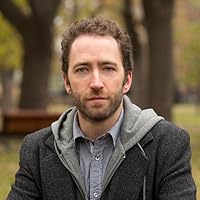
Timothy Irving Frederick Findley was a Canadian novelist and playwright. He was also informally known by the nickname Tiff or Tiffy, an acronym of his initials.
One of three sons, Findley was born in Toronto, Ontario, to Allan Gilmour Findley, a stockbroker, and his wife, the former Margaret Maude Bull. His paternal grandfather was president of Massey-Harris, the farm-machinery company. He was raised in the upper class Rosedale district of the city, attending boarding school at St. Andrew's College (although leaving during grade 10 for health reasons). He pursued a career in the arts, studying dance and acting, and had significant success as an actor before turning to writing. He was part of the original Stratford Festival company in the 1950s, acting alongside Alec Guinness, and appeared in the first production of Thornton Wilder's The Matchmaker at the Edinburgh Festival. He also played Peter Pupkin in Sunshine Sketches, the CBC Television adaptation of Stephen Leacock's Sunshine Sketches of a Little Town.
Though Findley had declared his homosexuality as a teenager, he married actress/photographer Janet Reid in 1959, but the union lasted only three months and was dissolved by divorce or annulment two years later. Eventually he became the domestic partner of writer Bill Whitehead, whom he met in 1962. Findley and Whitehead also collaborated on several documentary projects in the 1970s, including the television miniseries The National Dream and Dieppe 1942.
Through Wilder, Findley became a close friend of actress Ruth Gordon, whose work as a screenwriter and playwright inspired Findley to consider writing as well. After Findley published his first short story in the Tamarack Review, Gordon encouraged him to pursue writing more actively, and he eventually left acting in the 1960s.
Findley's first two novels, The Last of the Crazy People (1967) and The Butterfly Plague (1969), were originally published in Britain and the United States after having been rejected by Canadian publishers. Findley's third novel, The Wars, was published to great acclaim in 1977 and went on to win the Governor General's Award for English-language fiction. It was adapted for film in 1981.
Timothy Findley received a Governor General's Award, the Canadian Authors Association Award, an ACTRA Award, the Order of Ontario, the Ontario Trillium Award, and in 1985 he was appointed an Officer of the Order of Canada. He was a founding member and chair of the Writers' Union of Canada, and a president of the Canadian chapter of PEN International.
His writing was typical of the Southern Ontario Gothic style — Findley, in fact, first invented its name — and was heavily influenced by Jungian psychology. Mental illness, gender and sexuality were frequent recurring themes in his work. His characters often carried dark personal secrets, and were often conflicted — sometimes to the point of psychosis — by these burdens.
He publicly mentioned his homosexuality, passingly and perhaps for the first time, on a broadcast of the programme The Shulman File in the 1970s, taking flabbergasted host Morton Shulman completely by surprise.
Findley and Whitehead resided at Stone Orchard, a farm near Cannington, Ontario, and in the south of France. In 1996, Findley was honoured by the French government, who declared him a Chevalier de l'Ordre des arts et des lettres.
Findley was also the author of several dramas for television and stage. Elizabeth Rex, his most successful play, premiered at the Stratford Festival of Canada to rave reviews and won a Governor General's award. His 1993 play The Stillborn Lover was adapted by Shaftesbury Films into the television film External Affairs, which aired on CBC Television in 1999. Shadows, first performed in 2001, was his last completed work. Findley was also an active mentor to a number of young Canadian writers, including Marnie Woodrow and Elizabeth Ruth.
I can’t help but wonder was Findley a perfectionist? Spending long hours, endless nights, painstakingly struggling to cultivate some of literature's most seamlessly flawless sentences ever read? Ultimately masking the premise of a story that is a bit flat, underdeveloped, lacking. Or was it natural happenstance for him to be able to write so fluently, so beautifully that all other hindrances on both author and reader just kind of vanishes into thin air as you progress through his work? Did the words just flow freely out of him without a whim, hesitation, second guess at his strain of thought? Any faults in this novel are hidden by the ease in which it is read, the tranquility of his prose. A magician with words.
There is only one Timothy Findley. Oh sure, there are those who come close. Margaret Atwood? Yeah, for sure. Carol Shields? Yeah, I'll give you that one.
But there's only one Timothy Findley. It's literary perfection. Every sentence.
There's only one Timothy Findley and he never misses his mark. Ever.
Its greatest achievement is that it manages to tell such a lovely, heart-breaking historical romance in so short a page count. Hurray for the art of being concise! Casablanca on a budget!
4/5 - story about a family during the Second World War. Sad and honest but a bit slow at times; (although very well written). Definitely not a feel good book but if you like gut wrenching loss then this might be the book for you.
I really loved this book. I thought Timothy did an amazing job and it's such a beautiful sad story. I actually cried a little while reading this. It took me longer to finish than I expected because I was cherishing the story. This is only my second TIF book, but it certainly is not my last.
A novella with interesting character development. A high school and college sports hero is not meeting his expectations or those of his aunt and drifts through women and alcohol while his wife and young son become more and more lost to him. He joins the Air Force in 1942 hoping to reclaim some of the camaraderie and status he previously enjoyed but still needs the alcohol and the affairs. His wife loves him and wants to keep things together but ultimately has an affair of her own with his roommate. The roommate conveniently is killed in a place crash so there is no need to bring this part to a head but the marriage cannot stand the strains. She will move on.
While the book felt long in certain parts, the latter end of it was the most compelling and heartbreaking. Mi, the central figure of Findley's novel, is pretty realistic in her weakness and strength. She loses her husband in spirit, then her young daughter and then finally, Ivan, the motorcycle-riding pilot who brought a sense of joy and thrill back into Mi's grey world.
I'm absolutely floored by the ending, as it ended somberly. Mi did not break into tears or yell and say that she loved Ivan. Rather her thoughts, her despair and grief were quiet. Shared amongst those she trusted and loved, like Nella and Eloise, and I found that to be the greatest show of grief.
This entire review has been hidden because of spoilers.
I found this book very disturbing on a very personal level. This story eerily parallels my own family history, you could very easily replace the name Graeme with that of my own grandfather. I put this book down many times determined not to finish it only to pick it up hoping that Graeme was going to get his comeuppance and that Mi would dump him, but as in my story this story did not have a satisfactory ending..
This entire review has been hidden because of spoilers.
The death of a marriage against the backdrop of the WWII Ontario Homefront. Findley is a master storyteller, welcoming me into a world and time period I didn’t want to leave. Of Mi and her son Matthew. Writing all the things we think be don’t say in italics. Brilliant.
I rated this book four stars as it was well written. If I find the writer conveyed a message that gives me insight or radiates with me is worth the read. I found the passage of a conversation of men and women and their differences between Mi and Eloise hit the mark and the red angels which I saw three days before running across a field of shimmering snow. This book is about a marriage breakdown, affairs, alcoholism, death of a child and war. I would have liked more of Graeme thought process and motivation. To top it all off this is a Canadian writer who wrote this book.
A WWII historical romance, concisely crafted and quite memorable. For me, it’s coming of age elements are the strongest. I think this will be one to return to.
Enjoyed this breezy book of WW11 era romance and coming of age. I guess it being only 247 pages and perhaps not delving deeply into the lives of its leads, makes it "A Novella" as it says on the cover (though I did not notice those words till after finishing it!) I am impressed with most books I finish, and find myself giving four stars on goodreads quite regularly. So I come to my reviews thinking, "Okay, what are some of the things that bugged me, or that I didn't like, about this book?" So, what are they? Not too much, actually but I did notice that TIF (this is my first book of his, I say, very bad Canadian I am!) TIF does something here that I have found a lot of authors do, and I always want to scream at them (though like TIF a lot of them have alas already passed on.) I want to scream at them, "WHY? Why with all the names to choose from for people, do you have to give so many characters names that start with the same letter, or that are otherwise similar-sounding? When one puts a book down due to busy life duties or even a bit of boredom, and then comes back to it later, it sucks to have to look back in order to remind oneself WHO certain characters were, after all. So that is my gripe, and i am just going to have to live with it, nobody else probably cares. But we have, an Ellen, an Eloise, we have a Matthew and a Michael, (granted Michael is a woman and usually referred to as "Mi" and also the very main character in terms of plot movement and point of view and with whom we are most expected to sympathize.) We also have an Ivan and an Ian, although I suspected and was later confirmed, that that similarity was on purpose. We have an Alex and an Alvin, though they are very minor characters. Alvin Speaks, Alex Ross, and Miss Rose, too, all living under the same roof which caused me to read, "Axl Rose" when it actually said Alex Ross but i can't blame TIF for THAT!! Okay enough minor gripes, but I just wish that authors would think of their readers when it comes to sorting out names as one reads...particularly more minor characters who could certainly be named something with an unused vowel, it would not upset things too much at all!! Mi's son "Matthew" is an interesting situation. The young boy is along for the ride, we feel for him as he loses his sister to an accident and then sees his parents grow further and further apart, both literally and figuratively as "you went away"...Graeme is away most of the time, and even when they ARE together he and Mi are separated by...some flaw in his character that makes him the distant philanderer. Oddly he does not seem like he is in love with the women he's having affairs with, but he's using them as some sort of devices to confirm his self-loathing and self-doubt. The alcoholism does not help much, either. The sudden, ahem, burst of feeling for Ivan that Mi's son Matthew feels, on the back of the motorcycle is interesting because this had been sort of an historical romance that one's grannie could enjoy, and even the sex scenes are...only implied, not described. So suddenly you have young Matthew having involuntary...young teen burst of enthusiasm...it's a bit unexpected, and had me wondering if the story was autobiographical. It's an interesting thing, having mother and son both basically in love AND in lust with the same dashing man!! And yet, oddly, this is not a problem but brings them closer together in the end. I felt satisfied with the length of the book and the conclusion. I found the era of the 30s and 40s was brought to life nicely.
This entire review has been hidden because of spoilers.
Graeme is living under the shadow of his brother and his father's heroism. Michael, Mi, his wife, is living under the shadow of his alcoholism and infidelities. Their son, Matthew, is living under the shadow of all the shadows. Graeme is flying a desk in the middle of World War II, bouncing from air base to air base and slowly, their entwined lives fall to pieces.
This was actually the second time I had read this book all the way through, but somehow, I had forgotten it completely. It was an enjoyable read, but as I finished, I realized why I had forgotten it. It is completely forgettable. It was a decent book, just nothing amazing, nothing that settles itself in your mind and won't be shaken free. Perhaps it's a story to study in order to find the subtleties of language and human nature in order to see an incredibly beauty in it, but I think that's lost on the average reader who is only moving through the pages for pure enjoyment.
The average reader will still like this book, I think, and it's certainly worth the read. Findley is a master storyteller and this one is not unlike his other novels - though shorter, being classified as just a 'novella'. It's obvious that each sentence is carefully crafted and joined into paragraphs, and dates and sections. It just doesn't have the staying power of a Really Good Book.
I found the storyline’s premise interesting - the creation of a story based upon a group of old photos of unknown origin. I have enjoyed other books by this author, but this one did not live up to my expectations. The plot and the characters were unimaginative, and the writing style was distracting at times. The only reason I finished reading it was because it was short, and I was hopeful something interesting might take place. Unfortunately, I found the entire book unremarkable.
A book imagined from a box of old photos puchased at a flea market. A pitiful story of a family with a selfish husband, a wife who tries to win his love, and their unfortunate son. Beatifully written, but it is hard to sympathize with any of the characters save the son. A very short read (a novella) so if you don't like it, it'll be over soon!
I like Timothy Findley, but he uses the device of a narrator imagining the lives of a novel's protagonists from old photographs taken from a box from time to time, and I hate that device. Here it is used to bad effect to start off a ho-hum coming-of-age story set in Toronto in the Second World War. Meh.
sigh It's TIF, what can I say. He brings to life some of those people you always see in photographs, abandoned in anitique shops. Had to force myself to put it down last night so as to get some sleep.
Findley has been one of my favorite writers for years. We should all be proud as Canadians to call him our own. My wife bought me an autographed copy of this book a few years ago and its one of my favorite possessions .