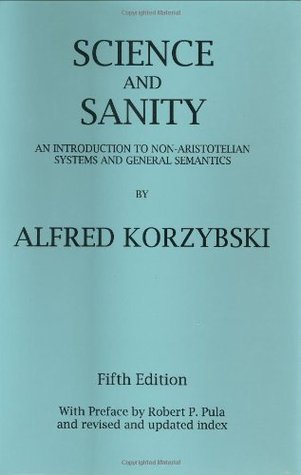
I am another reader whose life was changed by reading this book. I tripped over this dense tome in my searching (half-crazed) teenage phase of life. I think that is the only explanation for how I was able to slough through it. If I had first come across this today there is no way I would give it the time. Someone needs to do a condensed 200 page version. A copy has travelled with me in my life helping me to joyfully reach 56 years of age. Each time I think about a problem in my life or in the world I remember what I learned in this book.
In addition to the other factors making this book a difficult read is the author's application of mathematics and physics to explain, illustrate and justify his concepts. So in addition to the difficulty of the concepts, in themselves, is the additional issue of following arguments based in math and physics, which 99% of us don't like wrapping our brains around. I was lucky I enjoy reading about math and physics, while not having studied much of the subjects in school.
I consider this book the most valuable member of my book collection, and it has profoundly influenced many aspects of my life.
Not for the faint of heart, this is a 900 page book packed to the brim with linguistic insight. If you have no previous background with semantics or linguistics philosophy, you might want to read "Language in thought and action" or "tyranny of words", as well as Korzybski's "Manhood of Humanity," first. Once you embark upon this journey, your disposition in life will never be the same, that i can guarantee.
"Science and Sanity" is perhaps the book that has had the most influence on my thinking. Korzybski's insight into the importance of language/semantics/reasoning is without equal.
That said, it is the one of the most difficult-to-read books I have ever run across. This stems from two principle problems. The first is that the author is not a native speaker of English. This no doubt made his explanations harder to structure. And secondly, I believe there is always going to be an inherent problem in using words to discuss words. No doubt especially true if one is building up a complex schemata.
Fascinating subject. This was the seminal work for non-Aristotelian logic and a host of other sub-specialties of Semantics. (See General Semantics @ Wiki)
And if you can slog through the book and grasp the concepts, you will never think the same again.
It took me a whole winter - about 5 months - to read through this opus.
I really liked it - therefore the four stars.
What I retained is that a map is not the territory, and that there can be as many maps as there are individual minds.
However, I have the impression that Mr. Korzybski never questions his core belief that there is one territory, a single objective reality that might be shared among semantically educated people, resulting in sanity for all.
After having finished the book, I felt emotionally connected to Mr. Korzybski, touched by the combination of strength, gentleness and modesty his writing exudes.
This is one of the most important books I've read. The concepts in it have become very important to my outlook on life. The reason I'm not giving it 5 stars is that, honestly, it is almost unreadable for modern humans. It is very academic. You can guess that any book that starts off with 100 pages of references just in the introduction, before it even starts, isn't going to be an easy reader. But it is well worth it. I wish that General Semantics had truly caught on. Particularly, as indicated in the title, within the practice of science. It hasn't really.
I read it age 14 and it felt like I was wandering around inside my home, it also changed me and how I understand language, cognition, misinterpretation, misunderstanding, manipulation and religion.
As has been noted in other reviews, this is not a book for the faint-hearted. I read all of it (save the appendices) back in the sixties and was very impressed. Some of the hard science is very dated, so you have to filter much of that out. The book definitely had an effect on the way I think about things.
I found that Harry L. Weinberg's Levels of Knowing and Existence to be much a more accessible work on the subject. S&S was more of a textbook/source-book/reference, and not really aimed at a general audience.
This is one of the first books that I read on epistemology of non-Euclidean geometry, post-aristotelian logic systems(multi-valued/fuzzy logic) and introduced me to mathematical systems that started my quest onto Base-12 mathematics, triangular mathematics and Neurolingustic Programming.
When I first read thus book, I sought-out to improve my verbal-currency and communication. What I got from it was a prerequisite to the meta-model of NLP and the ability to delay my reactions when interacting with other people.
I am a fan of classic science fiction and the many references to general semantics by authors such as A. E. Vogt made me want to go to the source of these ideas. Unfortunately I found the book unreadable. I found the language difficult to understand and overly repetitive. If I didn't understand the words and phrases the first time then repeating them several times using the same words and phrases doesn't help. I read the 4th edition which is basically the 1933 version. Was my problem because the language of science, metaphysics and psychiatry really that different then? I understand that it is implying that we need to address language in a much fuller way. We can't just look at the intellectual meaning of what we say or what we hear. We need to understand the emotional response that we have to language because of our experiences in developing our response. This is done by allowing enough time for the emotional portion of the response to rise to the surface and be identified so that you don't just react to something you hear without knowing why your response came out the way it did. Or maybe I'm missing the whole point.
science and sanity is actually the antidote to many philosophies that uses confusions in their understanding of language to create meaningless questions, and respond with meaningless answers. That being said, the book tends to repeat the same messages over and over (map is not the territory, deny the is of identity).
I think however that he is a bit naive. People make mistakes when they generalize and confuse orders of abstraction, because those mistakes are beneficial to them. A synonym for this is lying.
I disagree that language is that which creates a discrepancy between technological advancement, and social advancement. It is not language that is lagging, but it's economic understanding, that creates this imbalance. Korzybski puts too much importance on language, and in doing so forgets economics.
Korzybski tells us talking crazy makes us crazy. Therefore talk sane, be sane. Sane speak will actually heal your nervous system. Sane speak is less in certainties and more in abstractions. Crazy speak is. Sane speak seems.
То что основана Альфредом Коржибски, т.е. общая семантика-эмпирическая дисциплина, представляющая собой систематическую методологию по исследованию того, как люди взаимодействуют с миром, реагируют на мир, реагируют на собственные реакции и реакции других людей и, соответственно, каким образом они изменяют своё поведение. Иными словами, такие книги делают нас умнее:))
The fact that "The Art of Awareness" by Samuel Bois is a very accessible, shorter summary of this, doesn't take away from this book. This book examines the fundamentals of thinking, ranging from the basic senses, to mathematics, to psychology. Applicable to every moment of waking life.
Alfred Korzybski's Science and Sanity (first published in 1933) was a book I was introduced to by my undergraduate professor Dr. Tracy Brown from the University of North Carolina - Asheville while taking one of his neurolinguistic courses. While a tough read at the tender age of 19, it was not until my second and third re-reading of this seminal work where I truly understood this remarkable piece of work.
Science and Sanity is such an ambitious and pioneering work that sought to redefine human knowledge and behavior through a systematic exploration of the relationship between language, perception, and reality.
Korzybski’s central thesis as I came to realise is that human beings often mistake their language for reality itself, hence the phrase "The Map is NOT the Territory", leading to cognitive distortions that can foster misunderstandings and perpetuate societal problems. His key proposal is the theory of General Semantics, which argues that through a more precise understanding of language and its limitations, individuals can achieve greater clarity, sanity, and effectiveness in their interactions with the world. While the book remains influential in fields like psychology, linguistics, and philosophy to this very day, there are several areas where it can be critiqued.
Strengths of Science and Sanity (My POV)
1.) Innovative Ideas: One of the book’s most significant contributions is Korzybski’s early recognition of the limitations of human perception and cognition. By emphasising the distinction between "the map" (our representation of reality) and "the territory" (reality itself), he presents a revolutionary way of thinking about the ways in which language shapes our understanding of the world. This concept, which Korzybski calls "the abstracting process," highlights how language inherently distorts reality and can lead to misunderstandings, emotional responses, and even conflict. This idea has had a lasting impact on fields such as cognitive science, communication theory, and linguistics.
2.) Integration of Multiple Disciplines: Korzybski’s interdisciplinary approach is one of the most admirable aspects of Science and Sanity. Drawing from fields such as biology, psychology, mathematics, and philosophy, he attempts to construct a holistic model for understanding human thought and behavior. His synthesis of ideas from diverse areas, including the work of Einstein and the theory of relativity, shows an impressive effort to create a comprehensive framework that accounts for the complexity of human cognition.
3.) Focus on Practical Application: Korzybski’s work is not just a theoretical circle jerk. To the very contrary, he argues that through the applicaption of his principles, derived primarily the field of General Semantics, a thorough understanding of his work can lead to practical improvements in personal behavior, communication, and even social and political issues. A long-time advocate for a more conscious awareness of language and its effects, has greatly inspired a range of practical approaches in education, therapy, and conflict resolution. In sum, the practical aspect of the book has made it valuable not only to academics but also to practitioners in various fields.
Weaknesses and Criticisms (My POV)
Overly Abstract and Complex: One of the major critiques of Science and Sanity is its dense and often inaccessible prose. Korzybski’s writing is highly technical and filled with jargon that can be difficult for readers without a strong background in philosophy, psychology, or science to fully grasp. The book’s abstract nature may alienate some readers who struggle to connect the theoretical concepts to their lived experiences. Moreover, Korzybski's frequent use of specialized terms, such as "non-Aristotelian" and "semantic reactions," can create confusion rather than clarity, potentially limiting the book’s accessibility to a broader audience.
1.) a common critique is the book's Overemphasis on Language and Semantics: While Korzybski’s emphasis on language and its role in shaping human perception is valuable, his exclusive focus on General Semantics as the key to understanding human behavior can be seen as a bit reductive. a few critics have made the arguement that by concentrating so heavily on the mechanics of language and its impact on the mind, Korzybski downplays the importance of other factors in shaping cognition and experience, such as emotion, unconscious drives, and social context, just to point out a few. While language is undeniably important, it may not be the sole factor determining the way people think and act.
Lack of Empirical Support: Another common criticism of Science and Sanity is the lack of empirical evidence supporting some of Korzybski’s claims. While he draws on a wide array of scientific theories and models, the book does not engage in systematic experimentation or present concrete data to back up his assertions. In contrast to more contemporary works in psychology and cognitive science, Korzybski’s ideas remain largely theoretical and speculative. This has led some critics to question the scientific rigor of his approach, particularly given his ambitious attempts to apply his theory to complex social and political issues.
Elitist and Technocratic Tone: Korzybski’s vision of a more "sanitised" and rational world, guided by a select group of individuals who understand General Semantics, has been criticised for its elitist undertones. His suggestion that a more "scientific" approach to language and thought could lead to social harmony implies a kind of intellectual hierarchy, where those who grasp the complexities of language and abstraction are positioned to lead and teach others. This could be seen as anti-democratic, as it suggests that only a select few are capable of truly understanding and improving human cognition and behavior.
Over-Optimism about Language and Sanity: Korzybski’s belief that understanding the limitations of language could lead to "sanity" may seem overly optimistic. While General Semantics offers valuable insights, it is unlikely to be a panacea for all of humanity's psychological and social issues. It is my humble opinion that human beings are driven by a wide array of unconscious factors—biological, emotional, and social—that cannot be easily addressed by simply altering the way we use language. Furthermore, Korzybski’s belief in the potential for widespread social reform through better language use may seem naïve in the face of deeper systemic and structural issues that cannot be solved merely by changing individuals’ ways of speaking and thinking.
In Conclusion
Nonetheless, Alfred Korzybski’s Science and Sanity is nothing less than a groundbreaking work that introduces the theory of General Semantics and presents a compelling argument about the role of language in shaping human thought, perception, and behavior. Its interdisciplinary approach and focus on the relationship between language and reality have left a lasting imprint on fields like communication, psychology, and philosophy to this very day. However, the book’s abstract, jargon-heavy writing style, along with its speculative nature and overemphasis on language as the root of human dysfunction, limit its practical applicability and scientific credibility.
While Korzybski’s ideas remain valuable for those interested in exploring the relationship between language and cognition, they should be approached with caution and supplemented with the latest empirical research along with a broader understanding of human psychology. Ultimately, Science and Sanity represents a bold intellectual vision, but one that requires further refinement and integration with contemporary scientific developments to fully realise its potential. Still, one of my all-time favorite books in this rather obscure genre.
An interesting view is not to be overlooked. As in physics, we changed our concepts from Newtonian (space and time) to Einstein or non-Newtonian (space/time). We see this in any field and some of us embrace the change and see how infinite our views can still work; others of us resist knowing that there is something fundamentally wrong if you cannot put your finger on it.
Korzybski opens up our mind and world to the possibilities of Non-Aristotelian systems and general semantics.
"If one wishes to obtain a definite answer to Nature one must attack the question from a more general and less selfish point of view" M. PLANCK
I'll admit I didn't read all the way through. It's a big book and I couldn't take it with me on my travels. I made it about half-way through and absolutely loved it. It was many years ago, so please excuse a vague review...
Korzybski's way of stripping language down and pointing out the way abstractions, when unconscious, confuse our ability to reason properly, really affected my way of looking at language, science and truth. I think this book and man never got the attention they should have.
This book, or some derivative of it, should be a must for any critical thinker in this world. And let's face it, we should all be critical thinkers...
A work of rare genius about how best to observe, learn, and think. Origin of “General Semantics”. Immensely influential. Sometimes misunderstood, even by famous students. Increase your intelligence. Counter propaganda. A very thick book, heavy, and full of footnotes, but worth working through. Train your brain.
Known for the terms: “General Semantics” “Non-Aristotelian” (a.k.a. “Null-A”, Ā) “Cortical-Thalamic Pause” “The Map Is Not The Territory” “Orders of Abstraction” “Space-Binding” “Time-Binding”
Jesus christ this book literally put me off of the deep end and broke my sad little 20 year old brain with Korzibski on the Structural Differential. I showed this to a PhD in Philosophy and I can proudly say he may have genuinely lost his mental stability. Do not f*ck with this book. This book is dangerous do not read this #alone
I've been struggling with this for fifty years because I think it's well worth the effort. It completely reformed my view of language and logic. The quotations alone are worth the price. Notoriously "unreadable"--the later material is very technical, but if you liked Stuart Chase's Tyranny of Words or Hayakawa's Language in Thought and Action, make haste to get this on eBay.
This text is the hands down best text i have read in a very long time. I have read this book a total of 3 times now in my life, and it has helped refine my own speech and text patterns over the years greatly. Excellent no matter if it is the first time, or the third time. Enjoy!
This book was a life changer for me because it provides a straight forward explanation of levels of abstraction that we may use and often misuse for understanding the world.
The null-A pause, akin to mindfulness, is a powerful practice.
I learned about this book from reading A. E. Van Vogt's novel, "The World of Null-A."
I have to be honest, I loved the book, even though it was very hard for me to grasp the new paradigm I was facing. I will come back to it and re-read it for sure, after more than 10 years. Fascinating book!