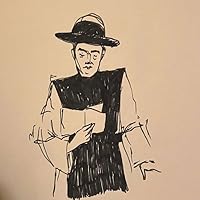
A Spiritual Aeneid is a book written by Ronald Arbuthnott Knox in 1918. The book is an allegorical interpretation of the Aeneid, an epic poem written by Virgil. Knox uses the characters and events from the Aeneid to explore spiritual themes and ideas. The book is divided into twelve chapters, each of which corresponds to one of the twelve books of the Aeneid. Knox uses his knowledge of Christianity and classical literature to provide a unique perspective on the Aeneid, and to offer insights into the nature of faith and redemption. The book is written in a clear and accessible style, making it suitable for both scholars and general readers. A Spiritual Aeneid is a fascinating exploration of the intersection between literature and spirituality, and a valuable addition to the canon of Christian literature.This scarce antiquarian book is a facsimile reprint of the old original and may contain some imperfections such as library marks and notations. Because we believe this work is culturally important, we have made it available as part of our commitment for protecting, preserving, and promoting the world's literature in affordable, high quality, modern editions, that are true to their original work.
Monsignor Ronald Arbuthnott Knox was a Roman Catholic priest, theologian, author of detective stories, as well as a writer and a regular broadcaster for BBC Radio.
Knox had attended Eton College and won several scholarships at Balliol College, Oxford. He was ordained an Anglican priest in 1912 and was appointed chaplain of Trinity College, Oxford, but he left in 1917 upon his conversion to Catholicism. In 1918 he was ordained a Catholic priest. Knox wrote many books of essays and novels. Directed by his religious superiors, he re-translated the Latin Vulgate Bible into English, using Hebrew and Greek sources, beginning in 1936.
He died on 24 August 1957 and his body was brought to Westminster Cathedral. Bishop Craven celebrated the requiem mass, at which Father Martin D'Arcy, a Jesuit, preached the panegyric. Knox was buried in the churchyard of St Andrew's Church, Mells.
Knox was only thirty years old when he wrote this account of his conversion, and in more ways than one it is a story about growing up. For Knox growing from the brilliantly clever and flippant boy, who published a volume of poetry whilst he was still at Eton, to a great-souled man tried by losing all his friends to the First World War coincides with his moving from the playful and 'unreal' religion of an extravagantly 'advanced' Anglo-Catholicism, which owed as much to youthful chivalry, love of paradox, and championing of lost causes as to supernatural virtue, to a deep and un-flashy Roman Catholicism.
Similarities to Newman's Apologia are obvious--especially in the spiritual re-working of the story of the Aeneid, which is even more explicit in Knox than in Newman--but the tone starts out quite differently. Knox's typically playful and light hearted style dominates the ealier chapters, in sharp contrast to the seriousness and restraint of the beginning of the Apologia, but they converge more and more, and the poignancy of Knox's final chapter is quite Newmanesque. But it is not so Newman whom Knox saw as his principal predecessor and heavenly patron as R.H. Benson. This might seem odd, as superficially Knox is far more similar to the Oxford man Newman than the Cambridge man Benson. But Benson was an Etonian, and to the child-prodigy Knox it was Eton rather than Oxford that represented Troy: "Oxford ... was always a very poor second best." But more fundamentally the form of extravagantly high Church Anglicanism in which Benson and Knox had both championed was post-Tractarian; Newman had made it possible, but it was fundamentally different than the pioneer days of Tractarianism. It was more daring but less hopeful; more brilliant but less heroic. And above all it had a different view of Rome: for the Tractarians Rome was an unspeakably remote and terrible vision; for Benson and Knox she was a kind of safety net.
More tolerable than Surprised by Joy, but suffers from the same basic problems. I haven't read the classics, so the constant untranslated Latin was lost on me. I haven't heard of any of the folks who wrote the pamphlets or delivered the sermons that Knox was audience to, so I had to guess at the contents of those works by reading between the lines. And I don't care at all about the structure or personalities of English schools or universities, so I hated the chapters which discuss those subjects (mostly in the first half). Also, Knox's hangups about Anglicanism vs Catholicism are very caught up in the precepts of movements and the opinions of discussion groups that he joined, and it's hard to follow them without a permanent Wikipedia tab opened on the side. For example I am very glad I looked up the 39 Articles of Anglicanism, but I naturally had never heard of them before this book.
However by the end, through sheer immersion, I was able to get the gist of his argument for his eventual submission to the Roman Catholic church, which is what I wanted to know in the first place. And the book is definitely witty, even if only sometimes.
In short, I think you'd to be a turn-of-the-century Englishman who attended Eton and Oxford and at least flirted with the Anglican church, to understand most of this book. But there is still some value in reading it even without that background.
It is worth reading if one cares about Knox. (His other books are excellent -- for example, The Mass in Slow Motion, and The Creed in Slow Motion).
I didn't find this book to be as engaging, I think partly because Knox had a fundamentally extremely logical rather than artistic nature. He could be creative and humorous, but his methodical recounting of his spiritual journey, which often defies precise description, doesn't bring out those qualities as much as his other writings.
Knox is often classed with Robert Hugh Benson. Both were Anglican clergy who were sons of prominent Anglican clergymen (Knox the son of a bishop, Benson of the archbishop of Canterbury, the Anglican Communion's highest prelate). They received similar educations. Both, of course, also converted to the Catholic Church, in part, at least, due to their Newmanesque recognition that the Catholic Church provides a real source of religious authority.
Benson, though, had a more creative, artistic, and kind of strange personality, all of which served him well as the author of numerous wonderful novels. Benson is more interesting to read about.
This is in fact a place-holder for Monsignor Knox Sermons edited by Evelyn Waugh and published by DropMore Press in London, England, 1949.
There is no entry for this book nor have my efforts been able to-date to get it added to the catalogue here so this is the closest I can get to a record for it.
An excellent selection of Knox's sermons made and edited by Waugh, with an introduction by the same.