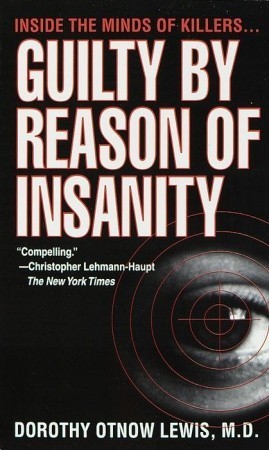
THIS BOOK IS NOT ABOUT TED BUNDY!!!!!
Now that I've gotten that out of the way.
I picked this book up with the knowledge that Dr. Lewis had examined Ted Bundy shortly before his death. She was the only person to ever admit that he was insane, and so I hoped for a deeper look into the details of that. I was also hoping for a bit more detail about his confessions, since the three books I've read about him don't really delve that deeply into his confessions.
That was not the point of this book.
So, because of that, I feel a little bit mislead. Part of the low rating is because I feel that, despite the description of the book naming other killers, it seems that Bundy's name was somewhat "dropped" in to generate interest in this book, when in fact he hardly played a role in it at all.
The second reason for the low rating is because this seemed to be more of an autobiography than anything else. At the least, I was expecting more stories about the convicts she spoke with and the people she has treated. Instead, about half of the book is just a running internal monologue about what she was thinking/feeling or circumstances surrounding her own life, rather than explaining the cases. It wasn't a bad thing; it was just very unexpected, and it did get to the point that it was overbearing.
The third reason for the low rating was because the author was just so out of touch with the people she was interviewing.
You can tell she grew up in the middle class on the coast. Some of the things she said, the places she named, just spoke of such privilege. I also grew up in a middle-class family, but I also grew up in the Midwest.
I thought perhaps it was just me overanalyzing, but I've seen some of the other reviews left, and others came to the same conclusion that I did. Lewis put way too much value on the things that the convicts told her. She repeatedly overanalyzes the mispoken words and contradictions of her interviewees. However, it seemed to me that she completely ignored the fact that 1) people in different parts of the country (specifically, the South and Midwest) have a tendency to speak with their own colloquialism, that doesn't always fit into the standards of "correct" English linguistics; and 2) two seemingly contradictive statements aren't necessarily unnoticed by the person speaking them.
Granted, there were times when the interviewee very clearly contradicted themselves. They obviously were not paying attention to what was coming out of their mouths. In those cases, I would put less credibility on the interviewee's story (which Lewis did not do), because obviously the discrepancies could stem from half-assed stories and excuses. Lewis took her interviewees at their word, and I feel like that was a mistake.
But often, I feel like she just misunderstood what the convict was telling her. There were moments that contradicting statements were made that made sense to me, but they went right over Lewis' head. Instead of looking deeper into the words being said, to understand the meaning beneath them (because who, even in their right mind, just comes out to honestly answer private, secret things?), Lewis just took the words at face-value, at surface-level analysis, and then was confused when the ideas didn't line up in the most base interpretation of them.
But as Lewis mentions in the book, she has limited amounts of time to conduct her interview. Perhaps that is why she doesn't seem to really dig deeper into the stories she is told, and analyze more critically the way the stories are told to her.
But as Lewis also mentioned, hurrying is the biggest downfall of an interview; and despite saying multiple times that she knew "hurrying" would be a big mistake, she repeatedly hurried through interviews and analyses to get the information that she wanted, rather than listening for the information that each interviewee actually provided.