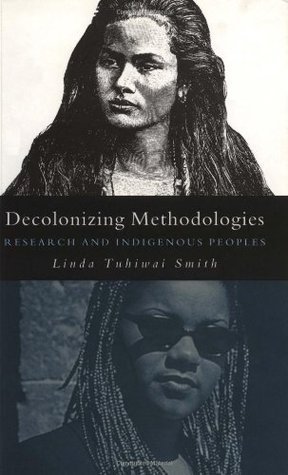
From the vantage point of the colonized, the term 'research' is inextricably linked with European colonialism; the ways in which scientific research has been implicated in the worst excesses of imperialism remains a powerful remembered history for many of the world's colonized peoples. Here, an indigenous researcher issues a clarion call for the decolonization of research methods.
The book is divided into two parts. In the first, the author critically examines the historical and philosophical base of Western research. Extending the work of Foucault, she explores the intersections of imperialism, knowledge and research, and the different ways in which imperialism is embedded in disciplines of knowledge and methodologies as 'regimes of truth'. Providing a history of knowledge from the Enlightenment to Postcoloniality, she also discusses the fate of concepts such as 'discovery, 'claiming' and 'naming' through which the west has incorporated and continues to incorporate the indigenous world within its own web.
The second part of the book meets the urgent need for people who are carrying out their own research projects, for literature which validates their frustrations in dealing with various western paradigms, academic traditions and methodologies, which continue to position the indigenous as 'Other'. In setting an agenda for planning and implementing indigenous research, the author shows how such programmes are part of the wider project of reclaiming control over indigenous ways of knowing and being.
Exploring the broad range of issues which have confronted, and continue to confront, indigenous peoples, in their encounters with western knowledge, this book also sets a standard for truly emancipatory research. It brilliantly demonstrates that "when indigenous peoples become the researchers and not merely the researched, the activity of research is transformed."
Professor Smith is Pro Vice-Chancellor Maori with responsibilities for Maori development at the University of Waikato as well as Dean of the School of Maori and Pacific Development and a professor of Education and Maori Development.
Professor Smith has an academic background in education and research and has a long career as an inter-disciplinary scholar. She is well known for her publications, public speaking and research leadership.
Her 1998 book Decolonising Methodologies: Research and Indigenous Peoples has become a seminal text in indigenous studies. Her other publications canvass a wide range of academic disciplines.
She has worked with a number of Maori scholars most notably her husband Professor Graham Hingangaroa Smith. Professor Smith has served on a number of New Zealand's national bodies.
She has been President of NZARE the New Zealand Association for Research in Education, a member of the Tertiary Education Advisory Commission, a member of the Health Research Council and Chair of the Maori Health Committee, Chair of the Social Sciences Panel of the Marsden Council and member of the Constitutional Review Panel.
She has also been active in establishing Maori educational initiatives from early childhood to higher education, was an inaugural co-Director of the Maori Research Centre of Excellence, Nga Pae o Te Maramatanga, and is currently the Director of the Te Kotahi Research Institute at the University of Waikato.
Linda is a daughter, a sister and cousin, a mother and aunt and a grandmother in an extended family.
منذ قراءتي الأولى لهذا الكتاب وأنا لا أستطيع تجاوزه. كتاب مهم، يبحث في سُبل تفكيك الاستعمار ونزعه عن المناهج البحثية التي تحاول مقاربة مجتمعات مابعد الاستعمار و/أو المجتمعات الأصلية.
تناقش فيه الكاتبة تاريخ المقاربات البحثية للمجتمعات الأصلية، وتختصر هذه التجربة بالقول أن ”البحث كلمة قذرة” (Research is a dirty word)، واصفةً تاريخ الحقول الأكاديمية في بحث المسائل المتعلقة بالمجتمعات المهمشة: بأنها عنيفة، وعليه تقدم سميث مقاربات منهجية بديلة للباحث/ة في المسائل المتعلقة بمجتمعات الهامش/السكان الأصليين، أقل عنفًا وتخففًا من النزعة الاستعمارية المهيمنة على الحقل والمؤسسات الأكاديمية.