

What do you think?
Race, Migration & Demography
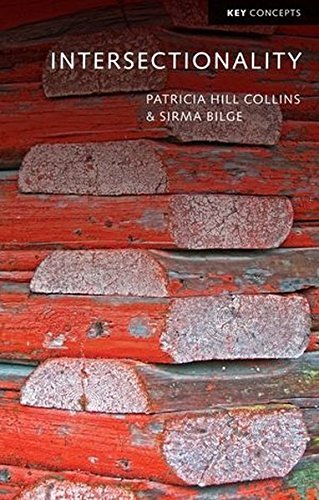
Intersectionality
The concept of intersectionality has become a hot topic in academic and activist circles alike. But what exactly does it mean, and why has it emerged as such a vital lens through which to explore how social inequalities of race, class, gender, sexuality, age, ability and ethnicity shape one another? In this new book Patricia Hill Collins and Sirma Bilge provide a much-needed, introduction to the field of intersectional knowledge and praxis. They analyze the emergence, growth and contours of the concept and show how intersectional frameworks speak to topics as diverse as human rights, neoliberalism, identity politics, immigration, hip hop, global social protest, diversity, digital media, Black feminism in Brazil, violence and World Cup soccer. Accessibly written and drawing on a plethora of lively examples to illustrate its arguments, the book highlights intersectionality's potential for understanding inequality and bringing about social justice oriented change. Intersectionality will be an invaluable resource for anyone grappling with the main ideas, debates and new directions in this field.
249 pages, Paperback
First published January 1, 2016
About the author
Patricia Hill Collins
43 books525 followersPatricia Hill Collins (born May 1, 1948) is currently a Distinguished University Professor of Sociology at the University of Maryland, College Park. She is also the former head of the Department of African American Studies at the University of Cincinnati, and the past President of the American Sociological Association Council.
Collins' work primarily concerns issues involving feminism and gender within the African-American community. She first came to national attention for her book Black Feminist Thought: Knowledge, Consciousness and the Politics of Empowerment, originally published in 1990.
Collins was born in Philadelphia, Pennsylvania in 1948. The only daughter of a factory worker and a secretary, Collins attended the Philadelphia public schools.
After obtaining her bachelor's degree from Brandeis University in 1969, she continued on to earn a Master of Arts Degree in Teaching from Harvard University in 1970. From 1970 to 1976, she was a teacher and curriculum specialist at St Joseph Community School, among two others, in Boston. She continued on to become the Director of the Africana Center at Tufts University until 1980, after which she completed her doctorate in sociology back at Brandeis in 1984.
While earning her PhD, Collins worked as an assistant professor at the University of Cincinnati beginning in 1982. In 1990, Collins published her first book, "Black Feminist Thought: Knowledge, Consciousness and the Politics of Empowerment". A revised tenth anniversary edition of the book was published in 2000, and subsequently translated into Korean in 2009.
While working at Tufts, she married Roger L. Collins in the year 1977, a professor of education at the University of Cincinnati, with whom she has one daughter, Valerie L. Collins.
In 1990, Collins was the recipient of the prestigious C. Wright Mills Award. She was later awarded the Jessie Bernard Award by the American Sociological Association in 1993. For her book Black Sexual Politics: African Americans, Gender and the New Racism (Routledge, 2005), she was presented the American Sociological Association Distinguished Scholarly Book Award in 2007.
Collins is recognized as a social theorist, drawing from many intellectual traditions; her more than 40 articles and essays have been published in a wide range of fields, including philosophy, history, psychology, and most notably sociology. Moreover, Collins was the recipient of a Sydney Spivack Dissertation Support Award.
The University of Cincinnati named Collins The Charles Phelps Taft Professor of Sociology in 1996, making her the first ever African-American, and only the second woman, to hold this position. She received emeritus status in the Spring of 2005, and became a professor of sociology at the University of Maryland, College Park. The University of Maryland named Collins a Distinguished University Professor in 2006.
(from Wikipedia)
Collins' work primarily concerns issues involving feminism and gender within the African-American community. She first came to national attention for her book Black Feminist Thought: Knowledge, Consciousness and the Politics of Empowerment, originally published in 1990.
Collins was born in Philadelphia, Pennsylvania in 1948. The only daughter of a factory worker and a secretary, Collins attended the Philadelphia public schools.
After obtaining her bachelor's degree from Brandeis University in 1969, she continued on to earn a Master of Arts Degree in Teaching from Harvard University in 1970. From 1970 to 1976, she was a teacher and curriculum specialist at St Joseph Community School, among two others, in Boston. She continued on to become the Director of the Africana Center at Tufts University until 1980, after which she completed her doctorate in sociology back at Brandeis in 1984.
While earning her PhD, Collins worked as an assistant professor at the University of Cincinnati beginning in 1982. In 1990, Collins published her first book, "Black Feminist Thought: Knowledge, Consciousness and the Politics of Empowerment". A revised tenth anniversary edition of the book was published in 2000, and subsequently translated into Korean in 2009.
While working at Tufts, she married Roger L. Collins in the year 1977, a professor of education at the University of Cincinnati, with whom she has one daughter, Valerie L. Collins.
In 1990, Collins was the recipient of the prestigious C. Wright Mills Award. She was later awarded the Jessie Bernard Award by the American Sociological Association in 1993. For her book Black Sexual Politics: African Americans, Gender and the New Racism (Routledge, 2005), she was presented the American Sociological Association Distinguished Scholarly Book Award in 2007.
Collins is recognized as a social theorist, drawing from many intellectual traditions; her more than 40 articles and essays have been published in a wide range of fields, including philosophy, history, psychology, and most notably sociology. Moreover, Collins was the recipient of a Sydney Spivack Dissertation Support Award.
The University of Cincinnati named Collins The Charles Phelps Taft Professor of Sociology in 1996, making her the first ever African-American, and only the second woman, to hold this position. She received emeritus status in the Spring of 2005, and became a professor of sociology at the University of Maryland, College Park. The University of Maryland named Collins a Distinguished University Professor in 2006.
(from Wikipedia)
Ratings & Reviews
Friends & Following
Create a free account to discover what your friends think of this book!
Community Reviews
Displaying 1 - 5 of 5 reviews

April 17, 2025
Ganhei este livro de presente de aniversário do Nicolas e estava interessado na leitura dele porque queria usar as teorias de interseccionalidades em um artigo. Mas na verdade este livro não é exatamente um livro teórico. É um livro muito bom sobre interseccionalidades, sim, mas não para quem busca conceitos, aplicações e discussões de teorias. Ele é um livro para entender as interseccionalidades na prática, de que forma elas são aplicadas ao redor do mundo e de diferentes formas. Patricia Hill Collins e Silma Birge trazem exemplos do futebol, das mulheres negras brasileiras, de diferentes aplicações da interseccionalidade situando ela como iniciada por Kimberlé Crenshaw. Para nós, brasileiros, o legal é que muitos dos exemplos utilizados vem do nosso próprio país, então a conversa segue mais fluida do que com aqueles livros feministas que só levam em conta a existência do Norte Global do mundo. Mas, infelizmente, a teoria que eu queria eu não encontrei...

March 13, 2024
li para a dissertação do mestrado, mas sobre todas as leituras sobre interseccionalidade é disparada a melhor! muito clara, muito crítica sobre o conceito e inspirou a trazer um lado mais prático para a construção da dissertação
Read
July 24, 2026Essa é uma obra fundamental para compreender como diferentes marcadores de opressão, como racismo, machismo, classe social, orientação sexual e outros, se cruzam na experiência de vida das pessoas. Através de uma abordagem teórica rigorosa e acessível, as autoras explicam que a interseccionalidade não é apenas uma soma de opressões, mas uma ferramenta analítica que revela as complexidades das desigualdades sociais.
O livro destaca que o conceito foi inicialmente cunhado por Kimberlé Crenshaw, uma jurista que buscava evidenciar como as mulheres negras, por exemplo, enfrentam uma opressão que não pode ser reduzida a uma única categoria, como racismo ou machismo isoladamente. A partir daí, o conceito se expandiu para diferentes áreas e contextos, mostrando que a opressão é multifacetada e que as experiências de marginalização variam de acordo com fatores históricos, culturais e geográficos.
Uma das principais contribuições do livro é a sua defesa de que a interseccionalidade é uma ferramenta vital para entender as desigualdades na prática, ajudando a construir políticas públicas mais inclusivas e justas. As autoras também abordam como essa perspectiva pode ser aplicada na análise de diferentes movimentos sociais, na educação, na cultura e na justiça, ampliando a compreensão das dinâmicas de poder.
Ao longo dos capítulos, o livro ilustra a importância de não reduzir as experiências de opressão a categorias isoladas, mas de reconhecê-las como interligadas e influenciadas por múltiplas identidades. Ele também reforça que a interseccionalidade é uma perspectiva que desafia a visão simplista e individualista, promovendo uma visão mais complexa e realista das lutas por direitos e igualdade.
Em suma, Interseccionalidade é uma leitura imprescindível para quem deseja entender as múltiplas dimensões da opressão e fortalecer uma abordagem feminista e antirracista que reconheça as especificidades de cada sujeito. É um livro que amplia nossa visão do mundo e das desigualdades, convidando-nos a pensar de forma mais crítica e inclusiva.
O livro destaca que o conceito foi inicialmente cunhado por Kimberlé Crenshaw, uma jurista que buscava evidenciar como as mulheres negras, por exemplo, enfrentam uma opressão que não pode ser reduzida a uma única categoria, como racismo ou machismo isoladamente. A partir daí, o conceito se expandiu para diferentes áreas e contextos, mostrando que a opressão é multifacetada e que as experiências de marginalização variam de acordo com fatores históricos, culturais e geográficos.
Uma das principais contribuições do livro é a sua defesa de que a interseccionalidade é uma ferramenta vital para entender as desigualdades na prática, ajudando a construir políticas públicas mais inclusivas e justas. As autoras também abordam como essa perspectiva pode ser aplicada na análise de diferentes movimentos sociais, na educação, na cultura e na justiça, ampliando a compreensão das dinâmicas de poder.
Ao longo dos capítulos, o livro ilustra a importância de não reduzir as experiências de opressão a categorias isoladas, mas de reconhecê-las como interligadas e influenciadas por múltiplas identidades. Ele também reforça que a interseccionalidade é uma perspectiva que desafia a visão simplista e individualista, promovendo uma visão mais complexa e realista das lutas por direitos e igualdade.
Em suma, Interseccionalidade é uma leitura imprescindível para quem deseja entender as múltiplas dimensões da opressão e fortalecer uma abordagem feminista e antirracista que reconheça as especificidades de cada sujeito. É um livro que amplia nossa visão do mundo e das desigualdades, convidando-nos a pensar de forma mais crítica e inclusiva.

October 18, 2023
Um livro muito bom sobre o tema, com exemplos fantásticos da sua aplicação em contexto práticos e atuais. E, o mais interessante pra mim foi, realmente, a atualidade que o livro aborda, ao citar, principalmente, o neoliberalismo e a intensificação do populismo de direita no mundo e seu capítulo final, funcionando como um resumo. O que é extremamente importante, principalmente por esse ser um livro de leitura complexa e lenta!

June 19, 2021
Collins é extremamente pedagógica, com vários exemplos da realidade concreta para explicar o modo de análise a partir da intersecionalidade. A autora apresenta a complexidade deste exercício, que exige o reconhecimento da totalidade da realidade social.
Displaying 1 - 5 of 5 reviews