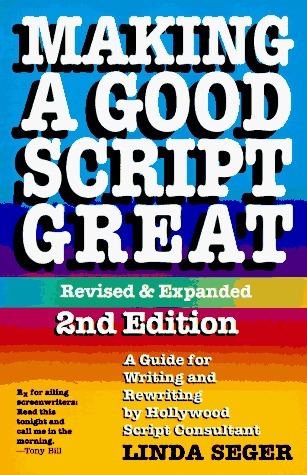
Making a good script great is not just a matter of having a good idea. Nor is it a matter of just putting that good idea down on paper. In scriptwriting, it's not just the writing but also the rewriting that counts. Making a Good Script Great focuses on the rewriting process and offers specific methods to help you craft tighter, stronger, and more workable scripts.
While retaining all the valuable insights that have made the first edition one of the all-time most popular screenwriting books, this expanded, second edition adds new chapters that take you through the complete screenwriting process, from the first draft through the shooting draft.
If you're writing your first script, this book will help develop your skills for telling a compelling and dramatic story. If you're a veteran screenwriter, this book will articulate the skills you know intuitively And if you're currently stuck on a rewrite, this book will help you analyze and solve the problems and get your script back “on track.”
Dr. Linda Seger has a Th.D. in Drama and Theology, and created her script consulting business based on her dissertation project about the elements needed to make a script work. She explored the integration of Drama and Spirituality during her five years in seminary. She holds three M.A. degrees: Drama from Northwestern University, Religion and the Arts from Pacific School of Religion, and Feminist Theology from Immaculate Heart College Center. She has a broad religious background. She grew up Lutheran and did several years of spiritual seeking in her 20s. She became a Born-Again Christian and then joined the Quakers (Society of Friends) and is a member of The Colorado Springs Friends Meeting. Throughout the years, she has meditated at a Zen Buddhist center, attended New Age conferences, has done the spiritual exercises of Saint Ignacious, and has read and taken classes in the religions of the world. Dr. Seger's thoughts about how spirituality influences her work:
“Many readers are surprised and even confused when they see I’m the most prolific writer in the area of screenwriting, an international screenwriting consultant and a screenwriting teacher. Yet, I also do theology/spiritual books. Some of this comes from having an M.A. In Drama, 2 M.A.s in theology and a ThD in Theology and Drama. They seem to be separate, but they are actually integrated.
Drama shines a light on the human condition. It explores the conflicts, struggles, doubts, uncertainties, and possibilities for transformation and redemption. Even secular drama deals with hope and goodness and the struggle for authenticity and love.
When I consult on scripts, I am trying to help the writer reach deeper into the truth about who we are as humans and what are our possibilities. When I write books on spirituality, I am doing the same thing – digging deeply into our experiences and struggles, and then shining the light of Scripture and theology on making some sense out of what we see and feel. I am trying to get at The Truth and to dig deep into our experiences. So, I never look for easy answers, and I don’t try to pigeonhole either our stories or our spirituality.”
Riletto per l’esame di scrittura creativa 2…un libro orrendo. Sembra una guida su come creare una sceneggiatura SOLO per vendere e incassare soldi denaro evvaiii money euro. Letteralmente c’è un capitolo che si intitola “Rendere commerciale la sceneggiatura”. Sembra come se gli sceneggiatori debbano basarsi unicamente sul profitto che ne ricaverà il prodotto finito, si parla di vendere e incassare e successi/insuccessi al botteghino in continuazione. Il tutto scritto malissimo con decine e decine di ripetizioni e un bel po’ di razzismo, sessismo e omofobia. I film presi in esame sono sempre quelle 3 o 4 normalate americane mid che nessun libro di storia del cinema citerà mai. Metto 2 stelle anziché 1 solo perché alla fine mi è stato utile per certi aspetti. Linda Seger ha visto 50 film in vita sua e sono tutti blockbuster americani.
Una buona mappatura di alcuni strumenti fondamentali per scrivere una sceneggiatura, con esempi molto interessanti, in particolare quelli tratti dai film "Tootsie" e "Witness". Forse un po' troppo convenzionale e schematico nel dire quali sceneggiature funzionino e quali no.
Ottimo libro per principianti. Tratta quasi esclusivamente di sceneggiatura e costruzione delle storie con una analisi approfondita degli elementi che la costituiscono. C'è qualche esercizio e riflessione interessante per chi ha bisogno di esercizio. Consigliato
Un buon manuale per principianti con tanti esempi pratici e dritte concrete, avrei solo voluto veder riportati diversi film e non sempre gli stessi, ma capisco l'esigenza di fare un'analisi più o meno a tutto tondo di ognuno.
Consigliato agli appassionati e a chi si avventura in queste acque per la prima volta!
È indubbiamente un libro molto semplice e basilare per scrivere una grande sceneggiatura, ma sicuramente è uno dei migliori libri di base per comprendere opere più complesse e specifiche. Lo consiglio a tutti coloro che vogliono cimentarsi nello studio delle sceneggiature partendo da zero.