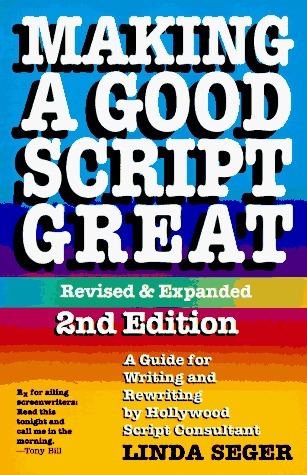
Making a good script great is not just a matter of having a good idea. Nor is it a matter of just putting that good idea down on paper. In scriptwriting, it's not just the writing but also the rewriting that counts. Making a Good Script Great focuses on the rewriting process and offers specific methods to help you craft tighter, stronger, and more workable scripts.
While retaining all the valuable insights that have made the first edition one of the all-time most popular screenwriting books, this expanded, second edition adds new chapters that take you through the complete screenwriting process, from the first draft through the shooting draft.
If you're writing your first script, this book will help develop your skills for telling a compelling and dramatic story. If you're a veteran screenwriter, this book will articulate the skills you know intuitively And if you're currently stuck on a rewrite, this book will help you analyze and solve the problems and get your script back “on track.”
Dr. Linda Seger has a Th.D. in Drama and Theology, and created her script consulting business based on her dissertation project about the elements needed to make a script work. She explored the integration of Drama and Spirituality during her five years in seminary. She holds three M.A. degrees: Drama from Northwestern University, Religion and the Arts from Pacific School of Religion, and Feminist Theology from Immaculate Heart College Center. She has a broad religious background. She grew up Lutheran and did several years of spiritual seeking in her 20s. She became a Born-Again Christian and then joined the Quakers (Society of Friends) and is a member of The Colorado Springs Friends Meeting. Throughout the years, she has meditated at a Zen Buddhist center, attended New Age conferences, has done the spiritual exercises of Saint Ignacious, and has read and taken classes in the religions of the world. Dr. Seger's thoughts about how spirituality influences her work:
“Many readers are surprised and even confused when they see I’m the most prolific writer in the area of screenwriting, an international screenwriting consultant and a screenwriting teacher. Yet, I also do theology/spiritual books. Some of this comes from having an M.A. In Drama, 2 M.A.s in theology and a ThD in Theology and Drama. They seem to be separate, but they are actually integrated.
Drama shines a light on the human condition. It explores the conflicts, struggles, doubts, uncertainties, and possibilities for transformation and redemption. Even secular drama deals with hope and goodness and the struggle for authenticity and love.
When I consult on scripts, I am trying to help the writer reach deeper into the truth about who we are as humans and what are our possibilities. When I write books on spirituality, I am doing the same thing – digging deeply into our experiences and struggles, and then shining the light of Scripture and theology on making some sense out of what we see and feel. I am trying to get at The Truth and to dig deep into our experiences. So, I never look for easy answers, and I don’t try to pigeonhole either our stories or our spirituality.”
Si quieres contar una historia para el cine y tienes duda de cómo revisar tu idea este es el mejor libro que he podido leer sobre guionismo.
No se queda solo en repasar conceptos sino que Linda Seger explica con ejemplos claros las fallas y aciertos de algunos guiones y que puede servir de mucha luz para quienes sueñan escribir para la gran o pequeña pantalla.
Muy bueno el repaso de diferentes conceptos de escritura desde la trama y narrativa de la historia, hasta la construcción de personajes y sus conflictos.
Creo que es la 5ta relectura. Siempre me logra refrescar ideas olvidadas y dar una nueva perspectiva sobre el proceso de escritura y reescritura. Recomendado completamente como primer manual para quienes se interesan en la escritura dramática para formatos audiovisuales (o dramaturgia o narrativa), ya que el orden, la exposición y los ejemplos de cada tema son buenísimos. La estrella de menos es por comentarios desafortunados sobre la homosexualidad como una anormalidad en el capitulo sobre los tipos de personajes (principales, secundarios, de apoyo, temáticos…); son mínimos, nada que no pueda ser eliminado sin afectar la integridad del texto en una nueva edición.
Todo se resume en: reescribir, reescribir y reescribir. Partiendo de una buena y cuidada estructura, claro. Si la trama no funciona como un reloj suizo la historia terminará haciendo aguas antes o después. Este manual (que presupone que estamos frente a una buena historia) nos habla de películas, pero sus recomendaciones se pueden extrapolar a la narrativa en general. Hay cientos de libros sobre el tema, aunque todos vienen a decir lo mismo: consigue que la historia no se estanque y triunfarás. Como si fuera tan fácil, ¿no?
Linda Seger consigue enseñar lo más básico en un libro corto y sencillo de entender. Lo que explica, aunque pensado para cine, se puede aplicar a cualquier obta de narrativa, lo que aumenta su valor en este contexto de "personas iniciadas que buscan algo con lo que empezar". Sobre todo habla de estructura y de personajes.
👍 Un libro con consejos muy prácticos para la revisión de guiones cinematográficos, preguntas puntuales que debemos hacernos durante la reescritura en nuestro proceso creativo.
Con ejemplos claros de películas como:
🔶Regreso al futuro 🔶Único testigo 🔶Tiburón 🔶E.T. 🔶La reina de Africa
Sin duda, un libro para leer cada vez que estemos trabajando un nuevo proyecto.
Una lectura imprescindible para todo guionista de cualquier parte del mundo. Linda enseña de forma hermosa y práctica el difícil pero necesario arte de reescribir nuestras historias. Lo revisito cada dos años y siempre aprendo algo nuevo. ¡Increíble!
Trabaja muy bien sobre el arte y oficio de la creación de guiones, te explica directamente sobre lo qué debiese aplicarse en conflicto, objetivo, meta, si cuenta un elenco númeroso o hasta como recortar sobrantes.
Un libro excelente no solo para escribir guiones, sino para construir cualquier historia. Aunque quizás es muy superficial en varios temas, las pinceladas que se dan (sobre todo en la construcción de personajes) son básicas pero esenciales.