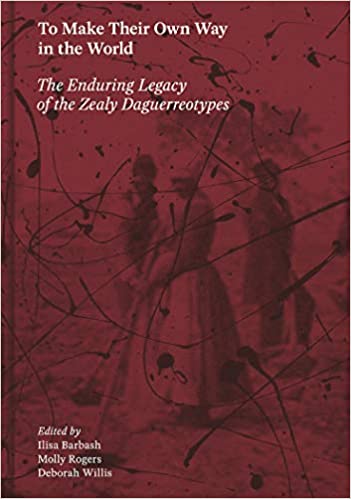
To Make Their Own Way in the World is a profound consideration of some of the most challenging images in the history of photography: fifteen daguerreotypes of Alfred, Delia, Drana, Fassena, Jack, Jem, and Renty--men and women of African descent who were enslaved in South Carolina.
Photographed by Joseph T. Zealy for Harvard professor Louis Agassiz in 1850, they were rediscovered at Harvard's Peabody Museum in 1976. This groundbreaking multidisciplinary volume features essays by prominent scholars who explore such topics as the identities of the people depicted in the daguerreotypes, the close relationship between photography and race, and visual narratives of slavery and its lasting effects. With over two hundred illustrations, including new photography by Carrie Mae Weems, this book frames the Zealy daguerreotypes as works of urgent engagement.
Henry Louis "Skip" Gates Jr. is a Professor of African and African-American Studies at Harvard University and Director of the W. E. B. Du Bois Institute for African and African American Research. He is well-known as a literary critic, an editor of literature, and a proponent of black literature and black cultural studies.
#FreeRentyandDelia who continue to be held hostage by Harvard and the Peabody Museum! Harvard’s refusal to return the images of Tamara Lanier’s ancestors is nothing short of exploitation. Shame on Harvard, the Peabody Museum and Aperture for still profiting from the images of @tamaralanier ancestors. Do not be complicit in participating in the events they organize around it or purchasing the book which contain the images. Instead, support Tamara Lanier’s rights. (1) Read more about the lawsuit here: https://tinyurl.com/lanierlawsuit (2) Sign the petition https://tinyurl.com/RentyP (3) Come to the @HarvardPDC event to learn more on Harvard and slavery (http://tiny.cc/harvardslaverythennow) (4) check https://www.harvardfreerenty.com/
A thorough and scholarly study of a very problematic set of photographs (and a rather expensive book – one of the problems is indeed Harvard and the Peabody profiting from these photos). The photos themselves are reproduced as high-quality prints on glossy paper (some also reappear in the individual essays that make up most of the book), and are painful to see. Contributions are by some of the leading figures in academic history of photography, plus a collection of images by Carrie Mae Weems accompanied by a short interview, and some other contemporary works that reflect on slavery and its photo-documentation. Like the photos in Without Sanctuary: Lynching Photography in America these are images that most won't want to spend a lot of time with, but important to know; this book, though, does have its own issues. The review in the NY Times is worth consulting.