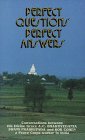
In 1972, a young American Peace Corps worker with an abiding interest in Indian culture and philosophy, and shaped by the 1960s Counterculture, made his way to India and found himself in conversation with A.C. Bhaktivedanta Swami Prabhupada, founder of ISKCON, at the fledgling Hare Krishna colony of Mayapur.
Their ensuing conversation covered a range of topics - the nature of the divine, spirituality, a person's search for meaning, the yoga of devotion (Bhakti yoga), the purpose of life, conquering the fear of death, cultivating happiness, living a fulfilled life etc - and provides an exposition of the Hare Krishna outlook and its interpretations of Hindu philosophy.
As with everything to do with ISKCON (and religions in general), there are profound truths and insights in this book mixed with dubious and spurious claims, faulty logic and scientific contradiction. I'm always skeptical of claims made of perfection, especially with regard to religious teachings, and especially when made by clerics and other figures of authority, using arguments from authority.
In youth, I cultivated myself with the company of books and figures who were shaped by the ethos of George Orwell, Christopher Hitchens, Swami Vivekananda and other figures, and so remain committed to a freedom of the intellect that is tempered with tragic wisdom, cautious about large-scale "revolutionary" change, and distrustful of unbridled idealism. Moreover, I have little patience for scripture being proffered as a source of objective truth, for political and religious cant, and for wilful obscurantism and intellectual dishonesty.
To my knowledge, the only religion that accepts that it could be wrong, is Buddhism. And this attitude of humility was best expressed by the Dalai Lama, when he said that if there is a contradiction between science and scripture, then the scriptural interpretations must yield to scientific knowledge.
And yet, I still feel there might be a grain of truth to what I've experienced of the Krishna Consciousness movement that's kept me exploring its literature, and practicing its chanting.
Now back to this book: a little too much creationism, but I think there is a philosophical core to Vaishnava Hindu teachings that is worth deeper exploration. Prabhupada's style of argument, bold claims and dubious logic - argued from authority - may be hard to understand for those not familiar with Indian culture. But once you get past the zealousness, the ideas and insights being discussed here do become very meaningful.
So long as ISKCON continues to venerate Prabhupada as "perfect", as a "perfect messenger" or whatever, and place his interpretations of Hindu teachings as being infallible and more authoritative than any other interpretation before or since, and certainly above direct study of the texts themselves, it'll be discredited by his shortcomings. The man was human, a product of his time and place, limited by his knowledge, upbringing and senses, and so while his interpretations of Hindu philosophy can be profound and insightful, his life and teachings shouldn't necessarily be taken as infallible. ISKCON should always reinterpret and update its teachings for the age. Otherwise, it'll be no different from a narrow cult that is doomed to fail. We shall see if the next generation of ISKCON leadership is capable of the kind of imagination and wisdom that is needed to keep this organization going and growing.
Sidenote: there is something to be said that making claims of knowledge being perfect and infallible is what helps it spread. People like me may not buy into it, but the masses have, do and would. That's what they want: reassurance and guarantees. So marketing what you have with confidence and shameless sales aplomb is key to helping your message spread.