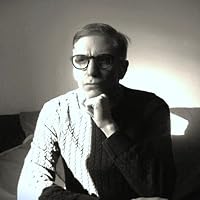
Louis-Ferdinand Céline, pen name of Dr. Louis-Ferdinand Destouches, is best known for his works Voyage au bout de la nuit (Journey to the End of the Night), and Mort à crédit (Death on the Installment Plan). His highly innovative writing style using Parisian vernacular, vulgarities, and intentionally peppering ellipses throughout the text was used to evoke the cadence of speech.
Louis-Ferdinand Destouches was raised in Paris, in a flat over the shopping arcade where his mother had a lace store. His parents were poor (father a clerk, mother a seamstress). After an education that included stints in Germany and England, he performed a variety of dead-end jobs before he enlisted in the French cavalry in 1912, two years before the outbreak of the First World War in 1914. While serving on the Western Front he was wounded in the head and suffered serious injuries—a crippled arm and headaches that plagued him all his life—but also winning a medal of honour. Released from military service, he studied medicine and emigrated to the USA where he worked as a staff doctor at the newly build Ford plant in Detroit before returning to France and establishing a medical practice among the Parisian poor. Their experiences are featured prominently in his fiction.
Although he is often cited as one of the most influential and greatest writers of the twentieth century, he is certainly viewed as a controversial figure. After embracing fascism, he published three antisemitic pamphlets, and vacillated between support and denunciation of Hitler. He fled to Germany and Denmark in 1945 where he was imprisoned for a year and declared a national disgrace. He then received amnesty and returned to Paris in 1951.
Kurt Vonnegut, Jr., Henry Miller, William Burroughs, and Charles Bukowski have all cited him as an important influence.
Céline—Ballets? Really?....Yes! Apparently Céline had a massive interest in Ballet and dance—and apart from his wife—whom was a dancer—probably loved it more so than anything else!—and even traveled to Russia to try and get them performed—but without any luck. According to his wife—around the time he passed away—he'd been planning to write a book dedicated to dance. Shame it never happened. The five ballets here—that are certainly on the unconventional side—are 'Scandal in the Deep' 'The Birth of a Fairy' 'Wicked Paul. Brave Virginie' 'Van Bagaden' and 'Slings and arrows'. A couple of them were really crazy—and just so funny too! Of course—it wouldn't be Céline without some controversy—and there is a little racism—but then he was known for hanging out with Nazis. Like another reviewer states—the last piece was indeed a thing of beauty. We also get a few Illustrations—which was a nice touch.
« Neptune ne trouve plus dans l’exercice de son décadent et fastidieux pouvoir qu’une petite compensation… une petite consolation… une seule… le Corps de ballet des sirènes… »
un recueil étonnant aux teneurs assez inégales — les premières pièces sont violentes, disent les extrêmes où peut pousser la simple jalousie. les dernières pièces sont quant à elles moins marquantes et paraissent « fades » aux côtés de l’incroyable « Naissance d’une fée » et du surprenant « Scandale aux abysses ».
« Naissance d’une fée » est ma pièce préférée de ce recueil, un ballet tragique et cynique où un corps de ballet diabolique ensorcelle des hommes aux passions impures, tandis qu’une amoureuse délaissée devenue fée cherche à sauver son amant de la damnation. j’ai énormément aimé ce ballet (et donnerais beaucoup pour le voir dansé!).
« Scandale aux abysses » est quant à lui un texte étonnamment moderne sur la destruction des océans et la violence des hommes, capable d’enlaidir l’innocence et la beauté les plus pures. un texte sur la jalousie, la vengeance et la punition qui entre en écho avec le premier texte du recueil (« Secrets dans l’île ») et se construit sur la base d’une relation femme jalouse/homme infidèle entre deux personnages mythologiques, comme dans « Foudres et flèches » (on sent la misogynie).
A collection of previously untranslated ballet sketches Celine tried to have staged in St. Petersburg. Dancing seems to have been one of the only things he liked, as evidenced in the characteristic loveliness of most of his female dancers. This being Celine, they are extremely off-kilter, and "Wicked Paul. Brave Virginie" is laughably racist, a pure iteration of his fear that white Europeans were "primer" to be painted over by layers of foreign darkness. But he will always surprise you; "Slings and Arrows" is a beautiful piece and the best of the five ballets.
Celine hung around dancers for a lot of his adult public life, and his last wife, Lucette Almansor, was a dancer and later instructor. These ballet plots, written over a long period and collected a few years before his death in 1961, shows his ideas for ballets. None was ever performed, or is ever likely to be performed, though who am I? For Celine specialists, or perhaps ballet specialists, only.
This books great because it when Celine really started to go nuts, but it's still well written and hilarious. It might even have my favorite first line of any book, "Neptune has finally wed Venus- even the Gods can't screw around forever."
i think i got more out of the street cred one gains from knowing about an obscure celine before anyone else has heard of it than actually reading said obscure celine book in all honesty. his account of venus living under the sea in newfoundland was fucking hilarious though.