Jump to ratings and reviews
Rate this book

L'hystérie Ou L'enfant Magnifique De La Psychanalyse

Rate this book
A quoi pensons-nous lorsque nous disons qu'une attitude ou une personne sont hystériques ? Ce livre tente de répondre à toutes les questions sur l'hystérie moderne, avec le désir de transmettre au lecteur ce que l'écoute de l'hystérie apprend au psychanalyste.

226 pages, Paperback

First published January 1, 1991

7 people are currently reading
135 people want to read

About the author

Juan-David Nasio

60 books58 followers
Juan-David Nasio (or J.-D. Nasio) is a psychoanalyst in Paris and former member of the Ecole Freudienne of Jacques Lacan.
Nasio was born in Rosario, Santa Fe, Argentina. After qualifying as a doctor Nasio completed his residency as a psychiatrist at the hospital in Lanús. He emigrated to France in 1969 where he worked with Jacques Lacan. He was a professor at the University of Paris VII Sorbonne for 30 years from 1971 and is considered one of the foremost commentators on Lacanian psychoanalysis. He was the first psychoanalyst to be inducted into the prestigious French Legion of Honor. In addition to participating in Lacan's seminars and translating his Écrits into Spanish, he has authored numerous books in French and Spanish, and he is the director of the Seminaires Psychanalytiques de Paris, a major center for psychoanalytical training and the dissemination of psychoanalytical thought to nonspecialists.

Ratings & Reviews

What do you think?
Rate this book

Friends & Following

Create a free account to discover what your friends think of this book!

Community Reviews

5 stars
47 (41%)
4 stars
36 (31%)
3 stars
24 (21%)
2 stars
7 (6%)
1 star
0 (0%)
Displaying 1 - 8 of 8 reviews
Profile Image for Owlseyes .
1,814 reviews309 followers
March 2, 2024

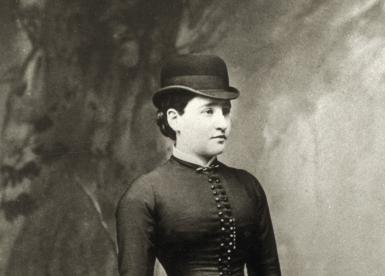
(Ana O./Bertha Pappenheim*)


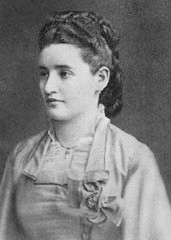
(Ana O./Bertha Pappenheim)


*WIKI: (1859–1936), an Austrian-Jewish feminist and the founder of the Jüdischer Frauenbund (League of Jewish Women).


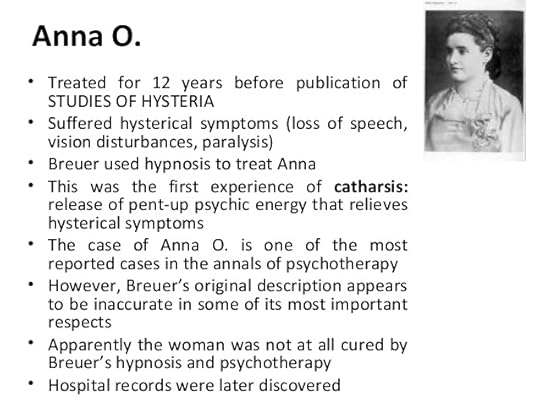
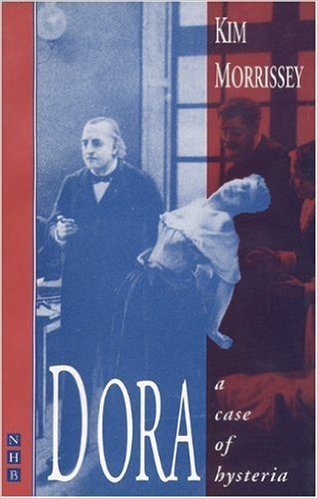
"¿A dónde se han ido las histéricas de antaño, esas mujeres maravillosas, las Anna O., las Dora..., todas esas mujeres que son hoy las figuras matrices de nuestro psicoanálisis?".
in: EL DOLOR DE LA HISTERIA

[Where did they go to, those hysterical women of old, those wonderful women, those Ana O., those Dora ..., all those women who are today the matrix figures of our Psychoanalysis?
in The Pain of Hysteria]

I have read the Spanish version of this book and yet I chose the English version to make the review, for this reason: the title. While the Spanish title seems to correctly portray the sadness of the hysterical condition (“El dolor de la hysteria”), the English title is way more positive, implying a certain gain out of the approach of this condition in the history of psychoanalysis (a pregnancy story...)

But then, it’s all a game of words; because FRUIT (ful), may have Plato’s connotations, and then…you’ll figure out.

Nasio, in some way, dedicated this book to his father’s memory, Juan Nasio, a medical doctor too. According to the author, his father’s works where imbued with the desire to understand the enigma of the body which knows how “to tell the truth of what we are”.

I reckon, for medical doctors, Hysteria had been a great challenge to address, in the 19th century. Ever, I would say. Here we had a patient (women to start with) with somatic symptoms, yet with no disease or damage of any sort, at the organic areas at stake. Say, a patient would have paralysis of one arm, yet the arm had no bone nor muscular disturbance/damage, or any physical cause for the paralysis.

Take a look at how Plato defined the phenomenon in his work Timeo:

“In women, that which is called the uterus, or matrix, is an animal inside them which has an appetite for making babies; and when for a long time without FRUIT , this animal gets impatient, unable to tolerate that state; and it roams all over every part of the body, obstructing the passage of the air, the breathing, provokes extreme anguish and other infirmities of all sorts”.

But let’s see the exact definition of Hysteria by Nasio. He calls it a type of Neurosis which manifests in several forms, quite often very temporarily. The most classic symptoms of Hysteria are disturbances in the motor performance (muscular contractures, difficulties in walking, paralysis of limbs, paralysis in the face…) , disturbances in the sensitivity (local pains, headaches, anesthesia in a certain part of the body) and sensorial disturbances (blindness, deafness, speechlessness …) .

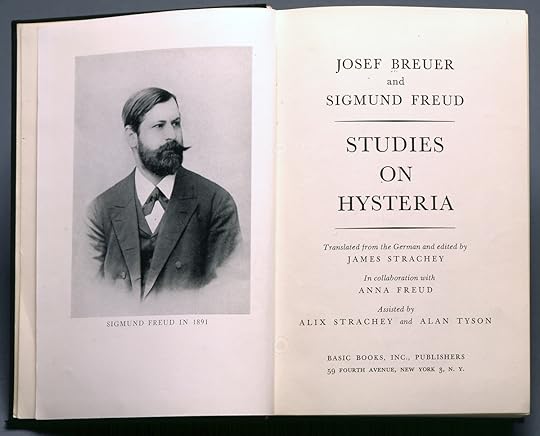

From a relational viewpoint Nasio would add: the permanent (“phantasmagoric”) state of absence of satisfaction/ fulfillment; an hysterical (phantasmagorical) view of the world [example of a patient: “I feel his movement in my skin, because I am his skin”]; and sadness: hysterical people feel themselves excluded; they create conflict, they intensify dramas. They suffer: “to suffer in a hysterical way is to suffer consciously in the body”.


Drawing on the works of Janet and Charcot, the first conceptualization of the problem of Hysteria by Freud placed as cause for it some kind of TRAUMA (a real one). Then the ego would adopt an inadequate way/mechanism for defending itself (from pain): through repression; conversion ensued.

But specifically in women, in those analyzed by Freud, it would all be resumed to /caused by an “unconscious castration anxiety”. Freud would have this second reading of the phenomenon: he would go as far as to tell on the origin of hysteria: it was not a representation, but all due to an “unconscious phantom” [the Plato’s animal??].

Any reader by this time would obviously wonder about the phenomenon in men. And indeed, some psychoanalysts would recognize it may happen in men [see Liliane Fainsiber: “les homes hysteriques, ces ambassadeurs oubliés du pays de l´inconscient”]. Yet, in a developmental sense, psychoanalysts would stress the difference in gender’s history. Anatomically, girls would go a different path; one of acknowledging a difference/sort of disadvantage: ”...in girls this character would show as a consequence of discerning her own castration…” (in Metapsicologia de la histeria de conversion”, by David Maldavksy).

The task of the therapist would become one of helping the hysterical patient overcome the castration anguish. The psychoanalyst should de-codify the symbolic nature on those symptoms/conversions. Once interpreted, it could lead to recovery.

The book approaches one specific symptom: hysterical blindness according to three perspectives: Janet’s, Freud’s and Lacan’s. But I won’t go into it. Especially on the Lacan’s perspective which seems a bit far fetched. Take a look at this phrase by Lacan: “The hysterical person sees the Other castrated, gets anguished, and due to this anguish identifies him/herself with the imaginary object missing in the Other”…”The result of this conversion, which the hysterical assumed to save him/her, is the pain …”. He/she fooled himself/herself,... basically.

The work offers also a remainder part full of quotations from Freud and Lacan. It is polemic still when Nasio calls some religious figures hysterical: “Eve, Mary and Mary Magdalene etc were all exemplar hysterical”.

Were they?

On a personal note any feminist of today would see almost as garbage all this theoretical apparatus. All would boil down to feminine potential and power. Nothing would be missing from the girl: she would have, like the boy, an anatomical legitimacy.


The animal, nowadays, is a genie.
Profile Image for Deniz Çabuk.
13 reviews1 follower
Read
August 2, 2016
Kitabın ismi gerçekten de tam yerinde olmuş; çünkü Psikanaliz gibi devrimsel bir bilimin doğmasına sonuç olan bir Anna O. vakası yer almaktadır ki bu vaka da Histeri vakasıdır. Benim fikrime göre Histeri nevrozunun Psikanaliz de özel bir yeri bulunmaktadır. Bu nevroza dair merak ettiklerinizi kitabı okuyarak giderebilirsiniz..
Profile Image for Aslı Can.
778 reviews306 followers
Read
June 19, 2016
Bir konu hakkında kitap yazılacaksa tam olarak böyle yazılmalı. Çok seviyorum bu adamı, bütün kitapları böyle; hem anlaşılır, hem çok kapsamlı hem de okuması çok zevkli.
Profile Image for James Hdz.
38 reviews2 followers
February 11, 2019
La castración es la más arriesgada apuesta del hombre y la más fundamental encrucijada.
Profile Image for Silva Hajrulla.
1 review
February 25, 2018
"Attraversare l'angoscia significa essere attraversati da lei. (...) Io attraverso l'angoscia quando una parola, un avvenimento, un gesto o un silenzio, poco importa di che cosa si tratti, se di una rivelazione folgorante proveniente dall'analista oppure insorgente all'improvviso in me analizzando, mi induce a comprendere che posso accettare di perdere, perché la posta non è mai la posta di un tutto, ma di una parte; e di una parte che sarà sempre perduta. Ho compreso, non mentalmente ma nei fatti, che qualunque sia lo sbocco finale di questo attraversamento dell'angoscia, il rischio rimane necessariamente parziale e la perdita inevitabilmente subita. Ho compreso, il mio corpo ha compreso, che non perderò mai tutto e che se guadagno non guadagnerò mai senza perdere."

J.D Nasio
Displaying 1 - 8 of 8 reviews