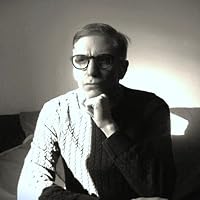
"Seldom has the muse of poetry spoken to anyone with such clarity and urgency as in Zagajewski's case. Seldom can one overhear so intense an exchange between Euterpe and Clio as in the pages of Tremor." -- Joseph Brodsky
Adam Zagajewski was a Polish poet, novelist, translator and essayist. He was awarded the 2004 Neustadt International Prize for Literature.
The Zagajeski family was expelled from Lwów by the Ukrainians to central Poland in 1945. In 1982 he emigrated to Paris, but in 2002 he returned to Poland, and now resides in Kraków. His poem "Try To Praise The Mutilated World", printed in The New Yorker, became famous after the 9/11 attacks.
He is considered a leading poet of the Generation of '68, or Polish New Wave (Polish: Nowa fala), and one of Poland's most prominent contemporary poets.
Poland like a dry fever on the lips of an émigré. Poland, a map pressed by the steam irons of long-distance trains. Don't forget the taste of the first strawberry, rain, the scent of wet lindens in the evening; heed the metallic sound of curses; take notes on hatred, the sheared coat of alienation; remember what links and what divides. A land of people so innocent that they cannot be saved. A sheep praised by a lion for its right conduct, a poet who always suffers. Land without sting, confession with no mortal sins. Be alone. Listen to the song of an unchristened blackbird. The raw scent of spring is flowing, a cruel sign.
I have read this book till the cover came off. I carry if frequently in my purse. I use the poems as prompts and props when the days get hard. The translation is, I hope, excellent, because the language is fresh, the images sharp and surprising, the meat of it all nourishes without cloying.
In the Introduction, Czeslaw Milosz says the work here is "related in a peculiar way to the crude reality of our century" (xi). And in the deep and peculiar imagery of "To Go to Lvov," Zagajewski says that "the snails converse about eternity...," a fine connection between the mundane and the eternal. Writing here about a cathedral in Lvov, the poet says "The bells pealed and the air vibrated, the cornets/of nuns sailed like schooners...." In "A Polish Dictionary," we find "an ordinary life with its taste of water." He also writes about Beethoven and Schopenhauer, Kierkegaard and Hegel, Van Gogh. He writes about "the face of a Jewish child/fifteen minutes before it dies." Zagajewski's range takes the reader on a journey through a world minutely investigated. This close encounter with crude reality affirms the power of poetry to connect us to each other and to a bigger world than the merely lyric ego can manage. I suggest you read this book until the covers fall off. You'll be a better person for it.
This is more gritty and honest, not quite as elegant as his later ones, but still haunting and resonant. I also love that it deals with eastern european history and personal experience in a very subtle and restrained way.