Order and History, Eric Voegelin's five-volume study of how human and divine order are intertwined and manifested in history, has been widely acclaimed as one of the great intellectual achievements of our age. In the fourth volume, The Ecumenic Age, Voegelin breaks with the course he originally charted for the series, in which human existence in society and the corresponding symbolism of order were to be presented in historical succession. The analyses in the three previous volumes remain valid as far as they go, Voegelin explains, but the original conception proved "untenable because it had not taken proper account of the important lines of meaning in history that did not run along lines of time." The Ecumenic Age treats history not as a stream of human beings and their actions in time, but as the process of man's participation in a flux of divine presence that has eschatological direction. "The process of history, and such order as can be discerned in it," Voegelin writes, "is not a story to be told from the beginning to its happy, or unhappy, end; it is a mystery in process of revelation." In the present volume, Voegelin applies his revised conception of historical analysis to the "Ecumenic Age," a pivotal period that extends roughly from the rise of the Persian Empire to the fall of the Roman. The age is marked by the advent of a new type of political unit—the ecumenic empire—achieved at the cost of unprecedented destruction. Yet the pragmatic destructiveness of the age is paralleled by equally unprecedented spiritual creativity, born from the need to make sense of existence in the wake of imperial conquest. These spiritual outbursts gave rise to the great ecumenic religions and raised fundamental questions for human self- understanding that extend into our historical present.
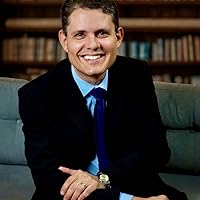
German-born American political philosopher. He taught political theory and sociology at the University of Vienna after his habilitation there in 1928. While in Austria Voegelin established the beginnings of his long lasting friendship with F. A. Hayek. In 1933 he published two books criticizing Nazi racism, and was forced to flee from Austria following the Anschluss in 1938. After a brief stay in Switzerland, he arrived in the United States and taught at a series of universities before joining Louisiana State University's Department of Government in 1942. His advisers on his dissertation were Hans Kelsen and Othmar Spann.
Voegelin remained in Baton Rouge until 1958 when he accepted an offer by Munich's Ludwig-Maximilians-Universität to fill Max Weber's former chair in political science, which had been empty since Weber's death in 1920. In Munich he founded the Institut für Politische Wissenschaft. Voegelin returned to America in 1969 to join Stanford University's Hoover Institution on War, Revolution, and Peace as Henry Salvatori Fellow where he continued his work until his death on January 19, 1985. He was a member of the Philadelphia Society.
"It will always be a wholesome exercise to reflect that 2,500 years from now our own time will belong to as remote a past as that of Heraclitus, the Buddha, and Confucius in relation to our present. The further reflection on what will be worth remembering about our present, and why, will establish the perspective in which it must be placed: Our present, like any present, is a phase in the flux of divine presence in which we, as all men before and after us, participate. The horizon of the Mystery in time that opens with the ecumenic expansion in space is still the Question that presents itself to the presently living; and what will be worth remembering about the present will be the mode of consciousness in our response to the Question." (405-06)
“Mas se alguns dos galhos fossem partidos, e vós, um broto selvagem de oliva, fôsseis enxertado em seu lugar para partilhar na fecunda raiz da Oliveira, não vos gabais sobre os ganhos.” (RM11, 17-18). Lembrai-vos que não sois vós que sustentais a raiz; é a raiz que vos sustenta.” (11,18). Paulo.
“A História não é um jorro de seres humanos e suas ações no tempo, mas o processo de participação humana num fluxo de presença divina que possui direção escatológica.” Eric Voegelin, A Era Ecumênica.
De acordo com Voegelin, a "Era Ecumênica" rompe com o programa dos três primeiros volume de "Ordem e História". A história é concebida como um processo de discernimento crescente da ordem do ser. É impossível uma história da ordem com base na sequência do tempo. A história deve ser conhecida por meio das irrupções espirituais como fontes de significado na e da história. Isto é, rejeita-se a concepção de uma história linear das ideias e busca-se compreender os padrões de significado na história por meio dos eventos teofânicos. A história é o processo de participação humana no fluxo da presença divina com direção escatológica. O processo da história é um mistério em processo de revelação. O homem busca captar pela consciência as epifanias divinas, transformando-as em símbolos. Assim, a captação divinal não é uma história unilinear, mas uma participação no fluxo da presença do Deus oculto. A exposição da simbologia e experiência existencial dos povos antigos da Era Ecumênica, que data dos persas à queda dos romanos, é extraordinária. Contudo, a conclusão que Voegelin chega é panenteísta e mística: Deus é um ser desconhecido, um Todo que produz o cosmos e os homens, a realidade é um mistério que não tem respostas, a ordem não é alcançável finalmente na consciência. De fato, é uma obra monumental, mas que leva a uma conclusão fechada da realidade em relação a quem é o divino e como se orientar no mundo.