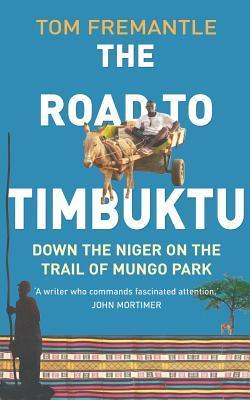
In the summer of 1795 a 24-year-old Scot with an optimistic heart and an unforgettable name docked on the Gambia River. So began one of the most extraordinary journeys of exploration in West Africa. Tackling fever, starvation, wild beasts and curious natives, Mungo Park soldiered on to his prize, the mysterious Niger, finally proving that the great river flowed to the east. The young explorer returned home a hero, his journal an instant bestseller. Over 200 years after this ground-breaking trip, Tom Fremantle - having long been inspired by Park - decides to follow in his doughty hero's wake. And so with a dugout canoe, a slothful ox, a donkey called Che and various motorised jalopies, Fremantle blazes his own haphazard trail down the Niger. En route he visits Timbuktu and Dogon country, dodges hippos and camps with desert Bedouin. His journey ends in the heart of Nigeria where Mungo Park lost his life on an ill-fated return expedition to Africa. Fremantle, like Park, puts his trust in strangers on the road and whether Senegalese prostitutes, Bozo fishermen or Malian chiefs, he brings their stories, their hopes and fears, vibrantly to life. This is a book that fuses past and present and reveals the spirit of Africa in a whole new light.
Tom is the author of three travel memoirs –Johnny Ginger’s Last Ride (Macmillan), The Moonshine Mule and The Road to Timbuktu (Constable). After completing a degree in nursing, Tom drew on his experiences in his very successful memoir Nurse! Nurse! under the pseudonym Jimmy Frazier.
Freemantle's book was a good introduction to the diverse land and peoples who live along Africa's 3rd largest river, the Niger. Although much has changed in the few years since he made his journey, particularly in Mali where I am bound in December, much remains timeless and is as relevant today as the diaries of 18th Century explorer Mungo Park which served as Freemantle's inspiration and travel guide.
Freemantle makes much of the people he meets and particularly their honesty and kindness; I found his account of the Nigerian student who he meets on a minibus from Mokwa to Kano to be the most enlightening since it is the only time he sees himself and his journey through the eyes of an African.
By a coincidence, I was reading these final pages on a Glasgow bus when a man sitting opposite me tapped my elbow and asked if I was a Christian. I eyed him with some suspicion, paying particular attention to his hands and whatever it was they held. It turned out to be nothing more than his bus ticket and my fear that I was about to suffer a dose of proselytising was ill-founded. This took too long and both he and I were embarrassed by my delayed 'Yes, I am'. My 'why do you ask?' opened up one of life's brief but remarkable coincidental conversations. He replied that he had seen I was reading a book about Mungo Park and presumed I was a missionary heading to or returning from Africa. That aside, this Nigerian man knew of Mungo Park and that he had died in Nigeria. Why would this be remarkable? One of the most persistent theme's of The Road to Timbuktu is how few African people Freemantle ever meets who have even heard of Park.
Although this wasn't the most dramatic or adventure-filled travel book I've read, I enjoyed the author's alternating between his story and those of past explorers. I learned a little new information about West Africa and as always, enjoyed the descriptions of the individuals a traveller meets along his journey.