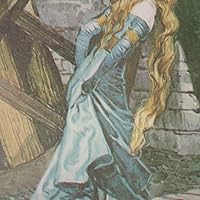
Winner of the 2004 Barnard Women Poets Prize, judged by Jorie Graham, this collection explores loss and regeneration. Whether searching for the beloved or translating dreams and memory into bearable parables, the speakers of Tessa Rumsey's poems cannot escape their endless longing. Will this uncontainable desire lead to the possession of the other, or to the dissolution of the self? Such are the book's ethical, cultural, and spiritual imperatives.
Why does Jorie Graham have to be the only person choosing Rumsey's work? I think she has an incredibly lush voice, and in this book, that voice takes on the contradictory nature that makes people interested in fate, or origin, or identity. People want an end point, whether it's beginning or ending, to which they can attach their lives, and yet that life is going to continue regardless of whether they establish that end point or not. This idea gets introduced in one of the epigraphs to the book. But I think it gets played out in subtle ways when trying to relate the poem on the verso side of the page spread with the poem on the recto. And then in more concrete ways with the content of the poems themselves. Consider what would make Audubon kill the birds he loved so much, so that he could accurately draw them.
Ok, only a decade behind the eight-ball here, I finally come upon Rumsey's The Return Message and find in her another master. What has happened is that Rumsey discovers the centripetal formal property of the book (it has a spine, and opposite that, a gutter) that invites the lines to seek their properties orthogonally in relation to writing. This shifts the form of the poems in subtle and inviting ways. The Return Message is a ta'wil Rumsey adorns in Sufi complexity.
If you could pardon and dismiss the echoing here, The Return Message is the one book written by someone alive that made me feel that I should simply "close shop."