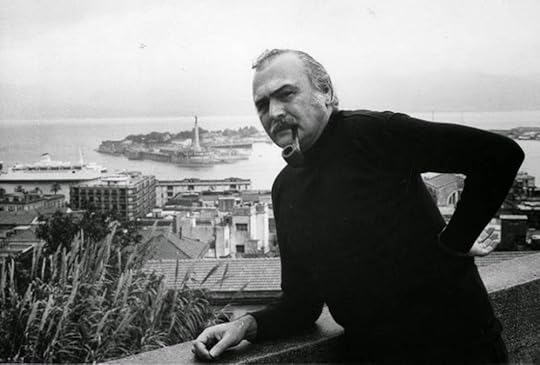
Bartolo Cattafi was born in Sicily, in the town of Barcellona, province of Messina, on July 6, 1922. His father, a physician, died four months before he was born. Raised by his mother in Mollerino and Barcellona, he was from a well-to-do family and was educated in the liceo classico or school of literary studies with a stress on classical sources. He was drafted into the army during World War II, and while he was undergoing training to become an infantry officer at Forli, he suffered a nervous breakdown. After his medical discharge from the army, and his discharge from the military hospital in 1943, he went back to school and earned a law degree, but never practiced. In 1947 he moved to Milan, where he worked in journalism and advertising. He also traveled extensively in Europe and North Africa. He died of cancer in Milan on March 13, 1979.
Cattafi has a firm place in the canon of contemporary Italian literature as a poet who spoke uncompromisingly in the post-World War II period about human illusions and delusions, hopes and betrayals. Cattafi’s poetry is the embodiment of post-war disillusionment. It dramatizes and echoes the absurdities of war and the chaotic experiences that followed the war. His tone is often dry, ironic, sometimes sardonic. According to his wife, Ada De Alessandri, who was an interpreter of his work, the journey that Cattafi undertook was always a spiritual quest.
Cattafi started writing after his medical discharge from the army, when he was in his early twenties. That traumatic beginning has colored his attitudes, his subjects and themes.
Winter figs come to the branches contorted by the cold. Closed, hard stubborn unlike their languidly soft summer companions they’re red inside like a sunset an icy red without yellow wild suspicious at every rustle of a branch they hold a streak of sugar tight between sour lips. They get here unexpectedly and they leave the way they came fragments wandering in the void in the dark struck for an instant by light.
Sicilian poet Bartolo Cattafi was born in 1922 in the province of Messina where he was raised by his mother after his father’s death. Drafted into the army during World War II, he suffered a nervous breakdown, was hospitalized, and then discharged from the army and returned to Sicily, an experience that may have catalyzed his genesis as a poet.
It started when I was 21. Maybe it was the puttees, the hobnailed boots, the blisters on my feet during basic training, the meager rations; maybe it was the nervous breakdown, the military hospital, the sounds of the orderly turning the key in the lock, the epileptics falling on the floor with a thud, the steps of the sleepwalkers, the screams of the malingerers and the glassy eyes of the madmen. I could put the blame on all this or on something else, something that was not working right inside of me; as it happened, as soon as I was discharged from the hospital and I arrived in Sicily (it was the spring of ’43) . . . I began to write poetry. . . I was always in the throes of some kind of intoxication, dazed by the oversharp, oversweet sensations. . . As in a second childhood, I began to number the things I loved, to spell out in verse a naive inventory of the world.
All around me the crashes of bombs and the blasts of Hurricanes and Spitfires . . . But I roamed the colorful countryside feeding on tastes, smells, images; death was not an unnatural element in that scene. It was like a peach tree in bloom, a hawk on a chicken, a lizard dashing across the path.
One of Cattafi's best-known poems, Bees, expresses a shocking, violent vitality that refuses imposed rule.
Bees
Those wild bees which you often see quivering head first over yellow corollas come from unknown frontiers a swarm hatched outside any law and order like the stubborn flowers they favor and defend —the honey they engender is an untamed honey— vehement brazen violators of spaces reserved for model colonies they are messengers and message of a strong something splendid with arrogance yet they still place eggs and larvae in the Saints’ pockets and die on All Souls’ Day.
On the other hand, his poem Anthracite conjures the hell of war, of labor, the weary disillusion with the once-bright futurist visions of modernism, in an ambiguous blackness below the earth that entices but defeats the human.
Anthracite
Factories and trains lose their gloss, get old, fade with time, disappear into the grey of fog. Anthracite endures, below, black brittle, hard, glints of metal, land enclosed and remote all the lights out. I understand its signs, the whitewashed pillars in the border, the fossil wing stuck in the shore, the stiff hands of mates shipwrecked dead in the gulf without sea. There might be another pyre tomorrow not the open the cheerful blaze that stains the air with smoke and amaranth, the stifling loss of the soul us embedded in the shadows.
I think of the rain, the ashes, the silence that the hurricane leaves behind mixed in the virgin stone of mud where bands of men and beasts will come once more to impress a passage in the world, ignorant at dawn on the black heart of the world.
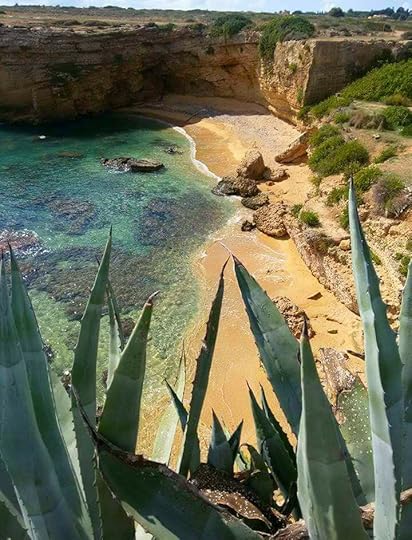
Cattafi spent his later adult life in the industrial northern Italian city of Milano (Milan) where he worked as a journalist until his death of cancer in 1979, but many of his poems conjure the land and people of Sicily, ancient island of Greeks, Romans, Arabs, Spanish, Italians, Germans, even Americans, colonized and occupied from every direction. In Agave the tough, ancient plant of the deserts of Mexico and the American Southwest that long ago colonized and naturalized throughout the Sicilian island becomes a melancholy symbol for the Sicilian diaspora whose labor and brains fed the more powerful economies of others.
Agave
Leave the Sicilian sand, the music and honey of the Arabs and Greeks, break the tender bonds, torpid milk of roots, go down into the sea somnolent queen green beast with arms of sorrow like one who’s about to cross; in the big cities, in the snow, the woods, the desert caravans go on forever; go, travel with the cold spirit of gulls with the fruitful heart the pregnant fish that enriches the most distant net and the slow slow hand of God come on the wing from a nest of fog.
Similarly, in Sage Juniper Rosemary he wishes he could trade the characteristics of these enticingly scented, unrealistically hopeful native plants for something more effective in repelling ill-intentioned invaders.
. . . The three patient plants perfume the air for centuries and wait in vain for a ship to arrive from some faraway place loaded with who-knows-what . . . Bearers of good-scented tales meek heirs of chaste scions if I can I’ll trade you in bulk for strong animal items executioner armies vipers scorpions black widows springing all together at the first sound of that foot.
Although he describes his first forays as naive and later claims to “reject and consider forbidden the cold determinations of the intellect” his short lyric verses are far from naive, concealing a searching intellectual intensity, distilling both bitterness and beauty, a surprising contrast of sensuality and disillusionment, a near-hopelessness tinged with spiritual longing.
According to editor/translator Rina Ferrarelli, Cattafi has a firm place in the canon of contemporary Italian literature as a poet who spoke uncompromisingly in the post-war period about human illusions and delusions, hopes and betrayals. . . I feel that affirmation despite everything is also expressed by the act of writing. According to Ada De Alessandri, who was an interpreter of his work and also his wife, the journey that Cattafi undertook was always a spiritual quest. In an era when so many dreams, ambitions, beliefs, systems, and lives have been crushed to nothingness, how far, it seems to ask, can things be reduced before there truly is nothing left?
Tabula Rasa
All right, love. Let's delete from the text water pearls on petals, the fancy frills, the bubbles of froth. Those delightfully necessary things. Let's also take out water air bread. Down to the bone shall we also toss out of life the bone, the soul to believe in your tabula which will never have the icon, the idol, the beloved magnet?
A number of gentler, even playful, poems address writing itself, the inspiration, the work, and the physical manifestation of the word, ink on paper.
A Tree
Here is a well-written tree in black in green and brown with its creases its tender spring leaves the birds on the branches and a procession of insects tiny monsters who revere it up and down and across and little by little eat holes in it but not in winter when they sleep in the thick of the ink.
This bilingual collection with facing-page translations was published in 2006 by Chelsea Editions, associated with the New York literary journal Chelsea that brought so much good poetry in translation to English-speaking readers. Brought together here are nearly 120 poems from seven of Cattafi’s books, some of them issued posthumously.
Le Mosche del Meriggio / The Flies of Noon (1958) L’Osso, L’Anima / The Bone, The Soul (1964) L’Aria Secca del Fuoco / The Dry Air of Fire (1972) La Discesa al Trono / The Descent to the Throne (1975) L’Allodola Ottobrina / The Lark of October (1979) Segni / Signs (1986) Chiromanzia d’Inverno / Winter Fortune Telling (1983)
Sixty-nine of Ferrarelli's translations gathered here were previously published in poetry and literary journals.
*******************************
*In Italian, a gendered language, nouns are either masculine or feminine. By general rule, the names of trees are masculine and the names of their fruit are feminine. An exception (perhaps the only exception?) to this is the fig: both tree and fruit are masculine.
**Full disclosure: the translator and editor, Rina Ferrarelli, is my mother.