
What do you think?

Perro de cristal (Para Lectores Intrepidos)
Un mago que busca aislamiento y tranquilidad le encarga a un soplador de vidrio un perro de cristal que mantenga alejados a los vecinos. A cambio de la pieza, le ofrece un elixir que cura cualquier dolencia. Versión de un clásico del autor del Mago de Oz en la que aparece un interesante retrato de una sociedad llena de prejuicios y convencionalismos. Un relato basado en la propia vida, que provoca preguntas y trata de evidenciar, de un modo sutil, la inutilidad del culto a la riqueza.
- GenresShort StoriesClassics
64 pages, Hardcover
First published January 30, 2006
About the author
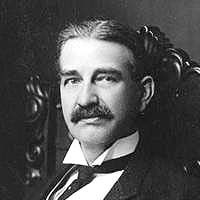
L. Frank Baum
3,577 books2,845 followersalso wrote under the names:
* Edith van Dyne,
* Floyd Akers,
* Schuyler Staunton,
* John Estes Cooke,
* Suzanne Metcalf,
* Laura Bancroft,
* Louis F. Baum,
* Captain Hugh Fitzgerald
Lyman Frank Baum was an American author best known for his children's fantasy books, particularly The Wonderful Wizard of Oz, part of a series. In addition to the 14 Oz books, Baum penned 41 other novels (not including four lost, unpublished novels), 83 short stories, over 200 poems, and at least 42 scripts. He made numerous attempts to bring his works to the stage and screen; the 1939 adaptation of the first Oz book became a landmark of 20th-century cinema.
Born and raised in Chittenango, New York, Baum moved west after an unsuccessful stint as a theater producer and playwright. He and his wife opened a store in South Dakota and he edited and published a newspaper. They then moved to Chicago, where he worked as a newspaper reporter and published children's literature, coming out with the first Oz book in 1900. While continuing his writing, among his final projects he sought to establish a film studio focused on children's films in Los Angeles, California.
His works anticipated such later commonplaces as television, augmented reality, laptop computers (The Master Key), wireless telephones (Tik-Tok of Oz), women in high-risk and action-heavy occupations (Mary Louise in the Country), and the ubiquity of advertising on clothing (Aunt Jane's Nieces at Work).
* Edith van Dyne,
* Floyd Akers,
* Schuyler Staunton,
* John Estes Cooke,
* Suzanne Metcalf,
* Laura Bancroft,
* Louis F. Baum,
* Captain Hugh Fitzgerald
Lyman Frank Baum was an American author best known for his children's fantasy books, particularly The Wonderful Wizard of Oz, part of a series. In addition to the 14 Oz books, Baum penned 41 other novels (not including four lost, unpublished novels), 83 short stories, over 200 poems, and at least 42 scripts. He made numerous attempts to bring his works to the stage and screen; the 1939 adaptation of the first Oz book became a landmark of 20th-century cinema.
Born and raised in Chittenango, New York, Baum moved west after an unsuccessful stint as a theater producer and playwright. He and his wife opened a store in South Dakota and he edited and published a newspaper. They then moved to Chicago, where he worked as a newspaper reporter and published children's literature, coming out with the first Oz book in 1900. While continuing his writing, among his final projects he sought to establish a film studio focused on children's films in Los Angeles, California.
His works anticipated such later commonplaces as television, augmented reality, laptop computers (The Master Key), wireless telephones (Tik-Tok of Oz), women in high-risk and action-heavy occupations (Mary Louise in the Country), and the ubiquity of advertising on clothing (Aunt Jane's Nieces at Work).
Ratings & Reviews
Friends & Following
Create a free account to discover what your friends think of this book!
Community Reviews
Displaying 1 - 4 of 4 reviews

October 18, 2021
eponymous sentence:
p14: Next morning he entered the wizard's room with the glass dog under his arm and set it carefully upon the table.
Such cheek!
Read as part of the collection American Fairy Tales.
p14: Next morning he entered the wizard's room with the glass dog under his arm and set it carefully upon the table.
Such cheek!
Read as part of the collection American Fairy Tales.

April 26, 2018
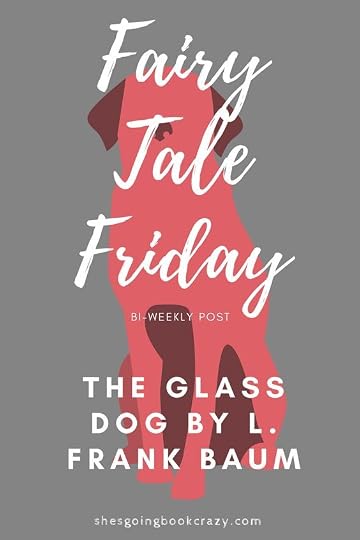
See a detailed review of this fairy tale on my blog at: shesgoingbookcrazy.com
The Glass Dog is an odd little fairy tale with an obscured purpose. While many fairy tales have a moral or morals that they try to portray to the reader population (typically children) this story simply doesn't have that characteristic.
A tale of a grumpy wizard, a money-seeking glass blower, and a snobby wealthy lady, the story intertwines its characters in strange and unusual circumstances. While there definitely are elements of fantasy throughout, it's not very comparable to the high-fantasy depicted in a majority of fairy tales.
While the wizard seems to be the main character at the beginning, this position transitions over to the glass blower who fashions the glass dog for the wizard. It is quickly revealed that the glass blower, although well into his years, is not necessarily a man of good character, as he seeks to marry the wealthy Miss Midas in order to squander her riches. With some difficulty, he eventually coerces her into marrying him. However, the union is a miserable one ending in squalor for both parties.
So, what is the lesson to be taken away? I'm not really sure. The glass blower nearly kills himself when he doesn't get his way. Then, when he does, he only desires to use Miss Midas for her money. Selfishness, greed, and shallow beauty are the traits represented here, and they lead to inevitable unhappiness for the characters.
And the wizard? Well, he just continues existing, held up in his home studying away, with the pink glass dog stopping anyone from disturbing him. The last few lines in the tale read:
"As for the glass dog, the wizard set him barking again by means of his wizardness and put him outside his door. I suppose he is there yet, and am rather sorry, for I should like to consult the wizard about the moral to this story."
I believe so. Anyways, if you are one for quirky fairy tales, this author may be one for your taste.
My Rating: ★★

Read
December 15, 2021El hechicero vivía
en el piso de arriba de una casa,
dedicando todo su tiempo
a estudios bien pensados
y a pensamientos bien estudiados.
en el piso de arriba de una casa,
dedicando todo su tiempo
a estudios bien pensados
y a pensamientos bien estudiados.

December 25, 2022
No one who breaks their word will never be satisfied. . . nor should they be.
Displaying 1 - 4 of 4 reviews